×
Request Free Sample ×

Kindly complete the form below to receive a free sample of this Report

* Please use a valid business email

Leading companies partner with us for data-driven Insights

clients tt-cursor
Hero Background

Germany Hyperpigmentation Disorders Treatment Market

ID: MRFR/HC/48961-HCR
200 Pages
Garvit Vyas
February 2026

Germany Hyperpigmentation Disorders Treatment Market Research Report: By Type (Topical Drugs, Chemical Peels, Laser Therapy), By Disease Indication (Melasma, Solar Lentigines), andBy End User (Hospitals, Others) - Growth & Industry Forecast 2025 To 2035

Share:
Download PDF ×

We do not share your information with anyone. However, we may send you emails based on your report interest from time to time. You may contact us at any time to opt-out.

Germany Hyperpigmentation Disorders Treatment Market Infographic
Purchase Options

Germany Hyperpigmentation Disorders Treatment Market Summary

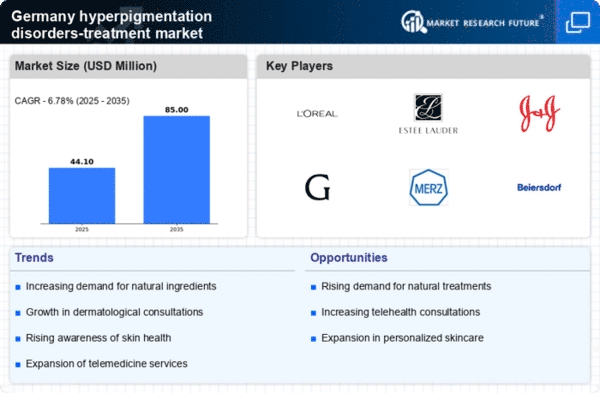
As per Market Research Future analysis, the Germany hyperpigmentation disorders-treatment market size was estimated at 41.3 USD Million in 2024. The Germany hyperpigmentation disorders-treatment market is projected to grow from 44.1 USD Million in 2025 to 85.0 USD Million by 2035, exhibiting a compound annual growth rate (CAGR) of 6.7% during the forecast period 2025 - 2035

Key Market Trends & Highlights

The Germany hyperpigmentation disorders-treatment market is experiencing a shift towards non-invasive and personalized treatment options.

  • The largest segment in the market is the topical treatments, while the fastest-growing segment is laser therapies.
  • There is a notable rise in demand for non-invasive treatments, reflecting a broader consumer preference for less invasive options.
  • The integration of advanced technologies is becoming increasingly prevalent, enhancing treatment efficacy and patient outcomes.
  • Key market drivers include increasing awareness of skin health and the aging population, which is contributing to a rise in skin concerns.

Market Size & Forecast

2024 Market Size 41.3 (USD Million)
2035 Market Size 85.0 (USD Million)
CAGR (2025 - 2035) 6.78%

Major Players

L'Oreal (FR), Estée Lauder (US), Johnson & Johnson (US), Galderma (CH), Merz Pharmaceuticals (DE), Beiersdorf (DE), Procter & Gamble (US), Bausch Health (CA)

Our Impact
Enabled $4.3B Revenue Impact for Fortune 500 and Leading Multinationals
Partnering with 2000+ Global Organizations Each Year
30K+ Citations by Top-Tier Firms in the Industry

Germany Hyperpigmentation Disorders Treatment Market Trends

The hyperpigmentation disorders-treatment market is currently experiencing notable growth. This growth is driven by an increasing awareness of skin health and the rising prevalence of hyperpigmentation conditions. Factors such as environmental influences, lifestyle changes, and genetic predispositions contribute to the demand for effective treatment options. In Germany, the market is characterized by a diverse range of products, including topical agents, laser therapies, and chemical peels, which cater to various patient needs. The integration of advanced technologies in treatment modalities is becoming more prevalent. This trend enhances the efficacy and safety of procedures. Furthermore, the emphasis on personalized medicine is likely to shape the future landscape of this market, as patients seek tailored solutions for their specific conditions. In addition, the regulatory framework in Germany supports innovation in dermatological treatments, fostering a competitive environment for both established and emerging players. The collaboration between healthcare professionals and pharmaceutical companies is essential for developing new therapies that address the complexities of hyperpigmentation disorders. As the population ages and the demand for aesthetic treatments rises, the hyperpigmentation disorders-treatment market is poised for continued expansion, with a focus on improving patient outcomes and satisfaction.

Rising Demand for Non-Invasive Treatments

There is a growing preference for non-invasive treatment options among patients, as they seek effective solutions with minimal downtime. This trend is evident in the increasing popularity of topical agents and laser therapies, which offer promising results without the need for surgical interventions.

Focus on Personalized Treatment Approaches

The hyperpigmentation disorders-treatment market is witnessing a shift towards personalized medicine, where treatments are tailored to individual patient profiles. This approach enhances treatment efficacy and patient satisfaction, as healthcare providers aim to address the unique needs of each patient.

Integration of Advanced Technologies

The incorporation of advanced technologies in treatment modalities is transforming the hyperpigmentation disorders-treatment market. Innovations such as artificial intelligence and machine learning are being utilized to improve diagnostic accuracy and treatment outcomes, paving the way for more effective therapies.

Germany Hyperpigmentation Disorders Treatment Market Drivers

Aging Population and Skin Concerns

Germany's aging population is a crucial factor influencing the hyperpigmentation disorders-treatment market. As individuals age, the incidence of skin disorders, including hyperpigmentation, tends to rise due to factors such as sun exposure and hormonal changes. Reports suggest that nearly 30% of older adults experience some form of hyperpigmentation, leading to increased demand for targeted treatments. This demographic shift necessitates the development of specialized products and services tailored to older consumers, thereby driving market growth. The healthcare sector is likely to adapt by offering more comprehensive treatment options, which could further stimulate the hyperpigmentation disorders-treatment market.

Increasing Awareness of Skin Health

The growing awareness of skin health among the German population is a pivotal driver for the hyperpigmentation disorders-treatment market. As consumers become more informed about skin conditions and their treatments, there is a noticeable increase in demand for effective solutions. Educational campaigns and social media influence have played a significant role in disseminating information about hyperpigmentation. This heightened awareness is reflected in market data, indicating a projected growth rate of approximately 8% annually in the treatment sector. Consequently, dermatological clinics and skincare brands are responding by expanding their product offerings, thereby enhancing the overall market landscape.

Rising Interest in Natural Ingredients

The trend towards natural and organic skincare products is significantly impacting the hyperpigmentation disorders-treatment market in Germany. Consumers are increasingly seeking treatments that utilize natural ingredients, driven by concerns over synthetic chemicals and their potential side effects. This shift is evident in market data, which indicates that products featuring botanical extracts and natural compounds are experiencing a surge in popularity, with sales increasing by approximately 15% over the past year. As a result, manufacturers are reformulating existing products and developing new ones that align with this consumer preference, thereby enhancing their market presence.

Increased Investment in Dermatological Research

The hyperpigmentation disorders-treatment market is benefiting from increased investment in dermatological research and development. Pharmaceutical companies and research institutions in Germany are focusing on understanding the underlying mechanisms of hyperpigmentation, leading to the discovery of novel therapeutic agents. This investment is crucial, as it fosters innovation and the development of more effective treatments. Recent funding reports indicate a rise in R&D budgets by approximately 12% in the dermatology sector, which is likely to yield new products and treatment protocols. As a result, the market is expected to expand, offering consumers a wider array of treatment options.

Technological Advancements in Treatment Options

Technological advancements are reshaping the hyperpigmentation disorders-treatment market by introducing innovative treatment modalities. The integration of laser therapies, intense pulsed light (IPL), and other advanced technologies has revolutionized the way hyperpigmentation is addressed. These methods offer more effective and quicker results, appealing to a consumer base that values efficiency. Market analysis indicates that the adoption of these technologies is expected to grow by 20% in the coming years, as clinics invest in state-of-the-art equipment. This trend not only enhances treatment efficacy but also expands the range of options available to patients, thereby driving market growth.

Market Segment Insights

By Type: Topical Drugs (Largest) vs. Laser Therapy (Fastest-Growing)

In the Germany hyperpigmentation disorders-treatment market, the distribution of market share among the different treatment types reveals that topical drugs maintain the largest share. This segment is well-established, driven by wide acceptance and various formulations catering to consumers' needs. Chemical peels follow, offering a viable treatment option but at a slower adoption pace compared to the dominant topical drugs. Laser therapy, though smaller in share, is gaining momentum due to technological advancements and increasing consumer awareness regarding treatment options. Growth trends in this segment indicate a shift towards more effective and less invasive treatments. Topical drugs are benefiting from continuous innovations and low-risk profiles, making them the preferred choice for many patients. Conversely, laser therapy is emerging as the fastest-growing segment, driven by rising demand for immediate results and minimally invasive procedures. This dynamic is further supported by endorsements from dermatologists and aesthetic professionals, leading to increased consumer trust and acceptance.

Topical Drugs (Dominant) vs. Laser Therapy (Emerging)

Topical drugs dominate the treatment landscape for hyperpigmentation disorders, characterized by their accessibility and variety of formulations tailored to diverse skin types and conditions. Their established presence in the market ensures a steady demand, bolstered by ongoing research and development that enhances efficacy and safety profiles. In contrast, laser therapy represents an emerging segment, experiencing rapid growth as patients seek more effective and quick solutions for hyperpigmentation. This treatment option offers precision and targeted results, appealing to consumers seeking advanced solutions. The combination of increased clinical validation and a growing number of aesthetic clinics offering laser therapy creates a compelling alternative for individuals looking to address hyperpigmentation more swiftly.

By Disease Indication: Melasma (Largest) vs. Solar Lentigines (Fastest-Growing)

In the Germany hyperpigmentation disorders-treatment market, Melasma holds the largest share due to its high prevalence among individuals, particularly women. This segment's popularity stems from rising awareness and widespread availability of effective treatments, which caters to a significant portion of the population affected by this condition. Conversely, Solar Lentigines has emerged as a notable player, appealing to an aging demographic increasingly concerned about skin discoloration from sun exposure, thereby capturing a growing market share. The growth trends for both segments indicate a promising future, particularly fueled by advancements in treatment technologies and an increase in skincare awareness. The market for Melasma treatments continues to thrive due to innovative and targeted solutions. Meanwhile, the Solar Lentigines segment is gaining momentum as more consumers recognize the impact of sun damage and seek preventive and corrective treatments, showcasing a clear shift toward maintaining skin health and aesthetics.

Melasma (Dominant) vs. Solar Lentigines (Emerging)

Melasma is currently the dominant segment in the market, characterized by its significant awareness and availability of treatment options that adequately address this condition. This segment benefits from a well-established customer base and tailored marketing efforts that resonate with affected individuals. On the other hand, Solar Lentigines, while emerging, showcases rapid growth due to its appeal to older populations. Increased exposure to sun has led to a greater focus on skincare solutions addressing these concerns. Both segments highlight the evolving landscape of skin treatment in the Germany hyperpigmentation disorders-treatment market, characterized by heightened consumer demand for effective and innovative solutions.

By End User: Hospitals (Largest) vs. Others (Fastest-Growing)

In the Germany hyperpigmentation disorders-treatment market, hospitals represent the largest segment, capturing a significant share of the treatment landscape. They play a crucial role in delivering advanced care, utilizing state-of-the-art technology and skilled personnel to address the complex needs associated with hyperpigmentation disorders. The accessibility and infrastructure of hospitals ensure that they remain a preferred choice for patients seeking effective treatments. On the other hand, the 'others' segment is identified as the fastest-growing, with an increasing number of specialized clinics and dermatology practices emerging in the market. This shift is driven by the growing awareness of skin conditions, alongside advancements in treatment options and the customization of services that cater to individual patient needs. These clinics often provide a more personalized healthcare experience, attracting a new demographic of patients.

Hospitals: Dominant vs. Others: Emerging

The dominance of hospitals in the Germany hyperpigmentation disorders-treatment market stems from their comprehensive resources, experienced healthcare professionals, and ability to offer a range of treatments and follow-up care. They serve not only as treatment centers but also as educational hubs for patients, facilitating access to clinical trials and cutting-edge therapies. In contrast, the 'others' segment, which includes specialized dermatology clinics and private practices, is rapidly gaining traction. These emerging facilities are leveraging technology to provide innovative treatment options, enhancing patient satisfaction through tailored services and shorter wait times. Their flexible approach allows them to cater to niche markets, making them a formidable player in the treatment landscape.

Get more detailed insights about Germany Hyperpigmentation Disorders Treatment Market

Key Players and Competitive Insights

The hyperpigmentation disorders-treatment market in Germany is characterized by a dynamic competitive landscape, driven by increasing consumer awareness and demand for effective skin treatments. Key players such as L'Oreal (FR), Estée Lauder (US), and Galderma (CH) are strategically positioned to leverage innovation and digital transformation to enhance their market presence. L'Oreal (FR) focuses on integrating advanced dermatological research into its product lines, while Estée Lauder (US) emphasizes premium branding and targeted marketing strategies to attract a diverse consumer base. Galderma (CH), with its strong portfolio of prescription and over-the-counter products, aims to expand its reach through strategic partnerships and collaborations, collectively shaping a competitive environment that prioritizes efficacy and consumer trust.In terms of business tactics, companies are increasingly localizing manufacturing to reduce costs and enhance supply chain efficiency. The market structure appears moderately fragmented, with several players vying for market share, yet the influence of major companies remains substantial. This competitive structure fosters innovation, as companies strive to differentiate their offerings in a crowded marketplace.

In October L'Oreal (FR) announced the launch of a new line of products specifically targeting melasma, a common form of hyperpigmentation. This strategic move underscores L'Oreal's commitment to addressing specific skin concerns through targeted solutions, potentially enhancing its market share in the hyperpigmentation segment. The introduction of these products is likely to resonate well with consumers seeking specialized treatments, thereby reinforcing L'Oreal's position as a leader in the market.

In September Estée Lauder (US) unveiled a digital platform aimed at providing personalized skincare recommendations based on individual skin types and concerns. This initiative reflects a growing trend towards digitalization in the beauty industry, allowing Estée Lauder to engage consumers more effectively and tailor its offerings. By leveraging technology to enhance customer experience, the company may strengthen brand loyalty and drive sales in the hyperpigmentation treatment sector.

In August Galderma (CH) entered into a partnership with a leading telehealth provider to offer virtual consultations for patients seeking treatment for hyperpigmentation disorders. This strategic alliance not only expands Galderma's reach but also aligns with the increasing consumer preference for accessible healthcare solutions. By integrating telehealth services, Galderma positions itself as a forward-thinking player in the market, catering to the evolving needs of consumers.

As of November current trends in the hyperpigmentation disorders-treatment market indicate a significant shift towards digitalization, sustainability, and the integration of artificial intelligence in product development. Strategic alliances are increasingly shaping the competitive landscape, enabling companies to pool resources and expertise. Looking ahead, competitive differentiation is likely to evolve from traditional price-based competition to a focus on innovation, technology, and supply chain reliability, as companies strive to meet the growing demand for effective and sustainable skincare solutions.

Key Companies in the Germany Hyperpigmentation Disorders Treatment Market include

Industry Developments

Recent developments in the Germany Hyperpigmentation Disorders Treatment Market highlight a growing focus on innovative treatments and technologies. In July 2023, Merck Group announced advancements in its dermatological portfolio, enhancing treatment options for hyperpigmentation disorders. Bayer also reported initiatives aimed at expanding its research capabilities in dermatological therapies, responding to the increasing demand for effective hyperpigmentation treatments among German consumers. Estee Lauder is leveraging its existing product lines to address skin imperfections, integrating sustainable practices into its formulation processes.

Notably, in August 2023, AbbVie completed the acquisition of a dermatological firm to bolster its offerings in skin health, adding to its robust pipeline targeting hyperpigmentation conditions. The market has seen significant growth over the past few years, with a marked valuation increase driven by an aging population and rising consumer spending on skincare. The German government’s support for biopharmaceutical innovations further propels these advancements, reflecting the country’s commitment to enhancing healthcare outcomes. Additionally, Johnson and Johnson have announced recent collaborations aimed at improving access to dermatological treatments in underserved regions, aligning with the trend of personalized healthcare solutions.

Future Outlook

Germany Hyperpigmentation Disorders Treatment Market Future Outlook

The Hyperpigmentation Disorders Treatment Market is projected to grow at a 6.78% CAGR from 2025 to 2035, driven by an increase in awareness and the introduction of innovative treatment options.

New opportunities lie in:

  • Development of personalized skincare formulations targeting specific hyperpigmentation types.
  • Expansion of telemedicine platforms for remote consultations and treatment plans.
  • Investment in AI-driven diagnostic tools for early detection and treatment customization.

By 2035, the market is expected to achieve substantial growth, driven by innovation and increased consumer demand.

Market Segmentation

Germany Hyperpigmentation Disorders Treatment Market Type Outlook

  • Topical Drugs
  • Chemical Peels
  • Laser Therapy

Germany Hyperpigmentation Disorders Treatment Market End User Outlook

  • Hospitals
  • Others

Germany Hyperpigmentation Disorders Treatment Market Disease Indication Outlook

  • Melasma
  • Solar Lentigines

Report Scope

MARKET SIZE 2024 41.3(USD Million)
MARKET SIZE 2025 44.1(USD Million)
MARKET SIZE 2035 85.0(USD Million)
COMPOUND ANNUAL GROWTH RATE (CAGR) 6.78% (2025 - 2035)
REPORT COVERAGE Revenue Forecast, Competitive Landscape, Growth Factors, and Trends
BASE YEAR 2024
Market Forecast Period 2025 - 2035
Historical Data 2019 - 2024
Market Forecast Units USD Million
Key Companies Profiled L'Oreal (FR), Estée Lauder (US), Johnson & Johnson (US), Galderma (CH), Merz Pharmaceuticals (DE), Beiersdorf (DE), Procter & Gamble (US), Bausch Health (CA)
Segments Covered Type, Disease Indication, End User
Key Market Opportunities Emerging technologies in personalized treatments enhance efficacy in the hyperpigmentation disorders-treatment market.
Key Market Dynamics Rising demand for innovative treatments drives competition and regulatory scrutiny in the hyperpigmentation disorders-treatment market.
Countries Covered Germany
Leave a Comment

FAQs

What is the projected market size of the Germany Hyperpigmentation Disorders Treatment Market in 2024?

The projected market size for the Germany Hyperpigmentation Disorders Treatment Market in 2024 is valued at 36.88 million USD.

What is the expected market size of the Germany Hyperpigmentation Disorders Treatment Market by 2035?

By 2035, the expected market size of the Germany Hyperpigmentation Disorders Treatment Market is anticipated to reach 84.0 million USD.

What is the expected CAGR for the Germany Hyperpigmentation Disorders Treatment Market from 2025 to 2035?

The expected compound annual growth rate, or CAGR, for the Germany Hyperpigmentation Disorders Treatment Market from 2025 to 2035 is 7.772%.

What are the main types of treatments available in the Germany Hyperpigmentation Disorders Treatment Market?

The main types of treatments available in the market include Topical Drugs, Chemical Peels, and Laser Therapy.

What is the market value of Topical Drugs in the Germany Hyperpigmentation Disorders Treatment Market for 2024?

The market value of Topical Drugs in the Germany Hyperpigmentation Disorders Treatment Market is 15.0 million USD in 2024.

How much is the market for Chemical Peels expected to grow by 2035?

The market for Chemical Peels is expected to grow to 23.0 million USD by the year 2035.

What is the projected value for Laser Therapy in 2024 within the Germany Hyperpigmentation Disorders Treatment Market?

The projected value for Laser Therapy in 2024 is approximately 11.88 million USD.

Who are the key players in the Germany Hyperpigmentation Disorders Treatment Market?

Key players in the market include Merck Group, Bayer, Estee Lauder, Novartis, and Johnson & Johnson.

What are the growth drivers for the Germany Hyperpigmentation Disorders Treatment Market?

Growth drivers for the market include increasing awareness about skin health and advancements in treatment technologies.

What challenges does the Germany Hyperpigmentation Disorders Treatment Market face?

The market faces challenges such as the high cost of treatments and varying regulations across regions.

Download Free Sample

Kindly complete the form below to receive a free sample of this Report

Compare Licence

×
Features License Type
Single User Multiuser License Enterprise User
Price $4,950 $5,950 $7,250
Maximum User Access Limit 1 User Upto 10 Users Unrestricted Access Throughout the Organization
Free Customization
Direct Access to Analyst
Deliverable Format
Platform Access
Discount on Next Purchase 10% 15% 15%
Printable Versions