×
Request Free Sample ×

Kindly complete the form below to receive a free sample of this Report

* Please use a valid business email

Leading companies partner with us for data-driven Insights

clients tt-cursor
Hero Background

Germany Herbal Nanomedicine Market

ID: MRFR/HC/52011-HCR
200 Pages
Rahul Gotadki
February 2026

Germany Herbal Nanomedicine Market Research Report By Type (Polymeric Herbal Nanoparticles, Solid Lipid Nanoparticles, Phytosomes, Nano-Micelles, Self-nano Emulsifying Drug Delivery System, Nanofibers, Others), By Source (Ginseng, Turmeric, Aloe Vera, Ginger, Others) and By Application (Cancer, Cardiovascular Diseases, Neurological Disorders, Others) -Forecast to 2035

Share:
Download PDF ×

We do not share your information with anyone. However, we may send you emails based on your report interest from time to time. You may contact us at any time to opt-out.

Germany Herbal Nanomedicine Market Infographic
Purchase Options

Germany Herbal Nanomedicine Market Summary

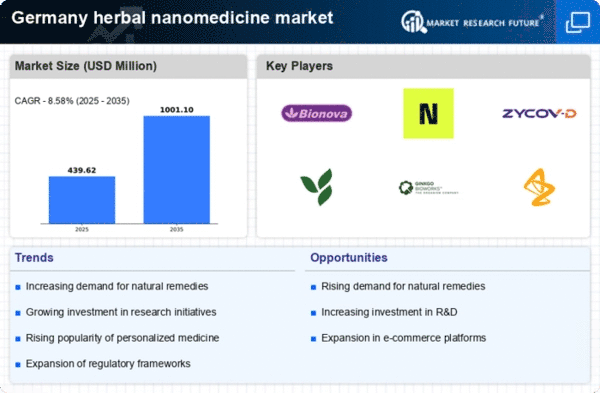
As per Market Research Future analysis, the Germany Herbal Nanomedicine Market size was estimated at 404.88 USD Million in 2024. The Herbal Nanomedicine market is projected to grow from 439.62 USD Million in 2025 to 1001.1 USD Million by 2035, exhibiting a compound annual growth rate (CAGR) of 8.5% during the forecast period 2025 - 2035

Key Market Trends & Highlights

The Germany herbal nanomedicine market is experiencing a transformative phase driven by technological advancements and consumer preferences.

  • Integrating nanotechnology with herbal remedies is reshaping treatment modalities in Germany.
  • Personalized treatment approaches are gaining traction, catering to the unique health needs of individuals.
  • The largest segment in this market is preventive healthcare, while the fastest-growing segment focuses on chronic disease management.
  • Rising consumer demand for natural products and advancements in nanotechnology are key drivers propelling market growth.

Market Size & Forecast

2024 Market Size 404.88 (USD Million)
2035 Market Size 1001.1 (USD Million)
CAGR (2025 - 2035) 8.58%

Major Players

Bionova (US), Nanobiotix (FR), ZyCoV-D (IN), Herbalife (US), Ginkgo BioWorks (US), AstraZeneca (GB), Bayer (DE), Amgen (US)

Our Impact
Enabled $4.3B Revenue Impact for Fortune 500 and Leading Multinationals
Partnering with 2000+ Global Organizations Each Year
30K+ Citations by Top-Tier Firms in the Industry

Germany Herbal Nanomedicine Market Trends

The Germany Herbal Nanomedicine Market is experiencing notable growth. This growth is driven by increasing consumer awareness of natural remedies and the potential benefits of nanotechnology in medicine. In Germany, there is a rising trend towards integrating herbal components with nanotechnology, which enhances the efficacy and bioavailability of therapeutic agents. This convergence is supported by a growing body of research suggesting the effectiveness of herbal formulations combined with nanocarriers. Furthermore, regulatory frameworks in Germany are evolving to accommodate these innovations, potentially facilitating market expansion. Moreover, the demand for personalized medicine is influencing the herbal nanomedicine market. Patients are increasingly seeking tailored treatment options that align with their individual health needs. This shift prompts manufacturers to explore innovative formulations leveraging nanotechnology for precise dosages of herbal compounds. As a result, the market landscape is likely to witness a surge in product development aimed at meeting these personalized health demands. The intersection of traditional herbal practices with modern nanotechnology may redefine therapeutic approaches, offering new avenues for treatment and enhancing patient outcomes.

Integration of Nanotechnology with Herbal Remedies

The herbal nanomedicine market is witnessing a trend where traditional herbal remedies are being enhanced through nanotechnology. This integration aims to improve the delivery and effectiveness of herbal compounds, making treatments more efficient. As research continues to validate these methods, the market is likely to see increased adoption of such innovative approaches.

Regulatory Support for Herbal Innovations

In Germany, regulatory bodies are adapting to the advancements in herbal nanomedicine. This support is crucial for fostering innovation and ensuring safety and efficacy in new products. As regulations evolve, they may encourage more companies to invest in research and development, thereby expanding the market.

Personalized Treatment Approaches

The demand for personalized medicine is reshaping the herbal nanomedicine market. Patients are increasingly looking for treatments tailored to their specific health conditions. This trend is driving manufacturers to develop customized herbal formulations that utilize nanotechnology, potentially leading to improved therapeutic outcomes.

Germany Herbal Nanomedicine Market Drivers

Advancements in Nanotechnology

Technological advancements in nanotechnology are significantly influencing the herbal nanomedicine market in Germany. Integrating nanotechnology with herbal formulations enhances the bioavailability and efficacy of active compounds in plants. This innovation allows for targeted delivery systems that can improve therapeutic outcomes while minimizing side effects. Research indicates that the use of nanoparticles can increase the absorption rates of herbal medicines by up to 90%. As a result, pharmaceutical companies are investing heavily in research and development to create novel herbal nanomedicines that leverage these advancements. The potential for improved patient outcomes and the ability to address complex health issues are likely to drive further growth in the herbal nanomedicine market.

Supportive Regulatory Framework

The regulatory environment in Germany is becoming increasingly supportive of the herbal nanomedicine market. Authorities are recognizing the importance of herbal products and their potential benefits for public health. Recent initiatives have been introduced to streamline the approval process for herbal medicines that incorporate nanotechnology. This regulatory support is crucial for fostering innovation and encouraging companies to invest in the development of new products. Furthermore, the European Medicines Agency (EMA) has established guidelines that facilitate the evaluation of herbal nanomedicines, ensuring that they meet safety and efficacy standards. As a result, the market is likely to see a rise in the number of approved herbal nanomedicines, which could enhance consumer trust and drive sales.

Growing Interest in Preventive Healthcare

There is a growing interest in preventive healthcare among the German population, which is positively impacting the herbal nanomedicine market. Consumers are increasingly seeking natural solutions to maintain health and prevent diseases rather than relying solely on treatments after illness occurs. This proactive approach aligns well with the principles of herbal medicine, which often emphasizes holistic health and wellness. The herbal nanomedicine market will likely benefit from this trend as products promoting preventive health measures are developed and marketed. Additionally, educational campaigns highlighting the benefits of herbal remedies in disease prevention could further stimulate consumer interest and drive market growth.

Rising Consumer Demand for Natural Products

The herbal nanomedicine market in Germany is experiencing a notable surge in consumer demand for natural and organic products. This trend is driven by an increasing awareness of the potential side effects associated with synthetic pharmaceuticals. Consumers are gravitating towards herbal alternatives, which are perceived as safer and more effective. According to recent surveys, approximately 70% of German consumers express a preference for natural remedies over conventional medications. This shift in consumer behavior is likely to propel the growth of the herbal nanomedicine market, as manufacturers respond by developing innovative products that combine traditional herbal knowledge with advanced nanotechnology. The market's expansion is further supported by the increasing availability of herbal products in pharmacies and health stores, making them more accessible to the general public.

Increased Investment in Research and Development

Investment in research and development (R&D) within the herbal nanomedicine market is on the rise in Germany. Both public and private sectors are recognizing the potential of combining herbal medicine with nanotechnology to create innovative therapeutic solutions. Funding for R&D initiatives is being allocated to explore the efficacy of various herbal compounds at the nanoscale, which could lead to breakthroughs in treatment options. Reports suggest that R&D spending in the herbal sector has increased by approximately 15% over the past year. This influx of investment is likely to accelerate the development of new products and technologies, thereby enhancing the competitiveness of the herbal nanomedicine market and expanding its reach within the healthcare system.


Market Segment Insights

By Type: Polymeric Herbal Nanoparticles (Largest) vs. Solid Lipid Nanoparticles (Fastest-Growing)

In the Germany herbal nanomedicine market, the segment distribution reveals that Polymeric Herbal Nanoparticles hold a significant share, leading the market with robust applications in drug delivery. Following this, Solid Lipid Nanoparticles are gaining traction, reflecting innovation in formulation and development capabilities that appeal to health-conscious consumers seeking naturopathic options. Other segments, including Phytosomes and Nano-Micelles, contribute to a diverse market landscape but lag in market share compared to the leading types. The growth trends in this segment are primarily driven by increasing consumer demand for natural and effective therapeutic solutions. With rising awareness of holistic health benefits and the expanding research supporting herbal therapeutics, Polymeric Herbal Nanoparticles are set to remain dominant. Concurrently, Solid Lipid Nanoparticles are emerging rapidly, propelled by advancements in technology and the healthcare industry's shift towards sustainable and patient-centric drug delivery systems.

Polymeric Herbal Nanoparticles (Dominant) vs. Solid Lipid Nanoparticles (Emerging)

Polymeric Herbal Nanoparticles are characterized by their ability to encapsulate a variety of herbal compounds, enhancing bioavailability and therapeutic efficacy. They dominate the market due to their versatility in formulations and extensive applications—addressing various health concerns and conditions. In contrast, Solid Lipid Nanoparticles represent an emerging segment, providing stable formulations with improved drug release profiles. These nanoparticles leverage lipid matrices to ensure maximal absorption of herbal extracts. As consumers increasingly prioritize quality and sustainability, both segments are well-positioned, with Polymeric Herbal Nanoparticles sustaining their strong market presence while Solid Lipid Nanoparticles continue to showcase remarkable growth potential.

By Source: Ginseng (Largest) vs. Turmeric (Fastest-Growing)

In the Germany herbal nanomedicine market, Ginseng holds the largest share, showcasing its long-standing popularity and extensive use in traditional medicine. Its widespread recognition and effectiveness in enhancing physical performance and cognitive function contribute significantly to its market dominance. On the other hand, Turmeric is rapidly gaining traction, appealing to health-conscious consumers due to its anti-inflammatory and antioxidant properties. This increasing awareness and demand for natural remedies propels Turmeric to be one of the fastest-growing segments in recent years. The growth trends in this segment are largely driven by a shift towards preventive healthcare and wellness. Consumers are becoming more educated on the benefits of herbal ingredients, which is leading to a surge in the use of Ginseng and Turmeric in various products, from supplements to functional foods. Additionally, innovative marketing strategies and the incorporation of these herbs into mainstream health products further amplify their reach in the market, ensuring a robust growth trajectory for both Ginseng and Turmeric.

Ginseng (Dominant) vs. Turmeric (Emerging)

Ginseng is a dominant force in the herbal nanomedicine space, characterized by its recognized efficacy and a robust historical foundation in traditional practices. It is primarily favored for enhancing energy, cognitive function, and overall vitality, appealing to a wide demographic. Meanwhile, Turmeric is positioning itself as an emerging star, driven by increasing consumer interest in natural health solutions. Its appealing anti-inflammatory and antioxidant properties make it a sought-after ingredient among health enthusiasts. With growing research supporting its benefits, Turmeric is rapidly being integrated into new product formulations, attracting a younger audience and helping reshape consumer perceptions of herbal remedies. The dynamic between these two segments illustrates a diversification in consumer preferences towards both established and trending herbal sources.

By Application: Cancer (Largest) vs. Neurological Disorders (Fastest-Growing)

In the Germany herbal nanomedicine market, the application segments showcase a diverse distribution with cancer treatments holding the largest share. Cancer treatments benefit from the increasing prevalence of the disease and growing awareness of therapeutic alternatives among patients. Its robust market presence reflects significant investments in research and development, driving innovations that cater to patient needs. Neurological disorders are emerging rapidly due to rising incidences and a heightened focus on mental health solutions. This segment is attracting significant attention from both investors and researchers aiming to develop effective herbal nanomedicine solutions. The growth trends indicate a strong shift towards embracing herbal solutions in conventional treatment paradigms. Factors driving this segment's expansion include the acceleration of health consciousness, coupled with rising healthcare costs, prompting patients to seek alternative treatments. Additionally, there is a growing inclination towards holistic approaches, further bolstered by clinical validations of herbal nanomedicines for various conditions. The emerging segment of cardiovascular diseases is also witnessing innovations, but it remains dwarfed by the momentum in cancer and neurological treatments.

Cancer: Dominant vs. Neurological Disorders: Emerging

Cancer treatments are the dominant force within this segment, characterized by extensive research aimed at enhancing efficacy and reducing side effects through nanomedicine applications. The successful adoption of herbal formulations is reinforcing its market position, as patients increasingly prefer natural treatment modalities. On the other hand, neurological disorders represent an emerging segment, driven by a surge in mental health awareness. Innovative solutions are being developed to address complex disorders like Alzheimer’s and depression, with herbal nanomedicines showing promising potential. This segment is likely to witness accelerated growth, fueled by a combination of technological advancements and a shift in societal attitudes towards alternative medical therapies.

Get more detailed insights about Germany Herbal Nanomedicine Market

Key Players and Competitive Insights

The herbal nanomedicine market in Germany is characterized by a dynamic competitive landscape, driven by innovation, strategic partnerships, and a growing emphasis on sustainability. Key players such as Bayer (DE), Nanobiotix (FR), and Herbalife (US) are actively shaping the market through their distinct operational focuses. Bayer (DE) has been investing heavily in research and development, particularly in the area of plant-based nanomedicine, which aligns with the increasing consumer demand for natural health solutions. Meanwhile, Nanobiotix (FR) is leveraging its expertise in nanotechnology to enhance drug delivery systems, indicating a strong commitment to innovation. Herbalife (US), on the other hand, is focusing on expanding its product portfolio to include herbal nanomedicines, thereby diversifying its offerings and appealing to a broader customer base. Collectively, these strategies contribute to a competitive environment that is increasingly centered around technological advancement and consumer-centric solutions.In terms of business tactics, companies are localizing manufacturing and optimizing supply chains to enhance efficiency and reduce costs. The market structure appears moderately fragmented, with several players vying for market share. This fragmentation allows for a variety of approaches to product development and marketing, fostering a competitive atmosphere where innovation is paramount. The collective influence of these key players is significant, as they not only drive market trends but also set benchmarks for quality and efficacy in herbal nanomedicine.

In October Bayer (DE) announced a strategic partnership with a leading German university to develop new herbal nanomedicine formulations aimed at chronic diseases. This collaboration is expected to enhance Bayer's research capabilities and accelerate the development of innovative products, thereby reinforcing its position in the market. The strategic importance of this partnership lies in its potential to leverage academic research for practical applications, which could lead to breakthroughs in treatment options.

In September Nanobiotix (FR) launched a new line of nanomedicine products specifically targeting oncology, which has garnered significant attention in the market. This launch not only showcases the company's commitment to addressing critical health challenges but also positions it as a leader in the integration of nanotechnology in cancer treatment. The strategic importance of this move is underscored by the growing demand for targeted therapies, which are increasingly favored by healthcare providers and patients alike.

In August Herbalife (US) expanded its distribution network in Germany by partnering with local health stores to promote its new herbal nanomedicine range. This strategic action is indicative of Herbalife's intent to enhance its market presence and accessibility, catering to the rising consumer interest in herbal products. The significance of this expansion lies in its potential to increase brand visibility and consumer trust, which are crucial in a market that values authenticity and quality.

As of November current competitive trends in the herbal nanomedicine market are heavily influenced by digitalization, sustainability, and the integration of artificial intelligence (AI) in product development. Strategic alliances are becoming increasingly important, as companies recognize the value of collaboration in driving innovation and enhancing market reach. Looking ahead, it is likely that competitive differentiation will evolve from traditional price-based strategies to a focus on innovation, technological advancements, and supply chain reliability. This shift suggests that companies that prioritize these elements will be better positioned to thrive in an increasingly competitive landscape.

Key Companies in the Germany Herbal Nanomedicine Market include

Industry Developments

Recent developments in the Germany Herbal Nanomedicine Market have seen a notable emphasis on innovative approaches and product advancements. Bionorica SE has been actively enhancing its portfolio by integrating nanotechnology into its herbal solutions to improve bioavailability and efficacy. Hexal AG continues to expand its product line with the introduction of herbal formulations targeting chronic diseases, aligning with Denmark's increasing consumer demand for natural remedies. In terms of mergers and acquisitions, Hochdorf Holding AG announced the acquisition of a local herbal supplement company in July 2023, thereby strengthening its position in the herbal sector. Dr. Willmar Schwabe GmbH & Co.

KG is also investing in Research and Development, leveraging state-of-the-art technologies to enhance its market offerings. Recent growth in market valuation has been driven by a rising preference for alternative medicine, with A.Vogel AG and Herbalife Nutrition Ltd. reported significant sales increases in the last fiscal year. Additionally, Germany's Federal Ministry of Food and Agriculture is promoting regulations that support the herbal sector, ensuring quality and sustainability in production. The market has seen intensified competition with emerging players such as Mareg GmbH gaining traction in the industry.

Future Outlook

Germany Herbal Nanomedicine Market Future Outlook

The Herbal Nanomedicine Market is projected to grow at 8.58% CAGR from 2025 to 2035, driven by increasing consumer demand for natural therapies and advancements in nanotechnology.

New opportunities lie in:

  • Development of targeted delivery systems for chronic diseases
  • Partnerships with biotech firms for innovative product formulations
  • Expansion into e-commerce platforms for wider market reach

By 2035, the herbal nanomedicine market is expected to achieve substantial growth and innovation.

Market Segmentation

Germany Herbal Nanomedicine Market Type Outlook

  • Polymeric Herbal Nanoparticles
  • Solid Lipid Nanoparticles
  • Phytosomes
  • Nano-Micelles
  • Self-nano Emulsifying Drug Delivery System
  • Nanofibers
  • Others

Germany Herbal Nanomedicine Market Source Outlook

  • Ginseng
  • Turmeric
  • Aloe Vera
  • Ginger
  • Others

Germany Herbal Nanomedicine Market Application Outlook

  • Cancer
  • Cardiovascular Diseases
  • Neurological Disorders
  • Others

Report Scope

MARKET SIZE 2024 404.88(USD Million)
MARKET SIZE 2025 439.62(USD Million)
MARKET SIZE 2035 1001.1(USD Million)
COMPOUND ANNUAL GROWTH RATE (CAGR) 8.58% (2025 - 2035)
REPORT COVERAGE Revenue Forecast, Competitive Landscape, Growth Factors, and Trends
BASE YEAR 2024
Market Forecast Period 2025 - 2035
Historical Data 2019 - 2024
Market Forecast Units USD Million
Key Companies Profiled Bionova (US), Nanobiotix (FR), ZyCoV-D (IN), Herbalife (US), Ginkgo BioWorks (US), AstraZeneca (GB), Bayer (DE), Amgen (US)
Segments Covered Type, Source, Application
Key Market Opportunities Growing demand for personalized herbal therapies drives innovation in the herbal nanomedicine market.
Key Market Dynamics Rising consumer preference for natural remedies drives innovation in herbal nanomedicine formulations and applications.
Countries Covered Germany
Leave a Comment

FAQs

What is the projected market size of the Germany Herbal Nanomedicine Market in 2024?

The Germany Herbal Nanomedicine Market is expected to be valued at 361.5 million USD in 2024.

What will be the estimated value of the Germany Herbal Nanomedicine Market in 2035?

By 2035, the Germany Herbal Nanomedicine Market is projected to reach a value of 1250.0 million USD.

What is the expected CAGR for the Germany Herbal Nanomedicine Market from 2025 to 2035?

The expected compound annual growth rate for the market from 2025 to 2035 is 11.939%.

Which segment is anticipated to lead the market share in 2035?

The Polymeric Herbal Nanoparticles segment is anticipated to dominate with a market value of 315.0 million USD in 2035.

How much is the Solid Lipid Nanoparticles segment expected to be valued at in 2035?

The Solid Lipid Nanoparticles segment is expected to be valued at 245.0 million USD in 2035.

Who are some key players in the Germany Herbal Nanomedicine Market?

Major players in the market include Bionorica SE, Bayer AG, and Dr. Willmar Schwabe GmbH & Co. KG.

What is the market value for Phytosomes in 2024?

The market value for Phytosomes is projected to be 60.0 million USD in 2024.

What market size is expected for Nano-Micelles by 2035?

The Nano-Micelles segment is expected to reach a market value of 280.0 million USD by 2035.

What challenges are currently affecting the Germany Herbal Nanomedicine Market?

Challenges in the market include regulatory hurdles and the need for extensive clinical validation.

What are some key applications driving growth in the Germany Herbal Nanomedicine Market?

Key applications driving growth include drug delivery systems and targeted therapy enhancements.

Download Free Sample

Kindly complete the form below to receive a free sample of this Report

Compare Licence

×
Features License Type
Single User Multiuser License Enterprise User
Price $4,950 $5,950 $7,250
Maximum User Access Limit 1 User Upto 10 Users Unrestricted Access Throughout the Organization
Free Customization
Direct Access to Analyst
Deliverable Format
Platform Access
Discount on Next Purchase 10% 15% 15%
Printable Versions