×
Request Free Sample ×

Kindly complete the form below to receive a free sample of this Report

* Please use a valid business email

Leading companies partner with us for data-driven Insights

clients tt-cursor
Hero Background

Germany Electrotherapy Market

ID: MRFR/Pharma/51192-HCR
200 Pages
Rahul Gotadki
February 2026

Germany Electrotherapy Market Research Report By Treatment Type (Extracorporeal Shock Wave Therapy, Interferential Current Therapy (IC), Magnetic Field Therapy, Ultrasound Therapy, Transcutaneous Electrical Nerve Stimulation (TENS) Therapy, Micro-Current Therapy), By Device Type (Transcutaneous Electrical Neural Stimulation (TENS), Electronic Muscle Stimulator (EMS), Interferential Stimulator (IF), High Voltage Pulsed Galvanic Stimulator (HVPGS)), By Application (Pain Management, Neuromuscular Dysfunction, Urine and Fecal Incontinence, Acute and Chronic Edema, Tissue Repair, Iontophoresis, Orthopedics, Cardiology) and By End User (Hospitals and amp; Clinics, Rehabilitation Centers, Long Term Centers) - Growth & Industry Forecast 2025 To 2035

Share:
Download PDF ×

We do not share your information with anyone. However, we may send you emails based on your report interest from time to time. You may contact us at any time to opt-out.

Germany Electrotherapy Market Infographic
Purchase Options

Germany Electrotherapy Market Summary

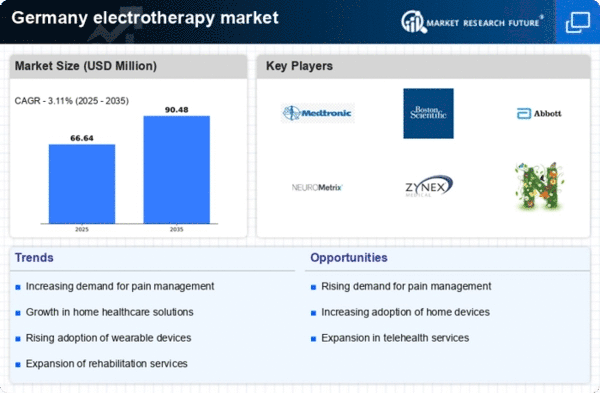
As per Market Research Future analysis, the Germany electrotherapy market Size was estimated at 64.63 USD Million in 2024. The Germany electrotherapy market is projected to grow from 66.64 USD Million in 2025 to 90.48 USD Million by 2035, exhibiting a compound annual growth rate (CAGR) of 3.1% during the forecast period 2025 - 2035

Key Market Trends & Highlights

The Germany electrotherapy market is poised for growth driven by technological advancements and increasing demand for non-invasive treatments.

  • Technological advancements are enhancing the efficacy and accessibility of electrotherapy devices.
  • The largest segment in the market is the pain management segment, while the fastest-growing segment is rehabilitation therapies.
  • Regulatory developments are shaping the landscape, ensuring safety and efficacy in electrotherapy applications.
  • Key market drivers include the increasing prevalence of chronic pain and growing awareness of electrotherapy benefits.

Market Size & Forecast

2024 Market Size 64.63 (USD Million)
2035 Market Size 90.48 (USD Million)
CAGR (2025 - 2035) 3.11%

Major Players

Medtronic (US), Boston Scientific (US), Abbott Laboratories (US), NeuroMetrix (US), Zynex (US), Nuvectra (US), Halyard Health (US), Omron Healthcare (JP), Bioness (US)

Our Impact
Enabled $4.3B Revenue Impact for Fortune 500 and Leading Multinationals
Partnering with 2000+ Global Organizations Each Year
30K+ Citations by Top-Tier Firms in the Industry

Germany Electrotherapy Market Trends

The electrotherapy market in Germany is currently experiencing a notable evolution, driven by advancements in technology and increasing awareness of non-invasive treatment options. The integration of innovative devices and techniques has led to a broader acceptance of electrotherapy among healthcare professionals and patients alike. This shift is further supported by a growing body of clinical evidence that underscores the efficacy of electrotherapy in managing various conditions, including pain relief and rehabilitation. As a result, the market is witnessing a surge in demand for electrotherapy devices, which are being utilized in hospitals, clinics, and even at home. Moreover, regulatory frameworks in Germany are adapting to accommodate the rapid growth of this sector. The emphasis on patient safety and product efficacy is paramount, leading to stringent guidelines for the approval and use of electrotherapy devices. This regulatory environment not only fosters innovation but also ensures that patients receive high-quality care. The increasing prevalence of chronic diseases and the aging population are additional factors contributing to the expansion of the electrotherapy market. As healthcare providers seek effective solutions to improve patient outcomes, the future of this market appears promising, with potential for further growth and diversification.

Technological Advancements

Recent innovations in electrotherapy devices are enhancing treatment efficacy and patient experience. These advancements include portable units and smart technology integration, allowing for more personalized and effective therapy sessions.

Regulatory Developments

The regulatory landscape in Germany is evolving to ensure the safety and effectiveness of electrotherapy devices. Stricter guidelines are being implemented, which may lead to increased consumer confidence and market growth.

Rising Demand for Non-Invasive Treatments

There is a growing preference for non-invasive treatment options among patients and healthcare providers. This trend is likely to drive the adoption of electrotherapy as a viable alternative to traditional pain management methods.

Germany Electrotherapy Market Drivers

Rising Geriatric Population

The demographic shift towards an aging population in Germany is a significant driver for the electrotherapy market. As the elderly population grows, there is an accompanying rise in age-related health issues, including chronic pain and mobility impairments. Electrotherapy offers a non-invasive and effective treatment option for these conditions, making it increasingly relevant for the geriatric demographic. Projections indicate that by 2030, nearly 25% of the German population will be over 65 years old, creating a substantial market opportunity for electrotherapy solutions. This trend suggests that healthcare providers will likely expand their offerings to include electrotherapy as a standard component of care for older adults, thereby enhancing market growth.

Supportive Healthcare Policies

The German government has been implementing supportive healthcare policies that favor the adoption of innovative medical technologies, including electrotherapy. Initiatives aimed at improving patient access to advanced treatment options are likely to bolster the electrotherapy market. For instance, reimbursement policies that cover electrotherapy treatments encourage healthcare providers to incorporate these modalities into their practice. Additionally, the focus on reducing healthcare costs while improving patient outcomes aligns with the benefits offered by electrotherapy. As policies continue to evolve in favor of non-invasive treatment options, the electrotherapy market is expected to experience sustained growth, driven by increased utilization in clinical settings.

Increasing Prevalence of Chronic Pain

The rising incidence of chronic pain conditions in Germany is a pivotal driver for the electrotherapy market. According to recent health statistics, approximately 20% of the German population suffers from chronic pain, leading to a growing demand for effective pain management solutions. Electrotherapy, known for its non-invasive nature, is increasingly being adopted in clinical settings as a viable treatment option. This trend is further supported by healthcare providers seeking to enhance patient outcomes while minimizing reliance on pharmaceuticals. The electrotherapy market is likely to benefit from this increasing prevalence, as more patients and healthcare professionals recognize the potential of electrotherapy devices in alleviating pain and improving quality of life.

Advancements in Electrotherapy Devices

Technological innovations in electrotherapy devices are significantly influencing the electrotherapy market in Germany. The introduction of portable and user-friendly devices has made electrotherapy more accessible to both healthcare professionals and patients. For instance, advancements in transcutaneous electrical nerve stimulation (TENS) units and neuromuscular electrical stimulation (NMES) devices have expanded their applications in rehabilitation and pain management. The market is projected to grow as these devices become more sophisticated, offering enhanced features such as wireless connectivity and personalized treatment settings. This evolution in technology not only improves patient compliance but also encourages healthcare providers to integrate electrotherapy into their treatment protocols, thereby driving market growth.

Growing Awareness of Electrotherapy Benefits

There is a notable increase in awareness regarding the benefits of electrotherapy among both patients and healthcare practitioners in Germany. Educational initiatives and marketing campaigns have played a crucial role in disseminating information about the efficacy of electrotherapy in treating various conditions, including musculoskeletal disorders and neurological issues. As patients become more informed about their treatment options, the demand for electrotherapy solutions is expected to rise. This heightened awareness is likely to stimulate growth in the electrotherapy market, as more individuals seek out these non-invasive alternatives to traditional therapies. Furthermore, healthcare professionals are increasingly recommending electrotherapy as part of comprehensive treatment plans, further solidifying its position in the healthcare landscape.


Market Segment Insights

By Treatment Type: Extracorporeal Shock Wave Therapy (Largest) vs. Transcutaneous Electrical Nerve Stimulation (TENS) Therapy (Fastest-Growing)

In the Germany electrotherapy market, Extracorporeal Shock Wave Therapy currently holds the largest market share, driven by its widespread adoption in treating musculoskeletal pain and conditions. Other key players include Interferential Current Therapy and Magnetic Field Therapy, which also contribute significantly to the market dynamics. Each treatment type offers unique benefits, creating a diverse landscape that caters to various patient needs and preferences. Looking ahead, Transcutaneous Electrical Nerve Stimulation (TENS) Therapy is emerging as the fastest-growing treatment in the segment. This growth is underpinned by increasing consumer awareness and the rising demand for non-invasive pain management solutions. Additionally, technological advancements in TENS devices and favorable reimbursement policies are driving this trend, further solidifying its position within the market.

Extracorporeal Shock Wave Therapy (Dominant) vs. TENS Therapy (Emerging)

Extracorporeal Shock Wave Therapy is recognized as the dominant treatment in the Germany electrotherapy market, primarily due to its effectiveness in addressing chronic pain and its adaptability across various medical specialties. Its non-invasive nature and minimal recovery time make it a preferred choice among healthcare providers and patients alike. In contrast, Transcutaneous Electrical Nerve Stimulation (TENS) Therapy is rapidly gaining traction as an emerging treatment option, especially for patients seeking drug-free pain relief. The ease of use, portability of TENS units, and ability to customize treatment settings have significantly contributed to its popularity, making it a viable choice for both acute and chronic pain management.

By Device Type: Transcutaneous Electrical Neural Stimulator (TENS) (Largest) vs. Electronic Muscle Stimulator (EMS) (Fastest-Growing)

In the Germany electrotherapy market, the distribution of market share among various device types displays a nuanced landscape. Transcutaneous Electrical Neural Stimulator (TENS) products continue to hold the largest market share due to their widespread use in pain management therapies and home care settings. In contrast, the Electronic Muscle Stimulator (EMS) is gaining traction because of its effectiveness in muscle rehabilitation and recovery, capturing a rapidly growing segment of the market. Growth trends within the Germany electrotherapy market indicate a distinct shift towards devices that offer both versatility and enhanced patient outcomes. Factors such as increased acceptance of electrotherapy by healthcare professionals, the rise of healthcare consumerism, and technological advancements in device functionalities are driving the growth of EMS, while TENS remains a staple for consistent market presence. The push for greater patient engagement in self-management therapies is also fueling interest in both device types.

Transcutaneous Electrical Neural Stimulator (Dominant) vs. Electronic Muscle Stimulator (Emerging)

Transcutaneous Electrical Neural Stimulators (TENS) are characterized by their non-invasive technology, which makes them ideal for pain relief applications. They work by delivering electrical impulses through the skin to stimulate nerves, thus alleviating discomfort. TENS devices are widely recommended in various therapeutic settings, contributing to their dominant market position. On the other hand, Electronic Muscle Stimulators (EMS) are emerging rapidly, particularly in sports and rehabilitation sectors. EMS devices aid in muscle contraction and recovery, making them invaluable for athletes and individuals undergoing physical therapy. As the trend towards at-home healthcare grows, the potential for EMS to capture more market share increases, showcasing their versatility and appeal to a broader audience.

By Application: Pain Management (Largest) vs. Neuromuscular Dysfunction (Fastest-Growing)

The Germany electrotherapy market consists of several application segments. Pain Management holds the largest share, driven by the rising prevalence of chronic pain conditions among the aging population. Following closely, Neuromuscular Dysfunction is gaining traction due to increasing awareness and advancements in technology, making it a significant contender in the market. Other segments, such as Tissue Repair and Orthopedics, contribute positively to the market's overall dynamics. Growth trends in the market are largely influenced by the growing demand for non-invasive pain relief therapies and advancements in electrotherapy devices. Increased research and development efforts are paving the way for innovative applications, particularly in areas like Urine and Fecal Incontinence and Acute and Chronic Edema. As healthcare providers continue to adopt electrotherapy for various applications, the market is expected to experience robust growth, especially in the Neuromuscular Dysfunction segment, which is perceived as the fastest-growing area due to technological innovations.

Pain Management (Dominant) vs. Neuromuscular Dysfunction (Emerging)

Pain Management stands as the dominant segment in the Germany electrotherapy market, reflecting its critical role in addressing widespread pain conditions. The growing geriatric population and shifting patient preferences towards non-invasive treatment options bolster its position. In contrast, Neuromuscular Dysfunction is emerging rapidly, driven by technological advancements that enhance treatment efficacy and patient outcomes. This segment is seeing increased adoption among clinicians, emphasizing the need for effective solutions in rehabilitative and neuromuscular care. As awareness spreads regarding the benefits of electrotherapy, both segments are positioned to play vital roles, catering to diverse patient needs and expanding their presence within the healthcare landscape.

By End User: Hospitals & Clinics (Largest) vs. Rehabilitation Centers (Fastest-Growing)

In the Germany electrotherapy market, Hospitals & Clinics represent the largest share among the end user segments, driven by their extensive patient database and advanced healthcare infrastructure. This segment benefits from a steady demand for various electrotherapy devices, making it a significant contributor to the overall market dynamics. On the other hand, Rehabilitation Centers are emerging rapidly, capitalizing on the rising trend of holistic healing and patient recovery programs, thereby increasing their market footprint. The growth trends within these segments showcase a robust trajectory for Rehabilitation Centers, which are increasingly adopting advanced electrotherapy solutions to enhance treatment effectiveness. Factors such as an aging population and increased awareness of physical rehabilitation benefits are driving this growth. Additionally, Hospitals & Clinics continue to innovate, integrating new technologies that improve patient outcomes and operational efficiency, thus maintaining their dominance in the market.

Hospitals & Clinics (Dominant) vs. Rehabilitation Centers (Emerging)

Hospitals & Clinics serve as the dominant force in the Germany electrotherapy market, characterized by their ability to invest in cutting-edge technology and provide a wide array of services to a large patient base. These facilities are often well-equipped with the latest electrotherapy devices, enabling them to treat various conditions effectively. In contrast, Rehabilitation Centers are classified as emerging players in this landscape, driven by an increased focus on rehabilitation therapy and patient-centered care. As these centers adopt innovative electrotherapy solutions, they cater to a niche market that values recovery and rehabilitation, positioning themselves effectively against traditional healthcare institutions.

Get more detailed insights about Germany Electrotherapy Market

Key Players and Competitive Insights

The electrotherapy market in Germany is characterized by a dynamic competitive landscape, driven by technological advancements and an increasing demand for non-invasive treatment options. Key players such as Medtronic (US), Boston Scientific (US), and Abbott Laboratories (US) are at the forefront, focusing on innovation and strategic partnerships to enhance their market presence. Medtronic (US) emphasizes its commitment to research and development, aiming to introduce cutting-edge electrotherapy devices that cater to a diverse range of medical conditions. Meanwhile, Boston Scientific (US) is actively pursuing mergers and acquisitions to expand its product portfolio and strengthen its foothold in the market. Abbott Laboratories (US) is leveraging digital transformation initiatives to improve patient engagement and streamline operations, thereby enhancing its competitive edge.The business tactics employed by these companies reflect a concerted effort to optimize supply chains and localize manufacturing processes. The market appears moderately fragmented, with several players vying for market share, yet the collective influence of major companies shapes the competitive structure significantly. This fragmentation allows for niche players to emerge, while larger firms capitalize on economies of scale and brand recognition.

In October Medtronic (US) announced the launch of a new line of neurostimulation devices designed to treat chronic pain more effectively. This strategic move is likely to enhance Medtronic's market position by addressing a growing patient need for innovative pain management solutions. The introduction of these devices not only showcases Medtronic's commitment to innovation but also aligns with the broader trend of increasing demand for advanced therapeutic options in the electrotherapy sector.

In September Boston Scientific (US) completed the acquisition of a smaller electrotherapy firm specializing in neuromodulation technologies. This acquisition is expected to bolster Boston Scientific's capabilities in the neuromodulation space, allowing for a more comprehensive product offering. The strategic importance of this move lies in its potential to accelerate product development timelines and enhance market competitiveness through an expanded technological portfolio.

In August Abbott Laboratories (US) launched a digital health platform aimed at improving patient monitoring and engagement for those undergoing electrotherapy treatments. This initiative reflects a growing trend towards digitalization in healthcare, positioning Abbott as a leader in integrating technology with patient care. The strategic importance of this platform lies in its ability to provide real-time data analytics, thereby enhancing treatment outcomes and patient satisfaction.

As of November current trends in the electrotherapy market indicate a strong focus on digitalization, sustainability, and the integration of artificial intelligence (AI) into treatment protocols. Strategic alliances among key players are increasingly shaping the competitive landscape, fostering innovation and collaboration. Looking ahead, it appears that competitive differentiation will evolve from traditional price-based competition to a focus on technological innovation, reliability in supply chains, and enhanced patient outcomes. This shift underscores the importance of adaptability and forward-thinking strategies in maintaining a competitive edge in the electrotherapy market.

Key Companies in the Germany Electrotherapy Market include

Industry Developments

Recent developments in the Germany Electrotherapy Market include significant growth driven by increasing demand for pain management solutions and advancements in technology. Companies such as Stimwave and Zynex have been expanding their product offerings, particularly in wearable electrotherapy devices, to cater to a growing patient base seeking non-invasive treatment options. Notably, DJO Global announced in September 2023 the introduction of a new line of therapeutic devices that utilize advanced electrotherapy techniques, which is expected to enhance patient outcomes and satisfaction.

In terms of mergers and acquisitions, EnrafNonius and Physiotech are reportedly in discussions for a potential merger, which could streamline operations and improve market positioning, though no final agreement has been disclosed as of October 2023. The market valuation of predominant players like Medtronic and BTL Industries is on the rise, attributed to increased healthcare investments and partnerships aimed at expanding R&D operations. Over the past few years, initiatives by the German government to promote innovative healthcare solutions have further stimulated this sector, emphasizing the significance of electrotherapy in managing chronic pain and rehabilitation.

Future Outlook

Germany Electrotherapy Market Future Outlook

The Electrotherapy Market in Germany is projected to grow at a 3.11% CAGR from 2025 to 2035, driven by technological advancements and increasing healthcare demand.

New opportunities lie in:

  • Development of portable electrotherapy devices for home use
  • Partnerships with rehabilitation centers for integrated therapy solutions
  • Expansion into telehealth platforms for remote electrotherapy services

By 2035, the market is expected to achieve robust growth and enhanced service offerings.

Market Segmentation

Germany Electrotherapy Market End User Outlook

  • Hospitals & Clinics
  • Rehabilitation Centers
  • Long Term Care Centers

Germany Electrotherapy Market Application Outlook

  • Pain Management
  • Neuromuscular Dysfunction
  • Urine and Fecal Incontinence
  • Acute and Chronic Edema
  • Tissue Repair
  • Iontophoresis
  • Orthopedics
  • Cardiology

Germany Electrotherapy Market Device Type Outlook

  • Transcutaneous Electrical Neural Stimulator (TENS)
  • Electronic Muscle Stimulator (EMS)
  • Interferential Stimulator (IF)
  • High Voltage Pulsed Galvanic Stimulator (HVPGS)

Germany Electrotherapy Market Treatment Type Outlook

  • Extracorporeal Shock Wave Therapy
  • Interferential Current Therapy
  • Magnetic Field Therapy
  • Ultrasound Therapy
  • Transcutaneous Electrical Nerve Stimulation (TENS) Therapy
  • Micro-Current Therapy

Report Scope

MARKET SIZE 2024 64.63(USD Million)
MARKET SIZE 2025 66.64(USD Million)
MARKET SIZE 2035 90.48(USD Million)
COMPOUND ANNUAL GROWTH RATE (CAGR) 3.11% (2025 - 2035)
REPORT COVERAGE Revenue Forecast, Competitive Landscape, Growth Factors, and Trends
BASE YEAR 2024
Market Forecast Period 2025 - 2035
Historical Data 2019 - 2024
Market Forecast Units USD Million
Key Companies Profiled Medtronic (US), Boston Scientific (US), Abbott Laboratories (US), NeuroMetrix (US), Zynex (US), Nuvectra (US), Halyard Health (US), Omron Healthcare (JP), Bioness (US)
Segments Covered Treatment Type, Device Type, Application, End User
Key Market Opportunities Integration of advanced wearable devices enhances patient engagement in the electrotherapy market.
Key Market Dynamics Rising demand for non-invasive pain management solutions drives innovation in the electrotherapy market.
Countries Covered Germany
Leave a Comment

FAQs

What is the current market value of the Germany Electrotherapy Market?

In 2024, the Germany Electrotherapy Market is expected to be valued at 42.0 million USD.

What is the projected market value for the Germany Electrotherapy Market by 2035?

By 2035, the Germany Electrotherapy Market is anticipated to reach a value of 65.0 million USD.

What is the expected compound annual growth rate (CAGR) for the Germany Electrotherapy Market from 2025 to 2035?

The market is projected to grow at a CAGR of 4.05% during the forecast period from 2025 to 2035.

Who are the key players in the Germany Electrotherapy Market?

Major players in the market include Stimwave, DJO Global, Medtronic, and Omron Healthcare.

Which segment holds the largest market share in the Germany Electrotherapy Market?

The Transcutaneous Electrical Nerve Stimulation (TENS) Therapy segment is expected to lead the market with a value of 11.0 million USD in 2024.

What is the projected market size for Extracorporeal Shock Wave Therapy in 2035?

Extracorporeal Shock Wave Therapy is expected to reach a market value of 16.0 million USD by 2035.

How will the Interferential Current Therapy (IC) segment perform by 2035?

The Interferential Current Therapy (IC) segment is projected to grow to a market value of 12.5 million USD by 2035.

What are the anticipated market values for Magnetic Field Therapy and Ultrasound Therapy by 2035?

By 2035, Magnetic Field Therapy is expected to reach 9.5 million USD, while Ultrasound Therapy will attain 11.0 million USD.

What growth opportunities exist within the Germany Electrotherapy Market?

The market presents growth opportunities due to the rising demand for pain management and rehabilitation solutions.

What challenges could the Germany Electrotherapy Market face in the future?

Future challenges may include regulatory hurdles and competition from alternative therapies.

Download Free Sample

Kindly complete the form below to receive a free sample of this Report

Compare Licence

×
Features License Type
Single User Multiuser License Enterprise User
Price $4,950 $5,950 $7,250
Maximum User Access Limit 1 User Upto 10 Users Unrestricted Access Throughout the Organization
Free Customization
Direct Access to Analyst
Deliverable Format
Platform Access
Discount on Next Purchase 10% 15% 15%
Printable Versions