×
Request Free Sample ×

Kindly complete the form below to receive a free sample of this Report

* Please use a valid business email

Leading companies partner with us for data-driven Insights

clients tt-cursor
Hero Background

Genotyping Market

ID: MRFR/LS/5172-HCR
85 Pages
Kinjoll Dey
February 2026

Genotyping Market Research Report Information By Technology (Sequencing, Capillary Electrophoresis, PCR, Others), By Product (Reagents and Kits, Instruments, Services), By Application (Diagnostics, Drug Discovery and Development, Academic Research, Research and Development Centers), By End Users (Hospitals, Diagnostic Centers, Academic Institutes, Research and Development Centers), And By Region (North America, Europe, Asia-Pacific, And Rest Of The World) - Growth & Industry Forecast 2025 To 2035

Share:
Download PDF ×

We do not share your information with anyone. However, we may send you emails based on your report interest from time to time. You may contact us at any time to opt-out.

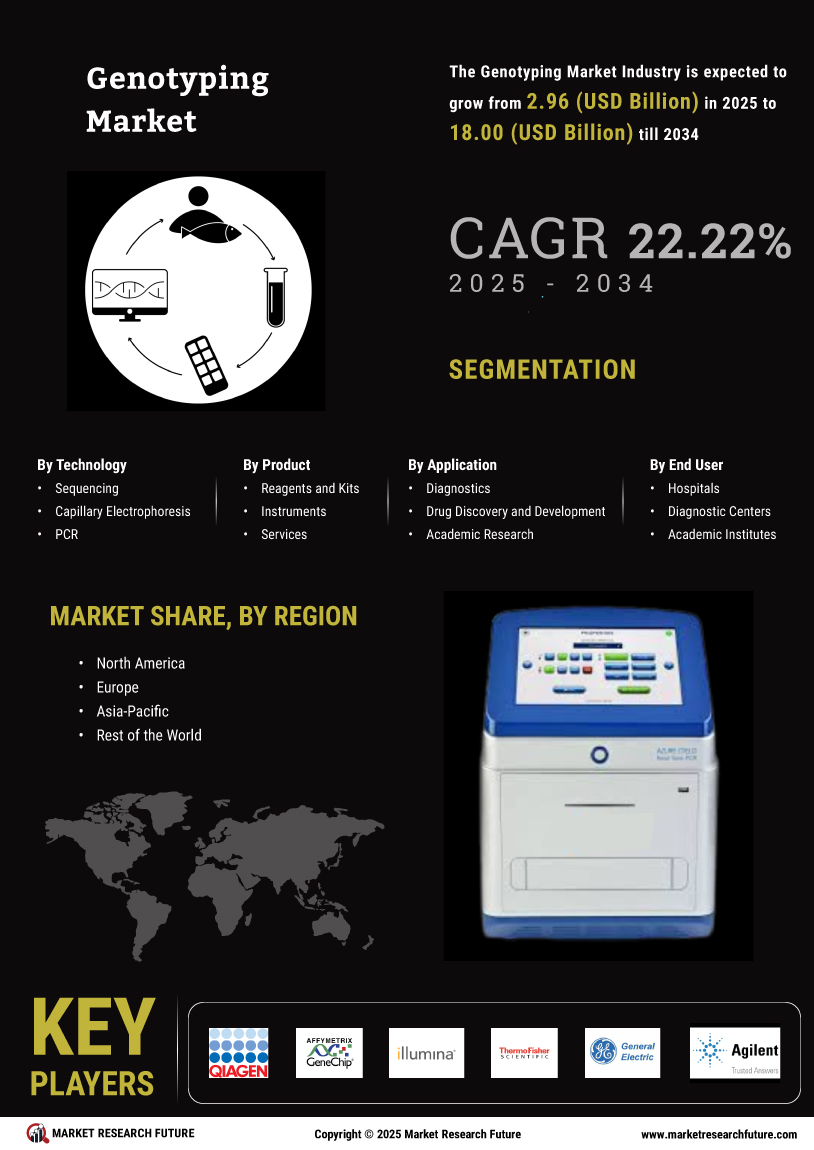
Genotyping Market Infographic
Purchase Options

Genotyping Market Summary

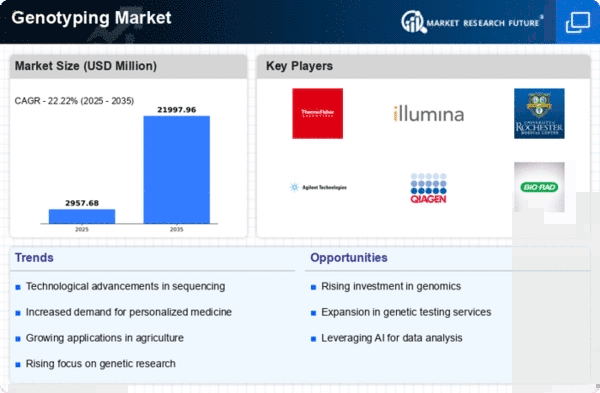
As per MRFR analysis, the Genotyping Market Size was estimated at 2419.96 USD Million in 2024. The Genotyping industry is projected to grow from 2957.68 USD Million in 2025 to 21997.96 USD Million by 2035, exhibiting a compound annual growth rate (CAGR) of 22.22 during the forecast period 2025 - 2035.

Key Market Trends & Highlights

The Genotyping Market is poised for substantial growth driven by technological advancements and increasing applications across various sectors.

  • North America remains the largest market for genotyping, driven by robust healthcare infrastructure and research initiatives.
  • Asia-Pacific is emerging as the fastest-growing region, fueled by rising investments in genomic research and personalized medicine.
  • Clinical diagnostics continues to dominate the market, while agricultural applications are rapidly gaining traction due to their potential in enhancing crop yields.
  • The rising demand for genetic testing and advancements in genotyping technologies are key drivers propelling market expansion.

Market Size & Forecast

2024 Market Size 2419.96 (USD Million)
2035 Market Size 21997.96 (USD Million)
CAGR (2025 - 2035) 22.22%

Major Players

Thermo Fisher Scientific (US), Illumina (US), Roche (CH), Agilent Technologies (US), Qiagen (DE), Bio-Rad Laboratories (US), PerkinElmer (US), BGI Genomics (CN), Genomatix (DE)

Our Impact
Enabled $4.3B Revenue Impact for Fortune 500 and Leading Multinationals
Partnering with 2000+ Global Organizations Each Year
30K+ Citations by Top-Tier Firms in the Industry

Genotyping Market Trends

The Genotyping Market is currently experiencing a dynamic evolution, driven by advancements in technology and increasing demand for personalized medicine. The integration of high-throughput sequencing and microarray technologies has revolutionized the way genetic information is analyzed, enabling researchers and healthcare professionals to obtain precise insights into genetic variations. This shift towards more accurate and efficient genotyping methods is fostering a greater understanding of genetic predispositions to diseases, thereby enhancing the development of targeted therapies. Furthermore, the growing emphasis on preventive healthcare is propelling the adoption of genotyping in various applications, including pharmacogenomics, oncology, and reproductive health. In addition, the Genotyping Market is witnessing a surge in collaborations between academic institutions and biotechnology companies, which appears to be facilitating innovation and expanding the scope of genetic research. As regulatory frameworks evolve to accommodate new technologies, the market is likely to see an influx of novel products and services aimed at improving genetic testing and analysis. Overall, the Genotyping Market is poised for substantial growth, driven by technological advancements and an increasing focus on personalized healthcare solutions.

Technological Advancements

The Genotyping Market is significantly influenced by rapid technological innovations. The emergence of next-generation sequencing and CRISPR technology is enhancing the accuracy and efficiency of genetic analysis. These advancements are likely to streamline workflows and reduce costs, making genotyping more accessible to a broader range of applications.

Personalized Medicine

There is a growing trend towards personalized medicine within the Genotyping Market. As healthcare shifts towards tailored treatment plans based on individual genetic profiles, the demand for genotyping services is expected to rise. This trend underscores the importance of understanding genetic variations in developing effective therapies.

Collaborative Research Initiatives

Collaborative efforts between research institutions and industry players are becoming increasingly prevalent in the Genotyping Market. These partnerships are fostering innovation and accelerating the development of new genotyping technologies and applications, which may lead to enhanced diagnostic capabilities and improved patient outcomes.

Genotyping Market Drivers

Rising Demand for Personalized Medicine

The Global Genotyping Market Industry experiences a notable surge in demand for personalized medicine, driven by advancements in genomic research. As healthcare shifts towards tailored treatments, genotyping plays a crucial role in identifying genetic variations that influence drug responses. This trend is exemplified by the increasing integration of genotyping in pharmacogenomics, which enhances therapeutic efficacy. The market is projected to reach 2.42 USD Billion in 2024, reflecting the growing recognition of personalized approaches in healthcare. By 2035, the market could expand to 19.6 USD Billion, indicating a robust CAGR of 20.95% from 2025 to 2035, as more healthcare providers adopt these technologies.

Increasing Prevalence of Genetic Disorders

The Global Genotyping Market Industry is significantly influenced by the rising prevalence of genetic disorders, which necessitates efficient diagnostic tools. Conditions such as cystic fibrosis, sickle cell anemia, and various hereditary cancers underscore the importance of early detection and intervention. Genotyping Market provides critical insights into genetic predispositions, enabling healthcare professionals to implement preventive measures and personalized treatment plans. The growing awareness of genetic testing among patients and healthcare providers is likely to drive demand for genotyping services. As the global population ages and the incidence of genetic disorders rises, the market is poised for substantial growth.

Growing Awareness and Adoption of Genetic Testing

The Global Genotyping Market Industry is witnessing a rise in awareness and adoption of genetic testing among consumers and healthcare providers. Educational campaigns and the proliferation of information regarding the benefits of genetic testing contribute to this trend. Patients are increasingly seeking genetic tests for various purposes, including ancestry tracing, disease risk assessment, and reproductive health. This heightened awareness is driving demand for genotyping services, as individuals recognize the potential for informed health decisions. As the market evolves, the integration of genetic testing into routine healthcare practices is anticipated to further stimulate growth, aligning with the projected market expansion.

Technological Advancements in Genotyping Techniques

Technological innovations significantly impact the Global Genotyping Market Industry, enhancing the accuracy and efficiency of genotyping processes. The advent of next-generation sequencing (NGS) and CRISPR technologies has revolutionized genetic analysis, allowing for high-throughput and cost-effective genotyping. These advancements facilitate large-scale studies and clinical applications, driving market growth. For instance, NGS enables researchers to analyze entire genomes rapidly, which is essential for understanding complex diseases. As these technologies continue to evolve, they are expected to attract substantial investments, further propelling the market forward and contributing to the anticipated growth trajectory.

Government Initiatives and Funding for Genomic Research

Government initiatives and funding play a pivotal role in shaping the Global Genotyping Market Industry. Numerous countries are investing in genomic research to enhance public health outcomes and foster innovation. For example, national genomic initiatives aim to sequence large populations to identify genetic variants associated with diseases. These programs not only facilitate research but also promote the development of new genotyping technologies. Increased funding from governmental bodies is expected to accelerate advancements in the field, thereby expanding the market. As public health policies increasingly prioritize genomic medicine, the market is likely to benefit from sustained governmental support.

Market Segment Insights

By Application: Clinical Diagnostics (Largest) vs. Agricultural (Fastest-Growing)

The Genotyping Market showcases a diverse application landscape, with Clinical Diagnostics holding the largest market share among various segments. Pharmaceutical applications follow closely, emphasizing drug development and personalized medicine strategies. Agricultural applications, while currently smaller, are rapidly gaining traction as advancements in genetic research enhance crop yields and resistance to pests. Forensic and Research applications also contribute significantly, driven by the need for genetic analysis in law enforcement and scientific inquiries respectively.

Clinical Diagnostics: Dominant vs. Agricultural: Emerging

Clinical Diagnostics stands out as the dominant application in the Genotyping Market, primarily due to its critical role in disease identification, treatment monitoring, and personalized medicine strategies. The segment benefits from established technologies and widespread adoption by healthcare providers. On the other hand, the Agricultural application is emerging rapidly, fueled by innovations in genetic engineering and biotechnology. It focuses on enhancing crop traits, improving livestock health, and ensuring food security through genetic insights. As agricultural practices increasingly adopt genotyping methods, this segment is projected to experience significant growth, driven by the global demand for sustainable and efficient farming solutions.

By Technology: PCR (Largest) vs. Next Generation Sequencing (Fastest-Growing)

In the Genotyping Market, the Polymerase Chain Reaction (PCR) technology holds the largest market share, thanks to its widespread application in various genetic analysis and diagnostic procedures. PCR's efficiency and reliability make it a preferred method among laboratories for amplifying DNA segments, while microarray and SNP genotyping technologies also contribute to substantial shares, reflecting their established presence in the genetic testing domain. Next Generation Sequencing (NGS) is quickly becoming the fastest-growing segment within the genotyping market. Its ability to sequence large amounts of genetic material rapidly and cost-effectively is driving its adoption in research and clinical settings. The surge in personalized medicine and genomic research is further propelling the demand for NGS, positioning it as a transformative technology in the field of genomics.

PCR (Dominant) vs. NGS (Emerging)

The Polymerase Chain Reaction (PCR) technology is a dominant force in the genotyping market, favored for its precision and speed in amplifying specific DNA sequences. It has enabled advancements in various applications, including diagnostics and research, making it a foundational technology in molecular biology. While it remains a standard, it faces increasing competition from Next Generation Sequencing (NGS), which is on the rise due to its scalability and ability to generate vast amounts of genomic data directly. NGS is becoming increasingly crucial in clinical settings, enabling comprehensive genetic analysis for personalized medicine applications. As researchers seek more efficient and cost-effective solutions, the appeal of NGS continues to grow, positioning it as an emerging leader in genotyping.

By End Use: Biotechnology Companies (Largest) vs. Clinical Laboratories (Fastest-Growing)

The genotyping market's end use segment is diverse, with biotechnology companies taking the lead in market share, driven by the high demand for genetic analysis in various applications. Pharmaceutical companies also hold significant portions of the market, as they utilize genotyping technologies for drug development and personalized medicine approaches. Research institutions play a critical role in advancing genotyping technologies, while agricultural companies utilize these methods in crop improvement, further expanding their market presence. Clinical laboratories, though smaller in market share, contribute notably to the market dynamics with their growth potential.

Biotechnology Companies (Dominant) vs. Clinical Laboratories (Emerging)

Biotechnology companies dominate the genotyping market by leveraging advanced technologies for complex genetic analyses. Their widespread application of genotyping in therapeutics, gene therapy, and diagnostics ensures a substantial market presence. Meanwhile, clinical laboratories represent an emerging sector due to increasing demands for genetic testing and personalized medicine. They are expanding rapidly by adopting new technologies and workflows that enhance efficiency and turnaround time for genetic test results. Both segments showcase complementary strengths, with biotech firms pushing innovation in health applications while clinical labs focus on practical implementation and accessibility of genetic diagnostics.

Get more detailed insights about Genotyping Market

Regional Insights

North America : Market Leader in Genotyping

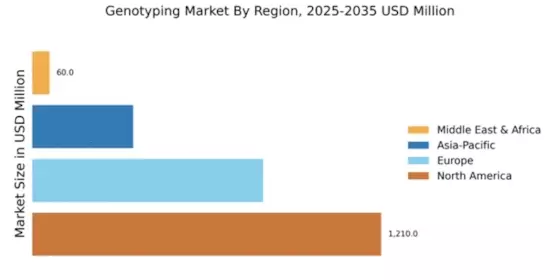
North America continues to lead the genotyping market, holding a significant share of 1210.0M in 2024. The region's growth is driven by advancements in biotechnology, increasing demand for personalized medicine, and supportive regulatory frameworks. The presence of major players like Thermo Fisher Scientific and Illumina further fuels market expansion, as they innovate and enhance product offerings to meet rising consumer needs. The United States is the primary contributor to this market, supported by a robust healthcare infrastructure and substantial investments in research and development. Canada also plays a vital role, with increasing collaborations between academic institutions and industry leaders. The competitive landscape is characterized by strategic partnerships and mergers, ensuring that North America remains at the forefront of genotyping technologies.

Europe : Emerging Market with Growth Potential

Europe's genotyping market is poised for growth, with a market size of 800.0M in 2024. The region benefits from a strong emphasis on research and development, particularly in genomics and personalized medicine. Regulatory support from bodies like the European Medicines Agency (EMA) encourages innovation and ensures compliance, driving demand for advanced genotyping solutions across various sectors, including healthcare and agriculture. Leading countries such as Germany, the UK, and France are at the forefront of this market, hosting numerous key players like Qiagen and Roche. The competitive landscape is marked by collaborations between biotech firms and academic institutions, fostering innovation. As Europe continues to invest in genomic research, the market is expected to expand, providing opportunities for both established and emerging companies.

Asia-Pacific : Rapidly Growing Genotyping Sector

The Asia-Pacific region is witnessing a rapid expansion in the genotyping market, with a size of 350.0M in 2024. This growth is driven by increasing investments in healthcare infrastructure, rising awareness of genetic testing, and government initiatives promoting biotechnology. Countries like China and India are leading this trend, supported by favorable regulations and a growing population seeking personalized healthcare solutions. China stands out as a major player, with companies like BGI Genomics leading the charge in innovation and technology. India is also emerging as a significant market, with a focus on affordable genetic testing solutions. The competitive landscape is evolving, with both local and international players vying for market share, indicating a promising future for the genotyping sector in this region.

Middle East and Africa : Untapped Market with Potential

The Middle East and Africa (MEA) region represents an untapped market for genotyping, with a size of 59.96M in 2024. The growth in this region is primarily driven by increasing healthcare investments and a rising demand for genetic testing. Governments are beginning to recognize the importance of genomics in healthcare, leading to supportive policies and initiatives aimed at enhancing biotechnology capabilities. Countries like South Africa and the UAE are emerging as key players in the genotyping landscape, with growing interest from both local and international companies. The competitive environment is characterized by collaborations and partnerships aimed at improving access to genetic testing services. As awareness of the benefits of genotyping increases, the MEA region is expected to see significant growth in the coming years.

Genotyping Market Regional Image

Key Players and Competitive Insights

The Genotyping Market is characterized by a dynamic competitive landscape, driven by advancements in technology, increasing demand for personalized medicine, and the growing prevalence of genetic disorders. Key players such as Thermo Fisher Scientific (US), Illumina (US), and Roche (CH) are at the forefront, each adopting distinct strategies to enhance their market positioning. Thermo Fisher Scientific (US) focuses on innovation through the development of advanced genotyping platforms, while Illumina (US) emphasizes partnerships to expand its product offerings and reach. Roche (CH) is strategically investing in digital transformation to streamline operations and improve customer engagement, collectively shaping a competitive environment that prioritizes technological advancement and customer-centric solutions.
In terms of business tactics, companies are increasingly localizing manufacturing to reduce costs and enhance supply chain efficiency. The Genotyping Market appears moderately fragmented, with a mix of established players and emerging companies. The collective influence of these key players is significant, as they drive innovation and set industry standards, thereby impacting market dynamics and competitive strategies.
In November 2025, Illumina (US) announced a strategic partnership with a leading biotechnology firm to co-develop next-generation sequencing technologies. This collaboration is expected to enhance Illumina's capabilities in precision medicine, allowing for more accurate and efficient genotyping solutions. The strategic importance of this partnership lies in its potential to accelerate product development and expand market reach, positioning Illumina as a leader in the rapidly evolving landscape of genomic technologies.
In October 2025, Roche (CH) launched a new genotyping assay that integrates artificial intelligence (AI) to improve data analysis and interpretation. This innovative approach not only enhances the accuracy of genotyping results but also streamlines workflows for laboratories. The introduction of AI into Roche's offerings signifies a critical shift towards integrating advanced technologies in genotyping, which could redefine operational efficiencies and customer satisfaction in the market.
In September 2025, Thermo Fisher Scientific (US) completed the acquisition of a smaller genomics company, thereby expanding its portfolio of genotyping solutions. This acquisition is strategically significant as it allows Thermo Fisher to leverage new technologies and expertise, enhancing its competitive edge in the market. The move reflects a broader trend of consolidation within the industry, as companies seek to strengthen their positions through strategic acquisitions and broaden their technological capabilities.
As of December 2025, the Genotyping Market is witnessing trends such as digitalization, sustainability, and the integration of AI technologies. Strategic alliances are increasingly shaping the competitive landscape, enabling companies to pool resources and expertise to drive innovation. Looking ahead, competitive differentiation is likely to evolve, with a shift from price-based competition to a focus on innovation, technological advancements, and supply chain reliability. This transition underscores the importance of agility and responsiveness in meeting the demands of a rapidly changing market.

Key Companies in the Genotyping Market include

Industry Developments

  • Q2 2024: Illumina Launches NextSeq 2000Dx Sequencing System for Clinical Genotyping Market Illumina announced the commercial launch of its NextSeq 2000Dx, a clinical-grade sequencing platform designed to expand genotyping capabilities for diagnostic laboratories, following CE-IVD marking.
  • Q2 2024: Thermo Fisher Scientific Expands Genotyping Market Portfolio with New Applied Biosystems QuantStudio 7 Pro Dx Real-Time PCR System Thermo Fisher Scientific introduced the QuantStudio 7 Pro Dx Real-Time PCR System, targeting clinical laboratories for high-throughput genotyping applications and regulatory compliance.
  • Q2 2024: QIAGEN Acquires Verogen to Strengthen Genotyping Market Solutions for Forensics QIAGEN completed the acquisition of Verogen, a leader in next-generation sequencing for forensic genotyping, aiming to expand its portfolio in human identification and genetic analysis.
  • Q3 2024: 23andMe Announces Strategic Partnership with AstraZeneca for Pharmacogenomic Genotyping Market 23andMe entered a multi-year partnership with AstraZeneca to leverage its genotyping platform for pharmacogenomic research, focusing on drug response and personalized medicine.
  • Q3 2024: Genetron Health Receives FDA Clearance for Genotyping Market-Based Cancer Diagnostic Panel Genetron Health secured FDA clearance for its new genotyping-based panel designed to detect actionable mutations in solid tumors, expanding its U.S. clinical diagnostics footprint.
  • Q3 2024: Bio-Rad Laboratories Opens New Genotyping Market Assay Manufacturing Facility in California Bio-Rad Laboratories inaugurated a state-of-the-art facility dedicated to the production of genotyping assay kits, aiming to meet rising global demand for precision medicine tools.
  • Q4 2024: Pacific Biosciences Raises $150 Million in Public Offering to Accelerate Genotyping Market Technology Development Pacific Biosciences completed a $150 million public offering, with proceeds earmarked for advancing its long-read genotyping platforms and expanding commercial operations.
  • Q4 2024: Agilent Technologies Appoints New VP of Genomics Division to Drive Genotyping Market Innovation Agilent Technologies announced the appointment of Dr. Lisa Chen as Vice President of its Genomics Division, tasking her with leading genotyping product development and strategic partnerships.
  • Q1 2025: Thermo Fisher Scientific Wins Major Genotyping Market Contract with UK Biobank Thermo Fisher Scientific secured a multi-year contract to supply genotyping platforms and reagents to UK Biobank, supporting large-scale population genomics research.
  • Q1 2025: Genomics Startup Helix Raises $80 Million Series C to Expand Genotyping Market Services Helix, a U.S.-based genomics startup, closed an $80 million Series C funding round to scale its direct-to-consumer and clinical genotyping offerings.
  • Q2 2025: Roche Launches New High-Throughput Genotyping Market Platform for Clinical Labs Roche introduced a high-throughput genotyping system designed for clinical laboratories, enabling faster and more accurate genetic variant detection for personalized medicine.
  • Q2 2025: Illumina and BGI Announce Collaboration to Develop Advanced Genotyping Market Solutions for Asia-Pacific Market Illumina and BGI entered a strategic collaboration to co-develop genotyping technologies tailored for the Asia-Pacific region, focusing on population-scale genomics and clinical diagnostics.

Future Outlook

Genotyping Market Future Outlook

The Genotyping Market is projected to grow at a 22.22% CAGR from 2025 to 2035, driven by advancements in technology, increasing demand for personalized medicine, and rising genetic research funding.

New opportunities lie in:

  • Development of portable genotyping devices for field research applications.
  • Expansion of genotyping services in emerging markets to capture new customer segments.
  • Integration of AI-driven analytics for enhanced data interpretation and decision-making.

By 2035, the Genotyping Market is expected to achieve substantial growth, solidifying its role in healthcare and research.

Market Segmentation

Genotyping Market End Use Outlook

  • Biotechnology Companies
  • Pharmaceutical Companies
  • Research Institutions
  • Agricultural Companies
  • Clinical Laboratories

Genotyping Market Technology Outlook

  • Polymerase Chain Reaction
  • Next Generation Sequencing
  • Microarray
  • SNP Genotyping
  • Whole Genome Sequencing

Genotyping Market Application Outlook

  • Pharmaceutical
  • Agricultural
  • Clinical Diagnostics
  • Forensic
  • Research

Report Scope

MARKET SIZE 2024 2419.96(USD Million)
MARKET SIZE 2025 2957.68(USD Million)
MARKET SIZE 2035 21997.96(USD Million)
COMPOUND ANNUAL GROWTH RATE (CAGR) 22.22% (2025 - 2035)
REPORT COVERAGE Revenue Forecast, Competitive Landscape, Growth Factors, and Trends
BASE YEAR 2024
Market Forecast Period 2025 - 2035
Historical Data 2019 - 2024
Market Forecast Units USD Million
Key Companies Profiled Thermo Fisher Scientific (US), Illumina (US), Roche (CH), Agilent Technologies (US), Qiagen (DE), Bio-Rad Laboratories (US), PerkinElmer (US), BGI Genomics (CN), Genomatix (DE)
Segments Covered Application, Technology, End Use
Key Market Opportunities Advancements in personalized medicine drive demand for innovative solutions in the Genotyping Market.
Key Market Dynamics Technological advancements and regulatory changes drive innovation and competition in the genotyping market.
Countries Covered North America, Europe, APAC, South America, MEA

Market Highlights

Author
Kinjoll Dey
Research Analyst Level I

He is an extremely curious individual currently working in Healthcare and Medical Devices Domain. Kinjoll is comfortably versed in data centric research backed by healthcare educational background. He leverages extensive data mining and analytics tools such as Primary and Secondary Research, Statistical Analysis, Machine Learning, Data Modelling. His key role also involves Technical Sales Support, Client Interaction and Project management within the Healthcare team. Lastly, he showcases extensive affinity towards learning new skills and remain fascinated in implementing them.

Leave a Comment

FAQs

What is the projected growth of the Genotyping market?

The Genotyping market is the expected increase in total market value of 22 USD billion over a defined forecast period 2025–2035. It is driven by factors such as demand trends, technological advances, regulatory changes, and geographic expansion.

What is the size of the Genotyping market?

Genotyping market size was valued at approximately 2.42 billion USD in 2024. This figure will reach 22 billion USD covering all regions (America, Europe, Asia, MEA and ROW), focusing its segments / services / distribution channels till 2035.

What is the CAGR of the Genotyping market?

Genotyping market is expected to grow at a CAGR of 22.22% between 2025 and 2035.

How much will the Genotyping market be worth by 2035?

Genotyping market is expected to be worth of 22 billion USD, reflecting growth driven by usage, technology and global demands by the end of 2035.

How will the Genotyping market perform over the next 10 years?

Over the next 10 years the Genotyping market is expected to shift from usd billion 2.42 to 22 billion USD, led by adoption of advanced tech, demographic trends, regulatory approvals, with potential headwinds from 2025 to 2035.

Which Region held the largest market share in the genotyping market?

North America had the largest share of the market.

Download Free Sample

Kindly complete the form below to receive a free sample of this Report

Compare Licence

×
Features License Type
Single User Multiuser License Enterprise User
Price $4,950 $5,950 $7,250
Maximum User Access Limit 1 User Upto 10 Users Unrestricted Access Throughout the Organization
Free Customization
Direct Access to Analyst
Deliverable Format
Platform Access
Discount on Next Purchase 10% 15% 15%
Printable Versions