Rising Military Expenditure
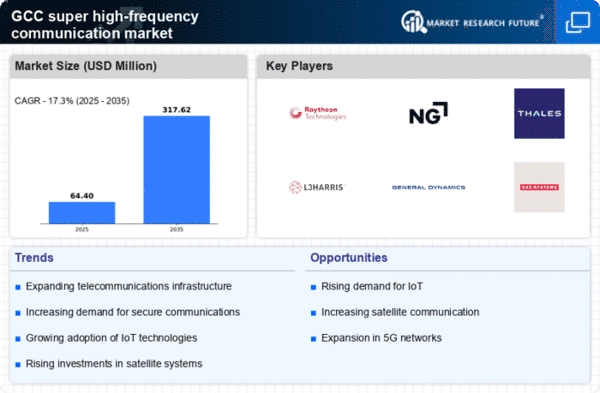
The super high-frequency-communication market is experiencing a notable boost due to the increasing military expenditure across GCC nations. Governments are investing heavily in advanced communication technologies to enhance defense capabilities. For instance, military budgets in the region have seen an average increase of 5% annually, with a significant portion allocated to communication systems. This trend indicates a growing recognition of the importance of secure and efficient communication in military operations. As a result, the demand for super high-frequency communication systems is likely to rise, driven by the need for reliable and high-speed communication channels in defense applications.
Emerging Cybersecurity Concerns
The super high-frequency-communication market is influenced by the rising concerns regarding cybersecurity in the GCC. As communication systems become more advanced, the potential for cyber threats increases, prompting organizations to seek secure communication solutions. The cybersecurity market in the region is expected to grow by 12% annually, with a focus on protecting sensitive data transmitted through super high-frequency communication channels. This heightened awareness of cybersecurity risks is likely to drive demand for advanced communication technologies that offer enhanced security features, thereby benefiting the super high-frequency-communication market.
Growing Demand for IoT Applications
The super high-frequency-communication market is experiencing growth driven by the increasing demand for Internet of Things (IoT) applications in the GCC. As industries adopt IoT technologies for automation and data collection, the need for reliable communication systems becomes paramount. The market for IoT in the region is projected to reach $15 billion by 2025, with super high-frequency communication systems playing a crucial role in ensuring seamless connectivity. This trend suggests that as more devices become interconnected, the demand for high-frequency communication solutions will likely rise, further propelling market growth.
Increased Focus on Smart City Initiatives
The super high-frequency-communication market is likely to gain traction due to the rising focus on smart city initiatives in the GCC. Governments are investing in smart infrastructure to improve urban living standards and enhance public services. The integration of super high-frequency communication systems is essential for the seamless operation of smart city technologies, such as traffic management and public safety systems. With an estimated investment of $20 billion in smart city projects by 2030, the demand for advanced communication solutions is expected to surge. This trend indicates a growing recognition of the role of super high-frequency communication in facilitating efficient urban management.
Expansion of Telecommunications Infrastructure
The super high-frequency-communication market is benefiting from the ongoing expansion of telecommunications infrastructure in the GCC. Governments are prioritizing the development of robust communication networks to support economic growth and digital transformation. Investments in fiber optic networks and satellite communication systems are projected to reach $10 billion by 2026. This expansion is expected to enhance connectivity and facilitate the deployment of super high-frequency communication technologies. As businesses and consumers demand faster and more reliable communication services, the market is poised for growth, driven by the need for advanced communication solutions.