×
Request Free Sample ×

Kindly complete the form below to receive a free sample of this Report

* Please use a valid business email

Leading companies partner with us for data-driven Insights

clients tt-cursor
Hero Background

GCC Stoma Ostomy Care Market

ID: MRFR/HC/47935-HCR
200 Pages
Rahul Gotadki
February 2026

GCC Stoma Ostomy Care Market Research Report By Product Type (Ostomy Bags, Skin Barriers, Pastes and Powders, Other Accessories), By Application (Colostomy, Ileostomy, Urostomy), By End User (Hospitals, Homecare, Ambulatory Surgical Centers) and By Distribution Channel (Online Pharmacy, Retail Pharmacy, Hospital Pharmacies) - Growth & Industry Forecast 2025 To 2035

Share:
Download PDF ×

We do not share your information with anyone. However, we may send you emails based on your report interest from time to time. You may contact us at any time to opt-out.

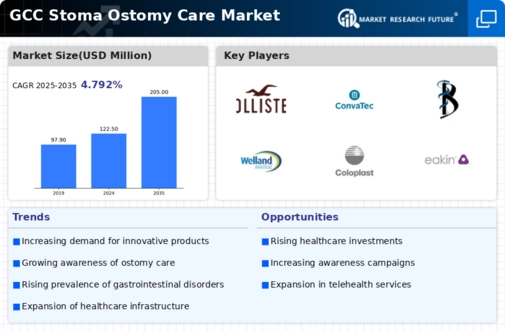
GCC Stoma Ostomy Care Market Infographic
Purchase Options

GCC Stoma Ostomy Care Market Summary

As per analysis, the GCC stoma ostomy care market is projected to grow from USD 145.2 Million in 2024 to USD 209.1 Million by 2035, exhibiting a compound annual growth rate (CAGR) of 3.37% during the forecast period (2025 - 2035).

Key Market Trends & Highlights

The GCC stoma ostomy care market is poised for growth driven by innovation and increasing patient awareness.

  • The colostomy segment remains the largest, reflecting a stable demand for effective care solutions.
  • Ileostomy products are experiencing rapid growth, indicating a shift towards more specialized care options.
  • Pouches dominate the market, while skin barriers are emerging as the fastest-growing category due to their enhanced functionality.
  • Key market drivers include the growing prevalence of chronic diseases and advancements in medical technology.

Market Size & Forecast

2024 Market Size 145.2 (USD Million)
2035 Market Size 209.1 (USD Million)
CAGR (2025 - 2035) 3.37%

Major Players

Coloplast A/S (DK), Hollister Incorporated (US), Convatec Group PLC (GB), B. Braun Melsungen AG (DE), Smith & Nephew PLC (GB), Medtronic PLC (IE), 3M Company (US), Cymed (US)

Our Impact
Enabled $4.3B Revenue Impact for Fortune 500 and Leading Multinationals
Partnering with 2000+ Global Organizations Each Year
30K+ Citations by Top-Tier Firms in the Industry

GCC Stoma Ostomy Care Market Trends

The GCC Stoma Ostomy Care Market is currently experiencing a notable evolution, driven by a combination of demographic shifts and advancements in medical technology. The increasing prevalence of conditions necessitating ostomy procedures, such as colorectal cancer and inflammatory bowel disease, has led to a growing demand for ostomy products and services. Furthermore, the rising awareness regarding ostomy care among healthcare professionals and patients is fostering a more supportive environment for individuals living with stomas. This heightened awareness is likely to enhance the quality of life for patients, as well as promote better adherence to ostomy care regimens. In addition to demographic factors, the gcc stoma ostomy care market is witnessing innovations in product design and functionality. Manufacturers are focusing on developing more comfortable, discreet, and user-friendly products that cater to the specific needs of patients. This trend is complemented by the increasing emphasis on patient education and support services, which are essential for effective ostomy management. As the market continues to evolve, it appears that collaboration between healthcare providers, manufacturers, and patient advocacy groups will play a crucial role in shaping the future of ostomy care in the GCC region.

Rising Demand for Innovative Products

The gcc stoma ostomy care market is seeing a surge in demand for innovative products that enhance patient comfort and usability. Manufacturers are increasingly focusing on developing advanced materials and designs that cater to the unique needs of ostomy patients. This trend suggests a shift towards more personalized care solutions, which may improve patient satisfaction and adherence to ostomy management.

Increased Patient Education Initiatives

There is a growing emphasis on patient education within the gcc stoma ostomy care market. Healthcare providers are recognizing the importance of equipping patients with the knowledge and skills necessary for effective ostomy management. This trend indicates a potential improvement in patient outcomes, as well-informed individuals are likely to experience fewer complications and enhanced quality of life.

Collaboration Among Stakeholders

The gcc stoma ostomy care market is witnessing increased collaboration among various stakeholders, including healthcare providers, manufacturers, and patient advocacy groups. This trend highlights the importance of a unified approach to ostomy care, which may lead to improved product development and better support systems for patients. Such collaboration could ultimately enhance the overall landscape of ostomy care in the region.

GCC Stoma Ostomy Care Market Drivers

Rising Geriatric Population

The rising geriatric population in the GCC region is a significant driver for the stoma ostomy care market. As the elderly population increases, the incidence of age-related health issues, including those requiring ostomy procedures, is likely to rise. This demographic shift necessitates a greater focus on ostomy care solutions tailored to the needs of older adults. Healthcare systems in the GCC are adapting to this trend by enhancing services and products aimed at the elderly, which may include specialized training for caregivers and improved product designs. Consequently, the market for ostomy care is expected to expand in response to the growing needs of this population.

Advancements in Medical Technology

Technological advancements play a crucial role in the GCC stoma ostomy care market. Innovations in ostomy products, such as skin-friendly adhesives and advanced pouching systems, are enhancing patient comfort and quality of life. The introduction of smart ostomy devices that monitor health metrics is also gaining traction. These advancements not only improve the functionality of ostomy products but also encourage patient adherence to care regimens. As healthcare providers increasingly adopt these technologies, the market is likely to witness a surge in demand for high-quality ostomy care solutions, reflecting a shift towards more patient-centered care.

Increasing Awareness and Education

The GCC stoma ostomy care market is benefiting from increased awareness and education regarding ostomy care. Healthcare providers are actively engaging in educational initiatives to inform patients about the importance of proper ostomy management. Workshops, seminars, and online resources are being utilized to disseminate knowledge about ostomy care products and techniques. This heightened awareness is likely to empower patients, leading to improved self-management and adherence to care protocols. As patients become more informed, the demand for specialized ostomy products is expected to rise, further propelling market growth in the GCC region.

Growing Prevalence of Chronic Diseases

The GCC stoma ostomy care market is experiencing growth due to the increasing prevalence of chronic diseases such as diabetes and colorectal cancer. According to regional health statistics, the incidence of these conditions has been rising, leading to a higher number of ostomy surgeries. This trend necessitates the demand for ostomy care products and services, as patients require ongoing support and management. The GCC region has seen a notable increase in healthcare expenditure, which is likely to enhance the availability of ostomy care solutions. Furthermore, government initiatives aimed at improving healthcare infrastructure may contribute to better access to ostomy care, thereby driving market growth.

Government Support and Healthcare Policies

Government support and favorable healthcare policies are pivotal drivers in the GCC stoma ostomy care market. Many GCC countries are implementing policies aimed at improving healthcare access and affordability for patients with ostomies. For instance, initiatives to subsidize ostomy products and services are being introduced, which may alleviate the financial burden on patients. Additionally, public health campaigns focused on raising awareness about ostomy care are likely to enhance patient education and encourage timely medical interventions. Such supportive measures from governments can significantly impact the growth trajectory of the ostomy care market in the region.


Market Segment Insights

By Application: Colostomy (Largest) vs. Ileostomy (Fastest-Growing)

In the GCC Stoma Ostomy Care Market, the application segment is primarily dominated by colostomy products, which account for the largest share of the market. This dominance can be attributed to the broader population requiring colostomy care due to various medical conditions, including cancer and inflammatory bowel diseases. Following colostomy are ileostomy products, which, despite having a smaller market share, are increasingly recognized for their essential role in postoperative care and management of specific gastrointestinal disorders. Growth trends indicate that while colostomy is the prevailing application, ileostomy is experiencing the fastest growth due to rising awareness and diagnosis of conditions necessitating ostomy procedures. The increasing prevalence of gastrointestinal diseases and advancements in medical technology contribute to this growth. Additionally, a growing aging population in the GCC is likely to push the demand for both colostomy and ileostomy products further, reflecting shifting healthcare needs in the region.

Colostomy (Dominant) vs. Urostomy (Emerging)

Colostomy products hold a dominant position in the GCC market due to their widespread use and acceptance in the healthcare community. Patients requiring colostomy often benefit from a supportive network of healthcare professionals, which facilitates better product adoption and usage education. Conversely, urostomy products are emerging as vital due to increasing awareness of urinary disorders and their associated treatment options. While traditionally regarded as less common compared to colostomy, urostomy is gaining traction as healthcare providers become more adept at managing diverse ostomy needs. The development of innovative urostomy devices that enhance comfort and usability is also driving their growing acceptance, positioning it as an important segment in the overall ostomy care market.

By Product Type: Pouches (Largest) vs. Skin Barriers (Fastest-Growing)

In the GCC Stoma Ostomy Care Market, the product type segment is characterized by a diverse array of offerings, including pouches, skin barriers, accessories, cleansing products, and other products. Pouches hold the largest share within this segment, reflecting their essential role in ostomy care. Skin barriers, meanwhile, have emerged as the fastest-growing category, driven by increasing awareness and advances in product technology. This dynamic landscape showcases the vital needs of ostomy patients and the ongoing innovations aimed at improving their quality of life.

Pouches (Dominant) vs. Skin Barriers (Emerging)

Pouches represent the dominant force in the GCC stoma ostomy care market, serving as critical elements of ostomy management. Their design focuses on convenience and user-friendliness, offering various types that cater to the specific lifestyles and preferences of patients. As the largest segment, pouches exhibit strong product differentiation, ensuring diverse options for patients. On the other hand, skin barriers are an emerging segment, marked by significant innovation and development. These products are essential for protecting the skin from irritation and improving overall comfort, thus enhancing the user experience. The growth in this category is fueled by rising demand for high-quality, reliable products that meet the practical needs of ostomy patients.

By End User: Home Care Settings (Largest) vs. Hospitals (Fastest-Growing)

In the GCC Stoma Ostomy Care Market, the distribution of market share among end users reveals that home care settings hold the largest portion, reflecting a significant shift towards patient-centered care. Hospitals follow closely, benefiting from their extensive resources and infrastructure for ostomy care. Ambulatory surgical centers and nursing homes are also relevant players, but their market share is smaller compared to these leading segments. Other end users, while contributing notable value, represent a minor share in the overall market landscape.

Home Care Settings: Dominant vs. Hospitals: Emerging

Home care settings have emerged as the dominant end user in the GCC stoma ostomy care market largely due to their convenience and the rising preference for at-home treatment among patients. This shift reflects a broader trend towards personalized care and patient empowerment, facilitating recovery in comfortable environments. Conversely, hospitals, although currently viewed as the fastest-growing segment, continue to enhance their portfolios with cutting-edge ostomy products and services. As healthcare systems recognize the importance of post-operative care in hospital settings, the demand for ostomy care products is expected to grow. Both segments are shaped by trends in patient care and healthcare delivery that prioritize efficiency and accessibility.

By Distribution Channel: Online Retail (Largest) vs. Pharmacies (Fastest-Growing)

In the GCC Stoma Ostomy Care Market, the distribution of sales across various channels reveals that online retail holds a dominant position, accounting for a significant share of the market. Pharmacies follow, serving a critical role in providing accessibility to stoma care products for patients. Medical supply stores, while essential, occupy a smaller portion of the market, whereas hospitals and direct sales channels focus more on patient care and personalized service. This distribution illustrates the importance of each channel in meeting the specific needs of ostomy care patients in the region. Growth trends indicate that the online retail segment is rapidly expanding, driven by increased internet penetration and a shift towards e-commerce. As more patients seek convenience in purchasing their ostomy care supplies, online platforms have become a vital resource. On the other hand, pharmacies are witnessing the fastest growth due to their broadening range of stoma care products and increasing collaborations with healthcare providers, aiding in patient education and support.

Online Retail (Dominant) vs. Medical Supply Stores (Emerging)

Online retail in the GCC stoma ostomy care market is characterized by its expansive reach and convenience, offering a wide range of products directly to consumers. This channel not only provides cost advantages but also allows for private and discreet purchasing experiences, which is essential for many ostomy patients. In contrast, medical supply stores represent an emerging segment that caters to a niche market, offering specialized products that may not be readily available through pharmacies or online platforms. These stores often provide personalized service and support, making them attractive despite a smaller market share. As awareness and acceptance of ostomy care grow, both channels are poised to play important roles in delivering the necessary products to patients.

By Material Type: Plastic (Largest) vs. Hydrocolloid (Fastest-Growing)

In the GCC Stoma Ostomy Care Market, the material type segment reveals a diverse distribution among its values. Plastic remains the largest segment in terms of market share, favored for its durability and widespread applicability in ostomy products. Followed by silicone and hydrocolloid, which are gaining traction due to their unique properties. While foam and other materials occupy smaller portions of the market, they still contribute to the overall variety and choices available to consumers and medical practitioners.

Materials: Plastic (Dominant) vs. Hydrocolloid (Emerging)

Plastic is the dominant material in the GCC stoma ostomy care segment, primarily due to its strength, cost-effectiveness, and ease of manufacturing. It is widely seen in various ostomy products, appealing to both patients and healthcare providers for its reliable performance. Hydrocolloid, on the other hand, is emerging rapidly in this market, driven by its skin-friendly properties and advanced performance in wound management, which enhances comfort and wear time. This growing preference is spurred by increasing awareness among patients regarding the importance of material choice in their health outcomes, alongside innovations aimed at improving the quality of life for ostomy patients.

Get more detailed insights about GCC Stoma Ostomy Care Market

Key Players and Competitive Insights

The GCC stoma ostomy care market exhibits a dynamic competitive landscape characterized by a blend of innovation, strategic partnerships, and regional expansion. Key players such as Coloplast A/S (DK), Hollister Incorporated (US), and Convatec Group PLC (GB) are actively shaping the market through their distinct operational focuses. Coloplast A/S (DK) emphasizes innovation in product development, particularly in advanced ostomy solutions that enhance patient comfort and quality of life. Meanwhile, Hollister Incorporated (US) is strategically positioned through its commitment to sustainability and eco-friendly product lines, which resonate with the growing consumer demand for environmentally responsible healthcare solutions. Convatec Group PLC (GB) appears to be concentrating on digital transformation, leveraging technology to improve patient engagement and streamline supply chain processes. Collectively, these strategies contribute to a moderately fragmented market structure, where competition is driven by both product differentiation and operational efficiency.

In terms of business tactics, companies are increasingly localizing manufacturing to reduce costs and enhance supply chain resilience. This approach not only mitigates logistical challenges but also allows for quicker response times to market demands. The competitive structure of the market is moderately fragmented, with several key players exerting influence through their unique value propositions. The collective impact of these companies fosters a competitive environment where innovation and operational excellence are paramount.

In December 2025, Coloplast A/S (DK) announced the launch of a new line of ostomy products designed specifically for the Middle Eastern market, which is expected to cater to the unique needs of local patients. This strategic move underscores Coloplast's commitment to regional customization and highlights its focus on enhancing patient-centric solutions. Such initiatives are likely to strengthen its market position and foster brand loyalty among healthcare providers and patients alike.

In November 2025, Hollister Incorporated (US) unveiled a partnership with a local healthcare provider in the GCC to enhance distribution channels for its ostomy care products. This collaboration is indicative of Hollister's strategy to deepen its market penetration and improve accessibility for patients. By aligning with local entities, the company not only expands its reach but also gains valuable insights into regional healthcare dynamics, which could inform future product development.

In October 2025, Convatec Group PLC (GB) launched a digital platform aimed at providing educational resources and support for ostomy patients in the GCC. This initiative reflects Convatec's focus on digital transformation and patient engagement, positioning the company as a leader in providing comprehensive care solutions. The platform is expected to enhance patient outcomes by facilitating better management of ostomy care, thereby reinforcing Convatec's competitive edge in the market.

As of January 2026, the competitive trends in the GCC stoma ostomy care market are increasingly defined by digitalization, sustainability, and the integration of advanced technologies such as AI. Strategic alliances are becoming more prevalent, as companies recognize the value of collaboration in enhancing their service offerings and operational capabilities. Looking ahead, competitive differentiation is likely to evolve from traditional price-based competition to a focus on innovation, technological advancements, and supply chain reliability. This shift may redefine market dynamics, compelling companies to invest in R&D and sustainable practices to maintain their competitive advantage.

Key Companies in the GCC Stoma Ostomy Care Market include

Industry Developments

The GCC Stoma Ostomy Care Market has witnessed notable growth in recent months, driven by increasing awareness and advancements in ostomy products. Companies such as Smith and Nephew, Hollister, and ConvaTec are focusing on innovative product development and expansion strategies to enhance their market presence. In July 2023, B. Braun Medical announced a new product line aimed at improving the quality of life for stoma patients, emphasizing sustainability in its materials. Additionally, Medtronic's recent collaboration with Welland Medical aims to improve healthcare solutions for ostomy care, showcasing a shift towards integrated healthcare approaches.

Current market indicators reveal a positive trajectory, with an anticipated increase in the valuation of ostomy care solutions, propelled by rising incidences of colorectal surgeries across the GCC region. The regulatory landscape is adapting as well, with governments emphasizing the need for quality healthcare supplies. In the past two years, major developments include Coloplast's entry into UAE's market in August 2022, highlighting the increasing competitiveness of the sector as companies strive to meet patients' needs through enhanced offerings and improved patient support services. The overall market environment remains dynamic, driven by both technological advancements and a growing patient demographic.

Future Outlook

GCC Stoma Ostomy Care Market Future Outlook

The GCC stoma ostomy care market is projected to grow at a 3.37% CAGR from 2025 to 2035, driven by increasing awareness and technological advancements.

New opportunities lie in:

  • Expansion of telehealth services for ostomy care management.
  • Development of biodegradable ostomy products to meet sustainability demands.
  • Implementation of targeted marketing strategies for elderly populations.

By 2035, the market is expected to achieve robust growth, reflecting evolving consumer needs and innovative solutions.

Market Segmentation

GCC Stoma Ostomy Care Market End User Outlook

  • Hospitals
  • Home Care Settings
  • Ambulatory Surgical Centers
  • Nursing Homes
  • Other End Users

GCC Stoma Ostomy Care Market Application Outlook

  • Colostomy
  • Ileostomy
  • Urostomy
  • Continent Ostomy
  • Other Applications

GCC Stoma Ostomy Care Market Product Type Outlook

  • Pouches
  • Skin Barriers
  • Accessories
  • Cleansing Products
  • Other Products

GCC Stoma Ostomy Care Market Material Type Outlook

  • Plastic
  • Silicone
  • Hydrocolloid
  • Foam
  • Other Materials

GCC Stoma Ostomy Care Market Distribution Channel Outlook

  • Online Retail
  • Pharmacies
  • Medical Supply Stores
  • Hospitals
  • Direct Sales

Report Scope

MARKET SIZE 2024145.2(USD Million)
MARKET SIZE 2025152.01(USD Million)
MARKET SIZE 2035209.1(USD Million)
COMPOUND ANNUAL GROWTH RATE (CAGR)3.37% (2024 - 2035)
REPORT COVERAGERevenue Forecast, Competitive Landscape, Growth Factors, and Trends
BASE YEAR2024
Market Forecast Period2025 - 2035
Historical Data2019 - 2024
Market Forecast UnitsUSD Million
Key Companies ProfiledColoplast A/S (DK), Hollister Incorporated (US), Convatec Group PLC (GB), B. Braun Melsungen AG (DE), Smith & Nephew PLC (GB), Medtronic PLC (IE), 3M Company (US), Cymed (US)
Segments CoveredApplication, Product Type, End User, Distribution Channel, Material Type
Key Market OpportunitiesGrowing demand for innovative ostomy products driven by increasing awareness and improved healthcare access in the GCC region.
Key Market DynamicsRising demand for innovative ostomy products drives competition and regulatory adaptations in the GCC stoma care market.
Countries CoveredGCC
Leave a Comment

FAQs

What is the current valuation of the GCC stoma ostomy care market?

The market valuation was 145.2 USD Million in 2024.

What is the projected market size for the GCC stoma ostomy care market by 2035?

The projected valuation for 2035 is 209.1 USD Million.

What is the expected CAGR for the GCC stoma ostomy care market during the forecast period?

The expected CAGR for the market from 2025 to 2035 is 3.37%.

Which companies are the key players in the GCC stoma ostomy care market?

Key players include Coloplast A/S, Hollister Incorporated, Convatec Group PLC, and others.

What are the main application segments in the GCC stoma ostomy care market?

Main application segments include Colostomy, Ileostomy, Urostomy, and Continent Ostomy.

How do the product types in the GCC stoma ostomy care market break down?

Product types include Pouches, Skin Barriers, Accessories, and Cleansing Products.

What are the primary end-user segments in the GCC stoma ostomy care market?

Primary end-user segments consist of Hospitals, Home Care Settings, and Nursing Homes.

What distribution channels are utilized in the GCC stoma ostomy care market?

Distribution channels include Online Retail, Pharmacies, and Medical Supply Stores.

What materials are commonly used in the products of the GCC stoma ostomy care market?

Common materials include Plastic, Silicone, Hydrocolloid, and Foam.

How did the market performance of different application segments compare in 2024?

In 2024, Other Applications led with 55.2 USD Million, followed by Colostomy at 30.0 USD Million.

Download Free Sample

Kindly complete the form below to receive a free sample of this Report

Compare Licence

×
Features License Type
Single User Multiuser License Enterprise User
Price $4,950 $5,950 $7,250
Maximum User Access Limit 1 User Upto 10 Users Unrestricted Access Throughout the Organization
Free Customization
Direct Access to Analyst
Deliverable Format
Platform Access
Discount on Next Purchase 10% 15% 15%
Printable Versions