Rising Cyber Threats
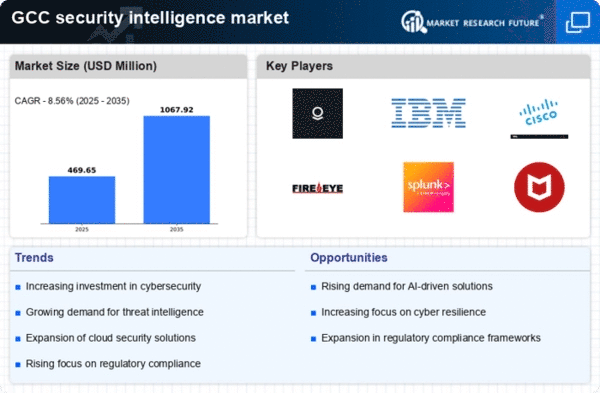
The security intelligence market is experiencing growth due to the increasing frequency and sophistication of cyber threats in the GCC region. Organizations are compelled to invest in advanced security solutions to protect sensitive data and infrastructure. Reports indicate that cybercrime costs are projected to reach $10.5 trillion annually by 2025, highlighting the urgency for robust security measures. As businesses digitize their operations, the demand for security intelligence solutions that can proactively identify and mitigate threats is likely to surge. This trend is further fueled by the need for real-time threat intelligence, which enables organizations to respond swiftly to potential breaches. Consequently, the security intelligence market is set for significant expansion. Companies are prioritizing cybersecurity to safeguard their assets and maintain customer trust..
Emergence of Smart Cities
The emergence of smart cities in the GCC region is creating new opportunities for the security intelligence market. As urban areas become more interconnected through IoT devices and smart technologies, the need for comprehensive security solutions becomes paramount. Smart city initiatives aim to enhance public safety, improve infrastructure resilience, and optimize resource management, all of which require robust security intelligence frameworks. The integration of security intelligence into smart city projects is essential for monitoring and responding to potential threats in real-time. As investments in smart city developments increase, the security intelligence market is likely to expand, driven by the demand for innovative solutions that address the unique challenges posed by urbanization and technological advancement.
Government Initiatives and Support
Government initiatives in the GCC region are playing a pivotal role in shaping the security intelligence market. Various national strategies emphasize the importance of cybersecurity, leading to increased funding and support for security intelligence solutions. For instance, the UAE's National Cybersecurity Strategy aims to enhance the nation's resilience against cyber threats, fostering a conducive environment for market growth. Additionally, regulatory frameworks are being established to ensure compliance with international standards, further driving the adoption of security intelligence technologies. As governments collaborate with private sectors to bolster cybersecurity measures, the security intelligence market will benefit from enhanced public-private partnerships, leading to innovative solutions and increased investment..
Increased Awareness of Data Privacy
Growing awareness of data privacy issues among consumers and businesses is significantly impacting the security intelligence market. As data breaches become more prevalent, organizations are recognizing the need to protect personal information and comply with stringent data protection regulations. This heightened awareness is driving demand for security intelligence solutions that ensure data integrity and confidentiality. In the GCC, initiatives such as the Saudi Data and Artificial Intelligence Authority (SDAIA) are promoting data governance and privacy standards, further influencing market dynamics. Companies are increasingly investing in security intelligence technologies to enhance their data protection strategies, thereby fostering trust with customers and stakeholders. This trend is likely to continue as data privacy remains a critical concern for organizations operating in the region.
Integration of Artificial Intelligence
The integration of artificial intelligence (AI) into security intelligence solutions is transforming the market landscape in the GCC. AI technologies enable organizations to analyze vast amounts of data, identify patterns, and predict potential threats with greater accuracy. This capability is particularly crucial as cyber threats evolve rapidly, necessitating adaptive security measures. The security intelligence market is witnessing a surge in demand for AI-driven solutions that enhance threat detection and response times. According to industry forecasts, the AI in cybersecurity market is expected to grow at a CAGR of 23.6% from 2021 to 2028. This trend indicates a strong inclination towards leveraging AI to bolster security intelligence capabilities, ultimately leading to more resilient cybersecurity frameworks across various sectors.