Focus on Cost Efficiency
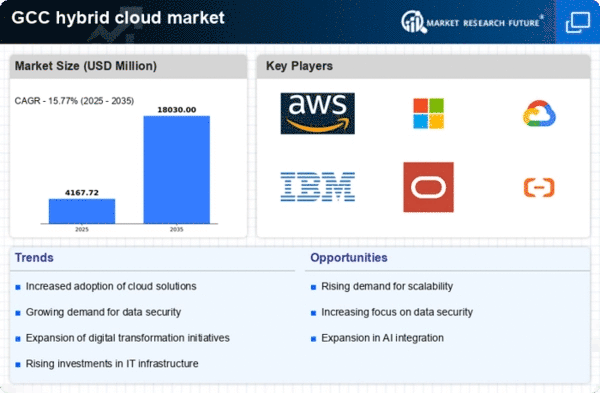
Cost efficiency remains a critical driver for the hybrid cloud market in the GCC. Organizations are increasingly adopting hybrid cloud solutions to optimize their IT expenditures. By utilizing a combination of on-premises and cloud resources, businesses can reduce capital costs and operational expenses. Data suggests that companies can save up to 30% on IT costs by implementing hybrid cloud strategies. This focus on cost efficiency is compelling many enterprises to transition to hybrid models, thereby propelling the growth of the hybrid cloud market as they seek to maximize their return on investment.
Rising Demand for Scalability
The hybrid cloud market is experiencing a notable surge in demand for scalability solutions. Organizations in the GCC are increasingly seeking flexible infrastructure that can adapt to fluctuating workloads. This trend is driven by the need for businesses to respond swiftly to market changes and customer demands. According to recent data, approximately 65% of enterprises in the region are prioritizing scalable cloud solutions to enhance operational efficiency. The hybrid cloud market is thus positioned to benefit from this growing emphasis on scalability, as companies look to optimize their resources and reduce costs while maintaining high performance.
Integration of Advanced Technologies
The integration of advanced technologies such as artificial intelligence (AI) and machine learning (ML) is significantly influencing the hybrid cloud market. In the GCC, organizations are leveraging these technologies to enhance data analytics and improve decision-making processes. Reports indicate that around 58% of businesses are investing in AI-driven solutions within their hybrid cloud environments. This trend not only boosts operational efficiency but also fosters innovation, allowing companies to develop new services and products. Consequently, the hybrid cloud market is likely to see increased investments in technology integration, driving growth and competitiveness.
Regulatory Compliance and Data Governance
Regulatory compliance and data governance are paramount concerns for organizations operating in the GCC. The hybrid cloud market is being shaped by the need to adhere to local regulations regarding data protection and privacy. As governments in the region implement stricter compliance frameworks, businesses are compelled to adopt hybrid cloud solutions that ensure data sovereignty. Approximately 70% of enterprises are prioritizing compliance in their cloud strategies, indicating a strong alignment with regulatory requirements. This focus on governance is likely to drive the hybrid cloud market as organizations seek to mitigate risks associated with non-compliance.
Growing Interest in Disaster Recovery Solutions
The hybrid cloud market is witnessing a growing interest in disaster recovery solutions among GCC enterprises. Organizations are increasingly recognizing the importance of robust disaster recovery plans to safeguard their data and ensure business continuity. Recent surveys indicate that nearly 60% of companies are investing in hybrid cloud-based disaster recovery solutions. This trend is driven by the need for resilience in the face of potential disruptions. As businesses prioritize risk management, the hybrid cloud market is expected to expand, offering innovative solutions that enhance recovery capabilities and minimize downtime.