×
Request Free Sample ×

Kindly complete the form below to receive a free sample of this Report

* Please use a valid business email

Leading companies partner with us for data-driven Insights

clients tt-cursor
Hero Background

GCC Eye Allergy Treatment Market

ID: MRFR/HC/54612-HCR
200 Pages
Rahul Gotadki
February 2026

GCC Eye Allergy Treatment Market Research Report By Type (Seasonal and Perennial Allergic Conjunctivitis, Vernal Keratoconjunctivitis, Atopic Keratoconjunctivitis, Contact Allergic Conjunctivitis, Giant Papillary Conjunctivitis), By Drug Class (Antihistamine, Mast Cell Stabilizer, NSAIDs, Corticosteroid, Decongestants, Immunotherapy Allergy Shots, Others), By Treatment Form (Eyedrops, Injectables, Tablets & Capsules) and By Distribution Channel (Hospital Pharmacies, Online Pharmacies, Retail Pharmacies) - Growth & Industry Forecast 2025 To 2035

Share:
Download PDF ×

We do not share your information with anyone. However, we may send you emails based on your report interest from time to time. You may contact us at any time to opt-out.

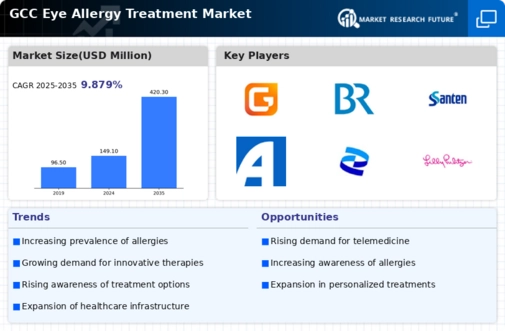
GCC Eye Allergy Treatment Market Infographic
Purchase Options

GCC Eye Allergy Treatment Market Summary

As per analysis, the GCC eye allergy treatment market is projected to grow from USD 177.5 Million in 2024 to USD 299.0 Million by 2035, exhibiting a compound annual growth rate (CAGR) of 4.85% during the forecast period (2025 - 2035).

Key Market Trends & Highlights

The GCC eye allergy treatment market is experiencing a transformative shift towards personalized and preventive care solutions.

  • The antihistamines segment remains the largest contributor to the market, driven by their widespread use in allergy management.
  • Corticosteroids are emerging as the fastest-growing segment, reflecting a trend towards more potent treatment options.
  • Topical treatments dominate the market, while injectable solutions are gaining traction as a rapid-response alternative.
  • The growing prevalence of allergies and rising awareness of eye health are key drivers propelling market expansion.

Market Size & Forecast

2024 Market Size 177.5 (USD Million)
2035 Market Size 299.0 (USD Million)
CAGR (2025 - 2035) 4.85%

Major Players

Allergan (AE), Novartis (CH), Bausch Health (CA), Santen Pharmaceutical (JP), Alcon (CH), Mylan (US), Teva Pharmaceutical (IL), Roche (CH), Bayer (DE)

Our Impact
Enabled $4.3B Revenue Impact for Fortune 500 and Leading Multinationals
Partnering with 2000+ Global Organizations Each Year
30K+ Citations by Top-Tier Firms in the Industry

GCC Eye Allergy Treatment Market Trends

The gcc eye allergy treatment market is currently experiencing notable developments, driven by an increasing prevalence of allergic conditions among the population. This rise in eye allergies is attributed to various environmental factors, including dust, pollen, and pollution, which are prevalent in the region. As awareness of eye allergies grows, healthcare providers are focusing on innovative treatment options that cater to the specific needs of patients. The market appears to be shifting towards more personalized therapies, which may enhance patient outcomes and satisfaction. Furthermore, the integration of advanced technologies in treatment modalities is likely to play a crucial role in shaping the future landscape of this market. In addition to the growing demand for effective treatments, there is a noticeable trend towards preventive measures and education regarding eye allergies. Public health initiatives are being implemented to inform individuals about the causes and management of eye allergies. This proactive approach may lead to a more informed patient base, which could, in turn, drive the demand for specialized treatments. Overall, the gcc eye allergy treatment market seems poised for growth, with a focus on both therapeutic advancements and patient education initiatives that aim to improve quality of life for those affected by eye allergies.

Rise of Personalized Treatments

The gcc eye allergy treatment market is witnessing a shift towards personalized therapies. This trend is characterized by tailored treatment plans that consider individual patient profiles, including specific allergens and response to previous therapies. Such an approach may enhance the effectiveness of treatments and improve patient adherence.

Increased Focus on Preventive Care

There is a growing emphasis on preventive care within the gcc eye allergy treatment market. Public health campaigns are being launched to educate the population about the triggers of eye allergies and effective management strategies. This proactive stance may lead to a reduction in the incidence of severe allergic reactions.

Integration of Technology in Treatment

The incorporation of technology into treatment options is becoming more prevalent in the gcc eye allergy treatment market. Innovations such as telemedicine consultations and mobile health applications are facilitating better patient engagement and monitoring, potentially leading to improved treatment outcomes.

GCC Eye Allergy Treatment Market Drivers

Rising Awareness of Eye Health

There is a growing awareness of eye health among the GCC population, which is positively impacting the eye allergy treatment market. Public health campaigns and educational programs are increasingly focusing on the importance of eye care and the management of allergies. As individuals become more informed about the symptoms and consequences of untreated eye allergies, they are more likely to seek medical advice and treatment. This heightened awareness is expected to drive market growth, as healthcare providers respond to the increasing demand for effective allergy management solutions tailored to the needs of the population.

Growing Prevalence of Allergies

The GCC eye allergy treatment market is experiencing a notable increase in the prevalence of allergic conditions, particularly among urban populations. Factors such as environmental pollution, climate change, and lifestyle changes contribute to this rise. According to regional health statistics, allergy cases have surged by approximately 30% over the past decade. This growing incidence of allergies necessitates effective treatment options, thereby driving demand within the market. As healthcare providers become more aware of the need for specialized treatments, the industry is likely to expand further, catering to a larger patient base seeking relief from eye allergies.

Government Initiatives and Regulations

Government initiatives aimed at improving healthcare access and quality in the GCC region significantly influence the eye allergy treatment market. Policies promoting awareness about allergies and their management are being implemented across various GCC countries. For instance, health ministries are launching campaigns to educate the public on allergy symptoms and available treatments. Additionally, regulatory frameworks are being established to ensure the safety and efficacy of allergy medications. These initiatives not only enhance patient access to treatments but also encourage pharmaceutical companies to invest in research and development, thereby fostering growth in the market.

Advancements in Pharmaceutical Research

The GCC eye allergy treatment market is benefiting from advancements in pharmaceutical research, leading to the development of innovative treatment options. Recent studies indicate that new antihistamines and immunotherapy approaches are gaining traction among healthcare providers. The introduction of biologics, which target specific pathways involved in allergic reactions, is particularly noteworthy. Market data suggests that the biologics segment is projected to grow at a compound annual growth rate of 15% over the next five years. This trend reflects a shift towards more effective and personalized treatment solutions, which are likely to enhance patient outcomes and satisfaction.

Integration of Telemedicine in Allergy Management

The integration of telemedicine into healthcare services is transforming the GCC eye allergy treatment market. Telehealth platforms enable patients to consult with specialists remotely, facilitating timely diagnosis and treatment of eye allergies. This is particularly beneficial in regions with limited access to healthcare facilities. Data indicates that telemedicine usage in the GCC has increased by over 40% in recent years, reflecting a shift in patient preferences towards convenient healthcare solutions. As telemedicine continues to evolve, it is likely to enhance patient engagement and adherence to treatment plans, ultimately contributing to the growth of the eye allergy treatment market.

Market Segment Insights

By Treatment Type: Antihistamines (Largest) vs. Corticosteroids (Fastest-Growing)

The GCC eye allergy treatment market is predominantly composed of Antihistamines, which hold the largest share due to their rapid onset of action and widespread acceptance among practitioners and patients. These medications are commonly recommended for mild to moderate allergic reactions, significantly driving their market presence. In contrast, Corticosteroids are emerging as the fastest-growing segment in this market, as they are increasingly prescribed for more severe symptoms and chronic allergy conditions, reflecting a shift towards more aggressive treatment strategies.

Antihistamines (Dominant) vs. Mast Cell Stabilizers (Emerging)

Antihistamines remain the dominant treatment type for eye allergies in the GCC region, primarily due to their effectiveness and immediate relief from symptoms such as itching and redness. They are widely available and supported by numerous clinical studies affirming their efficacy. On the other hand, Mast Cell Stabilizers are positioned as an emerging alternative, particularly appealing to patients seeking long-term control over allergic conjunctivitis. These medications work by inhibiting the release of histamines, thereby providing preventive care against allergy onset. As awareness of chronic allergy management grows, Mast Cell Stabilizers are anticipated to expand their market footprint, catering to a niche yet increasing patient demographic.

By Route of Administration: Topical (Largest) vs. Injectable (Fastest-Growing)

In the GCC eye allergy treatment market, the distribution of market share among routes of administration showcases a clear dominance of the topical segment. Topical administration is preferred due to its localized action and minimal systemic side effects, making it a favored choice among healthcare providers and patients alike. Conversely, injectable solutions, while currently a smaller fraction of the market, are rapidly gaining traction due to their effectiveness in severe cases that do not respond to topical treatments. This diversification in administration routes caters to varying patient needs and enhances therapeutic options available in the market. The growth trends in the GCC eye allergy treatment market are significantly influenced by the growing prevalence of allergic diseases and an increased awareness of treatment options. The rising demand for effective and convenient treatment methods is propelling the adoption of injectable therapies, particularly among patients seeking rapid relief from severe symptoms. Additionally, advances in formulation technologies are enhancing the safety and efficacy profiles of injectable treatments, thereby supporting their expansion within the market. As a result, while topical remains the dominant option, injectable routes are poised to become a crucial part of the therapeutic landscape for eye allergies in the GCC region.

Topical (Dominant) vs. Injectable (Emerging)

Topical administration has established itself as the dominant route in the GCC eye allergy treatment market, primarily due to its targeted delivery system that minimizes systemic exposure. This route includes a variety of formulations, such as eye drops and gels, which are specifically designed for rapid absorption into the ocular tissues, leading to effective symptom relief. The convenience and ease of use of topical solutions make them highly accessible to patients, driving their popularity among consumers. On the flip side, injectable treatments are emerging as a potent option, particularly for patients with chronic or severe allergic reactions that may not respond well to topical therapies. These injectables offer a rapid onset of action and prolonged relief, appealing to an increasing demographic that requires immediate intervention. The introduction of innovative injectable therapies is expected to significantly influence future treatment paradigms within the market.

By Patient Demographics: Adults (Largest) vs. Elderly (Fastest-Growing)

In the GCC eye allergy treatment market, the distribution of patient demographics reveals that adults constitute the largest segment, accounting for a significant share of treatment recipients. This population is increasingly seeking effective solutions for allergy-related eye issues due to lifestyle factors and a growing awareness of available treatments. Conversely, the elderly demographic is emerging as the fastest-growing segment, driven by an increased prevalence of allergies and a heightened focus on healthcare and quality of life as they age. Growth trends in this segment can be attributed to various factors, including the increasing incidence of environmental allergens and a rising geriatric population demonstrating susceptibility to eye allergies. In addition, healthcare providers are tailoring treatments to meet the diverse needs of these demographics, leading to innovations and better patient outcomes. As awareness and access improve, the demand among these age groups is expected to rise significantly, impacting the overall market development.

Adults (Dominant) vs. Children (Emerging)

In the GCC eye allergy treatment market, adults represent the dominant segment, characterized by their strong demand for various treatment options, including antihistamines and eye drops. This group places significant emphasis on effective and convenient treatment modalities to manage symptoms, which include itching and redness. On the other hand, children are emerging as a vital segment due to increased diagnosis and better awareness among parents regarding childhood allergies. As pediatricians and allergists pay more attention to eye allergy symptoms, the demand for child-specific formulations is expected to rise. Additional factors such as rising air pollution, changing environmental conditions, and increasing screen time contribute to a greater prevalence of allergies among children, making them a key focus area for healthcare providers in the GCC.

By Severity of Condition: Moderate (Largest) vs. Severe (Fastest-Growing)

In the GCC eye allergy treatment market, the distribution of treatment across the severity of condition segments reveals that Moderate allergies command the largest share. This segment benefits from a significant number of patients seeking effective relief options, contributing to its dominant market presence. Meanwhile, Severe allergies, although currently smaller in market share, are rapidly gaining attention, indicating a shift in treatment patterns as healthcare providers increasingly focus on managing more challenging cases. Growth trends within the Severity of Condition segment are primarily driven by increases in awareness about the adverse effects of untreated eye allergies, prompting patients to seek medical intervention sooner. Additionally, advancements in therapy options tailored for Severe allergies are encouraging healthcare professionals to recommend treatments specifically for this group, further stimulating growth. As patients become more proactive in managing their conditions, the market is likely to witness enhanced demand for targeted treatments for severe eye allergies.

Moderate (Dominant) vs. Severe (Emerging)

The Moderate severity segment is characterized by a substantial patient base that often experiences intermittent symptoms that warrant treatment. Patients in this group typically seek effective management solutions to control their eye allergy symptoms. In contrast, the Severe segment represents an emerging opportunity in the GCC market, marked by patients experiencing debilitating symptoms that critically affect their quality of life. This segment is witnessing increased interest from healthcare providers due to a growing awareness of the need for specialized therapies that address these more complex cases. As the medical community continues to innovate in the development of effective treatment modalities, the Severe segment is anticipated to grow, supported by an influx of new therapies and a heightened focus on patient quality of life.

Get more detailed insights about GCC Eye Allergy Treatment Market

Key Players and Competitive Insights

The GCC eye allergy treatment market is characterized by a competitive landscape that is increasingly shaped by innovation, strategic partnerships, and regional expansion. Key players such as Allergan (AE), Novartis (CH), and Alcon (CH) are actively pursuing strategies that emphasize product development and market penetration. Allergan (AE) focuses on enhancing its portfolio of eye care products, particularly in allergy treatments, while Novartis (CH) is leveraging its research capabilities to introduce novel therapies. Alcon (CH), on the other hand, is concentrating on expanding its distribution networks to improve accessibility across the region. Collectively, these strategies contribute to a dynamic competitive environment where companies are not only vying for market share but also striving to meet the evolving needs of consumers.

In terms of business tactics, companies are increasingly localizing manufacturing and optimizing supply chains to enhance efficiency and reduce costs. The market structure appears moderately fragmented, with several players competing for dominance. This fragmentation allows for a diverse range of products and services, but it also necessitates that companies differentiate themselves through innovation and customer engagement. The collective influence of these key players is significant, as they set trends that smaller companies often follow, thereby shaping the overall market dynamics.

In December 2025, Allergan (AE) announced the launch of a new line of allergy eye drops specifically formulated for seasonal allergic conjunctivitis. This strategic move is likely to bolster its market presence and cater to the growing demand for effective allergy treatments in the GCC region. The introduction of this product aligns with the company's focus on innovation and addresses a critical consumer need, potentially enhancing customer loyalty and brand recognition.

In November 2025, Novartis (CH) entered into a partnership with a local pharmaceutical company to co-develop a new biologic therapy for severe allergic reactions. This collaboration not only expands Novartis's product offerings but also strengthens its foothold in the GCC market. By leveraging local expertise and resources, Novartis is positioned to accelerate the development and distribution of this therapy, which could significantly impact patient outcomes and market share.

In October 2025, Alcon (CH) launched a digital platform aimed at educating healthcare professionals about the latest advancements in eye allergy treatments. This initiative reflects a broader trend towards digitalization in the healthcare sector, where companies are utilizing technology to enhance engagement and knowledge sharing. By investing in educational resources, Alcon is likely to foster stronger relationships with healthcare providers, ultimately driving product adoption and improving patient care.

As of January 2026, the competitive trends in the GCC eye allergy treatment market are increasingly defined by digitalization, sustainability, and the integration of artificial intelligence (AI) in product development. Strategic alliances are becoming more prevalent, as companies recognize the value of collaboration in navigating complex market challenges. Looking ahead, competitive differentiation is expected to evolve, with a notable shift from price-based competition to a focus on innovation, technology, and supply chain reliability. This transition may lead to a more sustainable and resilient market, where companies that prioritize these elements are likely to thrive.


Key Companies in the GCC Eye Allergy Treatment Market include

Industry Developments

Recent developments in the GCC Eye Allergy Treatment Market highlight a growing focus on innovative therapeutic solutions. For instance, in September 2023, Allergan launched a new eye drop treatment aimed at alleviating seasonal allergic conjunctivitis, enhancing its portfolio in the region. Concurrently, March 2023 saw Novartis unveil a patient assistance program in the GCC aimed at providing easier access to eye allergy treatments. 

The market has also experienced significant growth, with major companies such as Santen Pharmaceutical and Merck reporting expanded product lines and increased investment in Research and Development to address rising allergic conditions due to climate change and urbanization.In the past couple of years, Alcon announced the acquisition of a specialized eye care company, bolstering its research capabilities and product offerings specifically geared toward treating ocular allergies in the GCC region, which was disclosed in January 2022. 

The overall market valuation for companies involved in eye allergy treatments has surged, evidencing a strong demand for effective solutions. The increasing prevalence of allergies further influences this, prompting pharmaceutical companies like Bayer and GSK to enhance their presence in the GCC Eye Allergy Treatment Market.

Future Outlook

GCC Eye Allergy Treatment Market Future Outlook

The GCC eye allergy treatment market is projected to grow at a 4.85% CAGR from 2025 to 2035, driven by increasing prevalence of allergies and advancements in treatment options.

New opportunities lie in:

  • Development of personalized allergy treatment plans
  • Expansion of telemedicine services for remote consultations
  • Investment in innovative drug delivery systems for enhanced efficacy

By 2035, the market is expected to achieve robust growth, reflecting evolving consumer needs and technological advancements.

Market Segmentation

GCC Eye Allergy Treatment Market Treatment Type Outlook

  • Antihistamines
  • Corticosteroids
  • Mast Cell Stabilizers
  • Immunotherapy

GCC Eye Allergy Treatment Market Patient Demographics Outlook

  • Adults
  • Children
  • Elderly

GCC Eye Allergy Treatment Market Severity of Condition Outlook

  • Mild
  • Moderate
  • Severe

GCC Eye Allergy Treatment Market Route of Administration Outlook

  • Topical
  • Oral
  • Injectable

Report Scope

MARKET SIZE 2024177.5(USD Million)
MARKET SIZE 2025187.0(USD Million)
MARKET SIZE 2035299.0(USD Million)
COMPOUND ANNUAL GROWTH RATE (CAGR)4.85% (2024 - 2035)
REPORT COVERAGERevenue Forecast, Competitive Landscape, Growth Factors, and Trends
BASE YEAR2024
Market Forecast Period2025 - 2035
Historical Data2019 - 2024
Market Forecast UnitsUSD Million
Key Companies ProfiledAllergan (AE), Novartis (CH), Bausch Health (CA), Santen Pharmaceutical (JP), Alcon (CH), Mylan (US), Teva Pharmaceutical (IL), Roche (CH), Bayer (DE)
Segments CoveredTreatment Type, Route of Administration, Patient Demographics, Severity of Condition
Key Market OpportunitiesEmergence of innovative biologics and personalized therapies in the gcc eye allergy treatment market.
Key Market DynamicsRising consumer awareness drives demand for innovative eye allergy treatments in the GCC market.
Countries CoveredGCC
Leave a Comment

FAQs

What is the current valuation of the GCC eye allergy treatment market?

The market valuation was 177.5 USD Million in 2024.

What is the projected market size for the GCC eye allergy treatment market by 2035?

The market is projected to reach 299.0 USD Million by 2035.

What is the expected CAGR for the GCC eye allergy treatment market during the forecast period?

The expected CAGR for the market from 2025 to 2035 is 4.85%.

Which treatment types dominate the GCC eye allergy treatment market?

Antihistamines and immunotherapy are among the leading treatment types, with valuations of 50.0 to 80.0 USD Million and 57.5 to 109.0 USD Million, respectively.

How does the market perform across different routes of administration?

Topical treatments lead the market with a valuation range of 70.0 to 120.0 USD Million.

What demographic segments are targeted in the GCC eye allergy treatment market?

Adults represent the largest demographic segment, with a valuation range of 106.0 to 173.0 USD Million.

What are the market dynamics concerning the severity of eye allergies?

The market shows varied performance, with moderate conditions valued between 70.0 and 115.0 USD Million.

Who are the key players in the GCC eye allergy treatment market?

Key players include Allergan, Novartis, Bausch Health, and Alcon, among others.

What is the significance of immunotherapy in the GCC eye allergy treatment market?

Immunotherapy is projected to grow significantly, with a valuation range of 57.5 to 109.0 USD Million.

How does the GCC eye allergy treatment market compare to other regions?

While specific regional comparisons are not provided, the growth trajectory suggests a robust market potential in the GCC.

Download Free Sample

Kindly complete the form below to receive a free sample of this Report

Compare Licence

×
Features License Type
Single User Multiuser License Enterprise User
Price $4,950 $5,950 $7,250
Maximum User Access Limit 1 User Upto 10 Users Unrestricted Access Throughout the Organization
Free Customization
Direct Access to Analyst
Deliverable Format
Platform Access
Discount on Next Purchase 10% 15% 15%
Printable Versions