×
Request Free Sample ×

Kindly complete the form below to receive a free sample of this Report

* Please use a valid business email

Leading companies partner with us for data-driven Insights

clients tt-cursor
Hero Background

France Sourdough Market

ID: MRFR/FnB/46638-HCR
128 Pages
Sakshi Gupta
February 2026

France Sourdough Market Size, Share, Industry Trend & Analysis Research Report: By Product Type (Type I, Type II, Type III), By Form (Dry, Liquid), By Source (Wheat, Rye, Oats, Barley), By Category (Organic, Regular), By Application (Bread Products, Pizza & Pizza Crust, Cakes & Pies, Others) and By Distribution Channel (Store-Based, Non-Store-Based) - Forecast to 2035

Share:
Download PDF ×

We do not share your information with anyone. However, we may send you emails based on your report interest from time to time. You may contact us at any time to opt-out.

France Sourdough Market Infographic
Purchase Options

France Sourdough Market Summary

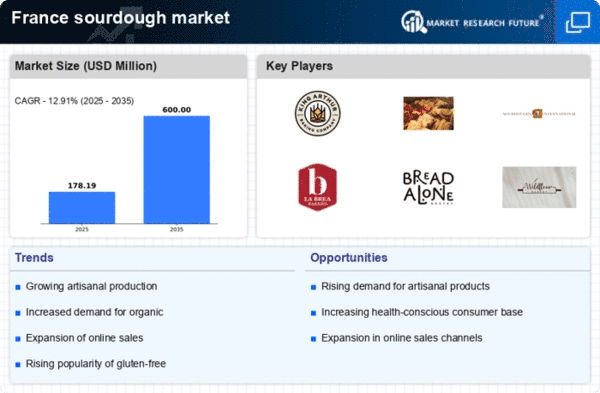
As per Market Research Future analysis, the France Sourdough Market size was estimated at 157.82 USD Million in 2024. The Sourdough market is projected to grow from 178.19 USD Million in 2025 to 600.0 USD Million by 2035, exhibiting a compound annual growth rate (CAGR) of 12.9% during the forecast period 2025 - 2035

Key Market Trends & Highlights

The France sourdough market is experiencing a notable shift towards health-conscious and sustainable practices.

  • The largest segment in the France sourdough market is the artisan bakery segment, reflecting a growing preference for handcrafted products.
  • The fastest-growing segment is the home baking segment, driven by increased consumer interest in baking at home.
  • Health consciousness and sustainability are key trends influencing consumer choices in the sourdough market.
  • Rising artisan bakery culture and increased demand for natural ingredients are major drivers propelling market growth.

Market Size & Forecast

2024 Market Size 157.82 (USD Million)
2035 Market Size 600.0 (USD Million)
CAGR (2025 - 2035) 12.91%

Major Players

King Arthur Flour (US), Baker's Pride (US), Sourdoughs International (US), La Brea Bakery (US), Bread Alone (US), Wild Flour Bakery (US), Sourdough Bakery (US), Boudin Bakery (US)

Our Impact
Enabled $4.3B Revenue Impact for Fortune 500 and Leading Multinationals
Partnering with 2000+ Global Organizations Each Year
30K+ Citations by Top-Tier Firms in the Industry

France Sourdough Market Trends

The France Sourdough Market in France is currently experiencing a notable transformation, driven by evolving consumer preferences and a growing interest in artisanal baking. This shift appears to be influenced by a heightened awareness of health and wellness, as many individuals seek out products that are perceived as more natural and less processed. Sourdough, with its unique fermentation process, is often viewed as a healthier alternative to conventional bread, potentially offering benefits such as improved digestibility and a lower glycemic index. Furthermore, the trend towards local sourcing and sustainability is gaining traction, with consumers increasingly favoring products that are made from locally sourced ingredients and traditional methods. In addition to health considerations, the sourdough market is also witnessing a rise in the popularity of home baking. This trend seems to be fueled by a desire for authenticity and a connection to food preparation. Many individuals are experimenting with sourdough recipes, leading to a surge in demand for starter cultures and specialty flours. As a result, local bakeries and suppliers are adapting their offerings to cater to this burgeoning interest, providing resources and products that support home bakers. Overall, the sourdough market in France appears to be on a promising trajectory, characterized by a blend of tradition and innovation that resonates with contemporary consumer values.

Health Consciousness

The sourdough market is increasingly influenced by consumer awareness regarding health. Many individuals are gravitating towards products perceived as natural and less processed. Sourdough is often regarded as a healthier option due to its fermentation process, which may enhance digestibility and reduce blood sugar spikes.

Home Baking Trend

There is a notable rise in home baking, particularly with sourdough. This trend reflects a desire for authenticity and personal connection to food. As more people experiment with sourdough recipes, demand for starter cultures and specialty flours is increasing, prompting local suppliers to adapt their offerings.

Sustainability Focus

Sustainability is becoming a key consideration in the sourdough market. Consumers are showing preference for products made from locally sourced ingredients and traditional methods. This focus on sustainability aligns with broader consumer values, driving demand for artisanal and locally produced sourdough.

France Sourdough Market Drivers

Rising Artisan Bakery Culture

The increasing popularity of artisan bakeries in France appears to be a significant driver for the sourdough market. Consumers are increasingly seeking authentic, handcrafted products, which has led to a surge in demand for sourdough bread. In 2025, the artisan bakery segment is projected to account for approximately 30% of the total bakery market in France. This trend indicates a shift towards quality over quantity, with consumers willing to pay a premium for artisanal products. The sourdough market benefits from this cultural shift, as many artisan bakers specialize in sourdough varieties, thus enhancing their visibility and appeal. Furthermore, the emphasis on traditional baking methods resonates with consumers who value heritage and craftsmanship, potentially leading to sustained growth in the sourdough market.

Growing Interest in Bread Education

The increasing interest in bread-making education is another driver influencing the sourdough market. Workshops and classes focused on sourdough baking are gaining popularity across France, as individuals seek to learn the art of bread-making. This trend is indicative of a broader movement towards self-sufficiency and culinary skills development. In 2025, it is projected that the market for cooking classes will grow by 15%, with sourdough workshops being a significant component. As more people engage in hands-on learning, they are likely to develop a deeper appreciation for sourdough, leading to increased consumption. This educational aspect not only fosters a community of home bakers but also strengthens the overall sourdough market by creating informed consumers who value quality and craftsmanship.

Impact of Social Media on Food Trends

The influence of social media on food trends is a powerful driver for the sourdough market in France. Platforms like Instagram and TikTok have transformed the way consumers discover and engage with food products. Sourdough, with its visually appealing crust and texture, has become a popular subject for food photography and sharing. This trend has led to a surge in interest among home bakers, many of whom are inspired to try their hand at sourdough baking. In 2025, it is estimated that 40% of consumers will rely on social media for food inspiration, which could significantly boost the visibility of sourdough products. As more individuals share their baking successes online, the sourdough market is likely to experience increased demand, driven by the desire to replicate visually stunning creations.

Increased Demand for Natural Ingredients

There is a growing consumer preference for natural and organic ingredients in food products, which significantly impacts the sourdough market. French consumers are becoming more discerning, often scrutinizing ingredient labels for additives and preservatives. This trend is reflected in the bakery sector, where sales of organic bread have increased by over 20% in recent years. Sourdough, typically made with minimal ingredients, aligns well with this demand for simplicity and purity. As a result, many bakeries are reformulating their recipes to highlight natural ingredients, thereby enhancing the appeal of sourdough products. This shift not only caters to health-conscious consumers but also positions the sourdough market favorably within the broader context of clean eating and sustainable food practices.

Culinary Tourism and Regional Specialties

Culinary tourism is emerging as a notable driver for the sourdough market in France. Tourists are increasingly drawn to regions known for their unique bread-making traditions, including sourdough. This trend is particularly evident in areas like Alsace and Provence, where local bakeries offer distinctive sourdough varieties that reflect regional flavors. In 2025, it is estimated that culinary tourism will contribute approximately €5 billion to the French economy, with a significant portion attributed to food experiences. As tourists seek authentic culinary experiences, the demand for locally produced sourdough bread is likely to rise. This not only benefits local bakers but also enhances the visibility of the sourdough market, encouraging further exploration of traditional baking methods and regional specialties.


Market Segment Insights

By Product Type: Type I (Largest) vs. Type II (Fastest-Growing)

In the France sourdough market, Type I is currently the largest segment, commanding a significant share of the market. This product type stands out for its traditional baking methods and high demand among consumers who favor artisanal bread. Conversely, Type II, while smaller in market share, is experiencing notable growth driven by the rising trend in health consciousness among consumers who prefer whole grain options. The growth trajectory for Type II is fueled by increasing awareness of its nutritional benefits, supported by a growing segment of health-focused consumers. This shift reflects broader consumer trends towards healthier eating habits, leading to innovations in recipes and ingredients that cater to this audience's preferences, emphasizing organic and natural components.

Type I: Dominant vs. Type II: Emerging

Type I is characterized by its rich flavor and traditional preparation methods, appealing to both gourmet and everyday consumers. Its dominance in the France sourdough market reflects a strong cultural preference for authentic sourdough varieties, often associated with quality and heritage. On the other hand, Type II is gaining traction as an emerging segment, appealing to health-conscious consumers who prioritize wholesome ingredients. This product type often features whole grains and organic certification, making it an attractive alternative to traditional options. The contrast between Type I's established popularity and Type II's innovative approach highlights the dynamic nature of consumer preferences within the market.

By Form: Dry (Largest) vs. Liquid (Fastest-Growing)

In the France sourdough market, the distribution between dry and liquid forms showcases a significant preference for dry sourdough, which currently leads the segment. This form has been well-accepted for its longer shelf life and ease of use, making it the dominant choice among bakers and consumers alike. Conversely, liquid sourdough is slowly making its mark, particularly among artisan bakers looking for unique flavor profiles and fermentation dynamics. The growth trends indicate a rising interest in liquid sourdough as the fastest-growing segment. This is fueled by a shift towards more traditional baking methods, where the use of liquid sourdough is often associated with better taste and texture in bread production. Innovations in product offerings and increased consumer education about the benefits of sourdough are significant drivers behind this trend, encouraging bakers to experiment more with liquid forms.

Form: Dry (Dominant) vs. Liquid (Emerging)

The dry form is characterized by its convenience and long shelf stability, appealing to both commercial bakeries and home bakers. Its ability to be easily measured and stored contributes to its dominance in the market. In contrast, liquid sourdough, while still emerging, is gaining traction for its unique qualities that enhance flavor and texture in baked goods. This form is often preferred by artisan bakers who value the more complex fermentation process it offers. As consumers become more adventurous with their bread preferences, the demand for liquid sourdough is expected to increase, fostering innovation and diversity in product offerings.

By Source: Wheat (Largest) vs. Rye (Fastest-Growing)

In the France sourdough market, Wheat currently holds the largest market share among the source segments, significantly contributing to the popularity of traditional sourdough bread. Rye, while holding a smaller share, is quickly gaining traction among health-conscious consumers seeking alternatives to wheat-based products. The presence of various artisanal and industrial bakers further enriches the diversity of sourdough offerings, allowing for a range of flavors and textures that appeal to different consumer preferences. Recent trends indicate a rising demand for Rye as an alternative to Wheat, particularly among consumers interested in dietary options such as gluten-free or lower-carbohydrate diets. This shift is driven by increased awareness of health benefits associated with rye and the growing popularity of sourdough for its purported digestive advantages. The market is witnessing innovations in sourdough formulations, further solidifying the appeal of both Wheat and Rye as significant players in the segment.

Wheat: Dominant vs. Rye: Emerging

Wheat remains the dominant source in the France sourdough market, attributed to its historical significance and established production methods. Its flour is favored for creating classic sourdough textures and flavors, which resonate well with traditional bread enthusiasts. On the other hand, Rye is emerging as a compelling alternative, offering unique health benefits and distinct flavors that cater to a niche but growing market segment. Rye's adaptability in baking provides exciting opportunities for sourdough variations, particularly appealing to consumers looking for healthier bread options. As consumers become increasingly aware of the nutritional advantages, Rye's market share is expected to expand, while Wheat maintains its stronghold in the mainstream sourdough segment.

By Category: Organic (Largest) vs. Regular (Fastest-Growing)

In the France sourdough market, the distribution of market share reveals that the Organic segment holds the largest share among consumers, reflecting a growing preference for health-conscious food options. Consumers are increasingly drawn to the perceived benefits of organic ingredients, leading to a substantial portion of overall sales in this category. Conversely, the Regular segment is gaining traction among traditional consumers, emphasizing affordability and availability, thus contributing to its growing presence in the market. Growth trends within the category demonstrate a shift towards healthier, organic alternatives that cater to consumers' evolving dietary preferences. The rise in health awareness, coupled with changes in consumer behavior, has prompted a surge in demand for organic sourdough. The Regular segment, while still popular, is emerging as a viable option for cost-conscious buyers, indicating a potential transformation in the market dynamics as preferences diversify and adapt to new consumer insights.

Sourdough: Organic (Dominant) vs. Regular (Emerging)

The Organic segment of the France sourdough market stands out as the dominant choice among health-conscious consumers, characterized by high-quality ingredients and natural production methods. This segment appeals to those seeking wholesome, clean-label products that align with their lifestyle values. On the other hand, the Regular segment is viewed as an emerging contender, offering a budget-friendly option for the masses. While it may not boast the premium status of organic alternatives, the Regular category satisfies a significant demand for accessibility and affordability, making it a crucial player in meeting diverse consumer needs. The contrasting characteristics of these segments underline the importance of consumer choice in shaping market strategies.

By Distribution Channel: Store-Based (Largest) vs. Non-Store-Based (Fastest-Growing)

In the France sourdough market, the Store-Based distribution channel holds a dominant share, significantly outperforming the Non-Store-Based channel. Retail outlets such as supermarkets and specialty bread shops cater to consumer preferences by providing a wide variety of sourdough products, allowing customers to physically assess quality before purchase. However, the Non-Store-Based channel has been gaining traction, driven by the increasing popularity of online shopping and home delivery services. This segment's growth is propelled by the convenience it offers, particularly appealing to younger consumers who prioritize ease and accessibility in their shopping experiences. As technology advances, the Non-Store-Based distribution is expected to expand further in the coming years.

Store-Based (Dominant) vs. Non-Store-Based (Emerging)

The Store-Based distribution channel in the France sourdough market remains the dominant force, characterized by its traditional brick-and-mortar format that allows consumers to engage directly with products. Stores often provide a sensory experience, enabling customers to smell and see the bread before purchasing. On the other hand, the Non-Store-Based channel is emerging rapidly, capitalizing on the digital transformation of retail. This segment includes e-commerce platforms and home delivery services that attract tech-savvy consumers. By providing convenience, variety, and often unique products not found in physical stores, Non-Store-Based retailers can cater to niche markets and build a loyal customer base, despite currently holding a smaller share of the overall market.

By Application: Bread Products (Largest) vs. Pizza & Pizza Crust (Fastest-Growing)

In the France sourdough market, the application segment shows substantial diversity, with bread products commanding the largest market share among other categories. Pizza & pizza crust, while not the largest, have gained notable traction, reflecting a significant consumer shift towards convenience and ready-to-eat options. The cakes & pies category accounts for a smaller share, catering specifically to niche markets focused on artisanal quality and unique flavors. Growth trends in this segment are driven primarily by evolving consumer preferences emphasizing healthier, more natural ingredients found in sourdough products. The rise of gourmet and artisanal offerings, alongside an increasing awareness of the health benefits associated with sourdough, contribute to the robust demand. Pizza & pizza crust are witnessing accelerated growth due to the popularity of home cooking and the advent of quick-to-prepare meal solutions, appealing to modern consumer lifestyles.

Bread Products: Dominant vs. Pizza & Pizza Crust: Emerging

The bread products segment stands as the dominant player within the France sourdough market, characterized by a longstanding consumer preference for traditional and artisanal breads that offer rich flavor profiles and superior texture. This segment benefits from established brand loyalty and a wide range of varieties that cater to different taste preferences. Conversely, the pizza & pizza crust category is emerging rapidly, appealing particularly to a younger demographic seeking convenience without compromising on quality. The fusion of traditional sourdough preparation with modern pizza influences positions this segment favorably for growth, as it taps into the evolving dining habits characterized by a blend of indulgence and health-consciousness.

Get more detailed insights about France Sourdough Market

Key Players and Competitive Insights

The sourdough market in France exhibits a dynamic competitive landscape characterized by a blend of traditional craftsmanship and modern innovation. Key growth drivers include the rising consumer preference for artisanal products, health-conscious choices, and the increasing popularity of home baking. Major players such as King Arthur Flour (US), La Brea Bakery (US), and Sourdoughs International (US) are strategically positioned to leverage these trends. King Arthur Flour (US) focuses on product innovation and educational initiatives, enhancing consumer engagement through baking classes and online resources. Meanwhile, La Brea Bakery (US) emphasizes regional expansion and partnerships with local retailers, thereby increasing its market footprint. Sourdoughs International (US) adopts a niche approach, specializing in organic and heritage grains, which appeals to a growing segment of health-oriented consumers. Collectively, these strategies contribute to a competitive environment that is increasingly defined by quality and authenticity.In terms of business tactics, companies are localizing manufacturing to reduce supply chain complexities and enhance freshness. The market structure appears moderately fragmented, with several players vying for consumer attention. This fragmentation allows for diverse offerings, yet the collective influence of key players like King Arthur Flour (US) and La Brea Bakery (US) shapes market dynamics significantly. Their ability to optimize supply chains and localize production is likely to enhance their competitive edge.

In October King Arthur Flour (US) launched a new line of gluten-free sourdough mixes, catering to the growing demand for gluten-free products. This strategic move not only diversifies their product range but also positions the company as a leader in inclusivity within the baking sector. By addressing dietary restrictions, King Arthur Flour (US) enhances its appeal to a broader consumer base, potentially increasing market share.

In September La Brea Bakery (US) announced a partnership with a prominent French grocery chain to distribute its sourdough products across France. This collaboration is strategically significant as it allows La Brea Bakery (US) to penetrate the French market more effectively, leveraging the grocery chain's established customer base. Such partnerships are indicative of a trend where companies seek to enhance distribution channels to reach consumers directly.

In August Sourdoughs International (US) introduced a subscription service for its artisanal sourdough products, aiming to capitalize on the growing trend of online shopping and home delivery. This initiative reflects a broader shift towards digitalization in the food sector, allowing Sourdoughs International (US) to maintain customer loyalty and ensure consistent revenue streams. The subscription model may also foster a community of dedicated sourdough enthusiasts, further solidifying brand loyalty.

As of November current competitive trends in the sourdough market include a pronounced focus on digitalization, sustainability, and the integration of AI technologies in production processes. Strategic alliances are increasingly shaping the landscape, enabling companies to enhance their operational efficiencies and market reach. Looking ahead, competitive differentiation is likely to evolve from traditional price-based competition to a focus on innovation, technology, and supply chain reliability. Companies that can effectively leverage these trends will likely secure a more robust position in the market.

Key Companies in the France Sourdough Market include

Industry Developments

The France Sourdough Market has seen notable developments recently, particularly with the rise of artisan bakeries emphasizing traditional methods. Companies like Boulangerie Saint Antoine, La Fournée D'Augustin, and Eric Kayser are increasingly focusing on sustainability and organic ingredients to meet consumer demand for healthier options. Additionally, a significant merger was reported in May 2023 involving Boulangerie Maison Pichard acquiring La Parisienne, further consolidating their market presence. Growth in the sector has been robust, with an increasing appreciation for high-quality, handcrafted products, as evidenced by the expansion of Le Pain Quotidien and Maison Landemaine into new regions.

The market valuation has seen an uptick, reflecting consumer willingness to pay a premium for artisanal sourdough products. In the past two to three years, the trend has shifted towards making sourdough more accessible through various distribution channels, including online sales and partnerships with local retailers. Boulangerie de la Cité and Boulangerie Mauclerc have also seen noteworthy growth, underscoring the importance of adapting to consumer preferences in the evolving marketplace. Such trends indicate a dynamic and resilient sector responsive to changing tastes and health-conscious consumer behaviors.

Future Outlook

France Sourdough Market Future Outlook

The Sourdough Market in France is projected to grow at a 12.91% CAGR from 2025 to 2035, driven by rising consumer demand for artisanal products and health benefits.

New opportunities lie in:

  • Expansion of online sales platforms for artisanal sourdough products.
  • Development of gluten-free sourdough options to capture niche markets.
  • Partnerships with local cafes for exclusive sourdough offerings.

By 2035, the sourdough market is expected to achieve robust growth and increased market share.

Market Segmentation

France Sourdough Market Form Outlook

  • Dry
  • Liquid

France Sourdough Market Source Outlook

  • Wheat
  • Rye
  • Oats
  • Barley

France Sourdough Market Category Outlook

  • Organic
  • Regular

France Sourdough Market Application Outlook

  • Bread Products
  • Pizza & Pizza Crust
  • Cakes & Pies
  • Others

France Sourdough Market Product Type Outlook

  • Type I
  • Type II
  • Type III

France Sourdough Market Distribution Channel Outlook

  • Store-Based
  • Non-Store-Based

Report Scope

MARKET SIZE 2024 157.82(USD Million)
MARKET SIZE 2025 178.19(USD Million)
MARKET SIZE 2035 600.0(USD Million)
COMPOUND ANNUAL GROWTH RATE (CAGR) 12.91% (2025 - 2035)
REPORT COVERAGE Revenue Forecast, Competitive Landscape, Growth Factors, and Trends
BASE YEAR 2024
Market Forecast Period 2025 - 2035
Historical Data 2019 - 2024
Market Forecast Units USD Million
Key Companies Profiled King Arthur Flour (US), Baker's Pride (US), Sourdoughs International (US), La Brea Bakery (US), Bread Alone (US), Wild Flour Bakery (US), Sourdough Bakery (US), Boudin Bakery (US)
Segments Covered Product Type, Form, Source, Category, Distribution Channel, Application
Key Market Opportunities Growing consumer preference for artisanal products enhances opportunities in the sourdough market.
Key Market Dynamics Rising consumer preference for artisanal products drives innovation and competition in the sourdough market.
Countries Covered France
Leave a Comment

FAQs

What is the expected market size of the France Sourdough Market in 2024?

The France Sourdough Market is expected to be valued at 118.5 million USD in 2024.

What is the projected market size for the France Sourdough Market by 2035?

By 2035, the France Sourdough Market is anticipated to reach a value of 421.0 million USD.

By 2035, the France Sourdough Market is anticipated to reach a value of 421.0 million USD.

The expected CAGR for the France Sourdough Market from 2025 to 2035 is 12.215%.

Which product type occupies the largest share of the France Sourdough Market?

Type II is expected to be the dominant product type, with a value of 50.0 million USD in 2024.

What will be the market value for Type I sourdough by 2035?

The market value for Type I sourdough is projected to reach 125.0 million USD by 2035.

Who are the major players in the France Sourdough Market?

Key players include Boulangerie Saint Antoine, La Fournée D'Augustin, and Eric Kayser, among others.

What are the implications of current trends on the France Sourdough Market ?

Current trends indicate a growing consumer preference for artisanal and healthier bakery products, driving market growth.

What market value is expected for Type III sourdough in 2024?

Type III sourdough is expected to have a market value of 33.5 million USD in 2024.

What challenges does the France Sourdough Market currently face?

Challenges include rising ingredient prices and competition from conventional bread products.

What growth opportunities exist in the France Sourdough Market by 2035?

There are significant growth opportunities in expanding product varieties and enhancing distribution channels to meet consumer demands.

Download Free Sample

Kindly complete the form below to receive a free sample of this Report

Compare Licence

×
Features License Type
Single User Multiuser License Enterprise User
Price $4,950 $5,950 $7,250
Maximum User Access Limit 1 User Upto 10 Users Unrestricted Access Throughout the Organization
Free Customization
Direct Access to Analyst
Deliverable Format
Platform Access
Discount on Next Purchase 10% 15% 15%
Printable Versions