×
Request Free Sample ×

Kindly complete the form below to receive a free sample of this Report

* Please use a valid business email

Leading companies partner with us for data-driven Insights

clients tt-cursor
Hero Background

France Anti Acne Dermal Patch Market

ID: MRFR/HC/49713-HCR
200 Pages
Rahul Gotadki
February 2026

France Anti-Acne Dermal Patch Market Research Report By Acne Type (Inflammatory Acne, Non-inflammatory Acne), By Patch Type (Medicated, Non-Medicated, Micro-Needle), By Distribution Channel (Retail Stores, Pharmacies & Drug Stores, E-Commerce Platform) and By Ingredient Type (Chemical Based, Herbal Based) - Growth & Industry Forecast 2025 To 2035

Share:
Download PDF ×

We do not share your information with anyone. However, we may send you emails based on your report interest from time to time. You may contact us at any time to opt-out.

France Anti Acne Dermal Patch Market Infographic
Purchase Options

France Anti Acne Dermal Patch Market Summary

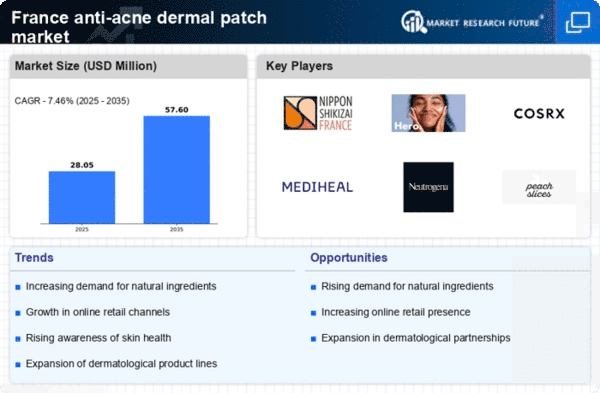
As per Market Research Future analysis, the France Anti Acne Dermal Patch Market size was estimated at 26.1 USD Million in 2024. The Anti Acne-dermal-patch market is projected to grow from 28.05 USD Million in 2025 to 57.6 USD Million by 2035, exhibiting a compound annual growth rate (CAGR) of 7.4% during the forecast period 2025 - 2035

Key Market Trends & Highlights

The France anti acne-dermal-patch market is experiencing a notable shift towards natural ingredients and innovative technologies.

  • The largest segment in the market is driven by the rising demand for natural ingredients, appealing to health-conscious consumers.
  • Technological innovations in product development are enhancing the efficacy and appeal of anti acne-dermal patches.
  • E-commerce channels are rapidly growing, providing consumers with convenient access to a wider range of products.
  • Key market drivers include increasing awareness of skin health and a growing preference for non-invasive treatments.

Market Size & Forecast

2024 Market Size 26.1 (USD Million)
2035 Market Size 57.6 (USD Million)
CAGR (2025 - 2035) 7.46%

Major Players

Nippon Shikizai Inc (JP), Hero Cosmetics (US), COSRX (KR), Mediheal (KR), Neutrogena (US), Peach Slices (US), The Ordinary (CA), Bioré (JP)

Our Impact
Enabled $4.3B Revenue Impact for Fortune 500 and Leading Multinationals
Partnering with 2000+ Global Organizations Each Year
30K+ Citations by Top-Tier Firms in the Industry

France Anti Acne Dermal Patch Market Trends

The France Anti Acne Dermal Patch Market is currently experiencing notable growth, driven by increasing consumer awareness regarding skin health and the efficacy of targeted treatments. In France, the demand for innovative skincare solutions has surged, as individuals seek convenient and effective methods to manage acne. The rise of e-commerce platforms has further facilitated access to these products, allowing consumers to explore various options from the comfort of their homes. Additionally, the influence of social media and beauty influencers has played a pivotal role in shaping consumer preferences, leading to a heightened interest in dermal patches specifically designed for acne treatment. Moreover, the anti acne-dermal-patch market is witnessing advancements in technology, with manufacturers focusing on developing patches that incorporate active ingredients known for their acne-fighting properties. This trend aligns with the growing inclination towards natural and organic skincare products among French consumers. As a result, brands are increasingly investing in research and development to create formulations that not only target acne but also promote overall skin health. The combination of convenience, effectiveness, and innovative formulations positions the anti acne-dermal-patch market favorably for continued expansion in the coming years.

Rising Demand for Natural Ingredients

There is a growing preference among consumers for products that utilize natural and organic components. This trend reflects a broader shift towards holistic skincare solutions, as individuals become more conscious of the ingredients in their beauty products. Manufacturers are responding by formulating patches that incorporate botanical extracts and other naturally derived substances, appealing to health-conscious consumers.

Technological Innovations in Product Development

Advancements in technology are significantly influencing the anti acne-dermal-patch market. Companies are increasingly focusing on creating patches that deliver active ingredients more effectively, enhancing their therapeutic benefits. Innovations such as micro-needling and hydrocolloid technology are being integrated into product designs, improving the overall efficacy of acne treatment.

Growth of E-commerce Channels

The expansion of e-commerce platforms is reshaping how consumers access anti acne-dermal-patch products. Online shopping offers convenience and a wider selection, allowing consumers to compare products and read reviews before making purchases. This trend is particularly pronounced among younger demographics, who prefer the ease of online transactions over traditional retail shopping.

France Anti Acne Dermal Patch Market Drivers

Rising Influence of Social Media

The influence of social media on consumer behavior is a significant driver for the anti acne-dermal-patch market. In France, platforms like Instagram and TikTok have become vital channels for beauty and skincare trends. Influencers and beauty enthusiasts frequently showcase their skincare routines, often highlighting the effectiveness of dermal patches in treating acne. This visibility not only raises awareness but also drives demand for these products. Recent surveys indicate that approximately 60% of French consumers are influenced by social media when making skincare purchases. Consequently, brands in the anti acne-dermal-patch market are increasingly leveraging social media marketing strategies to engage with potential customers and promote their products, thereby enhancing market growth.

Increasing Awareness of Skin Health

The rising awareness of skin health among consumers in France is a pivotal driver for the anti acne-dermal-patch market. As individuals become more informed about skincare, they are increasingly seeking effective solutions for acne management. This trend is reflected in the growing demand for products that offer targeted treatment options. According to recent data, the skincare market in France is projected to reach €11 billion by 2026, with a notable portion attributed to acne treatment solutions. The anti acne-dermal-patch market benefits from this heightened focus on skin health, as consumers prioritize products that are both effective and convenient. Furthermore, educational campaigns by dermatologists and skincare brands contribute to this awareness, encouraging individuals to explore innovative solutions like dermal patches for acne treatment.

Shift Towards Convenience in Skincare

The anti acne-dermal-patch market is experiencing a notable shift towards convenience in skincare routines. French consumers are increasingly favoring products that offer ease of use and portability. Dermal patches, which can be applied discreetly and worn throughout the day, align perfectly with this demand for convenience. This trend is particularly appealing to younger demographics, who often seek quick and effective solutions for acne management. Market data indicates that the convenience-driven segment of the skincare market is expanding, with a projected growth rate of 8% annually. As consumers prioritize products that seamlessly integrate into their busy lifestyles, the anti acne-dermal-patch market stands to gain significantly from this evolving consumer preference.

Growing Preference for Non-Invasive Treatments

The anti acne-dermal-patch market is benefiting from a growing preference for non-invasive treatments among consumers in France. As individuals seek alternatives to traditional acne medications, dermal patches offer a less invasive option that appeals to those wary of side effects associated with oral medications. This trend is particularly pronounced among younger consumers who are more inclined to explore innovative skincare solutions. Market analysis suggests that the non-invasive skincare segment is expanding, with a projected growth rate of 7% over the next five years. The anti acne-dermal-patch market is well-positioned to capitalize on this shift, as it provides a targeted and user-friendly approach to acne treatment.

Increased Investment in Research and Development

Investment in research and development within the skincare industry is a crucial driver for the anti acne-dermal-patch market. French companies are increasingly focusing on developing advanced formulations and technologies to enhance the efficacy of dermal patches. This commitment to innovation is evident in the introduction of patches infused with active ingredients that target acne at various stages. Recent reports indicate that R&D spending in the French skincare sector has increased by 15% over the past year, reflecting a strong commitment to improving product offerings. As companies strive to meet consumer demands for effective and scientifically-backed solutions, the anti acne-dermal-patch market is likely to benefit from these advancements.


Market Segment Insights

By Acne Type: Inflammatory Acne (Largest) vs. Non-inflammatory Acne (Fastest-Growing)

In the France anti acne-dermal-patch market, the distribution of market share among acne types shows that inflammatory acne dominates the segment with a significant majority. This indicates a well-established consumer preference towards addressing inflammatory conditions, which often require immediate and effective treatment solutions. Non-inflammatory acne, while smaller in share, is gaining traction as awareness grows about skin health and prevention methods, highlighting evolving consumer behaviors. Growth trends in this segment are driven by increasing demand for targeted acne treatments that are effective and convenient. Inflammatory acne solutions continue to benefit from advances in formulation technology and consumer education. Meanwhile, non-inflammatory acne patches are emerging rapidly, appealing to a younger demographic focused on proactive skin care and preventive measures, reflecting an overall trend towards personalized health and wellness products.

Inflammatory Acne: Dominant vs. Non-inflammatory Acne: Emerging

Inflammatory acne, being the dominant segment, is characterized by its ability to provide swift relief from painful and visible breakouts. Consumers gravitate towards effective, fast-acting products to manage crisis situations, thus driving this segment. The growth of dermal patches that offer medical-grade formulations ensures a competitive edge in this space. Conversely, non-inflammatory acne patches are gaining recognition as an emerging trend, appealing to users who prefer less aggressive treatments focused on prevention and subtle care. These products often incorporate skincare benefits that promote overall skin health, aligning with the rising consumer preference for holistic approaches to skin care.

By Patch Type: Medicated (Largest) vs. Micro-Needle (Fastest-Growing)

The France anti acne-dermal-patch market segment is characterized by its division into three primary types: Medicated, Non-Medicated, and Micro-Needle. Medicated patches hold the largest market share due to their effectiveness and targeted action against acne. Non-Medicated patches, while popular, do not contribute significantly to the overall market share and are often seen as supplementary options. Micro-Needle patches are gaining traction as they offer innovative delivery methods for active ingredients and are increasingly favored by consumers seeking advanced solutions for acne treatment. Growth trends in this segment are driven by the rising prevalence of acne among various demographics, leading to increased demand for effective treatment options. The inclination towards self-care and the convenience offered by patches is further bolstering the market. Additionally, the growth of e-commerce platforms is facilitating easier access to these products, supporting the rapid ascent of Micro-Needle patches in particular. As consumers become more informed about their options, the shift towards Medicated solutions continues to solidify its dominance, while Micro-Needle innovations attract a modern audience seeking advanced efficacy.

Medicated (Dominant) vs. Micro-Needle (Emerging)

Medicated patches are recognized as the dominant force within the France anti acne-dermal-patch market, largely attributed to their formulation containing active ingredients that directly combat acne at its source. These patches are praised for their therapeutic benefits, which appeal to consumers seeking reliable and visible results. In contrast, Micro-Needle patches represent an emerging trend, featuring tiny needles that penetrate the skin to deliver medication more effectively. This method is particularly appealing to a younger demographic that values advanced skincare technologies and immediate results. While Medicated patches continue to capture the largest segment of the market, the innovative approach of Micro-Needle patches is carving out a niche, positioning them as a relevant alternative.

By Distribution Channel: E-Commerce Platform (Largest) vs. Pharmacies & Drug Stores (Fastest-Growing)

In the distribution of anti acne-dermal-patch products, E-Commerce Platforms capture the largest market share, driven by the increasing preference of consumers for online shopping. Retail Stores also hold a significant portion, yet both Retail Stores and Pharmacies & Drug Stores are gradually being overshadowed by the convenience and accessibility offered by e-commerce. The shift towards digital purchasing is evident, indicating changing consumer habits. The growth trends within this segment highlight a significant rise in E-Commerce Platforms as consumers opt for the convenience of shopping from home. Pharmacies & Drug Stores are emerging with rapid growth due to the increasing emphasis on health and skin care at physical locations. The ongoing digital transformation and the rise in telehealth solutions further bolster online sales, while the personal touch in pharmacies helps maintain their steady growth.

E-Commerce Platforms (Dominant) vs. Pharmacies & Drug Stores (Emerging)

E-Commerce Platforms dominate the distribution channel for anti acne-dermal-patch products, offering unmatched convenience and a wide range of product options to consumers. These platforms enable retailers to reach a broader audience, capitalizing on the shift towards online shopping. The extensive use of digital marketing strategies and personalized advertisements has further enhanced their market presence. On the other hand, Pharmacies & Drug Stores, while classified as the emerging channel, demonstrate impressive growth as they cater to consumers looking for expert advice and immediate access to products. Their physical presence allows for trust-building, which can significantly influence purchasing decisions. As these channels evolve, the competition between the two intensifies, shaping the landscape of the France anti acne-dermal-patch market.

By Ingredient Type: Chemical Based (Largest) vs. Herbal Based (Fastest-Growing)

In the France anti acne-dermal-patch market, Chemical Based patches currently hold the largest market share, attributed to their proven effectiveness and rapid results in treating acne. These patches leverage traditional chemical formulations that have been validated through extensive user experience, making them a preferred choice among consumers. In contrast, Herbal Based patches, while smaller in market share, are gaining traction, especially among consumers seeking natural origins in their skincare products. This growing preference is indicative of a shift towards organic and herbal solutions in the skincare industry. The market dynamics indicate that the Herbal Based segment is the fastest-growing within this category, driven by increasing consumer awareness about natural ingredients and the demand for eco-friendly products. The rise of social media influencers promoting herbal alternatives has also propelled interest in these patches. Additionally, an evolving consumer base that prioritizes health-conscious choices contributes to the robust growth of the Herbal Based segment, making it a compelling area for investment and development.

Ingredient Type: Chemical Based (Dominant) vs. Herbal Based (Emerging)

Chemical Based patches are characterized by their active ingredients that provide effective and rapid solutions for acne treatment. This segment benefits from established trust through clinical usage, resulting in strong brand loyalty. Conversely, Herbal Based patches, aimed at consumers who prefer eco-friendly and sustainable product lines, are emerging as a popular alternative. These patches typically use natural extracts, appealing to health-conscious individuals. As consumers become more educated about ingredient sourcing and the impacts of synthetic compounds, the Herbal Based segment shows potential for significant market penetration. Thus, while Chemical Based remains dominant, Herbal Based is poised for rapid growth.

Get more detailed insights about France Anti Acne Dermal Patch Market

Key Players and Competitive Insights

The anti acne-dermal-patch market in France exhibits a dynamic competitive landscape, characterized by a blend of innovation and strategic positioning among key players. Companies such as Hero Cosmetics (US), COSRX (KR), and Neutrogena (US) are at the forefront, leveraging their brand equity and product efficacy to capture market share. Hero Cosmetics (US) focuses on direct-to-consumer sales, enhancing customer engagement through social media platforms, while COSRX (KR) emphasizes product formulation transparency and sustainability, appealing to environmentally conscious consumers. Neutrogena (US) continues to innovate with its dermatologically tested products, reinforcing its reputation for quality and reliability. Collectively, these strategies contribute to a competitive environment that prioritizes consumer trust and product effectiveness.In terms of business tactics, companies are increasingly localizing manufacturing to reduce lead times and enhance supply chain efficiency. This approach not only mitigates risks associated with The anti acne-dermal-patch market demands. The competitive structure of the market appears moderately fragmented, with several players vying for dominance, yet the influence of major brands remains substantial, shaping consumer preferences and market trends.

In October Hero Cosmetics (US) launched a new line of eco-friendly anti acne-dermal patches, which utilize biodegradable materials. This strategic move aligns with the growing consumer demand for sustainable products and positions the company as a leader in environmentally responsible skincare. The introduction of these patches is likely to attract a broader customer base, particularly among younger consumers who prioritize sustainability in their purchasing decisions.

In September Neutrogena (US) announced a partnership with a leading technology firm to integrate AI-driven skin analysis into its product offerings. This collaboration aims to provide personalized skincare solutions, enhancing customer experience and engagement. By leveraging AI technology, Neutrogena (US) is poised to differentiate itself in a crowded market, offering tailored solutions that resonate with individual consumer needs.

In August COSRX (KR) expanded its distribution channels by entering into a strategic alliance with a prominent French retailer. This partnership is expected to enhance brand visibility and accessibility, allowing COSRX (KR) to tap into a wider audience. The move signifies a commitment to growth in the European market, potentially increasing market share and reinforcing its competitive stance.

As of November current trends in the anti acne-dermal-patch market are increasingly defined by digitalization, sustainability, and technological integration. The rise of strategic alliances among companies is reshaping the competitive landscape, fostering innovation and collaboration. Looking ahead, competitive differentiation is likely to evolve, shifting from price-based competition to a focus on innovation, technology, and supply chain reliability. Companies that can effectively integrate these elements into their strategies will likely emerge as leaders in this evolving market.

Key Companies in the France Anti Acne Dermal Patch Market include

Industry Developments

The France Anti-Acne Dermal Patch Market has witnessed several significant developments recently. Companies like Cosrx, Peach Slices, Clean and Clear, L'Oréal, and Hero Cosmetics have been actively promoting innovative products targeted at acne treatment. 

In particular, the increasing popularity of KBeauty has contributed to a rise in consumer interest in dermal patches as a convenient and effective solution for acne management. The market valuation has shown noticeable growth in recent years, with significant uptake noted since mid-2021, reflecting changing consumer preferences towards skincare products that offer targeted treatments.In September 2023, a collaboration between Neutrogena and an emerging KBeauty brand expanded the offerings available in France, while the emergence of companies like Avarelle and MediHeal indicates a trend towards diversification within the market. 

Furthermore, the regulatory environment in France has been adapting to accommodate the introduction of new beauty technologies, with guidelines to ensure safety and efficacy. Although no significant mergers or acquisitions have been reported in the segment recently, the ongoing innovation and expansion of product lines among established brands continue to shape the market landscape.

Future Outlook

France Anti Acne Dermal Patch Market Future Outlook

The Anti Acne Dermal Patch Market in France is projected to grow at a 7.46% CAGR from 2025 to 2035, driven by increasing consumer awareness and demand for effective skincare solutions.

New opportunities lie in:

  • Development of subscription-based delivery services for patches
  • Partnerships with dermatologists for product endorsements
  • Expansion into e-commerce platforms targeting young adults

By 2035, the market is expected to achieve substantial growth and innovation.

Market Segmentation

France Anti Acne Dermal Patch Market Acne Type Outlook

  • Inflammatory Acne
  • Non-inflammatory Acne

France Anti Acne Dermal Patch Market Patch Type Outlook

  • Medicated
  • Non-Medicated
  • Micro-Needle

France Anti Acne Dermal Patch Market Ingredient Type Outlook

  • Chemical Based
  • Herbal Based

France Anti Acne Dermal Patch Market Distribution Channel Outlook

  • Retail Stores
  • Pharmacies & Drug Stores
  • E-Commerce Platform

Report Scope

MARKET SIZE 2024 26.1(USD Million)
MARKET SIZE 2025 28.05(USD Million)
MARKET SIZE 2035 57.6(USD Million)
COMPOUND ANNUAL GROWTH RATE (CAGR) 7.46% (2025 - 2035)
REPORT COVERAGE Revenue Forecast, Competitive Landscape, Growth Factors, and Trends
BASE YEAR 2024
Market Forecast Period 2025 - 2035
Historical Data 2019 - 2024
Market Forecast Units USD Million
Key Companies Profiled Nippon Shikizai Inc (JP), Hero Cosmetics (US), COSRX (KR), Mediheal (KR), Neutrogena (US), Peach Slices (US), The Ordinary (CA), Bioré (JP)
Segments Covered Acne Type, Patch Type, Distribution Channel, Ingredient Type
Key Market Opportunities Rising demand for innovative formulations and eco-friendly materials in the anti acne-dermal-patch market.
Key Market Dynamics Rising consumer demand for effective anti acne solutions drives innovation in dermal patch technology and formulations.
Countries Covered France
Leave a Comment

FAQs

What is the expected market size of the France Anti-Acne Dermal Patch Market in 2024?

The France Anti-Acne Dermal Patch Market is expected to be valued at 26.1 million USD in 2024.

What will be the market growth rate for the France Anti-Acne Dermal Patch Market between 2025 and 2035?

The market is anticipated to grow at a CAGR of 9.197% from 2025 to 2035.

What is the projected market value for inflammatory acne patches in 2035?

Inflammatory acne patches are projected to reach a market value of 28.1 million USD by 2035.

Which segment represents a larger market size in 2024, inflammatory or non-inflammatory acne patches?

Non-inflammatory acne patches represent a larger market size of 15.6 million USD compared to 10.5 million USD for inflammatory acne patches in 2024.

Who are the major players in the France Anti-Acne Dermal Patch Market?

Major players include Cosrx, Peach Slices, Clean & Clear, L'Oréal, and Neutrogena.

What is the expected market value for non-inflammatory acne patches in 2035?

The market for non-inflammatory acne patches is expected to reach 40.6 million USD by 2035.

What is the estimated overall market size of the France Anti-Acne Dermal Patch Market in 2035?

The overall market is expected to be valued at 68.7 million USD in 2035.

Which type of acne patch is anticipated to grow faster in the coming years?

Inflammatory acne patches are expected to witness significant growth in the coming years.

What are the key applications driving the growth of the France Anti-Acne Dermal Patch Market?

The primary applications driving growth include treatment for both inflammatory and non-inflammatory acne.

How does the current market scenario impact the growth of the France Anti-Acne Dermal Patch Market?

The current market scenario is conducive to growth due to increasing consumer awareness and demand for skincare products.

Download Free Sample

Kindly complete the form below to receive a free sample of this Report

Compare Licence

×
Features License Type
Single User Multiuser License Enterprise User
Price $4,950 $5,950 $7,250
Maximum User Access Limit 1 User Upto 10 Users Unrestricted Access Throughout the Organization
Free Customization
Direct Access to Analyst
Deliverable Format
Platform Access
Discount on Next Purchase 10% 15% 15%
Printable Versions