×
Request Free Sample ×

Kindly complete the form below to receive a free sample of this Report

* Please use a valid business email

Leading companies partner with us for data-driven Insights

clients tt-cursor
Hero Background

France Advanced Baby Monitors Market

ID: MRFR/MED/43068-HCR
200 Pages
Garvit Vyas
February 2026

France Advanced Baby Monitors Market Research Report By Product Outlook (Stationary, Wearable) and By End-User Outlook (Home Care, Day Care, Others) - Growth & Industry Forecast 2025 To 2035

Share:
Download PDF ×

We do not share your information with anyone. However, we may send you emails based on your report interest from time to time. You may contact us at any time to opt-out.

France Advanced Baby Monitors Market Infographic
Purchase Options

France Advanced Baby Monitors Market Summary

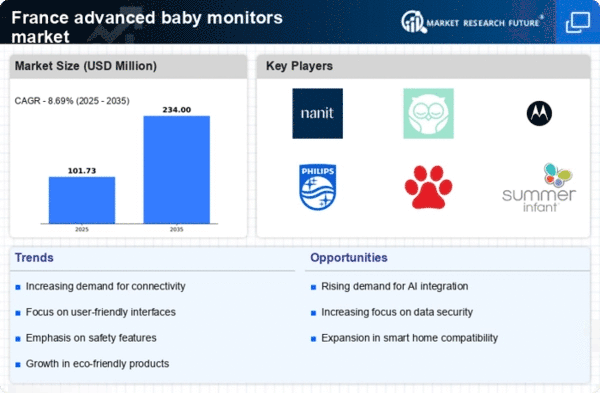
As per Market Research Future analysis, the France Advanced Baby Monitors Market size was estimated at 93.6 USD Million in 2024. The Advanced Baby-monitors market is projected to grow from 101.73 USD Million in 2025 to 234.0 USD Million by 2035, exhibiting a compound annual growth rate (CAGR) of 8.6% during the forecast period 2025 - 2035

Key Market Trends & Highlights

The France advanced baby-monitors market is experiencing a robust shift towards smart technology and health-focused features.

  • The integration of smart technology is transforming the advanced baby-monitors market, enhancing user experience and functionality.
  • Health monitoring features are becoming increasingly prevalent, reflecting a growing parental focus on child well-being.
  • Sustainability and eco-friendly products are gaining traction, appealing to environmentally conscious consumers.
  • Rising parental concerns and technological advancements are key drivers propelling market growth, particularly in the largest segment of health-focused monitors.

Market Size & Forecast

2024 Market Size 93.6 (USD Million)
2035 Market Size 234.0 (USD Million)
CAGR (2025 - 2035) 8.69%

Major Players

Nanit (US), Owlet (US), Motorola (US), Philips (NL), Angelcare (CA), Summer Infant (US), Babysense (IL), VTech (TW)

Our Impact
Enabled $4.3B Revenue Impact for Fortune 500 and Leading Multinationals
Partnering with 2000+ Global Organizations Each Year
30K+ Citations by Top-Tier Firms in the Industry

France Advanced Baby Monitors Market Trends

The France Advanced Baby Monitors Market is currently experiencing a notable evolution, driven by technological advancements and changing consumer preferences. In France, parents increasingly seek devices that offer enhanced features such as high-definition video, two-way audio, and smart connectivity. This shift reflects a broader trend towards integrating technology into parenting, where safety and convenience are paramount. As a result, manufacturers are focusing on developing products that not only meet these demands but also provide additional functionalities, such as sleep tracking and environmental monitoring. Moreover, the market appears to be influenced by a growing awareness of child safety and well-being. Parents are more informed than ever about the benefits of using advanced monitoring systems, which can provide peace of mind. This trend is further supported by the rise of e-commerce platforms, making these devices more accessible to a wider audience. Consequently, the advanced baby-monitors market is poised for continued growth, as innovations and consumer education drive demand for sophisticated monitoring solutions.

Integration of Smart Technology

The advanced baby-monitors market is witnessing a surge in the integration of smart technology. Devices are increasingly equipped with features such as Wi-Fi connectivity, allowing parents to monitor their children remotely via smartphones. This trend reflects a broader shift towards smart home devices, where convenience and connectivity are prioritized.

Focus on Health Monitoring

There is a growing emphasis on health monitoring features within the advanced baby-monitors market. Many products now include functionalities that track a child's sleep patterns, breathing rates, and even room temperature. This focus on health aligns with parents' desires for comprehensive monitoring solutions that ensure their child's well-being.

Sustainability and Eco-Friendly Products

Sustainability is becoming a significant consideration in the advanced baby-monitors market. Manufacturers are increasingly exploring eco-friendly materials and production processes. This trend indicates a shift towards environmentally conscious consumerism, where parents prefer products that are not only safe for their children but also for the planet.

France Advanced Baby Monitors Market Drivers

Changing Family Dynamics

The changing dynamics of family structures in France are contributing to the growth of the advanced baby-monitors market. With an increase in dual-income households, parents are often balancing work and family responsibilities, leading to a greater reliance on technology for child monitoring. Approximately 60% of working parents report using baby-monitors to ensure their child's safety while they are occupied with other tasks. This trend indicates a shift in how parents approach childcare, with technology playing a crucial role in providing reassurance. The advanced baby-monitors market is likely to see continued growth as these devices offer features that cater to the needs of busy families, such as remote access and alerts. As societal norms evolve, the demand for convenient and reliable monitoring solutions is expected to rise, further enhancing market opportunities.

Rising Parental Concerns

In recent years, there has been a notable increase in parental concerns regarding child safety and well-being. This trend appears to be driving demand for advanced baby-monitors, which offer features such as real-time video streaming, two-way audio, and temperature monitoring. In France, approximately 70% of parents express a desire for enhanced monitoring capabilities, indicating a strong market potential. The advanced baby-monitors market is likely to benefit from this heightened awareness, as parents seek products that provide peace of mind. Furthermore, the integration of advanced technology in these devices, such as AI-driven alerts and mobile app connectivity, aligns with the growing expectations of tech-savvy consumers. As a result, manufacturers are increasingly focusing on developing innovative solutions that cater to these concerns, thereby propelling market growth.

Technological Advancements

The rapid pace of technological advancements is significantly influencing the advanced baby-monitors market. Innovations such as high-definition video quality, night vision, and smart home integration are becoming standard features in new products. In France, the market for smart baby-monitors is projected to grow at a CAGR of 15% over the next five years, reflecting the increasing consumer preference for high-tech solutions. The advanced baby-monitors market is witnessing a shift towards devices that not only monitor but also analyze data, providing parents with insights into their child's sleep patterns and overall health. This trend suggests that manufacturers who invest in R&D to enhance product functionality and user experience are likely to gain a competitive edge. As technology continues to evolve, the demand for sophisticated monitoring solutions is expected to rise, further driving market expansion.

Growing E-commerce Adoption

The increasing adoption of e-commerce platforms in France is transforming the way consumers purchase baby products, including advanced baby-monitors. With the convenience of online shopping, parents are more inclined to explore a wider range of options and compare features before making a purchase. Recent statistics show that online sales of baby products have surged by 25% in the past year, indicating a shift in consumer behavior. The advanced baby-monitors market is likely to benefit from this trend, as e-commerce platforms provide access to a broader audience and facilitate easier product discovery. Furthermore, the ability to read reviews and access detailed product information online empowers consumers to make informed decisions. As e-commerce continues to grow, the market is expected to see increased sales and a diversification of product offerings, catering to the evolving preferences of modern parents.

Increased Disposable Income

The rise in disposable income among French households is positively impacting the advanced baby-monitors market. As families experience improved financial stability, they are more willing to invest in premium baby-monitoring solutions that offer advanced features and functionalities. Recent data indicates that households with an annual income exceeding €50,000 are 40% more likely to purchase high-end baby-monitors. This trend suggests that the advanced baby-monitors market is poised for growth, as consumers prioritize quality and innovation in their purchasing decisions. Additionally, the willingness to spend on child safety and well-being reflects a broader societal trend towards investing in technology that enhances parenting experiences. As disposable income continues to rise, the market is expected to attract a larger segment of consumers seeking sophisticated monitoring solutions.


Market Segment Insights

By Product: Wearable (Largest) vs. Stationary (Fastest-Growing)

In the France advanced baby-monitors market, the product segment is characterized by two main values: Wearable and Stationary. Wearable monitors dominate this space, capturing a significant share among consumers looking for convenience and mobility. In contrast, the Stationary segment is rapidly expanding, driven by advancements in technology that enhance features and functionalities, appealing to a wide range of parents seeking reliable monitoring solutions. Growth trends indicate that as parental awareness increases, the demand for baby-monitoring products escalates. The Wearable segment's dominance arises from its innovative designs that allow for real-time tracking of infants' conditions. Meanwhile, the Stationary segment is becoming increasingly popular as manufacturers innovate, introducing features that cater to modern parenting needs, thus setting the stage for its rapid ascent in market presence.

Wearable (Dominant) vs. Stationary (Emerging)

The Wearable segment of baby monitors is recognized for its user-friendly features and portability, making it a preferred choice for on-the-go parents. Wearables typically include smart textiles that monitor various infant conditions, providing parents with real-time alerts and updates. This segment's innovation has positioned it as a dominant force within the France advanced baby-monitors market. On the other hand, the Stationary segment is emerging strongly, characterized by high-definition video capabilities and smart home integration, appealing to tech-savvy families. These monitors often come with robust features like night vision and humidity sensors, enhancing the safety and monitoring experience. As manufacturers continue to innovate, the Stationary segment shows promising potential for growth.

By End-User: Home Care (Largest) vs. Day Care (Fastest-Growing)

The France advanced baby-monitors market showcases a diverse distribution among key end-user segments, with Home Care holding the largest share. Its significant presence can be attributed to the increasing number of households opting for advanced monitoring solutions to ensure the safety and well-being of their infants. Meanwhile, the Day Care segment is gaining traction, reflecting a growing trend where child care facilities invest in these technologies to enhance parental trust and operational efficiency. Growth trends in the end-user segment indicate a shift towards multifunctional baby-monitoring solutions that cater to the evolving needs of both Home Care and Day Care users. Factors such as the rise in awareness regarding child safety, advancements in technology, and the demand for real-time connectivity are driving this market. The increased focus on child development and parental peace of mind is propelling innovations, thereby influencing purchasing decisions across various segments.

Home Care (Dominant) vs. Day Care (Emerging)

Home Care remains the dominant segment in the France advanced baby-monitors market, characterized by a strong adoption of high-tech monitoring devices that provide parents with peace of mind. The segment benefits from a wide array of products featuring video, audio, and smart connectivity options that cater to families' diverse needs. In contrast, the Day Care segment is emerging, witnessing rapid growth as childcare providers recognize the importance of advanced monitoring technology. This segment typically focuses on devices that support multiple children and integrate features such as mobile notifications, enabling caregivers to monitor various activities effectively. Both segments play pivotal roles in shaping the overall landscape of the market.

Get more detailed insights about France Advanced Baby Monitors Market

Key Players and Competitive Insights

The advanced baby-monitors market in France is characterized by a dynamic competitive landscape, driven by technological advancements and evolving consumer preferences. Key players such as Nanit (US), Owlet (US), and Philips (NL) are at the forefront, each adopting distinct strategies to enhance their market presence. Nanit (US) focuses on innovation through its smart monitoring technology, which integrates AI to provide personalized insights for parents. Meanwhile, Owlet (US) emphasizes health monitoring features, positioning itself as a leader in infant health technology. Philips (NL), leveraging its extensive experience in consumer electronics, aims to expand its product line with enhanced connectivity features, thereby appealing to tech-savvy parents. Collectively, these strategies contribute to a competitive environment that prioritizes innovation and consumer engagement.In terms of business tactics, companies are increasingly localizing manufacturing and optimizing supply chains to enhance efficiency and reduce costs. The market structure appears moderately fragmented, with several players vying for market share. However, the influence of major companies is significant, as they set trends and standards that smaller firms often follow. This competitive structure fosters an environment where innovation is crucial for differentiation, compelling companies to continuously adapt and evolve their offerings.

In October Nanit (US) announced a partnership with a leading pediatric health organization to enhance its monitoring capabilities. This collaboration is expected to integrate expert health insights into Nanit’s existing platform, potentially elevating its value proposition in the market. Such strategic alliances not only bolster product offerings but also enhance brand credibility, which is vital in a market where trust is paramount.

In September Owlet (US) launched a new subscription service that provides parents with access to real-time health data and personalized coaching. This move signifies a shift towards a more service-oriented approach, allowing Owlet to create a recurring revenue stream while deepening customer engagement. The strategic importance of this initiative lies in its potential to foster long-term relationships with consumers, thereby enhancing brand loyalty in a competitive landscape.

In August Philips (NL) unveiled a new line of baby monitors featuring advanced AI capabilities that allow for predictive analytics regarding infant sleep patterns. This innovation not only positions Philips as a technology leader but also addresses a growing consumer demand for data-driven parenting solutions. The introduction of such features indicates a broader trend towards integrating AI into everyday parenting tools, which could redefine user expectations in the market.

As of November current competitive trends are heavily influenced by digitalization, sustainability, and AI integration. Companies are increasingly forming strategic alliances to leverage complementary strengths, thereby enhancing their market offerings. The competitive differentiation is likely to evolve from traditional price-based competition to a focus on innovation, technology, and supply chain reliability. This shift suggests that companies that prioritize these aspects will be better positioned to capture market share and meet the demands of modern consumers.

Key Companies in the France Advanced Baby Monitors Market include

Industry Developments

The France Advanced Baby Monitors Market has recently witnessed significant developments impacting companies such as VTech, iBaby, Withings, and Nanit. Notably, in September 2023, Withings introduced an advanced sleep monitor that integrates with existing baby monitor technologies, enhancing sleep tracking for infants. Growth in consumer demand for features like high-definition video and smart connectivity has promoted expansion among brands like Philips Avent and Motorola.

Additionally, the market has seen a rise in competition, with startups such as Lollipop gaining traction due to innovative designs and features. In terms of mergers, VTech announced an acquisition of a European tech firm in August 2023, bolstering its digital capabilities in baby monitoring technology.

This strategic move aligns with the increasing consumer preference for integrated smart home products, amplifying market competition. France's emphasis on child safety standards has also influenced the market, as manufacturers comply with rigorous regulations, thereby impacting their product offerings and market strategies.

Overall, the dynamics within the France Advanced Baby Monitors Market reflect a blend of innovation, strategic partnerships, and regulatory compliance that shapes the competitive landscape.

Future Outlook

France Advanced Baby Monitors Market Future Outlook

The Advanced Baby Monitors Market is projected to grow at an 8.69% CAGR from 2025 to 2035, driven by technological advancements, increasing parental concerns, and rising disposable incomes.

New opportunities lie in:

  • Integration of AI-driven analytics for enhanced monitoring capabilities.
  • Development of subscription-based services for premium features.
  • Expansion into smart home ecosystems for seamless connectivity.

By 2035, the market is expected to achieve substantial growth, reflecting evolving consumer demands.

Market Segmentation

France Advanced Baby Monitors Market Product Outlook

  • Stationary
  • Wearable

France Advanced Baby Monitors Market End-User Outlook

  • Home Care
  • Day Care
  • Others

Report Scope

MARKET SIZE 2024 93.6(USD Million)
MARKET SIZE 2025 101.73(USD Million)
MARKET SIZE 2035 234.0(USD Million)
COMPOUND ANNUAL GROWTH RATE (CAGR) 8.69% (2025 - 2035)
REPORT COVERAGE Revenue Forecast, Competitive Landscape, Growth Factors, and Trends
BASE YEAR 2024
Market Forecast Period 2025 - 2035
Historical Data 2019 - 2024
Market Forecast Units USD Million
Key Companies Profiled Nanit (US), Owlet (US), Motorola (US), Philips (NL), Angelcare (CA), Summer Infant (US), Babysense (IL), VTech (TW)
Segments Covered Product, End-User
Key Market Opportunities Integration of AI-driven features enhances safety and monitoring capabilities in the advanced baby-monitors market.
Key Market Dynamics Technological advancements drive consumer demand for enhanced features in advanced baby-monitors, reshaping market dynamics.
Countries Covered France
Leave a Comment

FAQs

What is the expected market size of the France Advanced Baby Monitors Market in 2024?

The France Advanced Baby Monitors Market is expected to be valued at 72.0 million USD in 2024.

How much is the France Advanced Baby Monitors Market projected to grow by 2035?

By 2035, the market is projected to grow to 155.0 million USD.

What is the expected compound annual growth rate (CAGR) for the market from 2025 to 2035?

The CAGR for the France Advanced Baby Monitors Market from 2025 to 2035 is expected to be 7.219%.

Which product segment is leading the market in 2024?

In 2024, the stationary product segment is projected to lead the market with a value of 42.0 million USD.

What is the market size for wearable baby monitors in 2024?

The wearable baby monitors segment is expected to be valued at 30.0 million USD in 2024.

Who are the key players in the France Advanced Baby Monitors Market?

Major players in this market include VTech, iBaby, Withings, and Motorola among others.

What market size is expected for stationary baby monitors by 2035?

The stationary baby monitors segment is expected to reach 92.0 million USD by 2035.

How much is the wearable baby monitors segment projected to be by 2035?

The wearable baby monitors segment is projected to grow to 63.0 million USD by 2035.

What are the growth drivers for the France Advanced Baby Monitors Market?

Key growth drivers include technological advancements and increasing demand for smart parenting solutions.

What is the anticipated impact of market trends on future growth?

Emerging trends in health monitoring technology are expected to drive significant growth in the market.

Download Free Sample

Kindly complete the form below to receive a free sample of this Report

Compare Licence

×
Features License Type
Single User Multiuser License Enterprise User
Price $4,950 $5,950 $7,250
Maximum User Access Limit 1 User Upto 10 Users Unrestricted Access Throughout the Organization
Free Customization
Direct Access to Analyst
Deliverable Format
Platform Access
Discount on Next Purchase 10% 15% 15%
Printable Versions