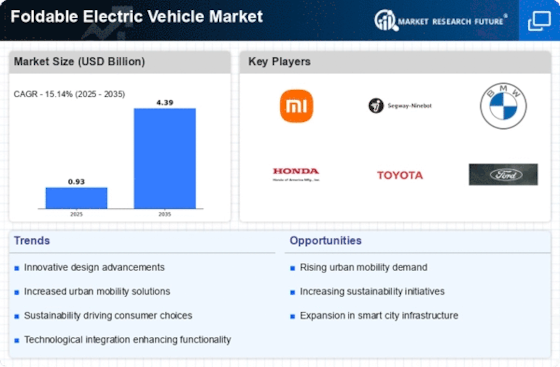
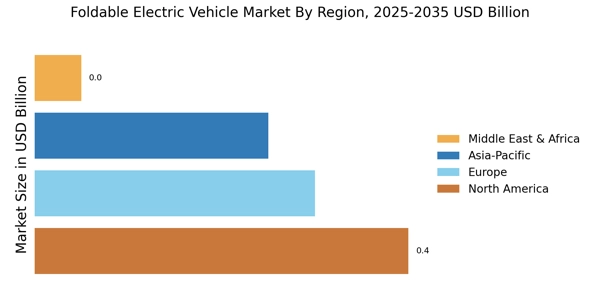
Government Incentives and Support
Government incentives and support for electric vehicles are significantly influencing the foldable electric vehicle Market. Many governments are implementing policies aimed at promoting the adoption of electric vehicles, including tax credits, rebates, and grants for manufacturers. These initiatives not only lower the cost barrier for consumers but also encourage manufacturers to invest in research and development. As a result, the Foldable Electric Vehicle Market is likely to experience accelerated growth, as more consumers are incentivized to consider electric options. Furthermore, the establishment of charging infrastructure is being prioritized, which enhances the practicality of owning foldable electric vehicles.
Urbanization and Space Constraints
The rapid pace of urbanization is creating significant space constraints in metropolitan areas, which is driving the demand for compact transportation solutions. The Foldable Electric Vehicle Market is particularly well-suited to address these challenges, as these vehicles can be easily stored and maneuvered in tight spaces. As cities continue to grow, the need for efficient and space-saving transportation options becomes increasingly critical. Data indicates that urban populations are expected to rise, leading to a greater emphasis on innovative mobility solutions. Foldable electric vehicles, with their unique design and functionality, are likely to emerge as a preferred choice for urban dwellers seeking to navigate congested environments.
Shift Towards Shared Mobility Solutions
The shift towards shared mobility solutions is reshaping the transportation landscape and impacting the Foldable Electric Vehicle Market. As ride-sharing and car-sharing services gain popularity, there is a growing need for vehicles that are not only efficient but also easy to store and deploy. Foldable electric vehicles offer a unique solution, as they can be utilized in shared mobility platforms, providing flexibility and convenience for users. This trend suggests that the Foldable Electric Vehicle Market may see increased collaboration with shared mobility providers, potentially leading to innovative business models and expanded market reach.
Rising Demand for Sustainable Transportation
The increasing awareness of environmental issues has led to a rising demand for sustainable transportation solutions. Consumers are becoming more conscious of their carbon footprints, which drives interest in the Foldable Electric Vehicle Market. As urban areas become more congested, the need for compact and eco-friendly vehicles is paramount. According to recent data, the electric vehicle segment is projected to grow at a compound annual growth rate of over 20% in the coming years. This trend suggests that foldable electric vehicles, which offer both portability and zero emissions, are well-positioned to capture a significant share of this expanding market. The Foldable Electric Vehicle Market is likely to benefit from this shift towards sustainability, as manufacturers innovate to meet consumer preferences for greener alternatives.
Technological Innovations in Battery Efficiency
Technological advancements in battery efficiency are playing a crucial role in the evolution of the Foldable Electric Vehicle Market. Recent innovations have led to the development of lighter, more efficient batteries that enhance the range and performance of electric vehicles. For instance, solid-state batteries are emerging as a promising alternative to traditional lithium-ion batteries, potentially offering greater energy density and faster charging times. This could significantly improve the user experience and broaden the appeal of foldable electric vehicles. As battery technology continues to advance, the Foldable Electric Vehicle Market may witness increased adoption rates, as consumers seek vehicles that combine convenience with enhanced performance.