Technological Innovations
Technological advancements in safety equipment are reshaping the Flame and Detonation Arrestor Market. Innovations such as smart arrestors equipped with sensors and monitoring systems are gaining traction, enhancing the effectiveness of these devices. These technologies not only improve safety but also offer real-time data analytics, allowing for better risk management. The integration of IoT in flame and detonation arrestors is particularly noteworthy, as it enables predictive maintenance and reduces downtime. As industries continue to adopt these advanced technologies, the Flame and Detonation Arrestor Market is likely to experience a surge in demand, reflecting a shift towards more sophisticated safety solutions.
Increasing Industrialization
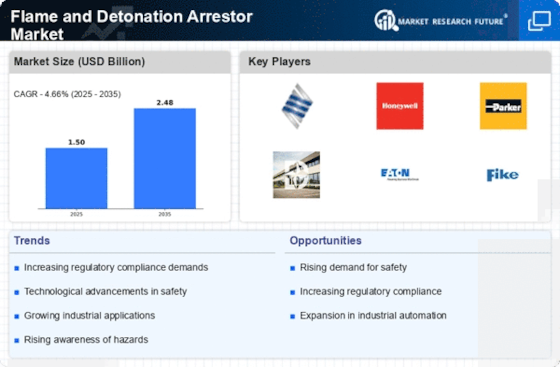
The ongoing trend of industrialization across various sectors appears to be a primary driver for the Flame and Detonation Arrestor Market. As industries expand, the need for safety measures to mitigate risks associated with flammable materials becomes paramount. This is particularly evident in sectors such as oil and gas, chemicals, and manufacturing, where the potential for explosive incidents necessitates the installation of flame and detonation arrestors. According to recent data, the demand for these safety devices is projected to grow at a compound annual growth rate of approximately 5.2% over the next five years. This growth is indicative of a broader recognition of the importance of safety in industrial operations, thereby propelling the Flame and Detonation Arrestor Market forward.
Stringent Regulatory Frameworks
The presence of stringent regulatory frameworks governing safety standards is a critical driver for the Flame and Detonation Arrestor Market. Regulatory bodies across various regions enforce compliance with safety protocols, compelling industries to adopt flame and detonation arrestors to meet these requirements. Non-compliance can lead to severe penalties and operational shutdowns, thereby incentivizing companies to invest in safety measures. Recent regulations have expanded the scope of safety equipment, further driving the demand for flame and detonation arrestors. This regulatory landscape is expected to continue evolving, ensuring that the Flame and Detonation Arrestor Market remains robust and responsive to safety needs.
Rising Awareness of Workplace Safety
There is a notable increase in awareness regarding workplace safety, which significantly influences the Flame and Detonation Arrestor Market. Organizations are increasingly prioritizing the implementation of safety protocols to protect employees and assets from potential hazards. This heightened awareness is often driven by stringent regulations and the potential financial repercussions of accidents. As a result, companies are investing in flame and detonation arrestors as a proactive measure to prevent catastrophic events. Market analysis suggests that the workplace safety segment is expected to contribute substantially to the overall growth of the Flame and Detonation Arrestor Market, with an anticipated increase in demand for these devices in various industrial applications.
Growth in Chemical and Petrochemical Industries
The expansion of the chemical and petrochemical industries is significantly impacting the Flame and Detonation Arrestor Market. These sectors are inherently associated with flammable materials, necessitating the implementation of effective safety measures to prevent explosions and fires. As these industries grow, the demand for flame and detonation arrestors is likely to increase correspondingly. Market projections indicate that the chemical sector alone could account for a substantial share of the Flame and Detonation Arrestor Market, driven by ongoing investments in infrastructure and safety enhancements. This trend underscores the critical role that flame and detonation arrestors play in safeguarding operations within these high-risk environments.