Diverse Flavor Profiles
The introduction of diverse flavor profiles in bubble tea is emerging as a key driver for the Europe Bubble Tea Market. European consumers are increasingly adventurous in their taste preferences, seeking unique and innovative flavors that go beyond traditional options. This trend is reflected in the growing popularity of fruit-infused bubble teas, as well as seasonal and limited-edition flavors. In 2025, it is anticipated that flavor innovation could contribute to a 15% increase in market share for bubble tea brands. The ability to cater to local tastes while incorporating exotic ingredients allows brands to differentiate themselves in a competitive landscape. This diversity not only attracts new customers but also encourages repeat purchases, thereby enhancing overall market growth.
Health and Wellness Trends
The increasing focus on health and wellness among European consumers is likely to drive the Europe Bubble Tea Market. As individuals become more health-conscious, there is a growing demand for beverages that offer nutritional benefits. Many bubble tea brands are responding by introducing healthier options, such as low-sugar or organic ingredients. In 2025, it is estimated that the health-oriented segment of the bubble tea market could account for nearly 30% of total sales. This shift towards healthier choices not only attracts a wider audience but also aligns with the broader trend of consumers seeking transparency in food and beverage ingredients. Consequently, the market is evolving to meet these demands, potentially leading to increased sales and brand loyalty.
Expansion of Retail Outlets
The proliferation of bubble tea shops across Europe is a notable driver for the Europe Bubble Tea Market. In recent years, cities such as London, Paris, and Berlin have witnessed a surge in bubble tea outlets, with estimates suggesting that the number of shops has doubled since 2020. This expansion is indicative of a growing consumer base that is eager to experience bubble tea. The convenience of access to bubble tea, coupled with the rise of delivery services, has made it easier for consumers to enjoy this beverage. By 2026, the number of bubble tea shops in Europe is projected to exceed 1,500, further solidifying the market's presence. This growth not only enhances brand visibility but also fosters competition, which may lead to innovation and improved product offerings.
Social Media Marketing Strategies
The role of social media in promoting bubble tea is becoming increasingly prominent within the Europe Bubble Tea Market. Brands are leveraging platforms such as Instagram and TikTok to engage with younger audiences, showcasing visually appealing drinks that encourage sharing and interaction. This strategy appears to be effective, as social media-driven campaigns have led to a notable increase in foot traffic to bubble tea shops. In 2025, it is estimated that social media marketing could account for up to 40% of customer acquisition for bubble tea brands. The ability to create viral content and engage with consumers directly fosters a sense of community and brand loyalty. As social media continues to evolve, its impact on the bubble tea market is likely to grow, shaping consumer preferences and purchasing behaviors.
Rising Popularity of Asian Culture
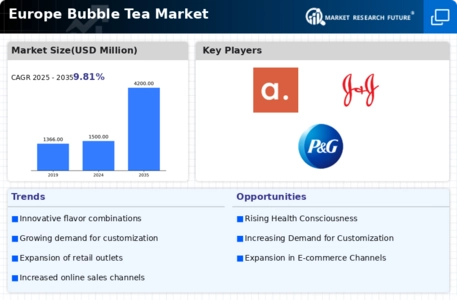
The increasing fascination with Asian culture across Europe appears to be a significant driver for the Europe Bubble Tea Market. This trend is evidenced by the growing number of Asian restaurants and cafes, which often feature bubble tea on their menus. In 2025, the market for bubble tea in Europe is projected to reach approximately 500 million euros, reflecting a compound annual growth rate of around 10%. This cultural appreciation not only enhances the visibility of bubble tea but also encourages consumers to explore diverse flavors and styles, thereby expanding the market. The influence of Asian pop culture, including K-pop and anime, further fuels this interest, leading to a broader acceptance and demand for bubble tea among European consumers.