×
Request Free Sample ×

Kindly complete the form below to receive a free sample of this Report

* Please use a valid business email

Leading companies partner with us for data-driven Insights

clients tt-cursor
Hero Background
English
Chinese
French
Japanese
Korean
German
Spanish

Europe Biochar from Woody Biomass Market Trends

ID: MRFR/EnP/13974-CR
128 Pages
Anshula Mandaokar
January 2024

Europe Biochar from Woody Biomass Market Research Report Information By Technology (Pyrolysis, Gasification, Others), By Application Construction, Soil Renovation Improvement, and Others) and By Country (Germany, France, UK, Poland, Switzerland, Belgium, Austria, Netherlands, Denmark, Finland, Norway, Sweden, Lithuania, Estonia, Rest of Europe) - Forecast to 2035

Share:
Download PDF ×

We do not share your information with anyone. However, we may send you emails based on your report interest from time to time. You may contact us at any time to opt-out.

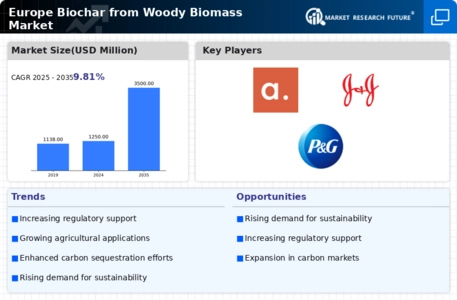
Europe Biochar from Woody Biomass Market Infographic
Purchase Options

Market Trends

Key Emerging Trends in the Europe Biochar from Woody Biomass Market

There are various trends related to the Europe Biochar from Woody Biomass market that have been driving its route of late. The popularity of biochar, which is described as a charcoal-rich product and obtained through woody biomass pyrolysis benefits from its potential to enhance fertility and retain valuable nutrients. One significant factor that propels this market forward is the growing popularity and implementation of sustainable agriculture methods. As European countries turn toward sustainable farming methods, biochar has emerged as an essential component of soil management. Policies of European governments also contribute to the market trend since they encourage biochar production and application. However, incentives subsidies and regulatory framework is being integrated into the biochar industry with regards to its contribution in climate change as well promoting circular economy principles. This supportive regulation environment is catalyzing investments in the sector that are propelling market growth. However, it is worth mentioning that the need for biochar produced from woody biomass keeps on rising as farmers find different methods of enhancing their soil health and increasing production. Biochar works as a conditioner in the soil to increase moisture and availability of elements. This has led to heavy investment in research and development projects aimed at perfecting techniques for biochar production. There is also an attempt by different countries to evaluate applications of the product within various agriculture fields. The market is witnessing innovation in the form of biochar formulations tailored for unique crop and soil requirements. Collaborations between research organizations, biochar producers and agricultural professionals are leading to knowledge exchange as well as technology transfer. This cooperative approach is crucial in addressing difficulties and the maintenance of biochar market sustainability. As a result, an interagency network of stakeholders is diffusing and influencing the codification of best practices standards in biochar production and utilization. The consumer preference and awareness towards nature-friendly products also support the market trends. As a result of the growing environmental concerns, there is an increase in demand for products that are produced using eco-friendly processes like biochar revitalized on agricultural production. This consumer-centric shift has made farmers comfortable with biochar as they try to meet the demand for sustainable food production. The market for biochar extends to other non-agricultural uses such as wastewater treatment and renewable energy. The flexibility of biochar also contributes to the attractiveness, promoting fresh chances for market development. Companies are looking for the different applications of biochar and people shifting towards it as a new market. However, the issues of expensive production and low consumer awareness persist. Achievement of such a target will need coordinated efforts from the stakeholders, creating awareness among farmers and consumers on long-term benefits of using biochar. In addition, technological innovations and economies of scale production may be viewed as a way round the cost concerns making biochar viable.

Author
Anshula Mandaokar
Team Lead - Research

Anshula Mandaokar holds an academic degree in Chemical Engineering and has been contributing to the field for more than 5 years. She has expertise in Market Research and Business Consulting and serves as a Team Lead for a reputed Market Research firm under the Chemicals and Materials domain spectrum. She has worked on multiple projects, generating explicit results in a quick turnaround time. Her understanding of data interpretation justifies her role as a leader.

Leave a Comment

FAQs

What is the current valuation of the Europe Biochar From Woody Biomass Market?

The market valuation reached 700.0 USD Million in 2024.

What is the projected market size for the Europe Biochar From Woody Biomass Market by 2035?

The market is expected to grow to 2146.0 USD Million by 2035.

What is the expected CAGR for the Europe Biochar From Woody Biomass Market during the forecast period?

The market is projected to experience a CAGR of 10.72% from 2025 to 2035.

Which applications are driving the Europe Biochar From Woody Biomass Market?

Key applications include Soil Amendment, Carbon Sequestration, Water Filtration, and Energy Production, with valuations ranging from 100.0 to 646.0 USD Million.

Market Summary

As per analysis, the Europe Biochar From Woody Biomass Market is projected to grow from USD 782.0 Million in 2025 to USD 2,146.0 Million by 2035, exhibiting a compound annual growth rate (CAGR) of 10.72% during the forecast period (2025 - 2035).

Key Market Trends & Highlights

The Europe Biochar From Woody Biomass Market is experiencing robust growth driven by sustainability and innovation.

  • Germany remains the largest market for biochar from woody biomass, reflecting a strong commitment to sustainable agricultural practices. The UK is emerging as the fastest-growing region, driven by increasing investments in biochar technology and production. Soil amendment continues to dominate the market, while carbon sequestration is rapidly gaining traction as a vital segment. Rising environmental awareness and supportive regulatory frameworks are key drivers propelling market expansion.

Market Size & Forecast

2024 Market Size 700.0 (USD Million)
2035 Market Size 2146.0 (USD Million)
CAGR (2025 - 2035) 10.72%

Major Players

<a href="https://www.carbongold.com/what-is-biochar/">Carbon Gold</a> (GB), Biochar Solutions (AT), Agri-Tech Producers (GB), ECOERA (DE), <a href="https://green-carbon.co.jp/en/mouwithlivingloots/">Green Carbon</a> (FR), Biochar Now (GB), CharGrow (NL), Terra Char (IT)

Market Trends

The Europe Biochar From Woody Biomass Market is currently experiencing a notable transformation, driven by increasing awareness of sustainable agricultural practices and the need for carbon sequestration. This market appears to be gaining traction as stakeholders recognize the potential of biochar to enhance soil health, improve crop yields, and mitigate climate change effects. The European Union's commitment to reducing greenhouse gas emissions and promoting renewable energy sources further supports the growth of this sector.

Additionally, various initiatives aimed at promoting circular economy principles are likely to bolster the adoption of biochar technologies across the region. Moreover, the market landscape is characterized by a diverse range of players, including small-scale producers and larger industrial entities. This diversity may foster innovation and competition, leading to advancements in biochar production techniques and applications. The increasing collaboration between research institutions and industry stakeholders suggests a promising future for the Europe Biochar From Woody Biomass Market.

As regulatory frameworks evolve and funding opportunities expand, the market could witness enhanced investment and development, paving the way for a more sustainable agricultural future in Europe.

Rising Demand for Sustainable Agriculture

The Europe Biochar From Woody Biomass Market is witnessing a growing demand for sustainable agricultural practices. Farmers and agronomists are increasingly recognizing the benefits of biochar in enhancing soil fertility and water retention. This trend indicates a shift towards environmentally friendly farming methods, aligning with the European Union's sustainability goals.

Government Support and Policy Frameworks

Government initiatives and supportive policy frameworks are playing a crucial role in the growth of the Europe Biochar From Woody Biomass Market. Various European countries are implementing regulations that encourage the use of biochar as a soil amendment, which may lead to increased adoption among agricultural producers.

Technological Advancements in Production

Technological advancements in biochar production processes are emerging as a key trend within the Europe Biochar From Woody Biomass Market. Innovations in pyrolysis and gasification technologies are likely to enhance the efficiency and scalability of biochar production, making it more accessible to a wider range of users.

Europe Biochar from Woody Biomass Market Market Drivers

Rising Environmental Awareness

The Europe Biochar From Woody Biomass Market is experiencing a surge in demand driven by increasing environmental awareness among consumers and businesses. As climate change concerns escalate, stakeholders are seeking sustainable solutions to mitigate carbon emissions. Biochar, produced from woody biomass, is recognized for its potential to sequester carbon and improve soil health. According to recent data, the European Union aims to achieve carbon neutrality by 2050, which has led to heightened interest in biochar as a viable carbon management strategy. This growing consciousness about environmental sustainability is likely to propel the market forward, as more agricultural and forestry sectors adopt biochar to enhance their ecological footprint.

Supportive Regulatory Frameworks

The Europe Biochar From Woody Biomass Market benefits significantly from supportive regulatory frameworks established by various European governments. Policies promoting renewable energy and sustainable waste management are increasingly favoring biochar production. For instance, the European Commission has introduced directives that encourage the use of biomass for energy and soil enhancement. These regulations not only provide financial incentives for biochar production but also create a favorable market environment. As a result, investments in biochar technologies are likely to increase, fostering innovation and expanding the market. The alignment of biochar initiatives with the EU's Green Deal further underscores the potential for growth in this sector.

Growing Agricultural Sector Demand

The agricultural sector in Europe is increasingly recognizing the benefits of biochar, which is driving growth in the Europe Biochar From Woody Biomass Market. Biochar is known to enhance soil fertility, retain moisture, and reduce the need for chemical fertilizers. As European farmers strive for sustainable practices, the adoption of biochar is becoming more prevalent. Recent studies indicate that biochar application can lead to yield increases of up to 30% in certain crops. This growing demand from the agricultural sector is expected to create new opportunities for biochar producers, as farmers seek to improve productivity while adhering to environmental regulations.

Investment in Research and Development

Investment in research and development is a key driver for the Europe Biochar From Woody Biomass Market. Various European institutions and private companies are allocating resources to explore the multifaceted applications of biochar, from carbon sequestration to waste management. Collaborative projects funded by the EU are focusing on innovative biochar applications in agriculture, energy, and environmental remediation. This emphasis on R&D is likely to yield new insights and technologies that enhance the efficiency and effectiveness of biochar production. As the market matures, these advancements could lead to the development of specialized biochar products tailored to specific industry needs, further expanding market opportunities.

Technological Innovations in Biochar Production

Technological advancements are playing a crucial role in shaping the Europe Biochar From Woody Biomass Market. Innovations in pyrolysis and gasification technologies have enhanced the efficiency and scalability of biochar production processes. For example, recent developments in continuous feed systems allow for higher throughput and lower operational costs. This has made biochar more accessible to a broader range of agricultural and industrial applications. Furthermore, the integration of digital technologies, such as IoT and data analytics, is optimizing production and quality control. As these technologies evolve, they are likely to drive down costs and improve the competitiveness of biochar in the European market.

Market Segment Insights

By Application: Soil Amendment (Largest) vs. Carbon Sequestration (Fastest-Growing)

In the Europe Biochar From Woody Biomass Market, the application segment is predominantly driven by soil amendment, which holds the largest market share due to its extensive adoption in agriculture for enhancing soil quality and crop yield. Soil amendment is crucial for improving soil structure, increasing nutrient availability, and promoting microbial activity, making it the preferred choice among farmers and land managers across Europe.

Soil Amendment (Dominant) vs. Carbon Sequestration (Emerging)

Soil amendment is characterized by its established market presence and broad acceptance among agricultural practitioners who recognize biochar's effectiveness in enriching soil properties. It facilitates superior water retention and nutrient retention, which is essential in European regions facing soil degradation. Meanwhile, carbon sequestration is emerging rapidly, fueled by growing environmental awareness and regulatory frameworks aimed at reducing carbon emissions. As businesses and governments seek sustainable practices, biochar’s role in capturing carbon makes it an attractive option for investment and innovation, catering to eco-conscious consumers and organizations.

By End Use: Agriculture (Largest) vs. Horticulture (Fastest-Growing)

In the Europe Biochar From Woody Biomass Market, the end-use segments showcase varied applications that cater to distinct needs. Agriculture remains the largest segment, driven by the demand for sustainable farming practices that improve soil health and crop yield. Horticulture, while smaller in comparison, is gaining traction as an emerging market, reflecting increased interest in ornamental plants and urban gardening that leverage biochar's benefits. The growth trends within these segments are significant, propelled by several factors. The rising awareness of environmental issues coupled with a robust push towards organic farming contributes to the demand for biochar in agriculture. Simultaneously, horticulture is expanding rapidly as urbanization fosters interest in innovative gardening solutions, thus establishing biochar as a key component in soil enrichment for various horticultural applications.

Agriculture (Dominant) vs. Environmental Remediation (Emerging)

In the realm of biochar applications, agriculture stands out as the dominant force, leveraging its benefits in enhancing soil structure, water retention, and nutrient availability. Farmers increasingly turn to biochar as a sustainable amendment that supports eco-friendly practices and long-term soil health. Conversely, environmental remediation emerges as a burgeoning segment, focusing on soil and water reclamation processes. The potential of biochar in treating contaminated soils and improving <a href="https://www.marketresearchfuture.com/reports/waste-management-market-21342">waste management</a> positions it as an innovative solution in ecological restoration strategies. This contrast highlights the established presence of agriculture, with its extensive adoption, against the backdrop of a developing field in environmental remediation that holds promise for future growth.

By Production Method: Pyrolysis (Largest) vs. Gasification (Fastest-Growing)

In the Europe Biochar From Woody Biomass Market, the production method segment is diversified into pyrolysis, gasification, hydrothermal carbonization, and combustion. Pyrolysis holds the largest market share due to its established technology and efficiency in converting biomass into biochar. Gasification, while currently smaller in market share, is gaining attention as it offers a sustainable avenue for energy recovery from biomass, leading to its rapid growth in recent years.

Production Method: Pyrolysis (Dominant) vs. Gasification (Emerging)

Pyrolysis remains the dominant production method in the biochar market, capitalizing on its mature processes and ability to produce biochar with high carbon content and stability. This method allows for the production of energy alongside biochar, creating a dual benefit for manufacturers. Conversely, gasification is emerging rapidly, driven by technological advancements and increased investment. It offers flexibility in feedstock and the potential for higher energy yields, making it attractive for future developments in biochar production. Manufacturers are increasingly leaning towards gasification for its environmental benefits and potential for carbon-negative operations.

By Feedstock Type: Hardwood (Largest) vs. Agricultural Residues (Fastest-Growing)

The feedstock type segment in the Europe Biochar from Woody Biomass Market is primarily characterized by four main categories: Hardwood, Softwood, Agricultural Residues, and Forest Residues. Hardwood is the dominant type due to its high carbon content and availability, which allows for the production of biochar with superior quality and performance. Softwood follows closely, offering a more lightweight alternative. In contrast, Agricultural Residues and Forest Residues are gaining traction as they provide an efficient means of utilizing waste materials, thereby contributing to a circular economy and sustainability efforts.

Hardwood (Dominant) vs. Agricultural Residues (Emerging)

Hardwood stands out as the dominant feedstock in the biochar market, attributed to its high density and carbon stability, which result in top-tier biochar products. It is often sourced from extensive forestry operations and offers high yield efficiency. On the other hand, Agricultural Residues, characterized by crop leftovers and by-products, represent an emerging segment that is rapidly growing in importance. This rise is driven by increasing awareness of sustainability and the need for waste valorization in agriculture. As farmers seek effective waste management practices, Agricultural Residues not only provide a cost-effective feedstock option but also help enhance soil fertility and quality when converted to biochar.

Get more detailed insights about Europe Biochar from Woody Biomass Market Research Report — Global Forecast till 2035

Regional Insights

Germany : Strong Demand and Innovation Drive Growth

Germany holds a commanding market share of 35% in the Biochar from Woody Biomass sector, valued at $210.0 million. Key growth drivers include increasing awareness of sustainable agriculture and government initiatives promoting carbon sequestration. The demand for biochar is rising due to its applications in soil enhancement and waste management. Regulatory policies, such as the German Climate Action Program, support biochar production, while robust infrastructure in biomass processing facilities enhances market potential.

UK : Sustainability Initiatives Fuel Growth

The UK biochar market is valued at $120.0 million, accounting for 20% of the European market. Growth is driven by increasing agricultural sustainability initiatives and a shift towards carbon-neutral practices. The UK government supports biochar through various grants and funding programs aimed at enhancing soil health and reducing waste. The demand for biochar is particularly strong in organic farming and horticulture, reflecting changing consumption patterns.

France : Focus on Agricultural Applications

France's biochar market is valued at $100.0 million, representing 16.7% of the European market. The growth is propelled by innovative agricultural practices and a focus on improving soil fertility. Government policies, such as the Ecophyto Plan, encourage the use of biochar in sustainable farming. The demand is particularly high in regions like Occitanie and Nouvelle-Aquitaine, where agriculture is a key economic driver, leading to increased consumption of biochar products.

Russia : Diverse Biomass Resources Available

Russia's biochar market is valued at $90.0 million, capturing 15% of the European market. The country benefits from abundant woody biomass resources, driving growth in biochar production. Demand is rising in sectors like forestry and agriculture, supported by government initiatives aimed at sustainable land management. The competitive landscape includes local players focusing on innovative biochar applications, particularly in soil remediation and carbon offset projects.

Italy : Sustainable Practices Gain Traction

Italy's biochar market is valued at $80.0 million, accounting for 13.3% of the European market. The growth is driven by increasing awareness of sustainable agricultural practices and government support for biochar initiatives. Regions like Emilia-Romagna and Lombardy are key markets, where biochar is used to enhance soil quality and reduce waste. The competitive landscape features local companies focusing on eco-friendly production methods and innovative applications in agriculture.

Spain : Focus on Environmental Sustainability

Spain's biochar market is valued at $70.0 million, representing 11.7% of the European market. The growth is fueled by a strong emphasis on environmental sustainability and government policies promoting renewable energy. Key markets include Andalusia and Catalonia, where biochar is increasingly used in agriculture and landscaping. The competitive landscape includes both local and international players, with a focus on innovative biochar applications to improve soil health and carbon capture.

Rest of Europe : Varied Applications and Growth Potential

The Rest of Europe biochar market is valued at $30.0 million, accounting for 5% of the European market. Growth is driven by diverse applications in agriculture, landscaping, and waste management. Countries like Austria and the Netherlands are emerging markets, supported by government initiatives promoting sustainable practices. The competitive landscape features a mix of local and international players, focusing on innovative biochar solutions tailored to regional needs.

Key Players and Competitive Insights

The Biochar From Woody Biomass Market in Europe is characterized by a dynamic competitive landscape, driven by increasing environmental awareness and the need for sustainable agricultural practices. Key players are actively engaging in innovative strategies to enhance their market presence. For instance, Carbon Gold (GB) has positioned itself as a leader in biochar production through a focus on high-quality products and extensive research into the benefits of biochar for soil health. Similarly, Biochar Solutions (AT) emphasizes partnerships with agricultural stakeholders to promote biochar's role in carbon sequestration and soil enhancement, thereby shaping a competitive environment that prioritizes sustainability and innovation.
In terms of business tactics, companies are increasingly localizing manufacturing and optimizing supply chains to enhance efficiency and reduce costs. The market appears moderately fragmented, with several players vying for market share. This fragmentation allows for diverse strategies, as companies leverage their unique strengths to capture specific segments of the market. The collective influence of these key players fosters a competitive structure that encourages innovation and responsiveness to market demands.
In November 2025, Agri-Tech Producers (GB) announced a strategic partnership with a leading agricultural university to develop advanced biochar applications in crop production. This collaboration is likely to enhance their research capabilities and expand their product offerings, positioning them favorably in the market. The partnership underscores the importance of academic collaboration in driving innovation and could lead to new biochar formulations that improve agricultural yields.
In December 2025, ECOERA (DE) launched a new line of biochar products specifically designed for urban gardening and landscaping. This strategic move reflects a growing trend towards urban sustainability and the increasing demand for eco-friendly gardening solutions. By targeting urban markets, ECOERA is likely to tap into a niche segment that values sustainability, thereby enhancing its competitive edge.
In January 2026, Green Carbon (FR) unveiled a digital platform aimed at connecting biochar producers with end-users, facilitating easier access to biochar products. This initiative appears to be a response to the increasing digitalization of supply chains and could significantly streamline the purchasing process for consumers. By leveraging technology, Green Carbon is likely to enhance customer engagement and improve market penetration.
As of January 2026, current competitive trends indicate a strong emphasis on digitalization, sustainability, and the integration of AI technologies within the Biochar From Woody Biomass Market. Strategic alliances are becoming increasingly vital, as companies recognize the need to collaborate to enhance their technological capabilities and market reach. The competitive differentiation is expected to evolve, shifting from traditional price-based competition to a focus on innovation, technological advancements, and supply chain reliability. This transition suggests that companies that prioritize these aspects will likely emerge as leaders in the market.

Key Companies in the Europe Biochar from Woody Biomass Market include

Industry Developments

Future Outlook

Europe Biochar from Woody Biomass Market Future Outlook

The Europe Biochar From Woody Biomass Market is projected to grow at a 10.72% CAGR from 2025 to 2035, driven by increasing demand for sustainable agriculture and carbon sequestration.

New opportunities lie in:

  • <p>Development of biochar production facilities near biomass sources Partnerships with agricultural firms for biochar application Innovative marketing strategies targeting eco-conscious consumers</p>

By 2035, the market is expected to be robust, driven by sustainable practices and technological advancements.

Market Segmentation

Europe Biochar from Woody Biomass Market End Use Outlook

  • Agriculture
  • Horticulture
  • Environmental Remediation
  • Animal Feed

Europe Biochar from Woody Biomass Market Application Outlook

  • Soil Amendment
  • Carbon Sequestration
  • Water Filtration
  • Energy Production

Europe Biochar from Woody Biomass Market Feedstock Type Outlook

  • Hardwood
  • Softwood
  • Agricultural Residues
  • Forest Residues

Europe Biochar from Woody Biomass Market Production Method Outlook

  • Pyrolysis
  • Gasification
  • Hydrothermal Carbonization
  • Combustion

Report Scope

MARKET SIZE 2024 700.0(USD Million)
MARKET SIZE 2025 782.0(USD Million)
MARKET SIZE 2035 2146.0(USD Million)
COMPOUND ANNUAL GROWTH RATE (CAGR) 10.72% (2024 - 2035)
REPORT COVERAGE Revenue Forecast, Competitive Landscape, Growth Factors, and Trends
BASE YEAR 2024
Market Forecast Period 2025 - 2035
Historical Data 2019 - 2024
Market Forecast Units USD Million
Key Companies Profiled Carbon Gold (GB), Biochar Solutions (AT), Agri-Tech Producers (GB), ECOERA (DE), Green Carbon (FR), Biochar Now (GB), CharGrow (NL), Terra Char (IT)
Segments Covered Application, End Use, Production Method, Feedstock Type
Key Market Opportunities Increasing demand for sustainable agriculture practices drives growth in the Europe Biochar From Woody Biomass Market.
Key Market Dynamics Rising regulatory support for sustainable practices drives growth in Europe's Biochar From Woody Biomass Market.
Countries Covered Germany, UK, France, Russia, Italy, Spain, Rest of Europe

FAQs

What is the current valuation of the Europe Biochar From Woody Biomass Market?

The market valuation reached 700.0 USD Million in 2024.

What is the projected market size for the Europe Biochar From Woody Biomass Market by 2035?

The market is expected to grow to 2146.0 USD Million by 2035.

What is the expected CAGR for the Europe Biochar From Woody Biomass Market during the forecast period?

The market is projected to experience a CAGR of 10.72% from 2025 to 2035.

Which applications are driving the Europe Biochar From Woody Biomass Market?

Key applications include Soil Amendment, Carbon Sequestration, Water Filtration, and Energy Production, with valuations ranging from 100.0 to 646.0 USD Million.

  1. EXECUTIVE SUMMARY 17
    1. THE TOP PERFORMING SEGMENTS 17
    2. KEY TRENDS SUMMARIZED 18
    3. PRICING OUTLOOK 19
    4. STRATEGIC INSIGHTS 19
    5. WHO ARE THE KEY PLAYERS IN THE MARKET? 20
  2. MARKET INTRODUCTION 22
    1. DEFINITION 22
    2. SCOPE OF THE STUDY 22
    3. RESEARCH OBJECTIVE 22
    4. MARKET STRUCTURE 23
  3. RESEARCH METHODOLOGY 24
    1. OVERVIEW 24
    2. DATA FLOW 26
      1. DATA MINING PROCESS 26
    3. PURCHASED DATABASE: 27
    4. SECONDARY SOURCES: 28
      1. SECONDARY RESEARCH DATA FLOW: 29
    5. PRIMARY RESEARCH: 30
      1. PRIMARY RESEARCH DATA FLOW: 31
    6. APPROACHES FOR MARKET SIZE ESTIMATION: 32
      1. TRADE ANALYSIS APPROACH 32
    7. DATA FORECASTING 32
      1. DATA FORECASTING TECHNIQUE 33
    8. DATA MODELING 34
      1. MICROECONOMIC FACTOR ANALYSIS: 34
      2. DATA MODELING: 34
    9. TEAMS AND ANALYST CONTRIBUTION 36
  4. MARKET DYNAMICS 37
    1. INTRODUCTION 37
    2. DRIVERS 38
      1. INCREASED DEMAND FOR SOIL AMENDMENT 38
      2. GROWING INTEREST IN CARBON SEQUESTRATION 38
      3. RENEWABLE ENERGY POLICIES DRIVE BIOCHAR WOODY BIOMASS MARKET EXPANSION 39
    3. RESTRAINTS 40
      1. HIGH PRODUCTION COSTS 40
    4. OPPORTUNITIES 42
      1. DEVELOPMENT OF NEW BIOCHAR PRODUCTION TECHNOLOGIES 42
      2. INCREASED GOVERNMENT SUPPORT FOR BIOCHAR RESEARCH AND DEVELOPMENT 43
      3. FILTER AND TREAT WATER WITH BIOCHAR TO REMOVE CONTAMINANTS 44
    5. IMPACT ANALYSIS OF COVID-19 46
      1. IMPACT ANALYSIS OF COVID-19 ON EUROPE BIOCHAR FROM WOODY BIOMASS MARKET 46
  5. MARKET FACTOR ANALYSIS 47
    1. SUPPLY CHAIN ANALYSIS 47
      1. RAW MATERIALS 47
      2. BIOCHAR MANUFACTURING 48
      3. DISTRIBUTORS 49
      4. END-USERS 50
      5. VALUE PERCOLATION ACROSS THE CHAIN 52
      6. INTEGRATION LEVELS 52
      7. KEY ISSUES ADDRESSED 53
    2. PORTER’S FIVE FORCES MODEL 55
      1. BARGAINING POWER OF SUPPLIERS 55
      2. BARGAINING POWER OF BUYERS 56
      3. THREAT OF NEW ENTRANTS 56
      4. THREAT OF SUBSTITUTES 57
      5. INTENSITY OF RIVALRY 57
    3. PRICING ANALYSIS 58
    4. PRODUCTION ANALYSIS 58
  6. EUROPE BIOCHAR FROM WOODY BIOMASS MARKET, BY TECHNOLOGY 61
    1. INTRODUCTION 61
  7. EUROPE BIOCHAR FROM WOODY BIOMASS MARKET, BY APPLICATION 63
    1. INTRODUCTION 63
  8. EUROPE BIOCHAR FROM WOODY BIOMASS MARKET, BY COUNTRY 66
    1. OVERVIEW 66
      1. GERMANY 69
      2. FRANCE 70
      3. UK 72
      4. POLAND 73
      5. SWITZERLAND 75
      6. BELGIUM 76
      7. AUSTRIA 78
      8. NETHERLANDS 79
      9. DENMARK 81
      10. FINLAND 82
      11. NORWAY 84
      12. SWEDEN 85
      13. LITHUANIA 87
      14. ESTONIA 88
      15. REST OF EUROPE 90
  9. COMPETITIVE LANDSCAPE 92
    1. OVERVIEW 92
    2. MARKET SHARE ANALYSIS, 2022 93
    3. COMPETITIVE BENCHMARKING 93
    4. KEY DEVELOPMENT IN THE EUROPE BIOCHAR WOODY BIOMASS MARKET 95
      1. PRODUCT LAUNCH/DEVELOPMENT/ BUSINESS EXPANSION 95
      2. AGREEMENT 95
      3. PARTNERSHIP 96
      4. MERGER 96
  10. COMPANY PROFILES 97
    1. AIREX ENERGY 97
      1. COMPANY OVERVIEW 97
      2. FINANCIAL OVERVIEW 97
      3. PRODUCTS OFFERED 98
      4. KEY DEVELOPMENTS 98
      5. SWOT ANALYSIS 99
      6. KEY STRATEGIES 99
    2. CARBOFEX 100
      1. COMPANY OVERVIEW 100
      2. FINANCIAL OVERVIEW 100
      3. PRODUCTS OFFERED 101
      4. KEY DEVELOPMENTS 101
      5. SWOT ANALYSIS 101
      6. KEY STRATEGIES 102
    3. RAINBOW BEE EATER 103
      1. COMPANY OVERVIEW 103
      2. FINANCIAL OVERVIEW 103
      3. PRODUCTS OFFERED 104
      4. KEY DEVELOPMENTS 104
      5. SWOT ANALYSIS 105
      6. KEY STRATEGIES 105
    4. ARBIOM 106
      1. COMPANY OVERVIEW 106
      2. FINANCIAL OVERVIEW 106
      3. PRODUCTS OFFERED 106
      4. KEY DEVELOPMENTS 107
      5. SWOT ANALYSIS 107
      6. KEY STRATEGIES 107
    5. NEXTCHAR 108
      1. COMPANY OVERVIEW 108
      2. FINANCIAL OVERVIEW 108
      3. PRODUCTS OFFERED 108
      4. KEY DEVELOPMENTS 109
      5. SWOT ANALYSIS 109
      6. KEY STRATEGIES 109
    6. CARBON GOLD LTD. 110
      1. COMPANY OVERVIEW 110
      2. FINANCIAL OVERVIEW 110
      3. PRODUCTS OFFERED 111
      4. KEY DEVELOPMENTS 112
      5. SWOT ANALYSIS 112
      6. KEY STRATEGIES 113
    7. SWISS BIOCHAR GMBH 114
      1. COMPANY OVERVIEW 114
      2. FINANCIAL OVERVIEW 114
      3. PRODUCTS OFFERED 114
      4. KEY DEVELOPMENTS 115
      5. SWOT ANALYSIS 115
      6. KEY STRATEGIES 115
    8. PACIFIC BIOCHAR BENEFIT CORPORATION 116
      1. COMPANY OVERVIEW 116
      2. FINANCIAL OVERVIEW 116
      3. PRODUCTS OFFERED 116
      4. KEY DEVELOPMENTS 117
      5. SWOT ANALYSIS 117
      6. KEY STRATEGIES 117
    9. BIOCHAR NOW 118
      1. COMPANY OVERVIEW 118
      2. FINANCIAL OVERVIEW 118
      3. PRODUCTS OFFERED 119
      4. KEY DEVELOPMENTS 119
      5. SWOT ANALYSIS 119
      6. KEY STRATEGIES 120
    10. CARBO CULTURE 121
      1. COMPANY OVERVIEW 121
      2. FINANCIAL OVERVIEW 121
      3. PRODUCTS OFFERED 121
      4. KEY DEVELOPMENTS 122
      5. SWOT ANALYSIS 122
      6. KEY STRATEGIES 122
  11. LIST OF TABLES
  12. QFD MODELING FOR MARKET SHARE ASSESSMENT 35
  13. EUROPE BIOCHAR FROM WOODY BIOMASS MARKET, PRICING ANALYSIS, 2018-2032 (USD PER TONS) 58
  14. EUROPE BIOCHAR FROM WOODY BIOMASS MARKET, PRODUCTION ANALYSIS, 2018-2032 (TONS) 59
  15. EUROPE BIOCHAR FROM WOODY BIOMASS MARKET, BY TECHNOLOGY, 2018-2032 (USD THOUSAND) 61
  16. EUROPE BIOCHAR FROM WOODY BIOMASS MARKET, BY TECHNOLOGY, 2018-2032 (TONS) 62
  17. EUROPE BIOCHAR FROM WOODY BIOMASS MARKET, BY APPLICATION, 2018-2032 (USD THOUSAND) 63
  18. EUROPE BIOCHAR FROM WOODY BIOMASS MARKET, BY APPLICATION, 2018-2032 (TONS) 64
  19. EUROPE BIOCHAR FROM WOODY BIOMASS MARKET, BY CONSTRUCTION APPLICATION, 2018-2032 (USD THOUSAND) 65
  20. EUROPE BIOCHAR FROM WOODY BIOMASS MARKET, BY CONSTRUCTION APPLICATION, 2018-2032 (TONS) 65
  21. EUROPE BIOCHAR FROM WOODY BIOMASS MARKET, BY COUNTRY, 2018-2032 (USD THOUSAND) 67
  22. EUROPE BIOCHAR FROM WOODY BIOMASS MARKET, BY COUNTRY, 2018-2032 (USD THOUSAND) 68
  23. GERMANY BIOCHAR FROM WOODY BIOMASS MARKET, BY TECHNOLOGY, 2018-2032 (USD THOUSAND) 69
  24. GERMANY BIOCHAR FROM WOODY BIOMASS MARKET, BY TECHNOLOGY, 2018-2032 (TONS) 69
  25. GERMANY BIOCHAR FROM WOODY BIOMASS MARKET, BY APPLICATION, 2018-2032 (USD THOUSAND) 69
  26. GERMANY BIOCHAR FROM WOODY BIOMASS MARKET, BY APPLICATION, 2018-2032 (TONS) 70
  27. GERMANY BIOCHAR FROM WOODY BIOMASS MARKET, BY CONSTRUCTION APPLICATION, 2018-2032 (USD THOUSAND) 70
  28. GERMANY BIOCHAR FROM WOODY BIOMASS MARKET, BY CONSTRUCTION APPLICATION, 2018-2032 (TONS) 70
  29. FRANCE BIOCHAR FROM WOODY BIOMASS MARKET, BY TECHNOLOGY, 2018-2032 (USD THOUSAND) 70
  30. FRANCE BIOCHAR FROM WOODY BIOMASS MARKET, BY TECHNOLOGY, 2018-2032 (TONS) 71
  31. FRANCE BIOCHAR FROM WOODY BIOMASS MARKET, BY APPLICATION, 2018-2032 (USD THOUSAND) 71
  32. FRANCE BIOCHAR FROM WOODY BIOMASS MARKET, BY APPLICATION, 2018-2032 (TONS) 71
  33. FRANCE BIOCHAR FROM WOODY BIOMASS MARKET, BY CONSTRUCTION APPLICATION, 2018-2032 (USD THOUSAND) 71
  34. FRANCE BIOCHAR FROM WOODY BIOMASS MARKET, BY CONSTRUCTION APPLICATION, 2018-2032 (TONS) 72
  35. UK BIOCHAR FROM WOODY BIOMASS MARKET, BY TECHNOLOGY, 2018-2032 (USD THOUSAND) 72
  36. UK BIOCHAR FROM WOODY BIOMASS MARKET, BY TECHNOLOGY, 2018-2032 (TONS) 72
  37. UK BIOCHAR FROM WOODY BIOMASS MARKET, BY APPLICATION, 2018-2032 (USD THOUSAND) 72
  38. UK BIOCHAR FROM WOODY BIOMASS MARKET, BY APPLICATION, 2018-2032 (TONS) 73
  39. UK BIOCHAR FROM WOODY BIOMASS MARKET, BY CONSTRUCTION APPLICATION, 2018-2032 (USD THOUSAND) 73
  40. UK BIOCHAR FROM WOODY BIOMASS MARKET, BY CONSTRUCTION APPLICATION, 2018-2032 (TONS) 73
  41. POLAND BIOCHAR FROM WOODY BIOMASS MARKET, BY TECHNOLOGY, 2018-2032 (USD THOUSAND) 73
  42. POLAND BIOCHAR FROM WOODY BIOMASS MARKET, BY TECHNOLOGY, 2018-2032 (TONS) 74
  43. POLAND BIOCHAR FROM WOODY BIOMASS MARKET, BY APPLICATION, 2018-2032 (USD THOUSAND) 74
  44. POLAND BIOCHAR FROM WOODY BIOMASS MARKET, BY APPLICATION, 2018-2032 (TONS) 74
  45. POLAND BIOCHAR FROM WOODY BIOMASS MARKET, BY CONSTRUCTION APPLICATION, 2018-2032 (USD THOUSAND) 74
  46. POLAND BIOCHAR FROM WOODY BIOMASS MARKET, BY CONSTRUCTION APPLICATION, 2018-2032 (TONS) 75
  47. SWITZERLAND BIOCHAR FROM WOODY BIOMASS MARKET, BY TECHNOLOGY, 2018-2032 (USD THOUSAND) 75
  48. SWITZERLAND BIOCHAR FROM WOODY BIOMASS MARKET, BY TECHNOLOGY, 2018-2032 (TONS) 75
  49. SWITZERLAND BIOCHAR FROM WOODY BIOMASS MARKET, BY APPLICATION, 2018-2032 (USD THOUSAND) 75
  50. SWITZERLAND BIOCHAR FROM WOODY BIOMASS MARKET, BY APPLICATION, 2018-2032 (TONS) 76
  51. SWITZERLAND BIOCHAR FROM WOODY BIOMASS MARKET, BY CONSTRUCTION APPLICATION, 2018-2032 (USD THOUSAND) 76
  52. SWITZERLAND BIOCHAR FROM WOODY BIOMASS MARKET, BY CONSTRUCTION APPLICATION, 2018-2032 (TONS) 76
  53. BELGIUM BIOCHAR FROM WOODY BIOMASS MARKET, BY TECHNOLOGY, 2018-2032 (USD THOUSAND) 76
  54. BELGIUM BIOCHAR FROM WOODY BIOMASS MARKET, BY TECHNOLOGY, 2018-2032 (TONS) 77
  55. BELGIUM BIOCHAR FROM WOODY BIOMASS MARKET, BY APPLICATION, 2018-2032 (USD THOUSAND) 77
  56. BELGIUM BIOCHAR FROM WOODY BIOMASS MARKET, BY APPLICATION, 2018-2032 (TONS) 77
  57. BELGIUM BIOCHAR FROM WOODY BIOMASS MARKET, BY CONSTRUCTION APPLICATION, 2018-2032 (USD THOUSAND) 77
  58. BELGIUM BIOCHAR FROM WOODY BIOMASS MARKET, BY CONSTRUCTION APPLICATION, 2018-2032 (TONS) 78
  59. AUSTRIA BIOCHAR FROM WOODY BIOMASS MARKET, BY TECHNOLOGY, 2018-2032 (USD THOUSAND) 78
  60. AUSTRIA BIOCHAR FROM WOODY BIOMASS MARKET, BY TECHNOLOGY, 2018-2032 (TONS) 78
  61. AUSTRIA BIOCHAR FROM WOODY BIOMASS MARKET, BY APPLICATION, 2018-2032 (USD THOUSAND) 78
  62. AUSTRIA BIOCHAR FROM WOODY BIOMASS MARKET, BY APPLICATION, 2018-2032 (TONS) 79
  63. AUSTRIA BIOCHAR FROM WOODY BIOMASS MARKET, BY CONSTRUCTION APPLICATION, 2018-2032 (USD THOUSAND) 79
  64. AUSTRIA BIOCHAR FROM WOODY BIOMASS MARKET, BY CONSTRUCTION APPLICATION, 2018-2032 (TONS) 79
  65. NETHERLANDS BIOCHAR FROM WOODY BIOMASS MARKET, BY TECHNOLOGY, 2018-2032 (USD THOUSAND) 79
  66. NETHERLANDS BIOCHAR FROM WOODY BIOMASS MARKET, BY TECHNOLOGY, 2018-2032 (TONS) 80
  67. NETHERLANDS BIOCHAR FROM WOODY BIOMASS MARKET, BY APPLICATION, 2018-2032 (USD THOUSAND) 80
  68. NETHERLANDS BIOCHAR FROM WOODY BIOMASS MARKET, BY APPLICATION, 2018-2032 (TONS) 80
  69. NETHERLANDS BIOCHAR FROM WOODY BIOMASS MARKET, BY CONSTRUCTION APPLICATION, 2018-2032 (USD THOUSAND) 80
  70. NETHERLANDS BIOCHAR FROM WOODY BIOMASS MARKET, BY CONSTRUCTION APPLICATION, 2018-2032 (TONS) 81
  71. DENMARK BIOCHAR FROM WOODY BIOMASS MARKET, BY TECHNOLOGY, 2018-2032 (USD THOUSAND) 81
  72. DENMARK BIOCHAR FROM WOODY BIOMASS MARKET, BY TECHNOLOGY, 2018-2032 (TONS) 81
  73. DENMARK BIOCHAR FROM WOODY BIOMASS MARKET, BY APPLICATION, 2018-2032 (USD THOUSAND) 81
  74. DENMARK BIOCHAR FROM WOODY BIOMASS MARKET, BY APPLICATION, 2018-2032 (TONS) 82
  75. DENMARK BIOCHAR FROM WOODY BIOMASS MARKET, BY CONSTRUCTION APPLICATION, 2018-2032 (USD THOUSAND) 82
  76. DENMARK BIOCHAR FROM WOODY BIOMASS MARKET, BY CONSTRUCTION APPLICATION, 2018-2032 (TONS) 82
  77. FINLAND BIOCHAR FROM WOODY BIOMASS MARKET, BY TECHNOLOGY, 2018-2032 (USD THOUSAND) 82
  78. FINLAND BIOCHAR FROM WOODY BIOMASS MARKET, BY TECHNOLOGY, 2018-2032 (TONS) 83
  79. FINLAND BIOCHAR FROM WOODY BIOMASS MARKET, BY APPLICATION, 2018-2032 (USD THOUSAND) 83
  80. FINLAND BIOCHAR FROM WOODY BIOMASS MARKET, BY APPLICATION, 2018-2032 (TONS) 83
  81. FINLAND BIOCHAR FROM WOODY BIOMASS MARKET, BY CONSTRUCTION APPLICATION, 2018-2032 (USD THOUSAND) 83
  82. FINLAND BIOCHAR FROM WOODY BIOMASS MARKET, BY CONSTRUCTION APPLICATION, 2018-2032 (TONS) 84
  83. NORWAY BIOCHAR FROM WOODY BIOMASS MARKET, BY TECHNOLOGY, 2018-2032 (USD THOUSAND) 84
  84. NORWAY BIOCHAR FROM WOODY BIOMASS MARKET, BY TECHNOLOGY, 2018-2032 (TONS) 84
  85. NORWAY BIOCHAR FROM WOODY BIOMASS MARKET, BY APPLICATION, 2018-2032 (USD THOUSAND) 84
  86. NORWAY BIOCHAR FROM WOODY BIOMASS MARKET, BY APPLICATION, 2018-2032 (TONS) 85
  87. NORWAY BIOCHAR FROM WOODY BIOMASS MARKET, BY CONSTRUCTION APPLICATION, 2018-2032 (USD THOUSAND) 85
  88. NORWAY BIOCHAR FROM WOODY BIOMASS MARKET, BY CONSTRUCTION APPLICATION, 2018-2032 (TONS) 85
  89. SWEDEN BIOCHAR FROM WOODY BIOMASS MARKET, BY TECHNOLOGY, 2018-2032 (USD THOUSAND) 85
  90. SWEDEN BIOCHAR FROM WOODY BIOMASS MARKET, BY TECHNOLOGY, 2018-2032 (TONS) 86
  91. SWEDEN BIOCHAR FROM WOODY BIOMASS MARKET, BY APPLICATION, 2018-2032 (USD THOUSAND) 86
  92. SWEDEN BIOCHAR FROM WOODY BIOMASS MARKET, BY APPLICATION, 2018-2032 (TONS) 86
  93. SWEDEN BIOCHAR FROM WOODY BIOMASS MARKET, BY CONSTRUCTION APPLICATION, 2018-2032 (USD THOUSAND) 86
  94. SWEDEN BIOCHAR FROM WOODY BIOMASS MARKET, BY CONSTRUCTION APPLICATION, 2018-2032 (TONS) 87
  95. LITHUANIA BIOCHAR FROM WOODY BIOMASS MARKET, BY TECHNOLOGY, 2018-2032 (USD THOUSAND) 87
  96. LITHUANIA BIOCHAR FROM WOODY BIOMASS MARKET, BY TECHNOLOGY, 2018-2032 (TONS) 87
  97. LITHUANIA BIOCHAR FROM WOODY BIOMASS MARKET, BY APPLICATION, 2018-2032 (USD THOUSAND) 87
  98. LITHUANIA BIOCHAR FROM WOODY BIOMASS MARKET, BY APPLICATION, 2018-2032 (TONS) 88
  99. LITHUANIA BIOCHAR FROM WOODY BIOMASS MARKET, BY CONSTRUCTION APPLICATION, 2018-2032 (USD THOUSAND) 88
  100. LITHUANIA BIOCHAR FROM WOODY BIOMASS MARKET, BY CONSTRUCTION APPLICATION, 2018-2032 (TONS) 88
  101. ESTONIA BIOCHAR FROM WOODY BIOMASS MARKET, BY TECHNOLOGY, 2018-2032 (USD THOUSAND) 88
  102. ESTONIA BIOCHAR FROM WOODY BIOMASS MARKET, BY TECHNOLOGY, 2018-2032 (TONS) 89
  103. ESTONIA BIOCHAR FROM WOODY BIOMASS MARKET, BY APPLICATION, 2018-2032 (USD THOUSAND) 89
  104. ESTONIA BIOCHAR FROM WOODY BIOMASS MARKET, BY APPLICATION, 2018-2032 (TONS) 89
  105. ESTONIA BIOCHAR FROM WOODY BIOMASS MARKET, BY CONSTRUCTION APPLICATION, 2018-2032 (USD THOUSAND) 89
  106. ESTONIA BIOCHAR FROM WOODY BIOMASS MARKET, BY CONSTRUCTION APPLICATION, 2018-2032 (TONS) 90
  107. REST OF EUROPE BIOCHAR FROM WOODY BIOMASS MARKET, BY TECHNOLOGY, 2018-2032 (USD THOUSAND) 90
  108. REST OF EUROPE BIOCHAR FROM WOODY BIOMASS MARKET, BY TECHNOLOGY, 2018-2032 (TONS) 90
  109. REST OF EUROPE BIOCHAR FROM WOODY BIOMASS MARKET, BY APPLICATION, 2018-2032 (USD THOUSAND) 90
  110. REST OF EUROPE BIOCHAR FROM WOODY BIOMASS MARKET, BY APPLICATION, 2018-2032 (TONS) 91
  111. REST OF EUROPE BIOCHAR FROM WOODY BIOMASS MARKET, BY CONSTRUCTION APPLICATION, 2018-2032 (USD THOUSAND) 91
  112. REST OF EUROPE BIOCHAR FROM WOODY BIOMASS MARKET, BY CONSTRUCTION APPLICATION, 2018-2032 (TONS) 91
  113. PRODUCT LAUNCH/DEVELOPMENT/ BUSINESS EXPANSION 95
    1. T
    2. '

Europe Biochar from Woody Biomass Market Segmentation

Europe Biochar from Woody Biomass Market Technology Outlook (USD Million, 2019-2032)

  • Pyrolysis
  • Gasification
  • Others

Europe Biochar from Woody Biomass Market Application Outlook (USD Million, 2019-2032)

  • Construction
    • Concrete cement
    • Steel
    • Asphalt
    • Building Material
  • Soil Renovation Improvement
  • Others

Europe Biochar from Woody Biomass Market Country Outlook (USD Million, 2019-2032)

  • Germany
  • France
  • UK
  • Poland
  • Switzerland
  • Belgium
  • Austria
  • Netherlands
  • Denmark
  • Finland
  • Norway
  • Sweden
  • Lithuania
  • Estonia
  • Rest of Europe
Infographic

Free Sample Request

Kindly complete the form below to receive a free sample of this Report

Get Free Sample

Customer Strories

Compare Licence

×
Features License Type
Single User Multiuser License Enterprise User
Price $4,950 $5,950 $7,250
Maximum User Access Limit 1 User Upto 10 Users Unrestricted Access Throughout the Organization
Free Customization
Direct Access to Analyst
Deliverable Format
Platform Access
Discount on Next Purchase 10% 15% 15%
Printable Versions