Regulatory Support
The Electronic Table Games Market benefits from evolving regulatory frameworks that are increasingly supportive of electronic gaming. Many jurisdictions are recognizing the potential economic benefits of electronic table games, leading to the establishment of favorable regulations. This shift is likely to encourage investment in the sector, as operators seek to capitalize on the growing acceptance of electronic gaming. For example, several regions have recently updated their gaming laws to include provisions for electronic table games, which could lead to a significant increase in market participation. As regulations become more standardized and transparent, the market is expected to attract a broader range of stakeholders, further driving growth.
Changing Demographics
The Electronic Table Games Market is influenced by shifting demographics, particularly the increasing participation of younger generations in gaming. Millennials and Generation Z are more inclined to engage with electronic table games due to their familiarity with technology and preference for digital interactions. This demographic shift is expected to drive demand, as younger players seek innovative and interactive gaming experiences. Market data indicates that approximately 60% of new players in the electronic table games sector belong to these younger age groups. As this trend continues, the market is likely to expand, with operators focusing on developing games that resonate with these demographics.
Enhanced User Experience
The Electronic Table Games Market is witnessing a transformation in user experience, largely driven by advancements in game design and user interface. Developers are increasingly focusing on creating visually appealing and user-friendly games that enhance player engagement. Features such as multi-player options, live dealer interactions, and customizable game settings are becoming standard, appealing to a broader audience. This emphasis on user experience is crucial, as it not only attracts new players but also fosters loyalty among existing ones. As a result, the market is expected to see a steady increase in player retention rates, contributing to overall growth.
Technological Integration
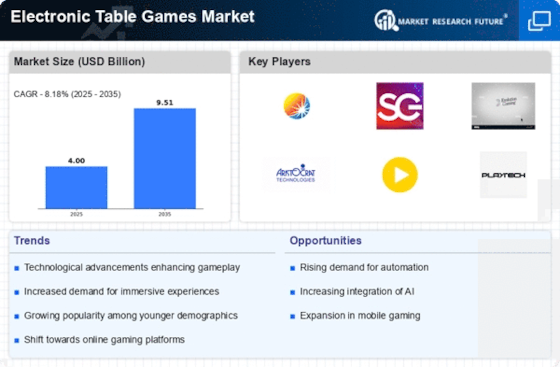
The Electronic Table Games Market is experiencing a notable surge due to the integration of advanced technologies such as artificial intelligence and virtual reality. These innovations enhance user experience, making games more immersive and engaging. For instance, AI algorithms can analyze player behavior, allowing for personalized gaming experiences that cater to individual preferences. This technological evolution not only attracts new players but also retains existing ones, thereby expanding the market. As of 2025, the market is projected to grow at a compound annual growth rate of approximately 10%, driven by these technological advancements. The ability to offer real-time analytics and interactive features positions electronic table games as a competitive alternative to traditional gaming options.
Market Expansion Opportunities
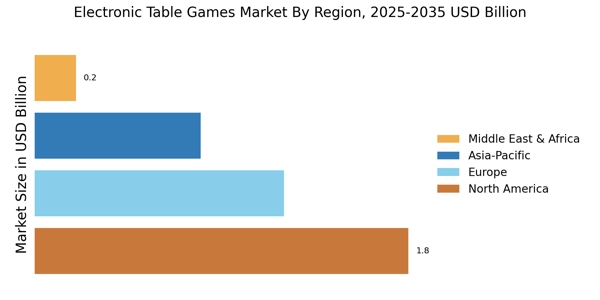
The Electronic Table Games Market is poised for expansion, particularly in emerging markets where traditional gaming options are limited. As internet penetration and smartphone usage increase in these regions, the accessibility of electronic table games is likely to improve. This presents a unique opportunity for operators to tap into new customer bases. Market analysts suggest that regions such as Asia-Pacific and Latin America could see substantial growth in electronic table gaming, driven by rising disposable incomes and changing entertainment preferences. The potential for market expansion in these areas is significant, indicating a promising future for the electronic table games sector.