×
Request Free Sample ×

Kindly complete the form below to receive a free sample of this Report

* Please use a valid business email

Leading companies partner with us for data-driven Insights

clients tt-cursor
Hero Background

Dry Yogurt Market

ID: MRFR/FnB/36032-HCR
100 Pages
Harshita Gorade
February 2026

Dry Yogurt Market Size, Share, Industry Trend & Analysis Research Report By Product Type (Powdered Yogurt, Granulated Yogurt, Flavored Yogurt), By Application (Food and Beverages, Nutritional Supplements, Bakery Products, Snacks), By Distribution Channel (Online Retail, Supermarkets, Convenience Stores, Health Food Stores) and By Regional (North America, Europe, South America, Asia-Pacific, Middle East and Africa)- Forecast to 2035

Share:
Download PDF ×

We do not share your information with anyone. However, we may send you emails based on your report interest from time to time. You may contact us at any time to opt-out.

Dry Yogurt Market Infographic
Purchase Options

Dry Yogurt Market Summary

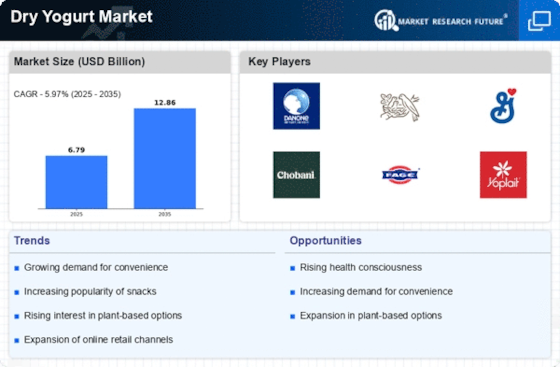
As per Market Research Future analysis, the Dry Yogurt Market Size was estimated at 6.795 USD Billion in 2024. The Dry Yogurt industry is projected to grow from 7.201 USD Billion in 2025 to 12.86 USD Billion by 2035, exhibiting a compound annual growth rate (CAGR) of 5.97% during the forecast period 2025 - 2035

Key Market Trends & Highlights

The Dry Yogurt Market is experiencing robust growth driven by health trends and innovative flavors.

  • Health consciousness is significantly driving demand for dry yogurt products, particularly in North America.
  • Flavor innovation and variety are becoming essential as consumers seek unique taste experiences in dry yogurt offerings.
  • The powdered yogurt segment remains the largest, while flavored yogurt is emerging as the fastest-growing category.
  • Convenience and on-the-go consumption, alongside sustainability initiatives, are key market drivers influencing growth.

Market Size & Forecast

2024 Market Size 6.795 (USD Billion)
2035 Market Size 12.86 (USD Billion)
CAGR (2025 - 2035) 5.97%

Major Players

Danone (FR), Nestle (CH), General Mills (US), Chobani (US), Fage (GR), Yoplait (FR), Lactalis (FR), Stonyfield Farm (US), Oikos (US)

Our Impact
Enabled $4.3B Revenue Impact for Fortune 500 and Leading Multinationals
Partnering with 2000+ Global Organizations Each Year
30K+ Citations by Top-Tier Firms in the Industry

Dry Yogurt Market Trends

The Dry Yogurt Market is currently experiencing a notable transformation, driven by evolving consumer preferences and an increasing awareness of health benefits associated with yogurt products. As individuals become more health-conscious, there is a growing inclination towards nutritious snacks, which has led to a surge in demand for dry yogurt. This product, known for its convenience and extended shelf life, appeals to a diverse demographic, including fitness enthusiasts and busy professionals seeking quick yet healthy options. Furthermore, the versatility of dry yogurt allows it to be incorporated into various culinary applications, enhancing its appeal in both retail and food service sectors. In addition to health trends, the Dry Yogurt Market is witnessing innovation in flavors and formulations. Manufacturers are exploring unique flavor profiles and incorporating functional ingredients, such as probiotics and superfoods, to cater to the diverse tastes of consumers. This trend not only enhances the sensory experience but also aligns with the growing demand for functional foods that offer additional health benefits. As the market continues to evolve, it appears poised for further growth, driven by a combination of health trends, innovative product offerings, and a shift towards convenient, nutritious options.

Health Consciousness Driving Demand

The increasing awareness of health and wellness among consumers is significantly influencing the Dry Yogurt Market. Individuals are actively seeking nutritious alternatives to traditional snacks, leading to a rise in the popularity of dry yogurt as a healthy option.

Flavor Innovation and Variety

Manufacturers in the Dry Yogurt Market are focusing on flavor innovation to attract a broader audience. By introducing unique and diverse flavor profiles, companies aim to enhance consumer interest and cater to varying taste preferences.

Functional Ingredients Integration

There is a growing trend towards incorporating functional ingredients in dry yogurt products. This includes the addition of probiotics and superfoods, which not only enhance the nutritional profile but also appeal to health-conscious consumers.

Dry Yogurt Market Drivers

Flavor Innovation and Variety

Flavor innovation plays a crucial role in the dry yogurt Market, as manufacturers strive to cater to diverse consumer palates. The introduction of unique and exotic flavors has the potential to attract a broader audience, enhancing market appeal. Recent trends indicate that consumers are increasingly seeking novel taste experiences, which has led to the development of flavors such as matcha, chai, and tropical fruit blends. This diversification not only satisfies consumer curiosity but also encourages repeat purchases. Market data suggests that products with innovative flavors can command higher price points, thereby contributing to overall revenue growth in the Dry Yogurt Market. As competition intensifies, companies that prioritize flavor variety may gain a competitive edge, positioning themselves favorably in a crowded marketplace.

Functional Ingredients Integration

The integration of functional ingredients into dry yogurt products is emerging as a significant driver within the Dry Yogurt Market. Consumers are increasingly interested in products that offer additional health benefits beyond basic nutrition. Ingredients such as probiotics, prebiotics, and superfoods are being incorporated to enhance the functional profile of dry yogurt. This trend aligns with the growing demand for products that support digestive health, immunity, and overall well-being. Market analysis indicates that products enriched with functional ingredients are likely to experience higher consumer acceptance and loyalty. As a result, the Dry Yogurt Market is witnessing a shift towards formulations that not only satisfy hunger but also contribute to health enhancement, thereby attracting a more health-conscious demographic.

Health Consciousness Driving Demand

The increasing awareness of health and wellness among consumers appears to be a primary driver for the Dry Yogurt Market. As individuals seek healthier dietary options, the demand for low-fat, high-protein snacks has surged. Dry yogurt, known for its nutritional benefits, aligns well with this trend. According to recent data, the market for healthy snacks is projected to grow at a compound annual growth rate of approximately 5.5% over the next five years. This growth is likely to be fueled by the rising prevalence of lifestyle-related diseases, prompting consumers to opt for nutritious alternatives. The Dry Yogurt Market is thus positioned to benefit from this shift in consumer preferences, as it offers a convenient and healthful option that meets the evolving demands of health-conscious individuals.

Convenience and On-the-Go Consumption

The fast-paced lifestyle of modern consumers is driving the demand for convenient food options, significantly impacting the Dry Yogurt Market. As individuals seek quick and easy meal solutions, dry yogurt products that are portable and ready-to-eat are gaining popularity. This trend is particularly evident among busy professionals and students who prioritize convenience without compromising on nutrition. Market Research Future indicates that the convenience food sector is expected to grow steadily, with a notable increase in demand for snackable and easy-to-prepare options. The Dry Yogurt Market is well-positioned to capitalize on this trend, offering products that cater to the needs of on-the-go consumers, thereby enhancing market penetration and sales.

Sustainability and Eco-Friendly Packaging

Sustainability has become a pivotal concern for consumers, influencing their purchasing decisions across various food categories, including the Dry Yogurt Market. As awareness of environmental issues grows, consumers are increasingly favoring products that utilize eco-friendly packaging and sustainable sourcing practices. Companies that adopt environmentally responsible practices may enhance their brand image and appeal to a more conscientious consumer base. Recent studies suggest that products marketed with sustainability credentials can experience a significant boost in sales, as consumers are willing to pay a premium for environmentally friendly options. The Dry Yogurt Market is thus likely to see a shift towards sustainable practices, which could not only attract eco-conscious consumers but also contribute to long-term brand loyalty.


Market Segment Insights

By Type: Powdered Yogurt (Largest) vs. Flavored Yogurt (Fastest-Growing)

The Dry Yogurt Market exhibits a diverse range of product types, among which Powdered Yogurt holds the largest market share due to its versatility and convenience. The increasing consumer preference for healthy snacks has significantly driven the demand for powdered options, which are often used in a variety of culinary applications. Flavored Yogurt, on the other hand, is emerging as a fast-growing segment, appealing to a broader audience with its array of taste options, which cater to changing consumer palates. Its ability to provide a delightful mix of flavors while maintaining nutritional value makes it a preferred choice especially among younger consumers. Growth trends within the ‘Type’ segment of the Dry Yogurt Market indicate a shift towards product innovation, where companies are focusing on creating unique flavors and formulations. This results in an expanded product offering that not only emphasizes health benefits but also caters to indulgence. Furthermore, the rise of e-commerce and health-conscious consumer behavior fosters the rapid growth of Flavored Yogurt, driving market players to enhance their product lines to capture this emerging segment effectively. Overall, these dynamics will continue shaping the competitive landscape of the Dry Yogurt Market into the foreseeable future.

Powdered Yogurt: (Dominant) vs. Flavored Yogurt (Emerging)

Powdered Yogurt is characterized by its long shelf life, ease of storage, and versatility in culinary applications, rendering it the dominant player in the Dry Yogurt Market. Its utility in both home cooking and industrial applications underscores its widespread acceptance. In contrast, Flavored Yogurt has emerged as a strong competitor, particularly favored among younger demographics seeking taste variety while maintaining nutrition. The appeal of diverse flavors attracts consumers looking for an enjoyable yogurt experience, thus positioning this type as an emerging threat to the dominance of powdered forms. The interaction between these two segment types highlights consumer trends leaning towards both convenience and indulgence, shaping the future landscape of yogurt consumption.

By Application: Food and Beverages (Largest) vs. Nutritional Supplements (Fastest-Growing)

The Dry Yogurt Market showcases a diverse application landscape, with the Food and Beverages segment leading the way due to its widespread use in products like smoothies, desserts, and breakfast items. This segment accounts for a significant portion of market share, driven by increasing consumer demand for healthy, convenient food options. Meanwhile, Nutritional Supplements are emerging rapidly, catering to health-conscious consumers looking for enhanced protein intake and gut health benefits via dry yogurt formulations. This trend is bolstered by a growing awareness of the health benefits associated with probiotics and dairy-based nutritional products.

Food and Beverages (Dominant) vs. Nutritional Supplements (Emerging)

The Food and Beverages segment stands as a dominant force in the Dry Yogurt Market, playing a crucial role in the development of innovative product offerings. Its extensive application in various food items makes it indispensable for manufacturers. On the other hand, the Nutritional Supplements sector is gaining traction, appealing to a demographic focused on health and wellness. Dry yogurt in this segment is often fortified with nutrients, positioning it as a desirable option for fitness enthusiasts and those seeking to enhance their dietary regimes. This dynamism in consumer preferences is shaping the evolution of both segments.

By Distribution Channel: Supermarkets (Largest) vs. Online Retail (Fastest-Growing)

In the Dry Yogurt Market, distribution through supermarkets represents the largest share, capitalizing on their extensive reach and established consumer base. These stores provide convenience and a variety of product choices that cater to different consumer preferences, making them the go-to option for many shoppers. Online retail, while currently smaller in terms of market share, is on the rise, driven by the increasing trend of e-commerce and changing consumer behavior that favors online shopping experiences, especially post-pandemic.

Supermarkets (Dominant) vs. Online Retail (Emerging)

Supermarkets, as the dominant distribution channel in the Dry Yogurt Market, offer consumers an extensive range of yogurts, enhancing consumer exposure and choice. They benefit from foot traffic and impulse buying, effectively attracting consumers who prioritize convenience. On the other hand, online retail is emerging swiftly, appealing particularly to younger demographics who favor the convenience of home delivery and the ability to compare products easily. This channel is proliferating, with various brands enhancing their online presence and direct-to-consumer strategies. The rise of subscription services and promotional deals further catalyzes growth in the e-commerce segment, posing both opportunities and challenges to traditional retail channels.

Get more detailed insights about Dry Yogurt Market

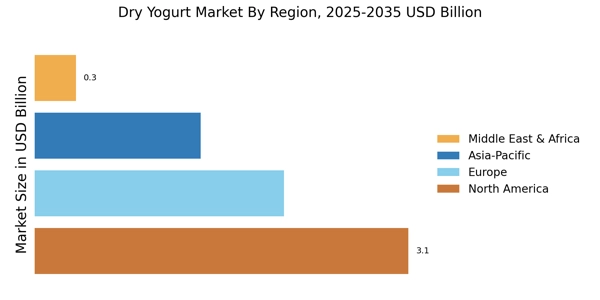
Regional Insights

dairy
Dry Yogurt Market Regional Image

Key Players and Competitive Insights

The Dry Yogurt Market is witnessing significant evolution, driven by the increasing demand for convenient and functional food products among health-conscious consumers. The market is characterized by a competitive landscape where various players strive to maintain their share through product innovation and strategic positioning. The combination of a rising preference for healthy snacks, coupled with growing awareness about the nutritional benefits of yogurt, has sparked intense competition, prompting companies to enhance their offerings. Market players are focusing on expanding their global footprint, improving supply chain efficiencies, and leveraging technology to understand consumer preferences better.
This competitive environment is further fueled by the necessity for companies to differentiate their products, leading to a wide range of flavors, fortifications, and packaging innovations.Yoplait has established a strong presence in the Dry Yogurt Market, recognized for its commitment to quality and innovation. One of its key strengths lies in its extensive product portfolio that caters to various consumer preferences, including low-fat and lactose-free options, appealing to health-conscious individuals and those with dietary restrictions. Yoplait's strategy of leveraging partnerships with retailers and optimizing distribution channels has enabled it to enhance its market reach and visibility.
The brand's focus on sustainability, exemplified through eco-friendly packaging and responsible sourcing practices, resonates well with environmentally aware consumers, further solidifying its position in the market. Additionally, Yoplait's investments in marketing campaigns that emphasize the health benefits of dry yogurt, coupled with engaging social media initiatives, have successfully captured consumer interest and cultivated brand loyalty.Stonyfield Farm has carved a niche for itself in the Dry Yogurt Market by emphasizing organic and clean-label product offerings. The company's commitment to organic farming practices and non-GMO ingredients positions it favorably among consumers prioritizing health and sustainability.
Stonyfield Farm's strengths include its strong emphasis on transparency and educating consumers about the benefits of its products, fostering trust and loyalty. Furthermore, the company's innovative flavor profiles and commitment to high-quality ingredients have enhanced its appeal, allowing it to attract a diverse consumer base. Stonyfield Farm actively engages in initiatives aimed at environmental sustainability, contributing to its positive brand image among eco-conscious buyers. The company's strategic collaborations with health-minded retailers and community-oriented programs also strengthen its presence in the market while ensuring alignment with consumer values.

Key Companies in the Dry Yogurt Market include

Industry Developments

Recent developments in the Dry Yogurt Market showcase significant activities among leading players, including Yoplait, Stonyfield Farm, Unilever, and Danone, as they adapt to evolving consumer preferences favoring healthier and more convenient options. Notably, several companies have introduced innovative product lines rich in probiotics and enhanced nutritional benefits, catering to the growing demand for functional foods. There has been observable growth in market valuation, with companies like Chobani and Lifeway Foods capitalizing on this trend by expanding their distribution networks.

In terms of mergers and acquisitions, Kraft Heinz has made strategic moves to bolster its portfolio, while Nestle is actively seeking partnership opportunities to enhance its dry yogurt offerings. In addition, General Mills is focusing on acquiring niche brands to diversify its range while responding to increasing health consciousness among consumers. The competitive landscape continues to evolve, with brands like Fage, Oikos, and Noosa positioning themselves effectively in regional markets, contributing to the sector's overall dynamism and performance.

As consumer interest in plant-based options rises, companies are also exploring alternative formulations to capture a broader demographic, ensuring sustained growth in this segment.

Future Outlook

Dry Yogurt Market Future Outlook

The Dry Yogurt Market is projected to grow at a 5.97% CAGR from 2025 to 2035, driven by increasing health consciousness, demand for convenience, and innovative product offerings.

New opportunities lie in:

  • Expansion into plant-based dry yogurt alternatives
  • Development of targeted marketing campaigns for fitness enthusiasts
  • Partnerships with health food retailers for exclusive product lines

By 2035, the Dry Yogurt Market is expected to achieve robust growth and diversification.

Market Segmentation

Dry Yogurt Market Type Outlook

  • Powdered Yogurt
  • Granulated Yogurt
  • Flavored Yogurt

Dry Yogurt Market Application Outlook

  • Food and Beverages
  • Nutritional Supplements
  • Bakery Products
  • Snacks

Dry Yogurt Market Distribution Channel Outlook

  • Online Retail
  • Supermarkets
  • Convenience Stores
  • Health Food Stores

Report Scope

MARKET SIZE 20246.795(USD Billion)
MARKET SIZE 20257.201(USD Billion)
MARKET SIZE 203512.86(USD Billion)
COMPOUND ANNUAL GROWTH RATE (CAGR)5.97% (2025 - 2035)
REPORT COVERAGERevenue Forecast, Competitive Landscape, Growth Factors, and Trends
BASE YEAR2024
Market Forecast Period2025 - 2035
Historical Data2019 - 2024
Market Forecast UnitsUSD Billion
Key Companies ProfiledDanone (FR), Nestle (CH), General Mills (US), Chobani (US), Fage (GR), Yoplait (FR), Lactalis (FR), Stonyfield Farm (US), Oikos (US)
Segments CoveredProduct Type, Application, Distribution Channel, Regional
Key Market OpportunitiesGrowing demand for healthy snacks drives innovation in the Dry Yogurt Market.
Key Market DynamicsRising consumer demand for healthy snacks drives innovation and competition in the Dry Yogurt Market.
Countries CoveredNorth America, Europe, APAC, South America, MEA
Leave a Comment

FAQs

What is the current market valuation of the Dry Yogurt Market in 2025?

The Dry Yogurt Market is valued at approximately 6.795 USD Billion in 2024.

What is the projected market size for the Dry Yogurt Market by 2035?

The market is projected to reach approximately 12.86 USD Billion by 2035.

What is the expected CAGR for the Dry Yogurt Market during the forecast period 2025 - 2035?

The expected CAGR for the Dry Yogurt Market during 2025 - 2035 is 5.97%.

Which companies are considered key players in the Dry Yogurt Market?

Key players in the market include Danone, Nestle, General Mills, Chobani, Fage, Yoplait, Lactalis, Stonyfield Farm, and Oikos.

What are the main types of dry yogurt products available in the market?

The main types of dry yogurt products include Powdered Yogurt, Granulated Yogurt, and Flavored Yogurt.

How much is the Powdered Yogurt segment valued at in 2025?

The Powdered Yogurt segment is valued at approximately 4.5 USD Billion in 2025.

What applications are driving the growth of the Dry Yogurt Market?

Key applications driving growth include Food and Beverages, Nutritional Supplements, Bakery Products, and Snacks.

What is the projected value of the Snacks application segment by 2035?

The Snacks application segment is projected to reach approximately 2.8 USD Billion by 2035.

Which distribution channels are most significant for the Dry Yogurt Market?

Significant distribution channels include Online Retail, Supermarkets, Convenience Stores, and Health Food Stores.

What is the expected value of the Health Food Stores distribution channel by 2035?

The Health Food Stores distribution channel is expected to reach approximately 5.79 USD Billion by 2035.

Download Free Sample

Kindly complete the form below to receive a free sample of this Report

Compare Licence

×
Features License Type
Single User Multiuser License Enterprise User
Price $4,950 $5,950 $7,250
Maximum User Access Limit 1 User Upto 10 Users Unrestricted Access Throughout the Organization
Free Customization
Direct Access to Analyst
Deliverable Format
Platform Access
Discount on Next Purchase 10% 15% 15%
Printable Versions