×
Request Free Sample ×

Kindly complete the form below to receive a free sample of this Report

* Please use a valid business email

Leading companies partner with us for data-driven Insights

clients tt-cursor
Hero Background

China Wood Flooring Market

ID: MRFR/PCM/55414-HCR
111 Pages
Snehal Singh
February 2026

China Wood Flooring Market Research Report By Product (Solid Wood, Engineered Wood) and By Application (Residential, Commercial, Industrial)- Forecast to 2035

Share:
Download PDF ×

We do not share your information with anyone. However, we may send you emails based on your report interest from time to time. You may contact us at any time to opt-out.

China Wood Flooring Market Infographic
Purchase Options

China Wood Flooring Market Summary

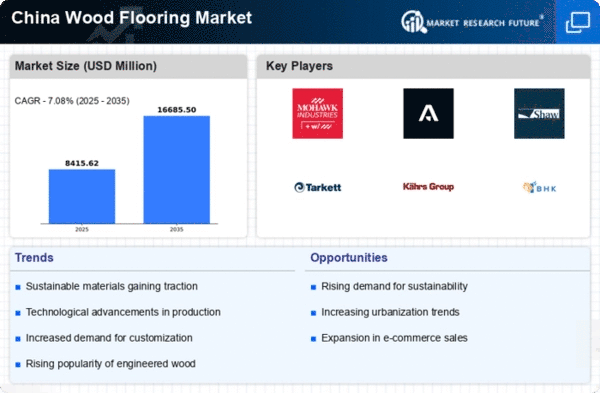
As per Market Research Future analysis, the China Wood Flooring Market size was estimated at 7859.19 USD Million in 2024. The Wood Flooring market is projected to grow from 8415.62 USD Million in 2025 to 16685.5 USD Million by 2035, exhibiting a compound annual growth rate (CAGR) of 7.0% during the forecast period 2025 - 2035

Key Market Trends & Highlights

The China wood flooring market is experiencing a robust shift towards sustainability and technological innovation.

  • The market is increasingly driven by a focus on sustainability, with consumers favoring eco-friendly products.
  • Urbanization is significantly impacting the demand for wood flooring, particularly in metropolitan areas.
  • Technological advancements in manufacturing processes are enhancing product quality and design options.
  • Rising disposable income and a growing real estate sector are key drivers fueling market expansion.

Market Size & Forecast

2024 Market Size 7859.19 (USD Million)
2035 Market Size 16685.5 (USD Million)
CAGR (2025 - 2035) 7.08%

Major Players

Mohawk Industries (US), Armstrong Flooring (US), Shaw Industries (US), Tarkett (FR), Kahrs Group (SE), BHK (DE), Pergo (US), BerryAlloc (BE), Quick-Step (BE)

Our Impact
Enabled $4.3B Revenue Impact for Fortune 500 and Leading Multinationals
Partnering with 2000+ Global Organizations Each Year
30K+ Citations by Top-Tier Firms in the Industry

China Wood Flooring Market Trends

The China Wood Flooring Market in China is currently experiencing a dynamic phase characterized by evolving consumer preferences and increasing demand for sustainable products. As environmental awareness rises, consumers are gravitating towards eco-friendly materials, which has prompted manufacturers to innovate and offer a wider range of sustainable options. This shift is not merely a trend but appears to be a fundamental change in purchasing behavior, as buyers seek products that align with their values. Additionally, the urbanization trend continues to drive growth in the wood flooring market, as more individuals invest in home improvement and renovation projects. This urban expansion is likely to sustain demand for high-quality flooring solutions that enhance aesthetic appeal and durability. Moreover, technological advancements in production processes are reshaping the landscape of the wood flooring market. Manufacturers are increasingly adopting automation and advanced machinery, which not only improves efficiency but also enhances product quality. This technological shift may lead to a more competitive environment, as companies strive to differentiate themselves through innovation. Furthermore, the rise of e-commerce platforms is transforming how consumers access wood flooring products, making it easier for them to compare options and make informed decisions. Overall, the wood flooring market in China is poised for continued growth, driven by sustainability, urbanization, and technological progress.

Sustainability Focus

There is a noticeable shift towards sustainable materials in the wood flooring market. Consumers are increasingly prioritizing eco-friendly options, prompting manufacturers to develop products that minimize environmental impact. This trend reflects a broader societal movement towards sustainability, influencing purchasing decisions.

Urbanization Impact

Rapid urbanization is significantly influencing the wood flooring market. As more individuals move to urban areas, there is a growing demand for home improvement and renovation. This trend is likely to sustain the need for high-quality flooring solutions that enhance living spaces.

Technological Advancements

The adoption of advanced technologies in production processes is transforming the wood flooring market. Automation and innovative machinery are improving efficiency and product quality, creating a more competitive landscape as companies seek to differentiate their offerings.

China Wood Flooring Market Drivers

Rising Disposable Income

The increasing disposable income among the Chinese population appears to be a significant driver for the wood flooring market. As consumers gain more financial freedom, they tend to invest in home improvement and renovation projects. This trend is particularly evident in urban areas, where the demand for high-quality flooring options is on the rise. In 2025, the average disposable income in urban China is projected to reach approximately 50,000 CNY, which could lead to a surge in spending on premium wood flooring products. The wood flooring market is likely to benefit from this trend, as consumers seek durable and aesthetically pleasing flooring solutions that enhance their living spaces.

Growing Real Estate Sector

The expansion of the real estate sector in China is another crucial driver for the wood flooring market. With urbanization continuing to accelerate, the demand for residential and commercial properties is increasing. In 2025, the real estate market is expected to grow by around 6% annually, leading to a higher demand for wood flooring materials. Developers and builders are increasingly opting for wood flooring due to its appeal and perceived value. This trend indicates that the wood flooring market is poised for growth, as new constructions and renovations require quality flooring solutions that meet consumer preferences.

Shift Towards Eco-Friendly Products

There is a noticeable shift towards eco-friendly products in China, which is influencing the wood flooring market. Consumers are becoming more environmentally conscious and are seeking sustainable flooring options. This trend is reflected in the increasing demand for wood flooring sourced from responsibly managed forests. In 2025, it is estimated that eco-friendly wood flooring could account for approximately 30% of the total market share. The wood flooring market is likely to adapt to this demand by offering products that meet sustainability standards, thereby attracting a broader customer base that prioritizes environmental considerations.

Increased Focus on Interior Design Trends

The growing emphasis on interior design trends in China is driving the wood flooring market. As consumers become more design-savvy, they are increasingly looking for flooring options that complement their home aesthetics. In 2025, it is projected that the demand for stylish and contemporary wood flooring designs will rise significantly. This trend is likely to encourage manufacturers to innovate and diversify their product offerings. The wood flooring market stands to gain from this focus on design, as it aligns with consumer desires for unique and visually appealing living spaces.

Technological Innovations in Manufacturing

Technological advancements in manufacturing processes are transforming the wood flooring market in China. Innovations such as improved milling techniques and enhanced finishing processes are leading to higher quality products with better durability and aesthetics. In 2025, it is anticipated that the adoption of advanced technologies could increase production efficiency by up to 20%. This improvement may allow manufacturers to offer competitive pricing while maintaining high standards. Consequently, the wood flooring market is expected to thrive as consumers benefit from superior products that meet their evolving preferences.


Market Segment Insights

By Product: Solid Wood (Largest) vs. Engineered Wood (Fastest-Growing)

In the China wood flooring market, the market share distribution is significantly tilted towards solid wood, which is regarded as the largest segment due to its traditional appeal and perceived quality. This segment has maintained a strong presence among consumers who prioritize premium aesthetics and durability, thus securing its dominant position. On the other hand, engineered wood is gaining traction and has emerged as a viable alternative, capturing a growing share of the market, particularly among those seeking cost-effective solutions without compromising on quality. The growth trends in this segment indicate a shift in consumer preferences, with engineered wood experiencing robust growth, largely driven by innovation in production techniques and design versatility. Factors such as increasing urbanization, a growing middle class, and a surge in renovation activities are propelling the demand for engineered wood products. The segment’s ability to offer sustainable and eco-friendly options is resonating well with environmentally conscious consumers, further enhancing its growth prospects while solid wood continues to thrive through its established market presence.

Solid Wood (Dominant) vs. Engineered Wood (Emerging)

Solid wood flooring is recognized for its classic elegance, strength, and long-lasting nature, making it the dominant choice for high-end residential and commercial applications. The traditional craftsmanship involved in solid wood products appeals to consumers seeking authenticity and luxury in their flooring options. In contrast, engineered wood is categorized as emerging, offering advantages such as enhanced stability and resistance to moisture, making it suitable for a variety of environments. This segment is particularly appealing to price-sensitive consumers and those looking for contemporary design options. With technological advancements, engineered wood is gaining recognition for its quality and environmental benefits, challenging the dominance of solid wood while attracting a diverse customer base.

By Application: Residential (Largest) vs. Commercial (Fastest-Growing)

In the China wood flooring market, the residential segment holds the largest market share, significantly outpacing the commercial and industrial segments. This dominance is driven by the growing urbanization and rising disposable incomes, leading to an increase in home renovations and new residential construction. On the other hand, the commercial segment is rapidly gaining traction, fueled by the expansion of retail and hospitality industries. Growth in the residential segment is primarily influenced by consumer preferences for aesthetic appeal and durability of wood flooring, while the commercial segment's expansion is supported by the increasing demand for sustainable and cost-effective flooring solutions in office spaces and public establishments. Additionally, innovations in flooring technology are enhancing product offerings, attracting both residential and commercial customers to invest in quality flooring solutions.

Residential (Dominant) vs. Commercial (Emerging)

The residential segment of the China wood flooring market is characterized by its substantial consumer base and preference for traditional and contemporary designs. Homeowners are increasingly investing in high-quality wood flooring products that offer enhanced durability and design flexibility. This segment thrives on aesthetic appeal and the perceived value of investment properties. In contrast, the commercial segment, while emerging, is witnessing strong growth driven by a shift towards modern office environments that prioritize sustainability. Commercial customers are leaning towards innovative flooring solutions that meet both functional and aesthetic needs, and as urban development continues, this segment is poised for significant expansion.

Get more detailed insights about China Wood Flooring Market

Key Players and Competitive Insights

The wood flooring market in China is characterized by a dynamic competitive landscape, driven by increasing consumer demand for sustainable and aesthetically pleasing flooring solutions. Key players such as Mohawk Industries (US), Tarkett (FR), and Shaw Industries (US) are actively shaping the market through strategic initiatives focused on innovation and sustainability. Mohawk Industries (US) emphasizes eco-friendly products, leveraging advanced manufacturing techniques to enhance product durability and reduce environmental impact. Meanwhile, Tarkett (FR) positions itself as a leader in sustainable flooring, integrating circular economy principles into its operations, which resonates well with environmentally conscious consumers. Shaw Industries (US) adopts a multifaceted approach, focusing on digital transformation and customer engagement to enhance its market presence and operational efficiency.The business tactics employed by these companies include localizing manufacturing to reduce costs and optimize supply chains. The market structure appears moderately fragmented, with several players competing for market share. However, the collective influence of major companies like Mohawk Industries (US) and Tarkett (FR) suggests a trend towards consolidation, as these firms seek to leverage economies of scale and enhance their competitive positioning.

In October Mohawk Industries (US) announced a partnership with a leading technology firm to develop smart flooring solutions that integrate IoT capabilities. This strategic move is likely to enhance customer experience by providing real-time data on flooring performance, thereby positioning Mohawk as a pioneer in the smart flooring segment. Such innovations may attract tech-savvy consumers and differentiate the brand in a crowded marketplace.

In September Tarkett (FR) launched a new line of flooring products made from recycled materials, reinforcing its commitment to sustainability. This initiative not only aligns with global trends towards eco-friendly products but also caters to the growing consumer preference for sustainable options. By enhancing its product portfolio with environmentally responsible offerings, Tarkett strengthens its market position and appeals to a broader audience.

In August Shaw Industries (US) unveiled a comprehensive digital platform aimed at streamlining the customer purchasing experience. This platform integrates augmented reality features, allowing customers to visualize flooring options in their spaces before making a purchase. Such a forward-thinking approach is likely to enhance customer satisfaction and drive sales, reflecting Shaw's commitment to innovation in the retail experience.

As of November the competitive trends in the wood flooring market are increasingly defined by digitalization, sustainability, and the integration of advanced technologies such as AI. Strategic alliances among key players are shaping the landscape, fostering innovation and enhancing product offerings. The shift from price-based competition to a focus on technological advancement and supply chain reliability is evident, suggesting that future competitive differentiation will hinge on the ability to innovate and meet evolving consumer preferences.

Key Companies in the China Wood Flooring Market include

Industry Developments

The China Wood Flooring Market has seen notable developments recently. Companies such as Tarkett and Mohawk Industries are focusing on sustainable products to align with China's increasing environmental regulations, driving a shift toward eco-friendly flooring solutions. In terms of market growth, Yihua Lifestyle Technology reported a significant increase in revenue in the second quarter of 2023, attributed to rising urbanization and demand for premium wood flooring products. Current affairs also highlight increased competition, particularly from local players like Huali Flooring and Liuhe Group, who are expanding their market presence through innovative designs and improved supply chain efficiencies.

In September 2023, Sika AG announced the acquisition of a major stake in a local adhesive manufacturer to strengthen its foothold in wood flooring applications. This follows the trend of consolidation in the industry aimed at enhancing operational capabilities and market reach. Furthermore, Wanhua Chemical Group has increased its investments in Research and Development to develop advanced coatings, reflecting a long-term strategy to improve product performance. These factors collectively underscore the dynamic growth and competitive landscape of the China Wood Flooring Market in recent months.

Future Outlook

China Wood Flooring Market Future Outlook

The wood flooring market in China is projected to grow at a 7.08% CAGR from 2025 to 2035, driven by urbanization, rising disposable incomes, and eco-friendly product demand.

New opportunities lie in:

  • Expansion of engineered wood flooring production lines
  • Development of smart flooring solutions with integrated technology
  • Partnerships with eco-conscious brands for sustainable product offerings

By 2035, the market is expected to achieve robust growth, positioning itself as a leader in innovative flooring solutions.

Market Segmentation

China Wood Flooring Market Product Outlook

  • Solid Wood
  • Engineered Wood

China Wood Flooring Market Application Outlook

  • Residential
  • Commercial
  • Industrial

Report Scope

MARKET SIZE 2024 7859.19(USD Million)
MARKET SIZE 2025 8415.62(USD Million)
MARKET SIZE 2035 16685.5(USD Million)
COMPOUND ANNUAL GROWTH RATE (CAGR) 7.08% (2025 - 2035)
REPORT COVERAGE Revenue Forecast, Competitive Landscape, Growth Factors, and Trends
BASE YEAR 2024
Market Forecast Period 2025 - 2035
Historical Data 2019 - 2024
Market Forecast Units USD Million
Key Companies Profiled Mohawk Industries (US), Armstrong Flooring (US), Shaw Industries (US), Tarkett (FR), Kahrs Group (SE), BHK (DE), Pergo (US), BerryAlloc (BE), Quick-Step (BE)
Segments Covered Product, Application
Key Market Opportunities Growing demand for sustainable wood flooring solutions driven by eco-conscious consumer preferences.
Key Market Dynamics Rising demand for sustainable wood flooring options drives innovation and competition among manufacturers in the market.
Countries Covered China
Leave a Comment

FAQs

What is the estimated market size of the China Wood Flooring Market in 2024?

The China Wood Flooring Market is expected to be valued at approximately 7.18 USD Billion in 2024.

What is the projected market value for the China Wood Flooring Market by 2035?

By 2035, the total market value for the China Wood Flooring Market is expected to reach around 17.14 USD Billion.

What is the expected CAGR for the China Wood Flooring Market from 2025 to 2035?

The China Wood Flooring Market is anticipated to grow at a CAGR of 8.231% from 2025 to 2035.

Who are the key players in the China Wood Flooring Market?

Key players in the China Wood Flooring Market include Tarkett, Sika AG, Bamboo Hardwood Flooring, and Mohawk Industries among others.

What is the market size of Solid Wood Flooring in 2024?

The Solid Wood Flooring segment is valued at approximately 3.0 USD Billion in the China Wood Flooring Market for the year 2024.

What is the expected value of Engineered Wood Flooring in 2035?

The Engineered Wood Flooring segment is projected to be valued at about 9.74 USD Billion in 2035.

What are the primary growth drivers of the China Wood Flooring Market?

Increased urbanization and rising disposable incomes are key growth drivers contributing to the China Wood Flooring Market.

What challenges does the China Wood Flooring Market face currently?

Challenges facing the China Wood Flooring Market include fluctuating raw material prices and environmental regulations.

What applications are driving demand in the China Wood Flooring Market?

Residential and commercial construction applications are driving significant demand in the China Wood Flooring Market.

How is the regional growth rate for the China Wood Flooring Market expected to evolve?

The regional growth rate for the China Wood Flooring Market is expected to remain strong, particularly in urban areas experiencing rapid development.

Download Free Sample

Kindly complete the form below to receive a free sample of this Report

Compare Licence

×
Features License Type
Single User Multiuser License Enterprise User
Price $4,950 $5,950 $7,250
Maximum User Access Limit 1 User Upto 10 Users Unrestricted Access Throughout the Organization
Free Customization
Direct Access to Analyst
Deliverable Format
Platform Access
Discount on Next Purchase 10% 15% 15%
Printable Versions