×
Request Free Sample ×

Kindly complete the form below to receive a free sample of this Report

* Please use a valid business email

Leading companies partner with us for data-driven Insights

clients tt-cursor
Hero Background

China Vitamins Market

ID: MRFR/FnB/46273-HCR
128 Pages
Snehal Singh
February 2026

China Vitamins Market Size, Share, Industry Trend & Analysis Research Report By Type (Vitamin B, Vitamin C, Vitamin E, Others), By Source (Synthetic, Natural) and By Application (Food & Beverages, Pharmaceutical & Nutraceutical, Animal Feed, Personal Care) - Forecast to 2035.

Share:
Download PDF ×

We do not share your information with anyone. However, we may send you emails based on your report interest from time to time. You may contact us at any time to opt-out.

China Vitamins Market Infographic
Purchase Options

China Vitamins Market Summary

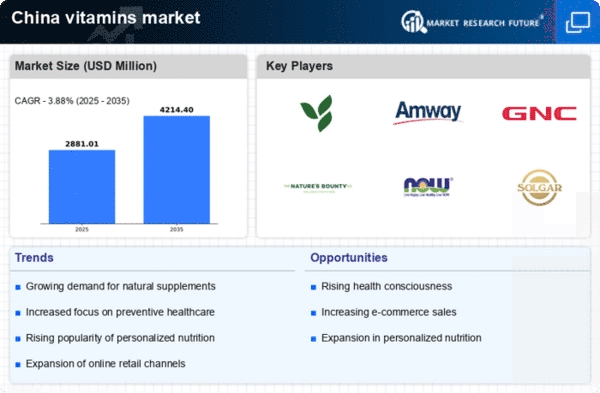
As per Market Research Future analysis, the China vitamins market Size was estimated at 2773.4 USD Million in 2024. The Vitamins market is projected to grow from 2881.01 USD Million in 2025 to 4214.4 USD Million by 2035, exhibiting a compound annual growth rate (CAGR) of 3.8% during the forecast period 2025 - 2035

Key Market Trends & Highlights

The China vitamins market is experiencing robust growth driven by health trends and demographic shifts.

  • The largest segment in the China vitamins market is dietary supplements, while the fastest-growing segment is herbal vitamins.
  • Rising health consciousness among consumers is significantly influencing purchasing decisions in the market.
  • E-commerce is rapidly expanding, providing consumers with greater access to a variety of vitamin products.
  • Key market drivers include increasing nutritional awareness and the rise of preventive healthcare initiatives.

Market Size & Forecast

2024 Market Size 2773.4 (USD Million)
2035 Market Size 4214.4 (USD Million)
CAGR (2025 - 2035) 3.88%

Major Players

Herbalife (US), Amway (US), GNC Holdings (US), Nature's Bounty (US), NOW Foods (US), Solgar (US), Swanson Health Products (US), NutraBlast (US)

Our Impact
Enabled $4.3B Revenue Impact for Fortune 500 and Leading Multinationals
Partnering with 2000+ Global Organizations Each Year
30K+ Citations by Top-Tier Firms in the Industry

China Vitamins Market Trends

The vitamins market in China is currently experiencing notable growth, driven by increasing health awareness among consumers. This trend appears to be influenced by a rising interest in preventive healthcare and wellness, leading individuals to seek out dietary supplements that can enhance their overall health. The market is characterized by a diverse range of products, including multivitamins, single vitamins, and herbal supplements, catering to various consumer needs. Additionally, the growing trend of online shopping has facilitated easier access to these products, allowing consumers to explore a wider array of options conveniently. Moreover, the demographic shift in China, particularly the aging population, seems to be contributing to the demand for vitamins. Older adults are increasingly prioritizing their health, which may lead to a higher consumption of vitamins aimed at addressing age-related health concerns. Furthermore, the influence of social media and digital marketing strategies has played a crucial role in shaping consumer preferences, as brands leverage these platforms to promote their products effectively. As a result, the vitamins market is poised for continued expansion, reflecting changing consumer behaviors and preferences in the coming years.

Rising Health Consciousness

There is a growing trend of health awareness among consumers, leading to increased demand for vitamins. Individuals are increasingly seeking dietary supplements to enhance their well-being and prevent health issues.

Aging Population

The demographic shift towards an older population is driving the consumption of vitamins. Older adults are focusing on health maintenance, resulting in a higher demand for products that address age-related concerns.

E-commerce Growth

The expansion of online shopping platforms is transforming the vitamins market. Consumers are now able to access a wider variety of products conveniently, influencing purchasing behaviors.

China Vitamins Market Drivers

Expansion of Retail Channels

The expansion of retail channels is playing a crucial role in shaping the vitamins market in China. With the rise of both traditional and online retail platforms, consumers have greater access to a diverse range of vitamin products. E-commerce platforms, in particular, have seen exponential growth, allowing consumers to purchase vitamins conveniently from their homes. This accessibility is expected to contribute to a projected market growth of 10% annually over the next few years. Additionally, brick-and-mortar stores are increasingly dedicating shelf space to vitamins, enhancing visibility and availability. This multi-channel approach is likely to attract a broader consumer base, thereby driving sales in the vitamins market.

Rise of Preventive Healthcare

The shift towards preventive healthcare is significantly influencing the vitamins market in China. As healthcare costs continue to rise, consumers are increasingly prioritizing preventive measures to maintain their health. This trend is reflected in the growing consumption of vitamins and supplements, which are perceived as essential tools for disease prevention and health maintenance. The market is expected to reach a valuation of $10 billion by 2026, driven by this proactive approach to health. Furthermore, healthcare professionals are increasingly recommending vitamins as part of a balanced diet, further solidifying their role in preventive healthcare strategies. This paradigm shift is likely to sustain the growth trajectory of the vitamins market in the coming years.

Increasing Nutritional Awareness

The vitamins market in China is experiencing a notable surge due to increasing nutritional awareness among consumers. As individuals become more informed about the benefits of vitamins and dietary supplements, there is a growing demand for products that promote overall health and well-being. This trend is particularly evident among younger demographics, who are actively seeking out vitamins to enhance their daily nutrition. According to recent data, the market is projected to grow at a CAGR of approximately 8% over the next five years, indicating a robust expansion in the vitamins market. This heightened awareness is driving manufacturers to innovate and diversify their product offerings, catering to the specific needs of health-conscious consumers.

Government Initiatives and Regulations

Government initiatives and regulations are playing a pivotal role in the vitamins market in China. The Chinese government has implemented various policies aimed at promoting health and wellness, which includes the regulation of dietary supplements and vitamins. These regulations ensure product safety and efficacy, thereby enhancing consumer trust in vitamin products. Furthermore, government campaigns advocating for healthier lifestyles are likely to encourage increased consumption of vitamins. As a result, the market is expected to benefit from a more structured environment that fosters growth and innovation. The alignment of government policies with consumer health trends is likely to create a favorable landscape for the vitamins market in the foreseeable future.

Influence of Social Media and Marketing

The influence of social media and marketing strategies is significantly impacting the vitamins market in China. Brands are leveraging social media platforms to engage with consumers, promote their products, and educate them about the benefits of vitamins. Influencer marketing, in particular, has emerged as a powerful tool, with many health and wellness influencers endorsing vitamin products to their followers. This trend is fostering a community of health-conscious individuals who are more likely to invest in vitamins. As a result, companies are expected to allocate a larger portion of their marketing budgets to digital channels, potentially increasing their market share in the vitamins market. This dynamic interaction between brands and consumers is likely to shape purchasing behaviors in the coming years.


Market Segment Insights

By Type: Vitamins C (Largest) vs. Vitamins D (Fastest-Growing)

Within the segment, Vitamins C leads the market share, attributed to its established presence and widespread use in health supplements. Despite strong competition, other segments like Vitamins A and E, although notable, lag behind significantly, with their market shares reflecting niche positions. Vitamins D, while smaller in total market share, is gaining traction rapidly, signaling changing consumer preferences and health consciousness. The growth trends for Vitamins in this segment indicate a robust upward trajectory influenced by increasing awareness of health benefits. Vitamins C's stronghold is fueled by its immune-boosting properties, which have garnered heightened attention, especially post-pandemic. Furthermore, Vitamins D is emerging as a key player due to its association with wellness and preventive health, making it the fastest-growing vitamin category.

Vitamins C (Dominant) vs. Vitamins D (Emerging)

Vitamins C stands out as a dominant player in the segment, characterized by high consumer demand driven by its renowned health benefits, particularly for immunity and skin health. Its robust market position is evidenced by strong branding and widespread availability across various channels, making it a staple in many households. In contrast, Vitamins D, considered an emerging segment, is rapidly differentiating itself by catering to a more health-conscious demographic. As consumers become increasingly aware of the role Vitamins D play in bone health and overall wellness, this segment is experiencing swift growth, indicating substantial potential for future market expansion.

By Form: Tablets (Largest) vs. Capsules (Fastest-Growing)

The distribution of market share across different forms of vitamins reveals that tablets hold the largest share, demonstrating their enduring popularity among consumers for their convenience and variety. Capsules follow as a significant player in the market, while powders and liquids cater to niche segments. Despite their smaller shares, powders and liquids are preferred for specific applications, particularly among those who prioritize ease of use in supplementation. Growth trends indicate that capsules are emerging as the fastest-growing form, driven by increasing consumer preference for easier swallowing options and the innovation of herbal and natural blends. The rise in health consciousness and demand for personalized nutrition also play a crucial role, allowing capsules to capture a larger segment of the market, while tablets continue to maintain their strong position due to brand loyalty.

Tablets: Dominant vs. Capsules: Emerging

Tablets are the dominant form in the market, characterized by their precise dosage and extensive availability of various vitamin formulations. Their solid structure appeals to consumers looking for reliability and familiarity, making them a staple in daily vitamin intake. On the other hand, capsules represent an emerging trend, particularly among younger consumers seeking convenience and rapid absorption. Their ability to hold liquid or powdered ingredients allows for versatile formulations. The growing inclination towards clean-label products further strengthens the capsule segment, as consumers seek transparency in their vitamin choices. Both forms cater to distinct consumer needs, yet their evolving characteristics highlight the dynamic nature of the China vitamins market.

By End Use: Dietary Supplements (Largest) vs. Pharmaceuticals (Fastest-Growing)

In the China vitamins market, dietary supplements hold the largest share among the end use segments, showcasing a robust preference among consumers. This sector benefits from the rising health consciousness and the increasing inclination towards preventive healthcare, significantly influencing market dynamics. Conversely, pharmaceuticals are gaining traction as the fastest-growing segment, driven by the rising demand for health management solutions and increasing investments in drug formulation. The growth trends in these segments reflect changing consumer behaviors and preferences, with dietary supplements being favored for everyday wellness, while pharmaceuticals are witnessing a rapid surge due to an aging population and the necessity for effective healthcare solutions. This duality highlights the evolving landscape of the China vitamins market, where both segments exhibit unique growth trajectories fueled by distinct consumer needs.

Dietary Supplements (Dominant) vs. Pharmaceuticals (Emerging)

Dietary supplements represent the dominant segment in the end use category, attributed to their widespread acceptance and integration into daily health routines. The focus on preventative health has made vitamins an essential part of many consumers' diets, appealing to a wide demographic. On the other hand, pharmaceuticals are emerging as a vital segment in the market, with innovations in formulations and a growing emphasis on therapeutic benefits. This segment is characterized by its response to specific health challenges, driven by research and development efforts. Both segments are evolving, with dietary supplements continuing to thrive on consumer trends, while pharmaceuticals are adapting to market needs, creating a balanced yet competitive environment.

By Distribution Channel: Online Retail (Largest) vs. Pharmacies (Fastest-Growing)

In the China vitamins market, the distribution of sales across different channels reveals that Online Retail has emerged as the largest contributor. This channel has effectively leveraged e-commerce growth, catering to the increasing preferences of consumers towards online shopping. Following closely, Pharmacies hold a significant share due to their accessibility and trust factor among consumers, which positions them as a reliable source for vitamin purchases. Health Stores and Supermarkets also play vital roles, but their market presence is relatively smaller compared to the top two channels. Growth trends indicate a persistent shift towards online platforms, driven by convenience and a wider variety of products available at competitive prices. The Covid-19 pandemic accelerated this transition, as consumers became more comfortable with online purchases. Conversely, Pharmacies demonstrate a robust growth trajectory, attributed to their ability to provide personalized advice and recommendations. As health awareness increases, these channels are expected to witness sustained growth, enabled by innovations in customer service and product offerings.

Online Retail: Largest vs. Pharmacies: Fastest-Growing

Online Retail stands out as the dominant distribution channel in the China vitamins market, primarily due to its extensive reach and the growing trend of digitalization. It encompasses various platforms, including brand websites and third-party e-commerce sites, which enhance product availability and consumer convenience. In contrast, Pharmacies represent the fastest-growing segment, appealing to customers seeking expert guidance and the assurance of purchasing quality vitamins. They offer a more personal shopping experience and often feature promotions that attract health-conscious consumers. The dual growth of these channels indicates a dynamic market environment where both convenience and trust are pivotal factors influencing consumer choices.

Get more detailed insights about China Vitamins Market

Key Players and Competitive Insights

The vitamins market exhibits a dynamic competitive landscape characterized by rapid growth and evolving consumer preferences. Key growth drivers include an increasing focus on health and wellness, a rising aging population, and heightened awareness of preventive healthcare. Major players such as Herbalife (US), Amway (US), and GNC Holdings (US) are strategically positioned to leverage these trends. Herbalife (US) emphasizes innovation in product formulations, while Amway (US) focuses on expanding its digital presence and direct selling model. GNC Holdings (US) is enhancing its retail footprint and diversifying its product range, collectively shaping a competitive environment that is increasingly focused on consumer engagement and product differentiation.In terms of business tactics, companies are localizing manufacturing to reduce costs and improve supply chain efficiency. The market structure appears moderately fragmented, with several key players holding substantial market shares. This fragmentation allows for niche players to thrive, while the collective influence of major companies drives innovation and competitive pricing strategies.
In October Herbalife (US) announced a partnership with a leading technology firm to develop a personalized nutrition app aimed at enhancing customer engagement. This strategic move is likely to position Herbalife (US) at the forefront of the digital health trend, enabling the company to offer tailored solutions that resonate with health-conscious consumers. The integration of technology into their product offerings may enhance customer loyalty and drive sales growth.
In September GNC Holdings (US) launched a new line of plant-based vitamins, responding to the growing demand for vegan and sustainable products. This initiative not only aligns with consumer preferences but also reflects a broader industry trend towards sustainability. By diversifying its product portfolio, GNC Holdings (US) is likely to attract a wider customer base and strengthen its market position.
In August Amway (US) expanded its operations in China by opening a new manufacturing facility, which is expected to enhance its supply chain capabilities and reduce lead times. This strategic investment underscores Amway's commitment to the Chinese market and its intent to capitalize on the increasing demand for health supplements. The facility is anticipated to improve operational efficiency and support the company's growth objectives in the region.
As of November current competitive trends are heavily influenced by digitalization, sustainability, and the integration of artificial intelligence in product development and marketing strategies. Strategic alliances are becoming increasingly important, as companies seek to enhance their technological capabilities and expand their market reach. The competitive differentiation is likely to evolve from traditional price-based competition to a focus on innovation, technology integration, and supply chain reliability, reflecting a shift in consumer expectations towards quality and personalized health solutions.

Key Companies in the China Vitamins Market include

Industry Developments

Recent developments in the China Vitamins Market have been notable, with significant growth attributed to increasing health awareness among consumers. Companies like GSK Consumer Healthcare and Herbalife are expanding their product lines to cater to rising demands for vitamins and dietary supplements. In terms of mergers and acquisitions, Fuzhiyuan acquired a minor stake in a regional supplement manufacturer in July 2023, enhancing its market presence in China. Additionally, DSM is reported to have entered into a strategic partnership with a local firm to boost its vitamin production capabilities, announced in August 2023.

Growth in the market valuation of companies has been remarkable; for instance, Nutraceutical International Corporation and USANA Health Sciences reported a surge in their revenue due to heightened consumer interest in preventive health. Recent statistics indicate that the vitamins market in China is expected to surpass USD 25 billion in valuation by 2025, driven by sales of products targeting immune support and overall wellness. The demand for natural and organic vitamin supplements is also on the rise, fueled by trends towards clean and sustainable living among Chinese consumers, significantly impacting market dynamics over the last 2-3 years.

Future Outlook

China Vitamins Market Future Outlook

The Vitamins Market in China is projected to grow at a 3.88% CAGR from 2025 to 2035, driven by increasing health awareness and demand for dietary supplements.

New opportunities lie in:

  • Expansion of e-commerce platforms for vitamin sales Development of personalized vitamin subscription services Investment in innovative delivery formats like gummies and powders

By 2035, the vitamins market in China is expected to achieve robust growth and diversification.

Market Segmentation

China Vitamins Market Form Outlook

  • Tablets
  • Capsules
  • Powders
  • Liquids

China Vitamins Market Type Outlook

  • Vitamins A
  • Vitamins B
  • Vitamins C
  • Vitamins D
  • Vitamins E

China Vitamins Market End Use Outlook

  • Dietary Supplements
  • Pharmaceuticals
  • Food Beverage

China Vitamins Market Distribution Channel Outlook

  • Online Retail
  • Pharmacies
  • Supermarkets
  • Health Stores

Report Scope

MARKET SIZE 2024 2773.4(USD Million)
MARKET SIZE 2025 2881.01(USD Million)
MARKET SIZE 2035 4214.4(USD Million)
COMPOUND ANNUAL GROWTH RATE (CAGR) 3.88% (2025 - 2035)
REPORT COVERAGE Revenue Forecast, Competitive Landscape, Growth Factors, and Trends
BASE YEAR 2024
Market Forecast Period 2025 - 2035
Historical Data 2019 - 2024
Market Forecast Units USD Million
Key Companies Profiled Herbalife (US), Amway (US), GNC Holdings (US), Nature's Bounty (US), NOW Foods (US), Solgar (US), Swanson Health Products (US), NutraBlast (US)
Segments Covered Type, Form, End Use, Distribution Channel
Key Market Opportunities Growing consumer demand for personalized vitamins and supplements tailored to individual health needs.
Key Market Dynamics Rising consumer health awareness drives demand for vitamins, influencing market dynamics and competitive strategies in China.
Countries Covered China
Leave a Comment

FAQs

What is the expected market size of the China Vitamins Market in 2024?

The China Vitamins Market is expected to be valued at 465.95 million USD in 2024.

What is the projected market size of the China Vitamins Market by 2035?

By 2035, the overall market is anticipated to grow to 1825.8 million USD.

What is the expected CAGR for the China Vitamins Market from 2025 to 2035?

The market is expected to grow at a CAGR of 13.219% from 2025 to 2035.

Which type of vitamin is projected to have the highest market value in 2035?

Vitamin C is expected to have the highest market value at 570.0 million USD in 2035.

What market share does Vitamin B hold in the China Vitamins Market in 2024?

Vitamin B holds a market value of 120.0 million USD in the China Vitamins Market in 2024.

Who are the key players in the China Vitamins Market?

Key players include Amway, Herbalife, GSK Consumer Healthcare, and DSM, among others.

What is the expected market value for Vitamin E in 2035?

The market value for Vitamin E is projected to reach 380.0 million USD by 2035.

Download Free Sample

Kindly complete the form below to receive a free sample of this Report

Compare Licence

×
Features License Type
Single User Multiuser License Enterprise User
Price $4,950 $5,950 $7,250
Maximum User Access Limit 1 User Upto 10 Users Unrestricted Access Throughout the Organization
Free Customization
Direct Access to Analyst
Deliverable Format
Platform Access
Discount on Next Purchase 10% 15% 15%
Printable Versions