×
Request Free Sample ×

Kindly complete the form below to receive a free sample of this Report

* Please use a valid business email

Leading companies partner with us for data-driven Insights

clients tt-cursor
Hero Background

China Sleep Aids Market

ID: MRFR/HC/50270-HCR
200 Pages
Rahul Gotadki
February 2026

China Sleep Aids Market Research Report: Size, Share, Trend Analysis By Product (Mattresses & Pillows, Medications, Sleep Apnea Devices, Others) and By Sleep-Disorder (Insomnia, Sleep Apnea, Restless Legs Syndrome, Narcolepsy, Sleep Walking, Other Sleep Disorders) - Growth Outlook & Industry Forecast 2025 To 2035

Share:
Download PDF ×

We do not share your information with anyone. However, we may send you emails based on your report interest from time to time. You may contact us at any time to opt-out.

China Sleep Aids Market Infographic
Purchase Options

China Sleep Aids Market Summary

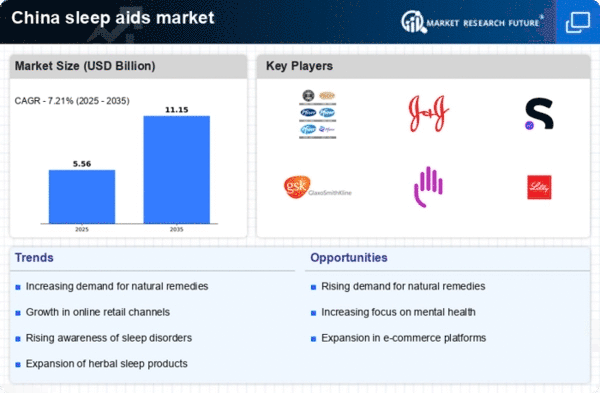
As per Market Research Future analysis, the China sleep aids market size was estimated at 5.19 USD Billion in 2024. The China sleep aids market is projected to grow from 5.56 USD Billion in 2025 to 11.15 USD Billion by 2035, exhibiting a compound annual growth rate (CAGR) of 7.2% during the forecast period 2025 - 2035

Key Market Trends & Highlights

The China sleep aids market is experiencing a notable shift towards natural and technologically integrated solutions.

  • The largest segment in the China sleep aids market is the natural products segment, driven by increasing consumer preference for organic and herbal solutions.
  • Technological integration in sleep solutions is rapidly gaining traction, with smart devices and apps becoming more prevalent among consumers.
  • The fastest-growing segment is the mental health-focused sleep aids, reflecting a heightened awareness of the connection between mental well-being and sleep quality.
  • Key market drivers include rising awareness of sleep disorders and urbanization, which are influencing consumer choices towards holistic health solutions.

Market Size & Forecast

2024 Market Size 5.19 (USD Billion)
2035 Market Size 11.15 (USD Billion)
CAGR (2025 - 2035) 7.21%

Major Players

Pfizer Inc (US), Johnson & Johnson (US), Sanofi (FR), GlaxoSmithKline (GB), Bristol-Myers Squibb (US), Eli Lilly and Company (US), AstraZeneca (GB), Novartis (CH), Sleep Number Corporation (US)

Our Impact
Enabled $4.3B Revenue Impact for Fortune 500 and Leading Multinationals
Partnering with 2000+ Global Organizations Each Year
30K+ Citations by Top-Tier Firms in the Industry

China Sleep Aids Market Trends

The sleep aids market is currently experiencing notable growth, driven by increasing awareness of sleep disorders and the importance of quality rest. In recent years, there has been a marked rise in the prevalence of insomnia and other sleep-related issues among the population. This trend appears to be influenced by various factors, including lifestyle changes, heightened stress levels, and the pervasive use of technology. As a result, consumers are increasingly seeking effective solutions to enhance their sleep quality, leading to a surge in demand for various sleep aids. The market encompasses a diverse range of products, including over-the-counter medications, herbal supplements, and sleep-enhancing devices. Moreover, the regulatory environment surrounding sleep aids is evolving, with authorities emphasizing safety and efficacy. This shift may encourage manufacturers to innovate and develop new formulations that cater to consumer preferences. Additionally, the rise of e-commerce platforms has transformed the way consumers access sleep aids, making it easier for them to explore options and make informed choices. As the market continues to expand, it is likely that new trends will emerge, reflecting changing consumer behaviors and preferences in the pursuit of better sleep.

Increased Demand for Natural Products

There is a growing preference for natural and herbal sleep aids among consumers. This trend suggests that individuals are becoming more health-conscious and are seeking alternatives to synthetic medications. The appeal of natural ingredients is likely driven by a desire for fewer side effects and a more holistic approach to health.

Technological Integration in Sleep Solutions

The integration of technology into sleep aids is becoming increasingly prevalent. Devices such as sleep trackers and smart mattresses are gaining traction, as they offer personalized insights and solutions for improving sleep quality. This trend indicates a shift towards data-driven approaches in managing sleep health.

Focus on Mental Health and Sleep Connection

There is an emerging recognition of the link between mental health and sleep quality. As awareness of mental health issues rises, consumers are more inclined to seek sleep aids that address both sleep disturbances and underlying psychological factors. This trend highlights the importance of a comprehensive approach to sleep health.

China Sleep Aids Market Drivers

Increased Focus on Holistic Health

There is a growing trend towards holistic health and wellness in China, which is positively impacting the sleep aids market. Consumers are increasingly seeking natural and organic products that promote overall well-being, including sleep quality. This shift in consumer preference is leading to a rise in the demand for herbal and non-pharmaceutical sleep aids. Market data suggests that sales of natural sleep aids have surged by approximately 25% in the past year. As consumers become more health-conscious, they are likely to gravitate towards products that align with their holistic health goals. This trend encourages manufacturers to innovate and expand their product lines to include natural sleep aids, thereby enhancing their competitiveness in the sleep aids market.

Urbanization and Lifestyle Changes

Rapid urbanization in China is significantly influencing the sleep aids market. As more individuals migrate to urban areas, lifestyle changes, including increased work hours and heightened stress levels, are becoming prevalent. These factors contribute to a rise in sleep-related issues, prompting a greater reliance on sleep aids. Data suggests that urban dwellers are 1.5 times more likely to experience sleep disturbances compared to their rural counterparts. Consequently, the demand for sleep aids is expected to grow as urban populations seek solutions to combat insomnia and other sleep disorders. This trend is likely to encourage manufacturers to innovate and diversify their product offerings, catering to the unique needs of urban consumers in the sleep aids market.

E-commerce Growth and Accessibility

The expansion of e-commerce platforms in China is transforming the sleep aids market by enhancing product accessibility. With the rise of online shopping, consumers can easily access a wide range of sleep aid products from the comfort of their homes. Data shows that online sales of health and wellness products, including sleep aids, have increased by over 40% in recent years. This trend is particularly appealing to younger consumers who prefer the convenience of online shopping. Furthermore, e-commerce allows for greater product variety and competitive pricing, which may attract more consumers to the sleep aids market. As online platforms continue to evolve, they are likely to play a crucial role in shaping consumer preferences and driving sales in the sleep aids market.

Rising Awareness of Sleep Disorders

The increasing awareness of sleep disorders among the Chinese population is a pivotal driver for the sleep aids market. As more individuals recognize the impact of poor sleep on overall health, there is a growing demand for effective solutions. Reports indicate that approximately 30% of adults in China experience some form of sleep disturbance, which has led to a surge in the consumption of sleep aids. This heightened awareness is prompting healthcare professionals to recommend various products, thereby expanding the market. Furthermore, educational campaigns by health organizations are likely to continue raising awareness, which may further stimulate growth in the sleep aids market. As a result, manufacturers are focusing on developing innovative products tailored to address specific sleep issues, enhancing their market presence.

Aging Population and Health Concerns

China's aging population is a crucial driver for the sleep aids market. As the demographic shifts, the prevalence of sleep disorders among older adults is increasing. Studies indicate that nearly 50% of elderly individuals in China report experiencing sleep problems, which can exacerbate other health issues. This growing concern is leading to a higher demand for sleep aids specifically designed for older adults. Healthcare providers are increasingly recommending these products as part of comprehensive care plans, further propelling market growth. Additionally, the government is likely to implement policies aimed at improving the quality of life for the elderly, which may include promoting the use of sleep aids. This demographic trend presents a significant opportunity for manufacturers to develop targeted solutions within the sleep aids market.


Market Segment Insights

By Product: Mattresses & Pillows (Largest) vs. Sleep Apnea Devices (Fastest-Growing)

The China sleep aids market demonstrates a diverse distribution among its product segments, with Mattresses & Pillows commanding the largest share. This segment is popular due to growing awareness of sleep quality and the increasing health concerns regarding sleep-related disorders. On the other hand, Sleep Apnea Devices, while currently smaller in market share, are rapidly gaining traction as more individuals are diagnosed with sleep apnea, driving demand for effective treatment options. In terms of growth trends, Mattresses & Pillows are benefiting from rising disposable incomes and consumer preferences for premium sleep products. Conversely, the Sleep Apnea Devices segment is experiencing the fastest growth, driven by technological advancements in device efficacy and a greater emphasis on sleep health. The increasing prevalence of sleep disorders in the population is a significant catalyst for this growth, indicating a shift in focus towards specific health-related sleep solutions.

Mattresses & Pillows (Dominant) vs. Sleep Apnea Devices (Emerging)

Mattresses & Pillows represent the dominant force in the China sleep aids market, appealing to a wide consumer base due to their essential role in improving sleep quality. Innovations such as memory foam and cooling technologies contribute to their popularity, as consumers prioritize comfort and health benefits. In contrast, Sleep Apnea Devices are emerging as a critical solution for individuals diagnosed with sleep apnea. This segment encompasses CPAP machines and oral appliances, which are gaining acceptance as awareness of sleep disorders increases. The trend towards at-home sleep testing and the consequent rise in diagnoses are fueling market demand, positioning Sleep Apnea Devices as a key player in the evolving landscape of sleep health.

By Sleep Disorder: Insomnia (Largest) vs. Sleep Apnea (Fastest-Growing)

In the China sleep aids market, insomnia remains the largest segment, commanding a significant share of the overall market. It has been marked by a consistent consumer preference for remedies that promote better sleep quality. Following insomnia, sleep apnea is emerging as a notable segment, driven by rising awareness and diagnosis rates. This disparity highlights varying consumer needs and the effectiveness of existing solutions across the different sleep disorder categories. Growth in the China sleep aids market is primarily fueled by increasing stress levels, changing lifestyles, and a growing aging population that is more prone to sleep disorders. Technological advancements in sleep monitoring and therapy are propelling segments like sleep apnea to the forefront, making it the fastest-growing segment. As consumers seek more effective and safer solutions for sleep issues, market players are focusing on innovative products that cater to these demands.

Insomnia (Dominant) vs. Sleep Apnea (Emerging)

Insomnia is widely recognized as the dominant disorder in the market, characterized by difficulty in falling or staying asleep. Its prevalence is linked to modern lifestyle challenges, social pressures, and work-related stress. Consequently, many consumers are turning to an array of sleep aids, ranging from over-the-counter medicines to natural supplements. In contrast, sleep apnea, marked by interrupted breathing during sleep, is gaining traction as an emerging concern due to heightened awareness and the push for medical treatments. Patients are increasingly drawn to CPAP machines and wearable sleep trackers that diagnose and manage this condition, indicating a shift toward personalized and monitored sleep solutions.

Get more detailed insights about China Sleep Aids Market

Key Players and Competitive Insights

The sleep aids market in China is characterized by a dynamic competitive landscape, driven by increasing consumer awareness regarding sleep health and a growing demand for effective solutions. Major players such as Pfizer Inc (US), Johnson & Johnson (US), and Sanofi (FR) are actively shaping the market through strategic initiatives focused on innovation and regional expansion. Pfizer Inc (US) has positioned itself as a leader in the pharmaceutical segment, emphasizing research and development to enhance its product offerings. Meanwhile, Johnson & Johnson (US) has adopted a multi-faceted approach, integrating digital health solutions into its portfolio to cater to the evolving needs of consumers. Sanofi (FR) is also making strides by investing in partnerships that leverage technology to improve sleep quality, thereby enhancing its competitive edge.The business tactics employed by these companies reflect a concerted effort to optimize supply chains and localize manufacturing processes. The market structure appears moderately fragmented, with a mix of established pharmaceutical giants and emerging players. This fragmentation allows for diverse product offerings, yet the collective influence of key players like GlaxoSmithKline (GB) and Eli Lilly and Company (US) is significant, as they continue to innovate and expand their market presence.

In October GlaxoSmithKline (GB) announced a strategic partnership with a leading tech firm to develop a digital platform aimed at improving sleep monitoring and management. This initiative is likely to enhance consumer engagement and provide valuable data insights, positioning GlaxoSmithKline (GB) at the forefront of the digital health revolution in sleep aids. The integration of technology into traditional pharmaceutical offerings may redefine how consumers interact with sleep solutions.

In September Eli Lilly and Company (US) launched a new line of sleep aids that incorporate natural ingredients, responding to the growing consumer preference for holistic health solutions. This product line not only diversifies Eli Lilly's portfolio but also aligns with current trends favoring natural remedies over synthetic options. The strategic introduction of these products may attract a broader consumer base, particularly among health-conscious individuals.

In August AstraZeneca (GB) expanded its research initiatives focused on sleep disorders, collaborating with academic institutions to explore innovative treatment options. This move underscores AstraZeneca's commitment to addressing unmet medical needs in the sleep aids market. By fostering academic partnerships, the company is likely to enhance its research capabilities and accelerate the development of novel therapies.

As of November the competitive trends in the sleep aids market are increasingly defined by digitalization, sustainability, and the integration of artificial intelligence. Strategic alliances are becoming pivotal, as companies seek to leverage complementary strengths to enhance their market positions. The shift from price-based competition to a focus on innovation and technology is evident, with firms prioritizing supply chain reliability and product differentiation. Looking ahead, competitive differentiation will likely evolve as companies invest in advanced technologies and sustainable practices, ultimately reshaping the landscape of sleep aids.

Key Companies in the China Sleep Aids Market include

Industry Developments

In recent months, the China Sleep Aids Market has witnessed notable developments with several companies actively enhancing their presence and product offerings. Sanofi is focusing on increasing its market share through the introduction of novel sleep aid formulations tailored to local consumer preferences. Zizai Technology has been at the forefront of innovative technology-based solutions like smart sleep tracking devices that cater to an increasingly health-conscious population.

Additionally, companies like AstraZeneca and Eli Lilly are investing in Research and Development for new sleep-related therapeutics, recognizing the rising demand attributed to stress and changing lifestyles in urban areas.Mergers and acquisitions have also shaped the landscape; for instance, in August 2023, Anand Pharma, partnering with Teva Pharmaceutical Industries, initiated a joint venture aimed at developing over-the-counter sleep aids tailored for the Chinese market. 

The valuation of the market is growing, driven by an uptick in demand for both prescription and non-prescription solutions, with industry reports indicating a strong forecast for growth through 2025. Over the last two years, consumer awareness surrounding sleep health has significantly increased, empowering companies like Pfizer and Bayer to expand product lines that align with evolving consumer needs in China.

Future Outlook

China Sleep Aids Market Future Outlook

The Sleep Aids Market in China is projected to grow at a 7.21% CAGR from 2025 to 2035, driven by increasing awareness of sleep health and innovative product offerings.

New opportunities lie in:

  • Development of personalized sleep aid solutions using AI technology.
  • Expansion of e-commerce platforms for direct-to-consumer sales.
  • Partnerships with healthcare providers for integrated sleep health programs.

By 2035, the market is expected to achieve substantial growth, reflecting evolving consumer needs and innovative solutions.

Market Segmentation

China Sleep Aids Market Product Outlook

  • Mattresses & Pillows
  • Medications
  • Sleep Apnea Devices
  • Others

China Sleep Aids Market Sleep Disorder Outlook

  • Insomnia
  • Sleep Apnea
  • Restless Legs Syndrome
  • Narcolepsy
  • Sleep Walking
  • Other Sleep Disorders

Report Scope

MARKET SIZE 2024 5.19(USD Billion)
MARKET SIZE 2025 5.56(USD Billion)
MARKET SIZE 2035 11.15(USD Billion)
COMPOUND ANNUAL GROWTH RATE (CAGR) 7.21% (2025 - 2035)
REPORT COVERAGE Revenue Forecast, Competitive Landscape, Growth Factors, and Trends
BASE YEAR 2024
Market Forecast Period 2025 - 2035
Historical Data 2019 - 2024
Market Forecast Units USD Billion
Key Companies Profiled Pfizer Inc (US), Johnson & Johnson (US), Sanofi (FR), GlaxoSmithKline (GB), Bristol-Myers Squibb (US), Eli Lilly and Company (US), AstraZeneca (GB), Novartis (CH), Sleep Number Corporation (US)
Segments Covered Product, Sleep Disorder
Key Market Opportunities Integration of digital health solutions enhances consumer engagement in the sleep aids market.

Key Market Dynamics Rising consumer awareness drives demand for natural sleep aids, influencing market dynamics in China.
Countries Covered China
Leave a Comment

FAQs

What is the projected market size of the China Sleep Aids Market by 2035?

The China Sleep Aids Market is projected to be valued at 11.14 USD Billion by the year 2035.

What is the expected CAGR for the China Sleep Aids Market during the forecast period of 2025 to 2035?

The expected CAGR for the China Sleep Aids Market from 2025 to 2035 is 7.201 %.

What will be the market value of medications in the China Sleep Aids Market by 2035?

By 2035, the market value of medications in the China Sleep Aids Market is expected to reach 4.7 USD Billion.

Which product segment is expected to dominate the China Sleep Aids Market by 2035?

The medications segment is expected to dominate the China Sleep Aids Market by reaching 4.7 USD Billion by 2035.

What are the expected market values for Mattresses & Pillows in the China Sleep Aids Market by 2024 and 2035?

The market value for Mattresses & Pillows is projected to be 1.3 USD Billion in 2024 and 2.85 USD Billion in 2035.

Who are some of the key players in the China Sleep Aids Market?

Key players in the China Sleep Aids Market include Sanofi, Zizai Technology, Mylan, and Johnson & Johnson.

What is the anticipated market value for Sleep Apnea Devices in 2024 and 2035?

The anticipated market value for Sleep Apnea Devices is 1.45 USD Billion in 2024 and 3.1 USD Billion in 2035.

What challenges might affect the growth of the China Sleep Aids Market?

Market growth may be challenged by regulatory hurdles and competition among numerous players in the industry.

What is the expected market value for the 'Others' product segment by 2035?

The expected market value for the 'Others' product segment in the China Sleep Aids Market is projected to be 0.49 USD Billion by 2035.

What is the expected market value for the entire China Sleep Aids Market in 2024?

In 2024, the overall value of the China Sleep Aids Market is expected to be 5.19 USD Billion.

Download Free Sample

Kindly complete the form below to receive a free sample of this Report

Compare Licence

×
Features License Type
Single User Multiuser License Enterprise User
Price $4,950 $5,950 $7,250
Maximum User Access Limit 1 User Upto 10 Users Unrestricted Access Throughout the Organization
Free Customization
Direct Access to Analyst
Deliverable Format
Platform Access
Discount on Next Purchase 10% 15% 15%
Printable Versions