×
Request Free Sample ×

Kindly complete the form below to receive a free sample of this Report

* Please use a valid business email

Leading companies partner with us for data-driven Insights

clients tt-cursor
Hero Background

China Milk Protein Market

ID: MRFR/FnB/46665-HCR
200 Pages
Varsha More
February 2026

China Milk Protein Market Size, Share, Industry Trend & Analysis Research Report By Product Type (Milk Protein Concentrates, Milk Protein Isolates, Milk Protein Hydrolysates, Casein and Caseinates, Whey Protein Concentrates, Whey Protein Isolates, Others), By Form (Dry, Liquid), and By Application (Dairy Products, Infant Formula, Dietary Supplements, Infant Formula, Beverages, Sweet & Savory Bakery & Confectionery, Others) - Forecast to 2035

Share:
Download PDF ×

We do not share your information with anyone. However, we may send you emails based on your report interest from time to time. You may contact us at any time to opt-out.

China Milk Protein Market Infographic
Purchase Options

China Milk Protein Market Summary

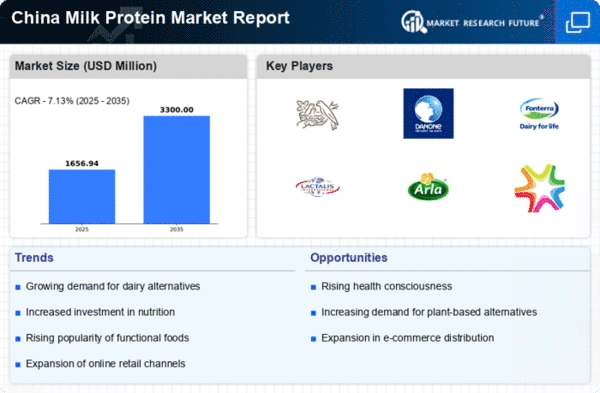
As per Market Research Future analysis, the China milk protein market Size was estimated at 1546.66 USD Million in 2024. The China milk protein market is projected to grow from 1656.94 USD Million in 2025 to 3300.0 USD Million by 2035, exhibiting a compound annual growth rate (CAGR) of 7.1% during the forecast period 2025 - 2035

Key Market Trends & Highlights

The China milk protein market is experiencing robust growth driven by health trends and innovation.

  • The largest segment in the China milk protein market is the sports nutrition segment, reflecting a growing consumer focus on fitness.
  • The fastest-growing segment is the dairy alternatives segment, indicating a shift towards plant-based options among consumers.
  • E-commerce is rapidly becoming a preferred channel for purchasing milk protein products, enhancing market accessibility.
  • Rising health consciousness and the growing demand for functional foods are key drivers propelling market expansion.

Market Size & Forecast

2024 Market Size 1546.66 (USD Million)
2035 Market Size 3300.0 (USD Million)
CAGR (2025 - 2035) 7.13%

Major Players

Nestle (CH), Danone (FR), Fonterra (NZ), Lactalis (FR), Arla Foods (DK), FrieslandCampina (NL), Saputo (CA), Glanbia (IE), Agropur (CA)

Our Impact
Enabled $4.3B Revenue Impact for Fortune 500 and Leading Multinationals
Partnering with 2000+ Global Organizations Each Year
30K+ Citations by Top-Tier Firms in the Industry

China Milk Protein Market Trends

The milk protein market is currently experiencing notable growth, driven by increasing consumer awareness regarding health and nutrition. This heightened focus on dietary choices has led to a surge in demand for protein-rich products, particularly among health-conscious individuals. The market appears to be influenced by a shift towards natural and organic ingredients, as consumers seek transparency in food sourcing. Additionally, the rise of fitness culture and the popularity of protein supplements contribute to the expanding market landscape. As a result, manufacturers are innovating to create diverse offerings that cater to various dietary preferences, including lactose-free and plant-based options. Moreover, the regulatory environment in China is evolving, with authorities implementing stricter quality control measures to ensure food safety. This regulatory framework may enhance consumer confidence in milk protein products, potentially leading to increased consumption. The market also seems to benefit from the growing trend of online shopping, which provides consumers with easier access to a wider range of milk protein products. Overall, the milk protein market is poised for continued expansion, driven by changing consumer preferences and a supportive regulatory landscape.

Health and Wellness Focus

There is a growing emphasis on health and wellness among consumers, leading to increased demand for protein-rich foods. This trend is particularly evident in urban areas, where individuals are more likely to seek out nutritious options that align with their fitness goals.

Innovation in Product Offerings

Manufacturers are actively developing new products to meet the diverse needs of consumers. This includes lactose-free and plant-based milk protein options, catering to those with dietary restrictions or preferences for alternative sources of protein.

E-commerce Growth

The rise of e-commerce platforms is transforming how consumers purchase milk protein products. Online shopping provides greater convenience and access to a wider variety of options, appealing to tech-savvy consumers who prefer to shop from home.

China Milk Protein Market Drivers

Rising Health Consciousness

The increasing awareness of health and nutrition among consumers in China is driving the milk protein market. As individuals become more health-conscious, they seek products that offer nutritional benefits, particularly those high in protein. This trend is reflected in the growing demand for protein-rich dairy products, which are perceived as essential for maintaining a balanced diet. According to recent data, the consumption of milk protein products has surged by approximately 15% in urban areas, indicating a shift towards healthier dietary choices. The milk protein market is likely to benefit from this trend as consumers prioritize functional foods that support their health goals.

Expansion of Dairy Alternatives

The milk protein market is witnessing a significant transformation with the rise of dairy alternatives, which cater to the growing population of lactose-intolerant individuals and those seeking plant-based diets. In China, the demand for non-dairy protein sources is increasing, leading to the development of innovative products that blend traditional dairy with alternative proteins. This trend is reshaping the market landscape, as consumers explore diverse options that align with their dietary preferences. The milk protein market must adapt to this shift by incorporating alternative protein sources into their offerings, potentially capturing a broader consumer base and enhancing market growth.

Growing Demand for Functional Foods

The milk protein market is experiencing a notable increase in demand for functional foods, which are products that provide health benefits beyond basic nutrition. In China, consumers are increasingly looking for foods that enhance their well-being, such as those that support muscle recovery and weight management. This shift is evident in the rising popularity of protein supplements and fortified dairy products. Market data suggests that the functional food segment within the milk protein market has expanded by around 20% over the past year, driven by the desire for products that contribute to overall health. The milk protein market is thus positioned to capitalize on this growing consumer preference.

Rising Popularity of Sports Nutrition

The milk protein market is benefiting from the growing interest in sports nutrition among Chinese consumers. As fitness and athleticism gain traction, there is an increasing demand for protein-rich products that support muscle growth and recovery. This trend is particularly evident among younger demographics, who are more inclined to incorporate protein supplements and fortified dairy products into their diets. Market analysis indicates that the sports nutrition segment within the milk protein market has expanded by approximately 30% in recent years, highlighting the potential for further growth. The milk protein market is well-positioned to leverage this trend by offering targeted products that cater to the needs of active consumers.

Increased Investment in Dairy Technology

Investment in advanced dairy processing technologies is playing a crucial role in the evolution of the milk protein market. In China, companies are focusing on improving production efficiency and product quality through innovative processing methods. This trend is likely to enhance the nutritional profile of milk protein products, making them more appealing to health-conscious consumers. Recent reports indicate that investments in dairy technology have increased by approximately 25% over the last two years, reflecting a commitment to innovation within the milk protein market. Such advancements may lead to the introduction of new products that meet evolving consumer demands.


Market Segment Insights

By Type: Whey Protein Isolate (Largest) vs. Casein & Caseinates (Fastest-Growing)

The China milk protein market exhibits a diverse segment distribution with Whey Protein Isolate leading as the largest segment. This dominance is driven by its high nutritional value and versatility in various applications, ranging from sports nutrition to functional foods. Following behind, Casein & Caseinates are gaining traction, appealing to consumers looking for slow-digesting proteins suited for muscle recovery and sustained energy release. Growth trends show that innovative product developments and rising health consciousness are substantial drivers for these segments. Whey Protein Isolate remains favored for its rapid absorption and muscle-building properties, while Casein & Caseinates are becoming more popular among health-conscious consumers who seek sustainable and slow-release protein options, establishing them as a significant emerging segment in this market.

Whey Protein Isolate (Dominant) vs. Casein & Caseinates (Emerging)

Whey Protein Isolate is the dominant category within the China milk protein market, favored for its nearly complete amino acid profile and rapid digestibility, appealing primarily to athletes and active individuals. Its applications are extensive, including protein supplements, fortified foods, and beverages. In contrast, Casein & Caseinates are emerging as an attractive option among consumers preferring slow-digesting proteins, which assist in overnight muscle recovery and satiety. This segment is garnering attention due to its potential health benefits and unique properties, positioning it favorably within the increasing trend of plant-based and alternative protein sources. As more consumers recognize these benefits, Casein & Caseinates are projected to capture a growing market share.

By Form: Dry (Largest) vs. Liquid (Fastest-Growing)

In the China milk protein market, the market share for dry and liquid forms showcases a clear distinction in their popularity. Dry milk proteins hold a significant portion of the market, largely due to their extensive applications in various food production processes. Meanwhile, liquid milk proteins, though currently a smaller segment, are rapidly gaining traction as consumer preferences shift toward convenience and ready-to-use products. Growth trends indicate a robust increase in the liquid segment, propelled by rising health consciousness and a demand for high-quality, protein-rich beverages. As health trends evolve, manufacturers are innovating to create more appealing liquid protein options, catering specifically to fitness enthusiasts and health-conscious consumers. This dynamic nature of the market is expected to result in an even larger share for liquid forms in the coming years, making it a key focus for industry players.

Dry: Dominant vs. Liquid: Emerging

Dry milk proteins are currently the dominant form within the market, favored for their long shelf life and versatility in multiple applications, including bakery, dairy, and nutritional supplements. Their extensive use in the food industry underscores their importance, making them a staple for many manufacturers. On the other hand, liquid milk proteins are emerging rapidly due to a shift in consumer behavior favoring ready-to-drink solutions. This segment is characterized by innovation, with products being developed to enhance convenience and nutritional benefits. Market players are increasingly focusing on liquid formats, as they align with modern dietary trends and the increasing preference for on-the-go nutritional options.

By Application: Dairy Products (Largest) vs. Infant Formula (Fastest-Growing)

In the China milk protein market, Dairy Products hold the largest share, significantly surpassing other applications. Following closely, Infant Formula has shown remarkable growth and is quickly catching up, showcasing a robust demand driven by rising health consciousness and a focus on nutrition for infants. The market also sees contributions from Dietary Supplements and Beverages, but they remain smaller in comparison. Growth trends indicate a shift towards convenience and health-oriented products. The rapid rise of the infant population and increasing disposable incomes have fostered demand for Infant Formula. Additionally, the trend of health and wellness is driving consumers towards high-protein Dairy Products and Dietary Supplements, creating a positive outlook for the market. Factors such as urbanization and lifestyle changes continue to fuel these trends, boosting the overall application segment.

Dairy Products: Dominant vs. Infant Formula: Emerging

Dairy Products serve as a dominant segment in the China milk protein market, characterized by a wide variety of offerings including milk, cheese, and yogurts that appeal to diverse consumer tastes. This segment is supported by strong consumer preference for traditional dairy as a key protein source. In contrast, Infant Formula is emerging as a fast-growing segment, largely due to heightened awareness among parents regarding nutritional needs for infants. This segment reflects innovation and product diversification, such as organic and tailored formulations that cater to specific dietary requirements. Both segments illustrate a robust interplay in consumer trends, signifying a dynamic shift towards health-focused dairy applications.

Get more detailed insights about China Milk Protein Market

Key Players and Competitive Insights

The milk protein market in China is characterized by a dynamic competitive landscape, driven by increasing consumer demand for high-protein products and a growing health consciousness among the population. Major players such as Nestle (CH), Danone (FR), and Fonterra (NZ) are strategically positioned to capitalize on these trends. Nestle (CH) focuses on innovation in product development, particularly in the realm of functional foods, while Danone (FR) emphasizes sustainability and health-oriented offerings. Fonterra (NZ) leverages its extensive supply chain to ensure quality and consistency, which is crucial in a market that values product integrity. Collectively, these strategies contribute to a competitive environment that is increasingly focused on health benefits and sustainability.Key business tactics within the market include localizing manufacturing to reduce costs and optimize supply chains, which is particularly relevant given the vast geographical expanse of China. The competitive structure appears moderately fragmented, with several key players holding significant market shares, yet leaving room for smaller entrants. This fragmentation allows for diverse product offerings, catering to various consumer preferences and dietary needs, while the influence of major companies helps to set industry standards.

In October Nestle (CH) announced a partnership with a local dairy cooperative to enhance its milk protein sourcing capabilities. This strategic move is likely to bolster Nestle's supply chain resilience and ensure a steady flow of high-quality milk protein, aligning with the growing consumer demand for transparency and quality in food sourcing. Such partnerships may also enhance Nestle's brand reputation in a market increasingly focused on sustainability.

In September Danone (FR) launched a new line of plant-based protein products aimed at health-conscious consumers. This initiative reflects Danone's commitment to diversifying its product portfolio and addressing the rising trend of plant-based diets among Chinese consumers. The introduction of these products not only positions Danone as a leader in innovation but also aligns with global sustainability goals, potentially attracting a broader customer base.

In August Fonterra (NZ) expanded its distribution network in China by entering into a joint venture with a local logistics firm. This strategic action is expected to enhance Fonterra's market penetration and improve its ability to meet the increasing demand for milk protein products across various regions in China. By optimizing its distribution channels, Fonterra may achieve greater operational efficiency and customer satisfaction.

As of November current competitive trends in the milk protein market are increasingly defined by digitalization, sustainability, and the integration of artificial intelligence in supply chain management. Strategic alliances among key players are shaping the landscape, fostering innovation and enhancing operational capabilities. Looking ahead, competitive differentiation is likely to evolve from traditional price-based competition to a focus on innovation, technology, and supply chain reliability, as companies strive to meet the sophisticated demands of the modern consumer.

Key Companies in the China Milk Protein Market include

Industry Developments

The China Milk Protein Market has witnessed significant developments recently, particularly with growing consumer demand for high-protein dairy products. Trends indicate a surge in the adoption of milk protein concentrates and isolates, mainly driven by the rising health consciousness among Chinese consumers.

Companies such as Yili Group and Mengniu Dairy are leading this transformation with innovative product launches aimed at enhancing nutritional profiles. In March 2023, China Mengniu Dairy entered into a strategic partnership with a local health food brand to expand its product offerings in the health segment.

Noteworthy is the merger of Bright Dairy and Schreiber Foods in April 2023, aimed at enhancing distribution capabilities and product innovation across the region, which has been well received in the market. Moreover, FrieslandCampina, in collaboration with Arla Foods, has intensified efforts in Research and Development to cater to the increasing demands for organic and premium milk protein products.

In the past couple of years, significant investments in the sector have been observed, which have spurred growth, enhancing the overall market valuation and indicating an optimistic outlook for the future of milk protein consumption in China.

Future Outlook

China Milk Protein Market Future Outlook

The Milk Protein Market is projected to grow at a 7.13% CAGR from 2025 to 2035, driven by rising health awareness, demand for protein-rich diets, and innovative product development.

New opportunities lie in:

  • Expansion of plant-based milk protein alternatives
  • Development of customized protein supplements for athletes
  • Investment in advanced processing technologies for higher yield

By 2035, the market is expected to achieve robust growth, reflecting evolving consumer preferences and innovation.

Market Segmentation

China Milk Protein Market Form Outlook

  • Dry
  • Liquid

China Milk Protein Market Type Outlook

  • Milk Protein Concentrate
  • Milk Protein Isolate
  • Milk Protein Hydrolysates
  • Casein & Caseinates
  • Whey Protein Concentrate
  • Whey Protein Isolate
  • Others

China Milk Protein Market Application Outlook

  • Dairy Products
  • Infant Formula
  • Dietary Supplements
  • Bakery & Confectionery
  • Beverages
  • Sweet & Savory Snacks
  • Others

Report Scope

MARKET SIZE 2024 1546.66(USD Million)
MARKET SIZE 2025 1656.94(USD Million)
MARKET SIZE 2035 3300.0(USD Million)
COMPOUND ANNUAL GROWTH RATE (CAGR) 7.13% (2025 - 2035)
REPORT COVERAGE Revenue Forecast, Competitive Landscape, Growth Factors, and Trends
BASE YEAR 2024
Market Forecast Period 2025 - 2035
Historical Data 2019 - 2024
Market Forecast Units USD Million
Key Companies Profiled Nestle (CH), Danone (FR), Fonterra (NZ), Lactalis (FR), Arla Foods (DK), FrieslandCampina (NL), Saputo (CA), Glanbia (IE), Agropur (CA)
Segments Covered Type, Form, Application
Key Market Opportunities Growing demand for plant-based alternatives drives innovation in the milk protein market.
Key Market Dynamics Rising consumer demand for high-protein products drives innovation and competition in the milk protein market.
Countries Covered China
Leave a Comment

FAQs

What was the market size of the China Milk Protein Market in 2024?

The China Milk Protein Market was valued at 1.5 billion USD in 2024.

What will be the value of the China Milk Protein Market by 2035?

By 2035, the China Milk Protein Market is expected to reach a value of 4.5 billion USD.

What is the expected compound annual growth rate (CAGR) of the China Milk Protein Market from 2025 to 2035?

The expected CAGR for the China Milk Protein Market from 2025 to 2035 is 10.503%.

Which product type is projected to dominate the China Milk Protein Market in 2035?

Milk Protein Concentrates are projected to dominate the market, valued at 1.35 billion USD in 2035.

What was the market size for Milk Protein Isolates in 2024?

The market size for Milk Protein Isolates was 0.3 billion USD in 2024.

Who are the major players in the China Milk Protein Market?

Key players in the market include WimmBillDann, Fonterra, Sanyuan Foods, and Nestle, among others.

What is the market size forecast for Whey Protein Concentrates by 2035?

Whey Protein Concentrates are expected to reach a market value of 0.9 billion USD by 2035.

How much was the market for Milk Protein Hydrolysates valued in 2024?

The Milk Protein Hydrolysates segment was valued at 0.2 billion USD in 2024.

What challenges could impact the China Milk Protein Market growth?

Challenges such as fluctuating dairy prices and shifts in consumer preferences could impact market growth.

What are the key applications driving growth in the China Milk Protein Market?

Key applications driving growth include nutritional products, dietary supplements, and food and beverage industries.

Download Free Sample

Kindly complete the form below to receive a free sample of this Report

Compare Licence

×
Features License Type
Single User Multiuser License Enterprise User
Price $4,950 $5,950 $7,250
Maximum User Access Limit 1 User Upto 10 Users Unrestricted Access Throughout the Organization
Free Customization
Direct Access to Analyst
Deliverable Format
Platform Access
Discount on Next Purchase 10% 15% 15%
Printable Versions