×
Request Free Sample ×

Kindly complete the form below to receive a free sample of this Report

* Please use a valid business email

Leading companies partner with us for data-driven Insights

clients tt-cursor
Hero Background

China Medicinal Mushroom Market

ID: MRFR/FnB/42888-HCR
200 Pages
Garvit Vyas
February 2026

China Medicinal Mushroom Market Size, Share, Industry Trend & Analysis Research Report: By Type (Shiitake, Reishi, Maitake, Chaga, Cordyceps, Turkey Tail, Other Types), By Form (Fresh, Dried, Other Form) andBy Function (Antioxidant, Immune Enhancer, Anti-Cancer, Skin Care, Other Functions)- Forecast to 2035

Share:
Download PDF ×

We do not share your information with anyone. However, we may send you emails based on your report interest from time to time. You may contact us at any time to opt-out.

China Medicinal Mushroom Market Infographic
Purchase Options

China Medicinal Mushroom Market Summary

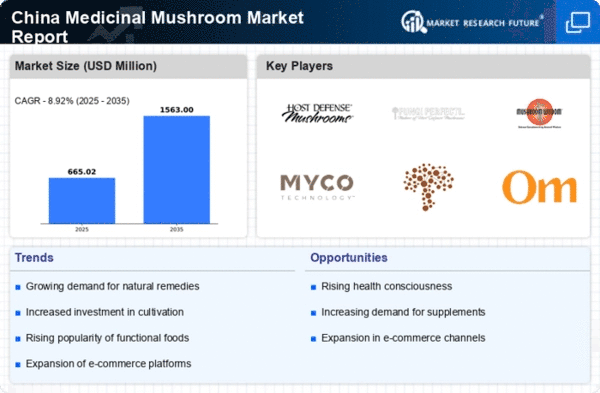
As per Market Research Future analysis, the China Medicinal Mushroom Market Size was estimated at 610.55 USD Million in 2024. The China The Distribution Of The Forms In The market reveals that fresh medicinal mushrooms dominate in terms of market share. is projected to grow from 665.02 USD Million in 2025 to 1563.0 USD Million by 2035, exhibiting a compound annual growth rate (CAGR) of 8.9% during the forecast period 2025 - 2035

Key Market Trends & Highlights

The China The medicinal mushroom market in China is experiencing robust growth driven by health trends and innovative product development. is experiencing robust growth driven by health trends and innovative product development.

  • The largest segment in the China medicinal mushroom market is functional foods, reflecting a rising consumer preference for health-oriented products.
  • E-commerce is the fastest-growing distribution channel, indicating a shift towards online purchasing behaviors among consumers.
  • Research and development activities are increasing, suggesting a focus on innovative applications and formulations of medicinal mushrooms.
  • Key market drivers include growing health consciousness and the integration of traditional medicine, which are shaping consumer demand and product offerings.

Market Size & Forecast

2024 Market Size 610.55 (USD Million)
2035 Market Size 1563.0 (USD Million)
CAGR (2025 - 2035) 8.92%

Major Players

Host Defense (US), Fungi Perfecti (US), Mushroom Wisdom (US), MycoTechnology (US), Real Mushrooms (CA), Om Mushroom Superfood (US), Four Sigmatic (FI), Mushroom Science (US), Aloha Medicinals (US)

Our Impact
Enabled $4.3B Revenue Impact for Fortune 500 and Leading Multinationals
Partnering with 2000+ Global Organizations Each Year
30K+ Citations by Top-Tier Firms in the Industry

China Medicinal Mushroom Market Trends

The The medicinal mushroom market is experiencing notable growth, driven by increasing consumer awareness regarding health benefits associated with various fungi. is experiencing notable growth, driven by increasing consumer awareness regarding health benefits associated with various fungi. In China, traditional practices have long embraced the use of mushrooms for their therapeutic properties, which has led to a resurgence in interest among modern consumers. This trend is further supported by a growing body of scientific research that highlights the potential health advantages of specific mushroom species, such as improved immune function and enhanced cognitive performance. As a result, the market is witnessing a diversification of products, ranging from supplements to functional foods, catering to a wide array of health-conscious individuals. Moreover, the rise of e-commerce platforms has significantly transformed the way consumers access medicinal mushrooms. Online sales channels provide convenience and a broader selection of products, allowing consumers to explore various options that may not be available in local stores. This shift in purchasing behavior is likely to continue, as more individuals seek out natural remedies and holistic health solutions. Additionally, the increasing popularity of plant-based diets may further bolster the demand for medicinal mushrooms, as they are often incorporated into vegetarian and vegan meal plans. Overall, the medicinal mushroom market appears poised for sustained growth, reflecting changing consumer preferences and a deeper understanding of the health benefits associated with these unique fungi.

Rising Popularity of Functional Foods

There is a growing trend towards incorporating medicinal mushrooms into functional foods. Consumers are increasingly seeking products that offer health benefits beyond basic nutrition. This shift is evident in the introduction of mushroom-infused snacks, beverages, and dietary supplements, which appeal to health-conscious individuals looking for natural ways to enhance their well-being.

Increased Research and Development

The medicinal mushroom market is witnessing heightened investment in research and development. Scientific studies are exploring the therapeutic properties of various mushroom species, leading to innovative product formulations. This focus on R&D is likely to enhance consumer trust and expand the range of available products, as evidence-based benefits become more widely recognized.

E-commerce Growth

The rise of e-commerce is reshaping the medicinal mushroom market landscape. Online platforms are becoming the preferred shopping method for many consumers, offering convenience and access to a diverse array of products. This trend is expected to continue, as more individuals turn to digital channels for their health and wellness needs.

China Medicinal Mushroom Market Drivers

Growing Health Consciousness

The increasing awareness of health and wellness among consumers in China appears to be a primary driver for the The increasing awareness of health and wellness among consumers in China appears to be a primary driver for the medicinal mushroom market.. As individuals seek natural remedies and preventive health solutions, the demand for products containing medicinal mushrooms is likely to rise. This trend is supported by a shift towards holistic health practices, with consumers gravitating towards functional foods that offer health benefits. Reports indicate that the market for health supplements, including those featuring medicinal mushrooms, has seen growth rates of approximately 15% annually. This heightened focus on health consciousness suggests that the medicinal mushroom market will continue to expand as consumers prioritize their well-being.

Innovative Product Development

The medicinal mushroom market is experiencing a surge in innovative product development, driven by consumer demand for diverse applications. Companies are increasingly formulating new products that incorporate medicinal mushrooms into supplements, beverages, and food items. This trend is likely to attract a broader consumer base, including those who may not traditionally seek out mushroom-based products. The introduction of functional beverages featuring medicinal mushrooms has gained traction, with market analysts estimating a growth rate of 20% in this segment. Such innovation not only enhances the appeal of medicinal mushrooms but also positions them as versatile ingredients in the health and wellness sector.

Traditional Medicine Integration

In China, the integration of medicinal mushrooms into traditional medicine practices significantly influences the medicinal mushroom market. Traditional Chinese Medicine (TCM) has long utilized various mushroom species for their therapeutic properties. The resurgence of interest in TCM, particularly among younger generations, indicates a potential growth area for the medicinal mushroom market. As more consumers seek natural alternatives to pharmaceuticals, the market for medicinal mushrooms is expected to flourish. The estimated value of the TCM market is projected to reach $130 billion by 2025, which could further bolster the demand for medicinal mushrooms as a key component of these traditional practices.

Sustainability and Organic Farming

Sustainability concerns are becoming increasingly relevant in the medicinal mushroom market, particularly in China. As consumers become more environmentally conscious, the demand for organically grown mushrooms is likely to rise. This shift towards sustainable practices may encourage producers to adopt organic farming methods, which could enhance the market's appeal. Reports suggest that the organic food market in China is expected to grow at a CAGR of 18% through 2025. This trend indicates that the medicinal mushroom market could benefit from the broader movement towards sustainability, as consumers seek products that align with their values.

Regulatory Support and Standardization

Regulatory support and standardization in the medicinal mushroom market are crucial for fostering consumer trust and market growth. The Chinese government has been actively promoting the use of medicinal mushrooms through various initiatives aimed at enhancing quality control and safety standards. This regulatory framework is likely to encourage more consumers to explore medicinal mushrooms as a viable health option. Furthermore, the establishment of clear guidelines for production and labeling may enhance market transparency. As a result, the medicinal mushroom market could see increased participation from both consumers and producers, potentially leading to a more robust market environment.


Market Segment Insights

By Product Type: Shiitake (Largest) vs. Lion's Mane (Fastest-Growing)

In the China In the China medicinal mushroom market, Shiitake stands out as the leading product type, commanding a significant share among consumers., Shiitake stands out as the leading product type, commanding a significant share among consumers. It is well-regarded for its culinary versatility and health benefits, contributing to its popularity. Lion's Mane, while having a smaller market share, is rapidly gaining traction due to its cognitive-enhancing properties and increasing consumer awareness of its health benefits. Growth trends in this segment indicate a robust rise in demand for medicinal mushrooms, driven by a growing interest in natural remedies and the health-conscious population. Innovations in cultivation techniques, coupled with changes in dietary preferences towards plant-based products, are fostering a favorable environment for both Shiitake and Lion's Mane. The market is expected to see continued expansion as consumers seek the therapeutic advantages of these products.

Shiitake (Dominant) vs. Lion's Mane (Emerging)

Shiitake mushrooms dominate the product type segment, favored by both consumers and chefs for their rich flavor and numerous health benefits, including immune support and anti-inflammatory properties. Their established position in the market is complemented by widespread availability and consumer familiarity. Conversely, Lion's Mane mushrooms are emerging as a popular choice, particularly among those looking for cognitive and neurological health enhancements. With their unique appearance and reputation for aiding mental clarity, they are becoming increasingly prominent. As awareness around their benefits grows, Lion's Mane is positioned to capture a more significant share of the market, appealing to a younger and health-focused demographic.

By Category: Organic (Largest) vs. Conventional (Fastest-Growing)

In the China In the China medicinal mushroom market, the segment distribution shows a significant lead for organic products., the segment distribution shows a significant lead for organic products, which are increasingly favored by health-conscious consumers. Organic mushrooms hold a larger market share due to rising awareness of the health benefits associated with organic consumption and a preference for natural products without synthetic chemicals. In contrast, conventional mushrooms, while traditionally popular, are experiencing a notable surge in demand as they offer cost efficiency and broader availability, appealing to a segment of consumers who prioritize price and accessibility over organic certification. Growth trends in this segment are being driven by several factors. The increasing consumer inclination toward organic foods is fostering a robust market for organic medicinal mushrooms, while the convenience and affordability of conventional options cater to those who require quick and economical solutions. Moreover, the ongoing health trend, largely influenced by the COVID-19 pandemic, has accelerated interest in the wellness sector, benefiting both categories as consumers explore the therapeutic properties of mushrooms for enhancing immunity and overall health.

Organic (Dominant) vs. Conventional (Emerging)

Organic medicinal mushrooms represent the dominant category in the China medicinal mushroom market. These products are renowned for their purity and nutritional benefits, with many consumers opting for them to avoid chemical residues and to support sustainable agriculture practices. On the other hand, conventional mushrooms are emerging as a strong competitor, owing to their affordability and availability. While they may not boast the same health claims as their organic counterparts, the growing interest in mushroom-based supplements has led to innovations in conventional cultivation practices, making them a viable option for consumers looking to explore the health benefits of medicinal mushrooms without the premium price tag.

By Form: Fresh (Largest) vs. Powder (Fastest-Growing)

The distribution of the forms in the market reveals that fresh medicinal mushrooms dominate in terms of market share, largely due to consumer preference for natural and unprocessed products. Processed and dried forms follow, catering to specific culinary and therapeutic needs, while powder forms, though currently smaller in share, are rapidly gaining traction as they align with the health trend of convenience and focused supplementation. Growth trends indicate an increasing demand for powdered forms of medicinal mushrooms, largely driven by the rise in health consciousness among consumers. The convenience of powder, which allows for easy incorporation into daily diets, positions it as the fastest-growing segment. This shift is further supported by the expanding use of medicinal mushrooms in functional foods and dietary supplements.

Fresh (Dominant) vs. Powder (Emerging)

Fresh medicinal mushrooms stand out as the dominant form in the market thanks to their appeal as a natural product, favored for both flavor and potential health benefits. They are often associated with traditional culinary practices and are preferred by chefs and health-conscious consumers alike. On the other hand, powdered forms represent an emerging segment that is capturing the interest of a younger demographic seeking convenience and enhanced bioavailability. The powdered form is often marketed for its ease of use in smoothies, supplements, and functional foods, making it increasingly popular as consumers look for ways to seamlessly integrate health benefits into their lifestyles.

By Application: Dietary Supplements (Largest) vs. Food & Beverages (Fastest-Growing)

The market share distribution among the application segments reveals a robust dominance of dietary supplements, accounting for the largest portion of consumption in the China The market share distribution among the application segments reveals a robust dominance of dietary supplements.. Following closely, the food & beverages segment has been making significant inroads, capturing the attention of both consumers and producers alike. Personal care and pharmaceuticals hold smaller shares, yet they contribute to a diverse market landscape, catering to specific consumer needs that are increasingly leaning towards holistic health products. Growth trends in this segment are being driven by rising health awareness and a shift towards natural products among consumers. The dietary supplements segment is fueled by a growing aging population seeking preventive health measures. Meanwhile, the food & beverages sector benefits from the trend of functional foods, with medicinal mushrooms being incorporated into various products as a means of enhancing health and flavor. The personal care and pharmaceuticals sectors are also witnessing emerging interest as consumers explore the benefits of natural ingredients in their products.

Dietary Supplements: Dominant vs. Food & Beverages: Emerging

Dietary supplements represent the dominant segment within the China medicinal mushroom market, largely due to their established reputation for enhancing health and well-being. These products often include capsules, powders, and extracts that harness the therapeutic properties of medicinal mushrooms. On the other hand, the food & beverages segment is rapidly emerging, characterized by its innovative incorporation of medicinal mushrooms into a variety of snacks, beverages, and health foods. This trend appeals to health-conscious consumers looking for flavorful yet functional options. The personal care segment is gradually evolving, with products infused with mushroom extracts gaining popularity for their potential skin benefits. Pharmaceuticals also show promise, particularly in areas focusing on natural and alternative medicine.

By End-user: Residential (Largest) vs. Commercial (Fastest-Growing)

The China The China medicinal mushroom market exhibits a diverse distribution between the residential and commercial segments. exhibits a diverse distribution between the residential and commercial segments. The residential segment holds the largest share, driven by increasing consumer awareness regarding the health benefits of medicinal mushrooms. Many consumers are opting for these products for home use, leading to significant demand. Conversely, the commercial segment, while smaller, is growing rapidly as more establishments, including restaurants and health food stores, incorporate medicinal mushrooms into their offerings, targeting health-conscious consumers. Growth trends indicate a strong upward trajectory for the commercial segment, attributed to the increasing integration of medicinal mushrooms into various cuisines and health products. This shift is fueled by rising health trends, along with more entrepreneurial ventures focused on restaurant and retail markets. Both segments are expected to continue evolving as societal preferences shift towards natural health solutions, making medicinal mushrooms a staple in Chinese food and health culture.

Residential: Dominant vs. Commercial: Emerging

The residential segment represents a dominant force within the segment landscape, characterized by individual consumers purchasing medicinal mushrooms for personal health and wellness. This segment is supported by a growing trend of self-care and prevention-focused health solutions. Consumers tend to favor easy access to medicinal mushrooms through retail outlets and online platforms. In contrast, the commercial segment is emerging, propelled by an increasing number of businesses recognizing the value of medicinal mushrooms in enhancing their menu offerings and health products. Restaurants, cafes, and health food stores are actively incorporating these ingredients, appealing to diners' interest in health benefits and natural ingredients. The commercial sector's growth reflects broader trends of sustainability and health consciousness, making it a dynamic area for future market developments.

By Distribution Channel: Supermarkets & Hypermarkets (Largest) vs. E-commerce (Fastest-Growing)

In the China In the China medicinal mushroom market, Supermarkets & Hypermarkets dominate the distribution channel segment., Supermarkets & Hypermarkets dominate the distribution channel segment, holding a significant portion of market share. These traditional retail formats have established consumer trust and provide accessibility, making them the preferred choice for many buyers. Specialty Stores also contribute to the market, but their share remains smaller compared to the leading channels, which cater to a broader audience through extensive networks and resources. The growth trends in the distribution channel segment highlight a shift towards E-commerce as the fastest-growing channel. Factors such as increased internet penetration, convenience, and the rise of health awareness among consumers are driving this trend. E-commerce platforms offer various products and flexible delivery options, attracting a younger demographic that prefers online shopping. As a result, while Supermarkets & Hypermarkets maintain dominance, E-commerce is rapidly transforming the market landscape.

Supermarkets & Hypermarkets (Dominant) vs. E-commerce (Emerging)

Supermarkets & Hypermarkets serve as the dominant distribution channel in the China medicinal mushroom market due to their vast reach and established presence. They typically offer a wide array of mushroom products, ensuring consumer confidence through recognized brands and quality. Conversely, E-commerce, while an emerging channel, is experiencing significant growth fueled by technological advancements and changing shopping habits. Consumers are increasingly inclined to purchase health supplements online, recognizing the convenience and variety available. Specialty Stores play a valuable role in catering to niche markets but do not match the widespread appeal of the more prominent distribution channels, positioning E-commerce as an attractive alternative for health-conscious consumers.

Get more detailed insights about China Medicinal Mushroom Market

Key Players and Competitive Insights

The medicinal mushroom market in China is characterized by a dynamic competitive landscape, driven by increasing consumer awareness of health benefits and a growing trend towards natural remedies. Key players such as Host Defense (US), Fungi Perfecti (US), and Real Mushrooms (CA) are strategically positioned to leverage these trends. Host Defense (US) emphasizes innovation in product development, focusing on high-quality, organic mushroom supplements that appeal to health-conscious consumers. Meanwhile, Fungi Perfecti (US) has adopted a robust approach to regional expansion, enhancing its distribution networks to reach a broader audience. Real Mushrooms (CA) appears to prioritize partnerships with local health food retailers, thereby strengthening its market presence and consumer trust. Collectively, these strategies contribute to a competitive environment that is increasingly focused on quality, accessibility, and consumer education.In terms of business tactics, companies are localizing manufacturing to reduce costs and improve supply chain efficiency. This approach is particularly relevant in a moderately fragmented market where numerous players vie for consumer attention. The collective influence of these key players fosters a competitive structure that encourages innovation and responsiveness to market demands, ultimately benefiting consumers through a wider array of product offerings.

In October Host Defense (US) announced a new line of mushroom-based protein powders aimed at fitness enthusiasts. This strategic move not only diversifies their product portfolio but also taps into the growing trend of plant-based nutrition, positioning the company favorably within the health and wellness sector. The introduction of these protein powders is likely to attract a new demographic, enhancing brand visibility and market share.

In September Fungi Perfecti (US) launched a sustainability initiative aimed at reducing its carbon footprint by 30% over the next five years. This initiative underscores the company's commitment to environmental responsibility, which resonates with an increasingly eco-conscious consumer base. By prioritizing sustainability, Fungi Perfecti (US) not only enhances its brand image but also aligns itself with global trends towards greener practices, potentially attracting more customers who value corporate social responsibility.

In August Real Mushrooms (CA) entered into a strategic partnership with a leading e-commerce platform to enhance its online sales capabilities. This collaboration is indicative of the growing importance of digital transformation in the market. By improving its online presence, Real Mushrooms (CA) is likely to reach a wider audience, thereby increasing sales and brand loyalty in a competitive digital landscape.

As of November current trends in the medicinal mushroom market include a pronounced shift towards digitalization, sustainability, and the integration of AI technologies in product development and marketing strategies. Strategic alliances are increasingly shaping the competitive landscape, allowing companies to pool resources and expertise. Looking ahead, competitive differentiation is expected to evolve, with a notable shift from price-based competition to a focus on innovation, technological advancements, and supply chain reliability. This evolution suggests that companies that prioritize these areas will likely emerge as leaders in the market.

Key Companies in the China Medicinal Mushroom Market include

Industry Developments

The China Medicinal Mushroom Market has recently witnessed notable developments. In August 2023, Xianggu Group announced plans to expand its production capabilities to meet increasing demand, thereby enhancing its global market share. Concurrently, Hubei Shijiang Biotechnology reported a significant increase in revenue in Q2 2023, driven by rising consumer awareness of the health benefits associated with medicinal mushrooms. Notably, in July 2023, Shenzhen Fuyuan Trading successfully acquired a small-scale competitor, which is expected to increase its product offerings and market penetration.

Market analysts believe that the overall market growth is fueled by a surge in the health and wellness trend, with companies like Nantong Rikai Industrial and Zhenjiang Huayi Mushrooms focusing on innovative product development. According to industry reports, the market valuation of the Chinese medicinal mushroom sector has increased by approximately 20% over the past two years as consumers increasingly seek natural health solutions. Moreover, Huanghe Wholesome Fishery Co has launched a campaign to promote traditional medicinal mushrooms in urban areas, demonstrating the growing recognition and integration of these products into everyday health regimens across China.

Future Outlook

China Medicinal Mushroom Market Future Outlook

The Medicinal Mushroom Market is projected to grow at an 8.92% CAGR from 2025 to 2035, driven by increasing health awareness, demand for natural products, and expanding applications in pharmaceuticals.

New opportunities lie in:

  • Develop subscription-based delivery services for medicinal mushroom products.
  • Invest in R&D for innovative extraction methods to enhance bioavailability.
  • Create partnerships with wellness brands for co-branded product lines.

By 2035, the medicinal mushroom market is expected to achieve substantial growth and diversification.

Market Segmentation

China Medicinal Mushroom Market Form Outlook

  • Fresh
  • Processed
  • Dried
  • Powder
  • Others

China Medicinal Mushroom Market Category Outlook

  • Organic
  • Conventional

China Medicinal Mushroom Market End-user Outlook

  • Residential
  • Commercial

China Medicinal Mushroom Market Application Outlook

  • Dietary Supplements
  • Food & Beverages
  • Personal Care
  • Pharmaceuticals

China Medicinal Mushroom Market Product Type Outlook

  • Shiitake
  • Lion's Mane
  • Reishi
  • Cordyceps
  • Chaga
  • Others

China Medicinal Mushroom Market Distribution Channel Outlook

  • Supermarkets & Hypermarkets
  • Specialty Stores
  • E-commerce

Report Scope

MARKET SIZE 2024 610.55(USD Million)
MARKET SIZE 2025 665.02(USD Million)
MARKET SIZE 2035 1563.0(USD Million)
COMPOUND ANNUAL GROWTH RATE (CAGR) 8.92% (2025 - 2035)
REPORT COVERAGE Revenue Forecast, Competitive Landscape, Growth Factors, and Trends
BASE YEAR 2024
Market Forecast Period 2025 - 2035
Historical Data 2019 - 2024
Market Forecast Units USD Million
Key Companies Profiled Host Defense (US), Fungi Perfecti (US), Mushroom Wisdom (US), MycoTechnology (US), Real Mushrooms (CA), Om Mushroom Superfood (US), Four Sigmatic (FI), Mushroom Science (US), Aloha Medicinals (US)
Segments Covered Product Type, Category, Form, Application, End-user, Distribution Channel
Key Market Opportunities Growing consumer interest in natural health products drives expansion in the medicinal mushroom market.
Key Market Dynamics Rising consumer demand for natural health products drives growth in the medicinal mushroom market.
Countries Covered China
Leave a Comment

FAQs

What is the expected market size of the China Medicinal Mushroom Market in 2024?

The China Medicinal Mushroom Market is expected to be valued at 522.9 million USD in 2024.

What will be the projected market size of the China Medicinal Mushroom Market by 2035?

By 2035, the market is projected to reach a value of 1360.0 million USD.

What is the anticipated CAGR for the China Medicinal Mushroom Market from 2025 to 2035?

The anticipated compound annual growth rate for the market from 2025 to 2035 is 9.078%.

Which segment of the China Medicinal Mushroom Market is expected to hold the largest market share?

The Shiitake segment is projected to hold the largest market share with a value of 190.0 million USD in 2024, and is expected to grow to 490.0 million USD by 2035.

Which key players dominate the China Medicinal Mushroom Market?

Major players include Nantong Rikai Industrial, Xianggu Group, and Hubei Shijiang Biotechnology among others.

What is the market value for the Reishi segment in 2024?

The Reishi segment is valued at 140.0 million USD in 2024.

What challenges and opportunities exist in the China Medicinal Mushroom Market?

Emerging trends such as increased health awareness and natural remedies present opportunities, while competition and regulatory challenges may pose difficulties.

What are the market values for Maitake and Chaga segments in 2024?

The Maitake segment is valued at 80.0 million USD and the Chaga segment at 72.9 million USD in 2024.

How is the Cordyceps segment expected to perform by 2035?

The Cordyceps segment is projected to grow from a value of 40.0 million USD in 2024 to 111.0 million USD by 2035.

What are the growth drivers for the China Medicinal Mushroom Market?

Growth drivers include rising consumer interest in health benefits associated with medicinal mushrooms and increasing demand for dietary supplements.

Download Free Sample

Kindly complete the form below to receive a free sample of this Report

Compare Licence

×
Features License Type
Single User Multiuser License Enterprise User
Price $4,950 $5,950 $7,250
Maximum User Access Limit 1 User Upto 10 Users Unrestricted Access Throughout the Organization
Free Customization
Direct Access to Analyst
Deliverable Format
Platform Access
Discount on Next Purchase 10% 15% 15%
Printable Versions