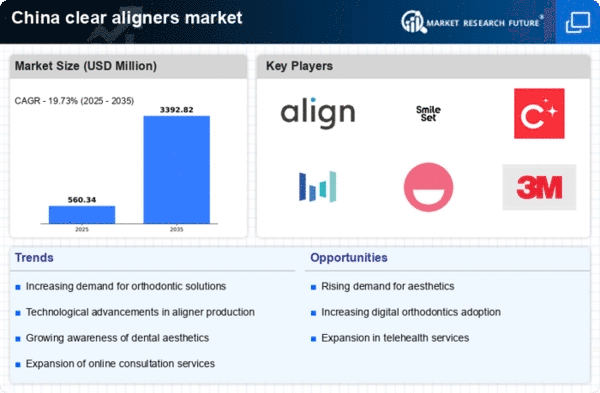
Growing Middle-Class Population
The expansion of the middle-class population in China significantly impacts the clear aligners market. As disposable incomes rise, more individuals are willing to invest in dental aesthetics, including clear aligners. This demographic shift is accompanied by an increasing awareness of dental health and aesthetics, leading to a greater willingness to seek orthodontic treatments. Market analysis suggests that the middle-class segment is projected to grow by 10% annually, which could translate into a substantial increase in demand for clear aligners. The clear aligners market is likely to capitalize on this trend by offering tailored marketing strategies that resonate with the aspirations of this burgeoning consumer base, ultimately driving sales and market penetration.
Rising Demand for Aesthetic Solutions
The clear aligners market in China experiences a notable surge in demand driven by the increasing preference for aesthetic dental solutions. Consumers are becoming more conscious of their appearance, leading to a shift from traditional braces to clear aligners, which offer a discreet alternative. This trend is particularly pronounced among younger demographics, who prioritize aesthetics in their dental care choices. Market data indicates that the demand for clear aligners has grown by approximately 25% annually, reflecting a broader cultural shift towards cosmetic enhancements. As more individuals seek to improve their smiles without the visibility of metal braces, the clear aligners market is poised for continued growth, supported by innovative marketing strategies that emphasize the aesthetic benefits of these products.
Increased Accessibility of Dental Care
The clear aligners market in China benefits from the increasing accessibility of dental care services. With the expansion of dental clinics and the introduction of tele-dentistry, more individuals can now access orthodontic treatments that were previously out of reach. This trend is particularly relevant in urban areas, where the proliferation of dental service providers has made it easier for consumers to obtain clear aligners. Additionally, government initiatives aimed at improving healthcare access contribute to this trend, as they encourage the establishment of more dental practices. The clear aligners market is likely to see a positive impact from these developments, as enhanced accessibility leads to higher adoption rates of clear aligners among the population.
Influence of Social Media and Marketing
The role of social media in shaping consumer perceptions and preferences is increasingly evident in the clear aligners market in China. Platforms such as WeChat and Weibo serve as powerful tools for marketing, allowing brands to engage directly with potential customers. Influencers and testimonials play a significant role in promoting clear aligners, as consumers often seek validation from peers before making purchasing decisions. This trend is supported by data indicating that nearly 60% of consumers in China rely on social media for product recommendations. The clear aligners market is likely to leverage these platforms to enhance brand visibility and consumer engagement, ultimately driving sales and fostering a community around clear aligner usage.
Technological Innovations in Manufacturing
Advancements in technology play a crucial role in shaping the clear aligners market in China. Innovations in 3D printing and digital scanning have streamlined the production process, allowing for more precise and customized aligner solutions. These technological improvements not only enhance the quality of the aligners but also reduce production costs, making them more accessible to a wider audience. The clear aligners market benefits from these efficiencies, as manufacturers can produce aligners at a lower price point while maintaining high standards of quality. Furthermore, the integration of artificial intelligence in treatment planning is expected to enhance patient outcomes, thereby driving further adoption of clear aligners among dental professionals and patients alike.