×
Request Free Sample ×

Kindly complete the form below to receive a free sample of this Report

* Please use a valid business email

Leading companies partner with us for data-driven Insights

clients tt-cursor
Hero Background

China Cassava Market

ID: MRFR/FnB/42866-HCR
200 Pages
Snehal Singh
February 2026

China Cassava Market Size, Share, Industry Trend & Analysis Research Report By Category Outlook (Conventional, Organic), By Form Outlook (Solid, Liquid) and By Application Outlook (Food Beverages, Animal Feed, Others)- Forecast to 2035

Share:
Download PDF ×

We do not share your information with anyone. However, we may send you emails based on your report interest from time to time. You may contact us at any time to opt-out.

China Cassava Market Infographic
Purchase Options

China Cassava Market Summary

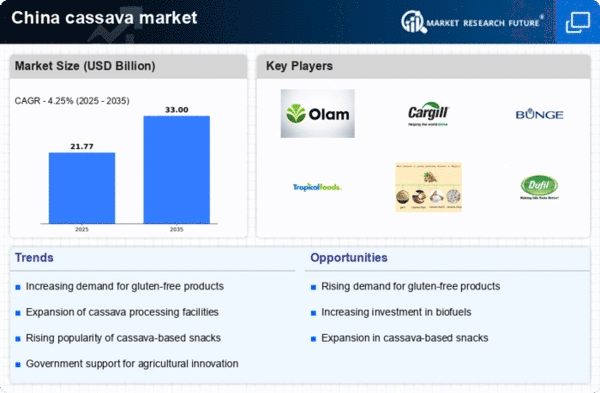
As per Market Research Future analysis, the China Cassava Market size was estimated at 20.88 USD Billion in 2024. The Cassava market is projected to grow from 21.77 USD Billion in 2025 to 33.0 USD Billion by 2035, exhibiting a compound annual growth rate (CAGR) of 4.2% during the forecast period 2025 - 2035

Key Market Trends & Highlights

The China cassava market is experiencing robust growth driven by rising demand for processed products and supportive government policies.

  • The largest segment in the China cassava market is processed cassava products, reflecting a rising demand for convenience foods.
  • The fastest-growing segment is cassava-based biofuels, driven by increasing energy needs and sustainability initiatives.
  • China is the largest market for cassava in Asia, while emerging markets in Africa are identified as the fastest-growing regions for exports.
  • Key market drivers include growing health consciousness among consumers and technological advancements in agriculture, enhancing production efficiency.

Market Size & Forecast

2024 Market Size 20.88 (USD Billion)
2035 Market Size 33.0 (USD Billion)
CAGR (2025 - 2035) 4.25%

Major Players

Olam International (SG), Cargill (US), Bunge Limited (US), Tropical Foods (GH), Cassava Processing Company (GH), Dufil Prima Foods (NG), Starch Solutions (NG), Siam Cassava Products (TH)

Our Impact
Enabled $4.3B Revenue Impact for Fortune 500 and Leading Multinationals
Partnering with 2000+ Global Organizations Each Year
30K+ Citations by Top-Tier Firms in the Industry

China Cassava Market Trends

The China Cassava Market in China is currently experiencing notable developments, driven by various factors including domestic demand and international trade dynamics. The country has emerged as a significant player in the production and processing of cassava, which is primarily utilized for food, animal feed, and industrial applications. The increasing recognition of cassava as a versatile crop has led to heightened interest among farmers and investors alike. Furthermore, the government's support for agricultural innovation and sustainable practices appears to bolster the sector's growth potential. In recent years, there has been a shift towards value-added products derived from cassava, such as starch and flour, which are gaining traction in both domestic and export markets. This trend suggests a growing consumer preference for processed cassava products, which may enhance profitability for producers. Additionally, the rising awareness of health benefits associated with cassava consumption could further stimulate market expansion. Overall, the cassava market in China seems poised for continued growth, influenced by evolving consumer preferences and supportive policy frameworks.

Rising Demand for Processed Products

There is an increasing consumer inclination towards processed cassava products, such as flour and starch. This trend indicates a shift in dietary preferences and highlights the potential for value addition in the cassava market.

Government Support and Policy Initiatives

The Chinese government is actively promoting agricultural innovation and sustainability, which is likely to enhance the cassava market. Supportive policies may encourage investment and research in cassava cultivation and processing.

Export Opportunities

The cassava market is witnessing growing interest in export opportunities. As international demand for cassava products rises, producers in China may find new markets, potentially boosting overall industry growth.

China Cassava Market Drivers

Rising Demand for Biofuels

The growing interest in renewable energy sources, particularly biofuels, is emerging as a potential driver for the cassava market in China. Cassava, being a high-yielding crop, is increasingly recognized for its potential in bioethanol production. The Chinese government has set ambitious targets for renewable energy, which may lead to an increased focus on cassava as a feedstock for biofuels. Current estimates suggest that the biofuel sector could expand by 10% annually, with cassava playing a pivotal role in meeting these targets. This trend indicates a dual benefit for the cassava market, as it not only diversifies the applications of cassava but also aligns with national energy policies aimed at reducing carbon emissions.

Expansion of Export Markets

The cassava market in China is likely to benefit from the expansion of export opportunities. As global demand for cassava products increases, particularly in regions such as Southeast Asia and Africa, Chinese producers may find new markets for their goods. Recent data suggests that exports of cassava products from China have risen by approximately 20% in the last year, indicating a growing international interest. This trend could encourage local farmers and producers to invest in cassava cultivation, thereby enhancing the overall capacity of the cassava market. Additionally, the establishment of trade agreements may further facilitate access to international markets, potentially boosting the economic viability of cassava production in China.

Growing Health Consciousness

The increasing awareness of health and nutrition among consumers in China appears to be driving the cassava market. As more individuals seek gluten-free and low-calorie alternatives, cassava, known for its high carbohydrate content and versatility, is gaining traction. The market for cassava-based products, such as flour and snacks, is projected to expand significantly, with estimates suggesting a growth rate of approximately 8% annually. This trend indicates a shift towards healthier eating habits, which could potentially enhance the demand for cassava in various food applications. Furthermore, the cassava market is likely to benefit from the rising popularity of plant-based diets, as cassava serves as a suitable ingredient for vegan and vegetarian products.

Technological Advancements in Agriculture

Innovations in agricultural practices and technology are likely to play a crucial role in enhancing the productivity of cassava cultivation in China. The adoption of precision farming techniques, improved seed varieties, and advanced pest management strategies may lead to higher yields and better quality produce. Reports indicate that the average yield of cassava in China has increased by approximately 15% over the past few years due to these advancements. Such improvements not only support the cassava market by ensuring a steady supply but also contribute to the overall sustainability of agricultural practices. As farmers become more adept at utilizing technology, the cassava market could experience a significant boost in both production and profitability.

Increased Investment in Research and Development

Investment in research and development (R&D) within the cassava market is becoming increasingly vital. As stakeholders recognize the potential of cassava as a versatile crop, funding for R&D initiatives is likely to increase. This investment may focus on improving crop resilience, developing new processing techniques, and enhancing the nutritional profile of cassava products. Recent reports indicate that R&D funding in the agricultural sector has seen a rise of approximately 12% in China, which could directly benefit the cassava market. By fostering innovation, the industry may witness the introduction of novel products and applications, thereby expanding its market reach and enhancing competitiveness.


Market Segment Insights

By Category: Conventional (Largest) vs. Organic (Fastest-Growing)

In the China cassava market, the market share is currently dominated by the conventional category. Conventional cassava enjoys a widespread acceptance due to established farming practices and reliable supply chains. In contrast, the organic segment, while smaller in overall market share, is rapidly gaining traction among health-conscious consumers, leading to an increasing shift towards organic products. Growth trends in the category segment reveal a significant pivot towards organic cassava products driven by the rise in health awareness and demand for sustainably sourced food options. The increasing consumer preferences for organic ingredients, coupled with the support from government initiatives promoting organic farming, is conducive to the organic segment's growth, marking it as the fastest-growing category in the market.

Conventional: Dominant vs. Organic: Emerging

Conventional cassava is characterized by its established farming methods and superior scalability, making it the dominant force in the China cassava market. This segment benefits from economies of scale and robust supply chains, offering consumers reliability and consistency. Conversely, the organic segment represents an emerging trend, appealing to consumers seeking healthier and more environmentally friendly food options. The growth in organic cassava is fueled by increasing consumer awareness of the benefits of organic products and a general lifestyle shift towards sustainable practices. While conventional cassava remains the market leader, organic cassava is poised for rapid growth, indicating a potential shift in consumer preferences in the coming years.

By Application: Food & Beverages (Largest) vs. Animal Feed (Fastest-Growing)

The China cassava market is segmented into Food & Beverages, Animal Feed, and Others, with Food & Beverages holding a significant market share due to its widespread use in various food products and beverages. This segment benefits from the increasing demand for cassava-based products, attributed to growing consumer health awareness and the trend towards natural ingredients in food processing. In contrast, Animal Feed is emerging prominently, capturing interest as a sustainable and nutritious feed alternative, driven by rising livestock production and the need for efficient feed resources. Looking ahead, the growth trends in the China cassava market indicate a favorable outlook for both Food & Beverages and Animal Feed segments. The Food & Beverages segment is expected to leverage the ongoing trend of plant-based diets, thereby solidifying its dominant position. Meanwhile, the Animal Feed segment is projected to grow rapidly due to an increase in investments in livestock farming and a shift towards high-quality animal nutrition, positioning it as the fastest-growing area within the market. Both segments are set to experience enhanced innovation and product development to meet specific consumer and industry demands.

Food & Beverages (Dominant) vs. Animal Feed (Emerging)

Food & Beverages remains the dominant segment within the China cassava market, characterized by versatility in application and higher consumer acceptance. This segment includes various products such as snacks, starches, and beverages, all of which utilize cassava's desirable attributes like gluten-free properties and adaptability in taste profiles. Conversely, Animal Feed is an emerging segment that is gaining traction due to an increasing emphasis on sustainable livestock practices. The feed produced from cassava is recognized for its nutritional benefits, leading to a shift in farmer preferences towards more environmentally friendly feed options. As both segments continue to evolve, their strategic importance in the market will become increasingly pronounced, driven by consumer trends and regulatory developments.

By Form: Solid (Largest) vs. Liquid (Fastest-Growing)

In the China cassava market, the solid form dominates the market, capturing a significant share due to its versatile applications in food, pharmaceuticals, and industrial sectors. This segment benefits from strong demand among manufacturers who utilize solid cassava for producing starch and flour, which are fundamental raw materials in various industries. Meanwhile, the liquid form, although smaller in comparison, exhibits a rapidly growing presence as innovations in processing boost its adoption in beverages, sauces, and other liquid-based products. The shift towards healthier and more natural options is further catalyzing growth in this segment. The growth trend for the liquid form is underpinned by the increasing preference for cassava-based products as alternatives to gluten and other allergens. Factors such as rising health consciousness, the expanding popularity of plant-based diets, and the food industry's push for clean-label products are driving this trend. As consumer preferences evolve, the liquid segment is expected to experience accelerated growth and innovation, providing new opportunities for businesses targeting health-focused consumers in the market.

Solid (Dominant) vs. Liquid (Emerging)

The solid form of cassava is well-established as a dominant player in the China cassava market, primarily used for its high starch content and multifunctional properties across various sectors. Its versatility allows for applications in bakery products, snacks, and even as a binding agent in processed foods. Conversely, the liquid form is emerging as a novel choice for manufacturers who are tapping into the health and wellness trend. This form offers easier integration into food and beverage formulations, catering to the growing consumer demand for convenient yet nutritious options. The solid form's established presence contrasts with the innovative potential of the liquid segment, which is adapting quickly to market trends.

Get more detailed insights about China Cassava Market

Key Players and Competitive Insights

The cassava market exhibits a dynamic competitive landscape characterized by a blend of established players and emerging companies. Key growth drivers include increasing demand for cassava-based products, particularly in food and industrial applications, alongside a growing emphasis on sustainable sourcing practices. Major companies such as Olam International (SG), Cargill (US), and Bunge Limited (US) are strategically positioned to leverage their extensive supply chains and innovation capabilities. Olam International (SG) focuses on enhancing its processing capabilities, while Cargill (US) emphasizes partnerships to expand its product offerings. Bunge Limited (US) is actively pursuing digital transformation initiatives to optimize operations, collectively shaping a competitive environment that prioritizes efficiency and sustainability.
In terms of business tactics, companies are increasingly localizing manufacturing to reduce costs and enhance supply chain resilience. The market structure appears moderately fragmented, with a mix of large multinationals and regional players. This fragmentation allows for diverse strategies, as companies adapt to local market conditions while competing on quality and innovation. The collective influence of these key players fosters a competitive atmosphere where agility and responsiveness to market trends are paramount.
In October 2025, Olam International (SG) announced the launch of a new cassava processing facility in Guangxi province, aimed at increasing production capacity and meeting rising domestic demand. This strategic move is likely to enhance Olam's market share in China, positioning the company to better serve local customers and capitalize on the growing trend towards cassava-based food products. The facility is expected to employ advanced processing technologies, aligning with the company's commitment to sustainability and efficiency.
In September 2025, Cargill (US) entered into a partnership with a local agricultural cooperative to promote sustainable cassava farming practices in Yunnan province. This collaboration is significant as it not only supports local farmers but also strengthens Cargill's supply chain by ensuring a reliable source of high-quality cassava. The initiative reflects a broader trend towards sustainability in the industry, as companies seek to enhance their corporate social responsibility profiles while securing their supply chains.
In August 2025, Bunge Limited (US) unveiled a new digital platform designed to streamline its cassava supply chain operations. This platform aims to enhance transparency and traceability, allowing Bunge to respond more effectively to market demands. The introduction of such technology indicates a shift towards digitalization in the industry, where data-driven decision-making is becoming increasingly vital for competitive differentiation.
As of November 2025, current trends in the cassava market are heavily influenced by digitalization, sustainability, and the integration of artificial intelligence. Strategic alliances are becoming more prevalent, as companies recognize the value of collaboration in navigating complex market dynamics. The competitive landscape is likely to evolve, with a shift from traditional price-based competition towards innovation, technology adoption, and supply chain reliability. This evolution suggests that companies that prioritize these aspects will be better positioned to thrive in the future.

Key Companies in the China Cassava Market include

Industry Developments

In recent months, significant developments in the China Cassava Market have been notable, reflecting growing interest and investment in the sector. Jilin Grain Group has focused on expanding its processing facilities to enhance cassava conversion into biofuels and starch, responding to rising global demand. China AgriIndustries Holdings reported a strategic effort to address supply chain challenges, resulting in increased production capabilities. Hunan Xinyuan Agricultural Development has been actively working on sustainability practices, aligning with China's green initiatives.

Notably, in June 2023, COFCO Corporation announced the acquisition of a stake in a cassava processing plant, further consolidating its position in the market. This acquisition aims to improve efficiency and product offerings in a competitive landscape. Additionally, Guangxi Yuchai Machinery Group has invested in research and development for cassava machinery, enhancing local processing efficiencies. The market has seen robust growth, with significant increases reported in trade volumes, reflecting a broader push by the Chinese government to enhance agribusiness and food security, indicated by policy emphasis on staple crop production and import regulation adjustments over the past two years.

Future Outlook

China Cassava Market Future Outlook

The Cassava Market in China is projected to grow at a 4.25% CAGR from 2025 to 2035, driven by increasing demand for food products and biofuels.

New opportunities lie in:

  • Investment in advanced processing technologies for higher yield and quality.
  • Development of cassava-based bioplastics to meet sustainability goals.
  • Expansion of export channels to emerging markets for cassava products.

By 2035, the cassava market is expected to achieve robust growth and enhanced market positioning.

Market Segmentation

China Cassava Market Form Outlook

  • Solid
  • Liquid

China Cassava Market Category Outlook

  • Conventional
  • Organic

China Cassava Market Application Outlook

  • Food & Beverages
  • Animal Feed
  • Others

Report Scope

MARKET SIZE 2024 20.88(USD Billion)
MARKET SIZE 2025 21.77(USD Billion)
MARKET SIZE 2035 33.0(USD Billion)
COMPOUND ANNUAL GROWTH RATE (CAGR) 4.25% (2025 - 2035)
REPORT COVERAGE Revenue Forecast, Competitive Landscape, Growth Factors, and Trends
BASE YEAR 2024
Market Forecast Period 2025 - 2035
Historical Data 2019 - 2024
Market Forecast Units USD Billion
Key Companies Profiled Olam International (SG), Cargill (US), Bunge Limited (US), Tropical Foods (GH), Cassava Processing Company (GH), Dufil Prima Foods (NG), Starch Solutions (NG), Siam Cassava Products (TH)
Segments Covered Category, Application, Form
Key Market Opportunities Growing demand for gluten-free products enhances opportunities in the cassava market.
Key Market Dynamics Rising demand for cassava-based products drives innovation and competition among local and international suppliers in China.
Countries Covered China
Leave a Comment

FAQs

What is the expected market size of the China Cassava Market in 2024?

The China Cassava Market is expected to be valued at 24.37 USD Billion in 2024.

What will be the market size of the China Cassava Market by 2035?

By 2035, the China Cassava Market is projected to reach a value of 36.74 USD Billion.

What is the expected compound annual growth rate (CAGR) for the China Cassava Market from 2025 to 2035?

The expected CAGR for the China Cassava Market from 2025 to 2035 is 3.804%.

Which segment is expected to dominate the China Cassava Market in terms of market size in 2024?

In terms of market size in 2024, the Conventional segment is expected to dominate with a value of 15.0 USD Billion.

What is the expected market value for the Organic segment of the China Cassava Market in 2035?

The Organic segment of the China Cassava Market is expected to be valued at 14.74 USD Billion by 2035.

Who are the key players in the China Cassava Market?

Key players in the China Cassava Market include Jilin Grain Group, COFCO Corporation, and Hunan Xinyuan Agricultural Development among others.

What are the major growth drivers for the China Cassava Market?

Major growth drivers for the China Cassava Market include increasing demand for cassava-based products and the growth of the organic food sector.

What challenges does the China Cassava Market currently face?

Challenges faced by the China Cassava Market include competition from alternative crops and fluctuations in market prices.

How is the global scenario impacting the China Cassava Market?

The global scenario influences the China Cassava Market through changing trade policies and shifts in supply chain dynamics.

Are there any emerging trends in the China Cassava Market?

Emerging trends in the China Cassava Market include the increasing focus on sustainable agricultural practices and innovation in processing technologies.

Download Free Sample

Kindly complete the form below to receive a free sample of this Report

Compare Licence

×
Features License Type
Single User Multiuser License Enterprise User
Price $4,950 $5,950 $7,250
Maximum User Access Limit 1 User Upto 10 Users Unrestricted Access Throughout the Organization
Free Customization
Direct Access to Analyst
Deliverable Format
Platform Access
Discount on Next Purchase 10% 15% 15%
Printable Versions