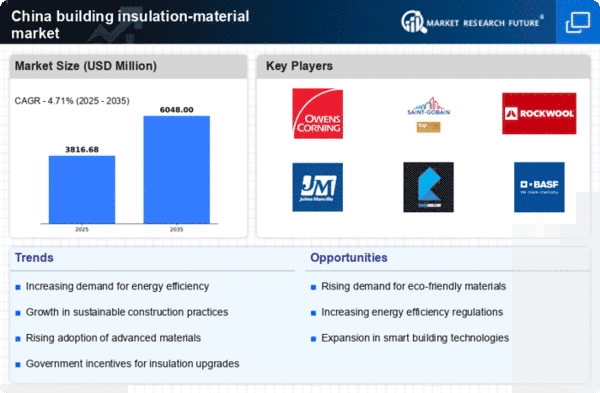
The building insulation-material market in China is characterized by a dynamic competitive landscape, driven by increasing demand for energy-efficient solutions and stringent regulatory frameworks aimed at reducing carbon emissions. Key players such as Owens Corning (US), Saint-Gobain (FR), and Rockwool International (DK) are strategically positioned to leverage innovation and sustainability in their operations. Owens Corning (US) focuses on developing advanced insulation technologies that enhance energy efficiency, while Saint-Gobain (FR) emphasizes sustainable building practices through its eco-friendly product lines. Rockwool International (DK) is committed to expanding its market presence by investing in local manufacturing capabilities, thereby reducing logistics costs and improving supply chain efficiency. Collectively, these strategies contribute to a competitive environment that prioritizes innovation and sustainability.In terms of business tactics, companies are increasingly localizing manufacturing to mitigate supply chain disruptions and optimize operational efficiency. The market structure appears moderately fragmented, with several key players holding substantial market shares. This fragmentation allows for a diverse range of products and solutions, catering to various customer needs. The collective influence of these major companies shapes market dynamics, as they compete not only on price but also on technological advancements and sustainability initiatives.
In October Owens Corning (US) announced the launch of a new line of high-performance insulation products designed specifically for the Chinese market. This strategic move is significant as it aligns with the growing demand for energy-efficient building materials in the region, potentially enhancing the company's market share and reinforcing its commitment to sustainability. By tailoring products to local needs, Owens Corning (US) positions itself as a leader in innovation within the insulation sector.
In September Saint-Gobain (FR) entered into a partnership with a local construction firm to develop sustainable building solutions in urban areas. This collaboration is noteworthy as it not only expands Saint-Gobain's (FR) footprint in China but also underscores the importance of strategic alliances in addressing local market challenges. By leveraging local expertise, the company enhances its ability to deliver customized solutions that meet regulatory requirements and consumer preferences.
In August Rockwool International (DK) completed the acquisition of a regional insulation manufacturer, which is expected to bolster its production capacity and distribution network in China. This acquisition reflects a strategic effort to enhance operational efficiency and respond to the increasing demand for insulation materials. By integrating local operations, Rockwool International (DK) can streamline its supply chain and improve its competitive positioning in the market.
As of November current competitive trends indicate a strong emphasis on digitalization, sustainability, and the integration of artificial intelligence in product development and manufacturing processes. Strategic alliances are increasingly shaping the landscape, enabling companies to pool resources and expertise to innovate more effectively. Looking ahead, competitive differentiation is likely to evolve from traditional price-based competition to a focus on innovation, technology, and supply chain reliability. This shift suggests that companies that prioritize sustainable practices and technological advancements will be better positioned to thrive in the evolving market.