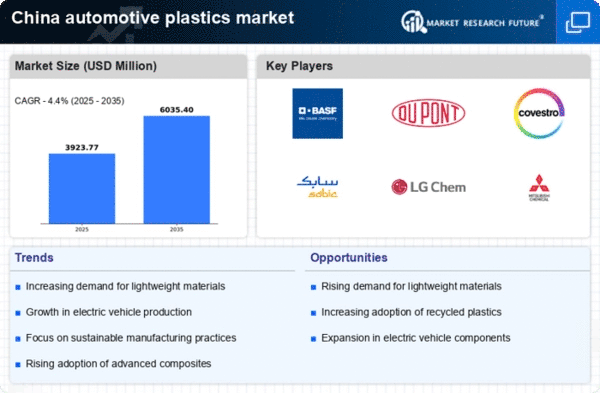
The automotive plastics market in China is characterized by a dynamic competitive landscape, driven by increasing demand for lightweight materials and sustainable solutions. Major players such as BASF (DE), DuPont (US), and Covestro (DE) are actively shaping the market through strategic initiatives focused on innovation and sustainability. BASF (DE) emphasizes its commitment to developing advanced materials that enhance vehicle efficiency, while DuPont (US) leverages its expertise in high-performance polymers to cater to the evolving needs of the automotive sector. Covestro (DE) is also notable for its focus on circular economy principles, which aligns with the growing emphasis on sustainability within the industry. Collectively, these strategies foster a competitive environment that prioritizes technological advancement and environmental responsibility.Key business tactics employed by these companies include localizing manufacturing and optimizing supply chains to enhance operational efficiency. The market structure appears moderately fragmented, with a mix of established players and emerging companies vying for market share. The collective influence of key players is significant, as they not only drive innovation but also set industry standards that smaller firms often follow.
In October BASF (DE) announced a partnership with a leading electric vehicle manufacturer to develop lightweight composite materials aimed at improving battery efficiency. This collaboration underscores BASF's strategic focus on innovation and its commitment to supporting the transition to electric mobility. The partnership is likely to enhance BASF's market position by aligning its product offerings with the growing demand for electric vehicles, thereby reinforcing its competitive edge.
In September DuPont (US) launched a new line of bio-based polymers specifically designed for automotive applications. This initiative reflects DuPont's strategic pivot towards sustainability, as these materials are derived from renewable resources and are intended to reduce the carbon footprint of automotive manufacturing. The introduction of these bio-based solutions may position DuPont favorably in a market increasingly driven by environmental considerations.
In August Covestro (DE) unveiled a new recycling technology that enables the recovery of high-quality plastics from end-of-life vehicles. This technological advancement not only supports Covestro's sustainability goals but also addresses the growing regulatory pressures for recycling and waste reduction in the automotive sector. By pioneering such innovations, Covestro is likely to enhance its reputation as a leader in sustainable practices within the automotive plastics market.
As of November current competitive trends indicate a strong shift towards digitalization, sustainability, and the integration of artificial intelligence in manufacturing processes. Strategic alliances among key players are increasingly shaping the landscape, fostering collaboration that enhances innovation and operational efficiency. Looking ahead, competitive differentiation is expected to evolve, with a pronounced shift from price-based competition to a focus on technological innovation, sustainability, and supply chain reliability. This transition may redefine market dynamics, compelling companies to invest in advanced technologies and sustainable practices to maintain their competitive positions.