×
Request Free Sample ×

Kindly complete the form below to receive a free sample of this Report

* Please use a valid business email

Leading companies partner with us for data-driven Insights

clients tt-cursor
Hero Background

China Automotive Glass Market

ID: MRFR/AT/52941-HCR
200 Pages
Sejal Akre
February 2026

China Automotive Glass Market Research Report By Type (Tempered Glass, Laminated Glass), By Vehicle Type (Passenger Car, Light Commercial Vehicle, Heavy Commercial Vehicle) and By Application (Windscreen, Sidelite, Backlite, Sunroof) - Growth & Industry Forecast 2025 To 2035

Share:
Download PDF ×

We do not share your information with anyone. However, we may send you emails based on your report interest from time to time. You may contact us at any time to opt-out.

China Automotive Glass Market Infographic
Purchase Options

China Automotive Glass Market Summary

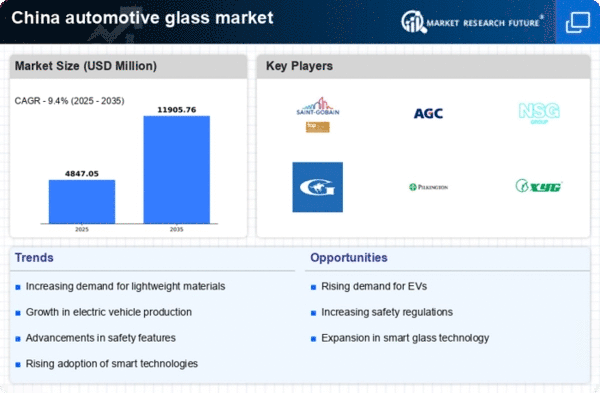
As per Market Research Future analysis, the China automotive glass market size was estimated at 4430.58 USD Million in 2024. The China automotive glass market is projected to grow from 4847.05 USD Million in 2025 to 11905.76 USD Million by 2035, exhibiting a compound annual growth rate (CAGR) of 9% during the forecast period 2025 - 2035

Key Market Trends & Highlights

The China automotive glass market is experiencing robust growth driven by technological advancements and increasing demand for electric vehicles.

  • Technological advancements in glass manufacturing are enhancing product performance and safety features.
  • Sustainability initiatives are gaining traction, with manufacturers focusing on eco-friendly materials and processes.
  • The electric vehicle segment is the fastest-growing, reflecting a shift towards greener transportation solutions.
  • Rising vehicle production and increased safety regulations are key drivers propelling market expansion.

Market Size & Forecast

2024 Market Size 4430.58 (USD Million)
2035 Market Size 11905.76 (USD Million)
CAGR (2025 - 2035) 9.4%

Major Players

Saint-Gobain (FR), AGC Inc. (JP), NSG Group (JP), Guardian Glass (US), Pilkington (GB), Xinyi Glass (CN), Sika AG (CH), Solera Holdings (US)

Our Impact
Enabled $4.3B Revenue Impact for Fortune 500 and Leading Multinationals
Partnering with 2000+ Global Organizations Each Year
30K+ Citations by Top-Tier Firms in the Industry

China Automotive Glass Market Trends

The automotive glass market in China is currently experiencing notable transformations driven by various factors. The increasing demand for vehicles, coupled with advancements in technology, is reshaping the landscape of this sector. Manufacturers are focusing on enhancing the quality and durability of glass products, which is essential for meeting safety standards and consumer expectations. Additionally, the rise of electric vehicles is influencing the types of glass used, as these vehicles often require specialized materials to optimize energy efficiency and performance. Furthermore, environmental regulations are prompting companies to adopt sustainable practices in production, which may lead to innovations in materials and processes. In November 2025, the automotive glass market appears to be on a growth trajectory, with a strong emphasis on research and development. The integration of smart technologies into automotive glass, such as heads-up displays and self-tinting features, is gaining traction. This trend suggests a shift towards more multifunctional glass solutions that enhance user experience and vehicle aesthetics. As the market evolves, it is likely that collaboration between automotive manufacturers and glass producers will intensify, fostering innovation and improving product offerings.

Technological Advancements

The automotive glass market is witnessing a surge in technological innovations. Manufacturers are increasingly incorporating advanced features such as smart glass, which can adjust transparency based on lighting conditions. This trend not only enhances comfort but also contributes to energy efficiency in vehicles.

Sustainability Initiatives

There is a growing emphasis on sustainability within the automotive glass market. Companies are adopting eco-friendly materials and processes to reduce their environmental footprint. This shift aligns with broader industry trends towards greener manufacturing practices and consumer preferences for sustainable products.

Electric Vehicle Influence

The rise of electric vehicles is significantly impacting the automotive glass market. These vehicles often require specialized glass solutions that enhance aerodynamics and energy efficiency. As the market adapts to this trend, manufacturers are likely to develop innovative glass products tailored to the unique needs of electric vehicles.

China Automotive Glass Market Drivers

Rising Vehicle Production

The automotive glass market in China is experiencing a notable surge due to the increasing production of vehicles. In recent years, the country has emerged as the largest automobile manufacturer, producing over 25 million vehicles annually. This growth in vehicle production directly correlates with the demand for automotive glass, as each vehicle requires multiple glass components, including windshields, side windows, and rear windows. The automotive glass market is thus poised for expansion, driven by the need to supply these essential components. Furthermore, the government's support for the automotive sector, including incentives for manufacturers, is likely to bolster production rates, further enhancing the demand for automotive glass. As the market evolves, manufacturers may need to adapt to changing consumer preferences, which could influence the types of glass products offered.

Increased Safety Regulations

The automotive glass market in China is significantly influenced by the stringent safety regulations imposed by the government. These regulations mandate the use of high-quality glass that meets specific safety standards, such as shatter resistance and UV protection. As a result, manufacturers are compelled to invest in advanced technologies and materials to comply with these regulations. The automotive glass market is thus witnessing a shift towards the production of laminated and tempered glass, which enhances passenger safety. Additionally, the growing awareness among consumers regarding vehicle safety is likely to drive demand for vehicles equipped with superior glass products. This trend may lead to an increase in the overall market value, as consumers are willing to pay a premium for enhanced safety features in their vehicles.

Growing Demand for Luxury Vehicles

The automotive glass market in China is witnessing a shift in consumer preferences towards luxury vehicles, which often feature advanced glass technologies. The demand for luxury vehicles has been on the rise, with sales increasing by approximately 15% annually. These vehicles typically incorporate larger glass surfaces, panoramic sunroofs, and enhanced sound insulation, all of which require specialized glass products. The automotive glass market is thus adapting to this trend by developing high-quality glass solutions that cater to the luxury segment. Additionally, the increasing disposable income among consumers is likely to further fuel this demand, as more individuals seek premium features in their vehicles. This trend may lead to a diversification of product offerings within the automotive glass market, as manufacturers strive to meet the expectations of luxury vehicle buyers.

Expansion of Electric Vehicle Market

The automotive glass market in China is poised for growth due to the rapid expansion of the electric vehicle (EV) market. With the government's commitment to promoting electric mobility, the number of EVs on the road is expected to increase significantly in the coming years. This shift towards electric vehicles presents unique opportunities for the automotive glass market, as EVs often require specialized glass solutions to enhance energy efficiency and reduce weight. For instance, the use of lightweight glass can contribute to improved battery performance and overall vehicle range. As manufacturers adapt to the evolving landscape of the automotive industry, the demand for innovative glass products tailored for electric vehicles is likely to rise. This trend may not only boost the automotive glass market but also encourage further research and development in glass technologies.

Technological Innovations in Glass Manufacturing

Technological advancements in glass manufacturing are playing a crucial role in shaping the automotive glass market in China. Innovations such as the development of lightweight glass and self-healing glass are gaining traction among manufacturers. Lightweight glass contributes to improved fuel efficiency and reduced emissions, aligning with the country's environmental goals. The automotive glass market is thus adapting to these innovations, as manufacturers seek to enhance the performance and sustainability of their products. Moreover, the integration of smart glass technologies, which can adjust transparency based on light conditions, is likely to attract consumers looking for modern features in their vehicles. As these technologies continue to evolve, they may redefine consumer expectations and drive further growth in the automotive glass market.


Market Segment Insights

By Type: Tempered (Largest) vs. Laminated Glass (Fastest-Growing)

In the China automotive glass market, the market share distribution reveals that tempered glass holds the largest share among segment values, reflecting its extensive application and preference in vehicle manufacturing. Laminated glass, although occupying a smaller share, is gaining traction due to its safety features, contributing to its growth in recent years. Overall, the demand for both segments reflects the evolving consumer preferences and safety regulations in the automotive industry. Growth trends indicate a robust expansion for laminated glass as safety regulations tighten and consumers become more aware of the benefits of enhanced security features. Conversely, tempered glass remains a staple due to its durability and ability to withstand high stress, which is vital for the structural integrity of vehicles. Factors such as technological advancements and innovation in glass manufacturing processes continue to drive the overall growth in this segment of the market.

Tempered Glass (Dominant) vs. Laminated Glass (Emerging)

Tempered glass is recognized as the dominant segment in the market due to its widespread usage in various automotive applications, providing strength and weather resistance. It is manufactured through a process that involves heating and rapid cooling, enhancing its durability compared to standard glass. Laminated glass, on the other hand, is emerging as a key segment, leveraging its safety advantages, such as reducing injuries during accidents by holding shards together. The rising demand for enhanced vehicle safety features and consumer awareness about the benefits of laminated glass is propelling its growth. While tempered glass continues to dominate owing to its performance characteristics, laminated glass is increasingly being adopted in new vehicle designs, showcasing a future-oriented trend in consumer preferences.

By Vehicle Type: Passenger Cars (Largest) vs. Light Commercial Vehicles (Fastest-Growing)

The segment distribution within the automotive glass market shows that passenger cars command the largest share, accounting for a significant portion of overall demand. Light commercial vehicles follow closely, reflecting their growing importance in both urban and rural settings, while heavy commercial vehicles represent a smaller yet stable percentage of the market. This dynamic distribution illustrates the shifting preferences of consumers and fleet operators in the China automotive glass market. As we analyze growth trends, light commercial vehicles are emerging as the fastest-growing segment, driven by increasing logistics demand and urbanization. The rise in e-commerce and delivery services further fuels this trend, as businesses require efficient transportation solutions. In contrast, passenger cars maintain solid growth, buoyed by consumer preferences for personal mobility and advancements in automotive technology, fostering a competitive landscape that shapes the future of the market.

Passenger Cars (Dominant) vs. Heavy Commercial Vehicles (Emerging)

Passenger cars are the dominant segment in the China automotive glass market, characterized by a broad consumer base and consistent demand. Features such as energy efficiency, safety enhancements, and technological innovation play a crucial role in maintaining their appeal. In contrast, heavy commercial vehicles are labeled as emerging within the marketplace, driven by growing construction and industrial sectors. Their market position reflects a shift towards more durable and high-performance glass solutions to meet the demands of logistics and freight. This dual dynamic showcases a market responding to both consumer needs for versatility in passenger vehicles and the evolving requirements of commercial transportation.

By Application: Windscreen (Largest) vs. Sunroof (Fastest-Growing)

In the China automotive glass market, the segment values show distinct variations in their market share. Windscreen glass holds the largest portion, supported by the high demand in both passenger and commercial vehicles. Following this, sidelites and backlites contribute notably, yet they do not match the dominance of windscreens. Sunroof segments, while comparatively smaller, are rapidly gaining traction among consumers seeking enhanced aesthetics and luxury in vehicles. The growth trends in this segment are driven by various factors, particularly advancements in automotive design and increasing consumer preferences for premium features. The burgeoning interest in electric vehicles is also contributing to the growing popularity of sunroofs, making them the fastest-growing segment within the market. As automotive technology evolves, innovations in glass manufacturing, such as lightweight and energy-efficient materials, further enhance the appeal of these applications.

Windscreen (Dominant) vs. Sunroof (Emerging)

Windscreen glass is undoubtedly the dominant application in the market due to its essential role in vehicle safety and visibility. It is designed to withstand high-impact scenarios and weather conditions, ensuring passenger protection. This segment is characterized by innovations, such as acoustic and UV-filtering technologies that enhance user experience. Conversely, the sunroof segment is emerging as a key player in attracting modern consumers who prioritize aesthetics and comfort. These products often feature panoramic design and advanced materials for energy efficiency. The growth in sunroof installations reflects a shift towards more luxurious vehicles, catering to a market that increasingly seeks enhanced experiences in automotive design.

Get more detailed insights about China Automotive Glass Market

Key Players and Competitive Insights

The automotive glass market in China is characterized by a competitive landscape that is increasingly shaped by innovation, sustainability, and strategic partnerships. Key players such as Xinyi Glass (CN), AGC Inc. (JP), and Saint-Gobain (FR) are actively pursuing strategies that emphasize technological advancements and regional expansion. Xinyi Glass (CN), for instance, has positioned itself as a leader in the market by focusing on high-quality production and expanding its manufacturing capabilities. Meanwhile, AGC Inc. (JP) is leveraging its expertise in glass technology to enhance product offerings, particularly in the realm of safety and energy efficiency. Saint-Gobain (FR) is also making strides in digital transformation, aiming to optimize its supply chain and improve customer engagement through innovative solutions. Collectively, these strategies contribute to a dynamic competitive environment where differentiation is increasingly based on technological prowess and sustainability initiatives.In terms of business tactics, companies are localizing manufacturing to reduce costs and improve supply chain efficiency. This approach is particularly relevant in a market that is moderately fragmented, with several players vying for market share. The collective influence of these key players is significant, as they not only drive innovation but also set industry standards that smaller competitors must follow. The competitive structure is evolving, with larger firms potentially consolidating their positions through strategic acquisitions and partnerships, thereby reshaping the market landscape.
In October Xinyi Glass (CN) announced the opening of a new manufacturing facility in Jiangsu province, aimed at increasing production capacity by 30%. This strategic move is expected to enhance the company's ability to meet the growing demand for automotive glass in the region, particularly as electric vehicle production ramps up. The facility is also designed to incorporate advanced manufacturing technologies, which may further solidify Xinyi's competitive edge in the market.
In September AGC Inc. (JP) launched a new line of lightweight, high-strength automotive glass that is designed to improve fuel efficiency in vehicles. This innovation aligns with global trends towards sustainability and energy efficiency, suggesting that AGC is keenly aware of the shifting consumer preferences and regulatory pressures. The introduction of this product could potentially position AGC as a frontrunner in the eco-friendly automotive glass segment, appealing to manufacturers looking to enhance their sustainability credentials.
In August Saint-Gobain (FR) entered into a strategic partnership with a leading electric vehicle manufacturer to supply advanced glazing solutions. This collaboration is indicative of the growing trend towards integrating smart technologies into automotive glass, which may enhance vehicle safety and performance. By aligning with a prominent player in the electric vehicle space, Saint-Gobain is likely to strengthen its market position and tap into the burgeoning demand for innovative automotive solutions.
As of November the automotive glass market is witnessing trends that emphasize digitalization, sustainability, and the integration of artificial intelligence. Strategic alliances are becoming increasingly important, as companies seek to leverage complementary strengths to enhance their competitive positioning. The shift from price-based competition to a focus on innovation and technology is evident, with firms prioritizing supply chain reliability and product differentiation. Looking ahead, it appears that the competitive landscape will continue to evolve, with companies that successfully navigate these trends likely to emerge as leaders in the automotive glass market.
Key Companies in the China Automotive Glass Market include

Industry Developments

In September 2023, Fuyao Glass Industry Group announced an expansion of its production capabilities in China to meet the increasing demand for automotive glass driven by the growing vehicle production sector. This expansion reflects the company's strategy to strengthen its market position amid rising competition.

Additionally, in October 2023, AGC Inc confirmed its plans for a joint venture with Jiangsu Bailing Group, focusing on developing advanced glass technology for electric vehicles, which positions both companies to capitalize on the shift towards environmentally friendly automotive technologies.

The automotive glass market in China has witnessed notable growth, driven by a surge in domestic vehicle production, which saw an increase of approximately 12% year-on-year as reported in the third quarter of 2023. The ongoing push for innovation in automotive designs has led major players like SaintGobain and Sika AG to invest heavily in Research and Development, enhancing their product offerings.

Furthermore, reputable sources highlighted the collaboration between Hangzhou Zhongheng Electric and Shenzhen Jinnaikang Technologies aimed at improving smart automotive glass solutions by integrating advanced electrical features, which aligns with the evolving smart vehicle trends seen in recent years.

Future Outlook

China Automotive Glass Market Future Outlook

The Automotive Glass Market in China is projected to grow at a 9.4% CAGR from 2025 to 2035, driven by increasing vehicle production, technological advancements, and rising consumer demand for safety features.

New opportunities lie in:

  • Development of lightweight, shatter-resistant glass for electric vehicles. Expansion of smart glass technology for enhanced driver experience. Implementation of automated glass replacement services for fleet operators.

By 2035, the automotive glass market is expected to achieve substantial growth and innovation.

Market Segmentation

China Automotive Glass Market Type Outlook

  • Tempered
  • Laminated Glass

China Automotive Glass Market Application Outlook

  • Windscreen
  • Sidelite
  • Backlite
  • Sunroof

China Automotive Glass Market Vehicle Type Outlook

  • Passenger Cars
  • Light Commercial Vehicles
  • Heavy Commercial Vehicles

Report Scope

MARKET SIZE 2024 4430.58(USD Million)
MARKET SIZE 2025 4847.05(USD Million)
MARKET SIZE 2035 11905.76(USD Million)
COMPOUND ANNUAL GROWTH RATE (CAGR) 9.4% (2025 - 2035)
REPORT COVERAGE Revenue Forecast, Competitive Landscape, Growth Factors, and Trends
BASE YEAR 2024
Market Forecast Period 2025 - 2035
Historical Data 2019 - 2024
Market Forecast Units USD Million
Key Companies Profiled Saint-Gobain (FR), AGC Inc. (JP), NSG Group (JP), Guardian Glass (US), Pilkington (GB), Xinyi Glass (CN), Sika AG (CH), Solera Holdings (US)
Segments Covered Type, Vehicle Type, Application
Key Market Opportunities Integration of advanced driver assistance systems in automotive glass enhances safety and market potential.
Key Market Dynamics Rising demand for advanced driver assistance systems drives innovation in automotive glass technology and design.
Countries Covered China
Leave a Comment

FAQs

What is the projected market size of the China Automotive Glass Market in 2024?

The China Automotive Glass Market is projected to be valued at 3.5 billion USD in 2024.

What market value is expected for the China Automotive Glass Market by 2035?

By 2035, the China Automotive Glass Market is expected to reach a valuation of 10.0 billion USD.

What is the expected compound annual growth rate (CAGR) of the China Automotive Glass Market from 2025 to 2035?

The China Automotive Glass Market is expected to grow at a CAGR of 10.014% from 2025 to 2035.

Which major players dominate the China Automotive Glass Market?

Key players in the China Automotive Glass Market include Fuyao Glass Industry Group, AGC Inc, and Saint-Gobain among others.

What is the market size for tempered glass within the China Automotive Glass Market in 2024?

The market size for tempered glass is valued at 1.5 billion USD in 2024.

What is the projected market size for laminated glass in the China Automotive Glass Market by 2035?

The laminated glass market is projected to be valued at 6.0 billion USD by 2035.

What are the growth opportunities in the China Automotive Glass Market?

Emerging trends in electric vehicles and advancements in safety glass present significant growth opportunities.

What challenges does the China Automotive Glass Market currently face?

The market is facing challenges such as fluctuating raw material costs and competition from international players.

How does the growth rate of the Chinese Automotive Glass Market compare to other regions?

The Chinese Automotive Glass Market is experiencing robust growth compared to other major automotive markets globally.

What are the key applications driving demand in the China Automotive Glass Market?

Key applications include windshields, side windows, and rear windows, all crucial for vehicle safety and aesthetics.

Download Free Sample

Kindly complete the form below to receive a free sample of this Report

Compare Licence

×
Features License Type
Single User Multiuser License Enterprise User
Price $4,950 $5,950 $7,250
Maximum User Access Limit 1 User Upto 10 Users Unrestricted Access Throughout the Organization
Free Customization
Direct Access to Analyst
Deliverable Format
Platform Access
Discount on Next Purchase 10% 15% 15%
Printable Versions