×
Request Free Sample ×

Kindly complete the form below to receive a free sample of this Report

* Please use a valid business email

Leading companies partner with us for data-driven Insights

clients tt-cursor
Hero Background

China Anti Acne Dermal Patch Market

ID: MRFR/HC/49718-HCR
200 Pages
Rahul Gotadki
February 2026

China Anti-Acne Dermal Patch Market Research Report By Acne Type (Inflammatory Acne, Non-inflammatory Acne), By Patch Type (Medicated, Non-Medicated, Micro-Needle), By Distribution Channel (Retail Stores, Pharmacies & Drug Stores, E-Commerce Platform) and By Ingredient Type (Chemical Based, Herbal Based) -Forecast to 2035

Share:
Download PDF ×

We do not share your information with anyone. However, we may send you emails based on your report interest from time to time. You may contact us at any time to opt-out.

China Anti Acne Dermal Patch Market Infographic
Purchase Options

China Anti Acne Dermal Patch Market Summary

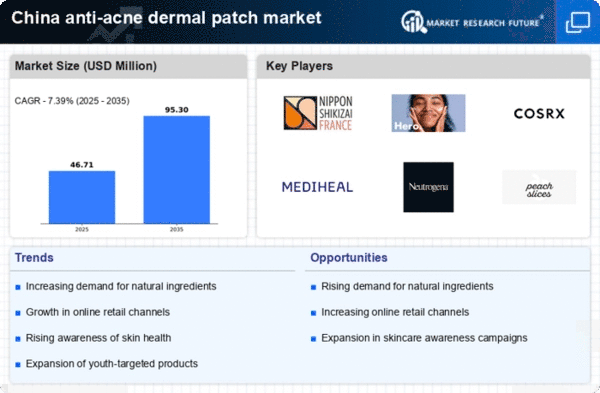
As per Market Research Future analysis, the China anti-acne dermal patch market size was estimated at 43.5 USD Million in 2024. The China anti acne-dermal-patch market is projected to grow from 46.71 USD Million in 2025 to 95.3 USD Million by 2035, exhibiting a compound annual growth rate (CAGR) of 7.3% during the forecast period 2025 - 2035

Key Market Trends & Highlights

The China anti acne-dermal-patch market is experiencing notable growth driven by evolving consumer preferences and technological advancements.

  • The market is witnessing a rising demand for convenience, particularly among younger consumers seeking quick solutions for acne management.
  • There is a growing focus on natural ingredients, as consumers increasingly prefer products that align with their health-conscious lifestyles.
  • Technological advancements in formulation are enhancing the efficacy and user experience of anti acne-dermal patches.
  • Key market drivers include increasing awareness of skin health and the influence of social media and beauty trends, which are shaping consumer choices.

Market Size & Forecast

2024 Market Size 43.5 (USD Million)
2035 Market Size 95.3 (USD Million)
CAGR (2025 - 2035) 7.39%

Major Players

Nippon Shikizai Inc (JP), Hero Cosmetics (US), COSRX (KR), Mediheal (KR), Neutrogena (US), Peach Slices (US), The Ordinary (CA), Bioré (JP), Skin Republic (AU)

Our Impact
Enabled $4.3B Revenue Impact for Fortune 500 and Leading Multinationals
Partnering with 2000+ Global Organizations Each Year
30K+ Citations by Top-Tier Firms in the Industry

China Anti Acne Dermal Patch Market Trends

The anti acne-dermal-patch market is currently experiencing notable growth, driven by increasing consumer awareness regarding skin health and the rising prevalence of acne among various demographics. This market appears to be influenced by a shift towards more convenient and effective skincare solutions, with dermal patches gaining popularity due to their ease of use and targeted treatment capabilities. The integration of innovative ingredients and technologies into these patches seems to enhance their efficacy, appealing to a broader audience seeking quick and effective solutions for acne management. Furthermore, the rise of e-commerce platforms has facilitated greater accessibility to these products, allowing consumers to purchase them with ease and discretion. In addition, the anti acne-dermal-patch market is likely to benefit from the growing trend of natural and organic skincare products. As consumers become more conscious of the ingredients in their skincare routines, there is a noticeable shift towards patches that utilize natural extracts and hypoallergenic materials. This trend suggests a potential for brands to differentiate themselves by focusing on sustainability and skin-friendly formulations. Overall, the market appears poised for continued expansion, driven by evolving consumer preferences and advancements in product development.

Rising Demand for Convenience

The anti acne-dermal-patch market is witnessing a surge in demand for convenient skincare solutions. Consumers increasingly prefer products that are easy to apply and can be worn throughout the day without disrupting their routines. This trend indicates a shift towards on-the-go treatments that fit seamlessly into busy lifestyles.

Focus on Natural Ingredients

There is a growing emphasis on natural and organic ingredients within the anti acne-dermal-patch market. Consumers are becoming more discerning about the components of their skincare products, leading to a preference for patches that incorporate botanical extracts and are free from harsh chemicals. This trend suggests a potential for brands to cater to health-conscious consumers.

Technological Advancements in Formulation

Innovations in formulation technology are shaping the anti acne-dermal-patch market. New developments in adhesive materials and active ingredients are enhancing the effectiveness of these patches. This trend indicates that brands are investing in research and development to create more potent and targeted solutions for acne treatment.

China Anti Acne Dermal Patch Market Drivers

Rising Youth Population

China's demographic landscape, characterized by a large youth population, is a key driver for the anti acne-dermal-patch market. Young individuals are particularly susceptible to acne, leading to a heightened demand for effective treatment options. The youth segment, comprising approximately 30% of the total population, is increasingly turning to innovative solutions like dermal patches for acne management. This demographic trend suggests a sustained growth trajectory for the anti acne-dermal-patch market, as brands tailor their offerings to meet the specific needs of younger consumers who prioritize convenience and efficacy.

Shift Towards E-commerce Platforms

The shift towards e-commerce platforms in China is significantly impacting the anti acne-dermal-patch market. With the increasing penetration of the internet and mobile devices, consumers are more inclined to purchase skincare products online. This trend is supported by data indicating that online sales of skincare products have surged by over 30% in recent years. E-commerce provides consumers with access to a wider range of products, including specialized anti acne-dermal patches, which may not be readily available in physical stores. The anti acne-dermal-patch market is thus experiencing a transformation, as brands adapt their strategies to leverage online sales channels.

Increasing Awareness of Skin Health

The growing awareness of skin health among consumers in China is driving the anti acne-dermal-patch market. As individuals become more informed about skincare, they are increasingly seeking effective solutions for acne management. This trend is reflected in the rising sales of anti acne-dermal patches, which are perceived as convenient and effective. The market is projected to grow at a CAGR of approximately 15% over the next five years, indicating a robust demand for innovative skincare products. The anti acne-dermal-patch market is benefiting from this heightened focus on skin health, as consumers prioritize products that offer targeted treatment and ease of use.

Focus on Dermatological Recommendations

The emphasis on dermatological recommendations in China is significantly influencing the anti acne-dermal-patch market. As consumers seek professional advice for skincare issues, products endorsed by dermatologists gain credibility and trust. This trend is evident in the rising sales of anti acne-dermal patches that are clinically tested and recommended by skincare professionals. The anti acne-dermal-patch market is likely to benefit from this focus on expert recommendations, as consumers increasingly prioritize products that are backed by scientific evidence and professional endorsements.

Influence of Social Media and Beauty Trends

The influence of social media and beauty trends is reshaping consumer behavior in China, particularly regarding the anti acne-dermal-patch market. Platforms like Weibo and Xiaohongshu are pivotal in promoting skincare products, with influencers often endorsing specific brands and products. This social media presence has led to a surge in consumer interest and trust in anti acne-dermal patches, as users share their experiences and results. The anti acne-dermal-patch market is thus witnessing a dynamic shift, where online engagement translates into increased sales and brand loyalty among consumers.


Market Segment Insights

By Acne Type: Inflammatory Acne (Largest) vs. Non-inflammatory Acne (Fastest-Growing)

In the China anti acne-dermal-patch market, the distribution of market share between Inflammatory Acne and Non-inflammatory Acne reflects diverse consumer needs. Currently, Inflammatory Acne holds the largest segment share, driven by its prevalence among adolescent and young adult populations. Conversely, Non-inflammatory Acne is gaining traction as more consumers become aware of effective treatment options, leading to an increase in its overall market presence. The growth trends in this segment are influenced by various factors, including an uptick in skincare awareness and the increasing demand for convenient at-home treatment solutions. Innovations in product formulations designed to target both types of acne contribute to this upward trajectory. Non-inflammatory Acne, representing a growing segment, is characterized by its appeal to a broader audience, including those seeking proactive skincare regimes.

Acne Type: Inflammatory (Dominant) vs. Non-inflammatory (Emerging)

Inflammatory Acne has established itself as the dominant force in the market due to its high prevalence, necessitating effective treatment solutions. Products targeting this acne type are often formulated with potent active ingredients that quickly address inflammation and prevent scarring. On the other hand, Non-inflammatory Acne is considered an emerging segment, appealing to consumers looking for gentle solutions that prevent breakouts. This segment's growth is attributed to a growing preference for preventative skincare, as consumers become increasingly conscious of maintaining their skin health. Success in this market relies on innovation, with brands adapting to meet the specific needs of diverse consumer demographics.

By Patch Type: Medicated (Largest) vs. Micro-Needle (Fastest-Growing)

In the China anti acne-dermal-patch market, the patch type segment is diversified among three primary categories: Medicated, Non-Medicated, and Micro-Needle. Medicated patches hold the largest share, appealing to consumers seeking effective acne treatment options, while Non-Medicated patches also have a notable presence. The emerging trend of Micro-Needle patches highlights an innovative approach, attracting consumers looking for advanced solutions for acne management. Growth trends in this segment are influenced by increasing awareness of skin health and rising demand for convenient and effective acne treatment methods. The Medicated segment is driven by its proven efficacy and strong brand recognition, while the Micro-Needle segment benefits from advancements in technology and a growing preference for minimally invasive treatments, positioning it as the fastest-growing option in the market.

Medicated (Dominant) vs. Micro-Needle (Emerging)

The Medicated patch segment is characterized by its established presence in the market, as it comprises patches that deliver active ingredients directly to the affected area, providing targeted relief from acne. This dominance is attributed to consumer trust in proven dermatological products and a wide variety of options catering to different skin types. On the other hand, the Micro-Needle segment is emerging rapidly, as these innovative patches utilize tiny needles to penetrate the skin, delivering treatments effectively and minimizing pain. Micro-Needle patches appeal to younger demographics seeking cutting-edge solutions, positioning them as a formidable player in the market's future growth.

By Distribution Channel: E-Commerce Platform (Largest) vs. Retail Stores (Fastest-Growing)

In the China anti acne-dermal-patch market, distribution channels have seen a distinct segmentation, with E-Commerce Platforms leading the charge in market share. This channel has become the preferred shopping experience, driven by the convenience and extensive range it offers consumers. Retail Stores, while important, have a smaller share in comparison but cater to the need for immediate access to products. The growth trends within this segment highlight a significant shift towards digital shopping. E-Commerce Platforms are experiencing robust growth due to increased internet penetration and consumer preference for online shopping. Conversely, Retail Stores are emerging as a fast-growing segment as consumers begin to seek convenience and immediate availability of acne treatments. This dynamic showcases the evolving landscape of consumer behavior in response to market offerings.

E-Commerce Platform (Dominant) vs. Retail Stores (Emerging)

The E-Commerce Platform segment is dominant in the distribution of anti acne-dermal patches, largely owing to its extensive reach and ability to cater to the tech-savvy consumer base. With a seamless shopping experience supported by targeted marketing and diverse product offerings, this channel continues to thrive. In contrast, Retail Stores are emerging as a vital player in the market as they provide customers with instant access to products. The tactile experience of purchasing from physical stores adds value, especially for consumers who prefer to see and feel products before making a purchase. Both segments are crucial in shaping the future distribution landscape as they adapt to changing consumer preferences.

By Ingredient Type: Chemical Based (Largest) vs. Herbal Based (Fastest-Growing)

The ingredient type segment of the China anti acne-dermal-patch market shows a clear market share distribution, with Chemical Based products leading the segment. This dominance is attributed to their broad recognition and established efficacy among consumers. Conversely, Herbal Based products, while currently holding a smaller share, are gaining traction as consumer preferences shift towards natural ingredients. This trend is fostering an increase in market options, with herbal formulations being particularly appealing to health-conscious consumers. Growth trends indicate a significant upsurge for Herbal Based products in the upcoming years, driven by increasing demand for organic and natural personal care items. Advances in extraction technology further enhance the efficacy and appeal of herbal ingredients, catalyzing their quicker acceptance. Meanwhile, Chemical Based products continue to benefit from proven results and extensive marketing, making them a steadfast choice within the market.

Chemical Based (Dominant) vs. Herbal Based (Emerging)

Chemical Based ingredients are characterized by their scientifically formulated properties, providing quick and effective solutions for acne treatment. These products tend to dominate the market due to their reliability and faster action compared to their herbal counterparts. On the other hand, Herbal Based ingredients are emerging in the market with their natural appeal. They offer a gentler approach to treating acne and cater to an audience increasingly concerned about synthetic chemicals in personal care products. The rise of herbal options is fueled by changing consumer attitudes towards healthier lifestyles, prompting brands to innovate within this segment and attract a growing demographic seeking alternatives.

Get more detailed insights about China Anti Acne Dermal Patch Market

Key Players and Competitive Insights

The anti acne-dermal-patch market in China exhibits a dynamic competitive landscape, characterized by rapid innovation and a growing consumer base increasingly focused on skincare solutions. Key players such as Hero Cosmetics (US), COSRX (KR), and Neutrogena (US) are strategically positioning themselves through a combination of product innovation and targeted marketing efforts. Hero Cosmetics (US), for instance, emphasizes its commitment to clean ingredients and effective formulations, which resonates well with the environmentally conscious consumer segment. Meanwhile, COSRX (KR) leverages its strong online presence and community engagement to foster brand loyalty, while Neutrogena (US) focuses on expanding its product range to include more targeted solutions for acne-prone skin. Collectively, these strategies contribute to a competitive environment that prioritizes consumer education and product efficacy.In terms of business tactics, companies are increasingly localizing manufacturing to reduce costs and enhance supply chain efficiency. This approach not only mitigates risks associated with international logistics but also allows for quicker response times to market demands. The market structure appears moderately fragmented, with several players vying for market share, yet the influence of major brands remains substantial. The collective actions of these key players shape a landscape where innovation and consumer engagement are paramount.

In October Hero Cosmetics (US) launched a new line of acne patches infused with natural ingredients, aiming to cater to the rising demand for clean beauty products. This strategic move not only aligns with current consumer preferences but also positions the brand as a leader in the clean skincare segment. The introduction of this product line is likely to enhance brand visibility and attract a broader audience seeking effective yet gentle solutions for acne management.

In September COSRX (KR) announced a partnership with a leading e-commerce platform to enhance its distribution capabilities across China. This collaboration is expected to significantly increase the brand's market penetration and accessibility, particularly among younger consumers who predominantly shop online. By optimizing its distribution channels, COSRX (KR) is poised to capitalize on the growing trend of online shopping, thereby reinforcing its competitive edge in the market.

In August Neutrogena (US) unveiled a new digital marketing campaign focused on educating consumers about the benefits of its acne patches. This initiative not only aims to increase brand awareness but also seeks to establish Neutrogena as a trusted authority in skincare. By leveraging digital platforms for consumer education, the company is likely to foster deeper connections with its audience, ultimately driving sales and brand loyalty.

As of November the competitive trends in the anti acne-dermal-patch market are increasingly defined by digitalization, sustainability, and the integration of advanced technologies such as AI. Strategic alliances among companies are shaping the landscape, enabling them to pool resources and expertise for enhanced product development. Looking ahead, it appears that competitive differentiation will evolve from traditional price-based strategies to a focus on innovation, technological advancements, and supply chain reliability. This shift suggests that companies prioritizing these elements will likely gain a competitive advantage in an ever-evolving market.

Key Companies in the China Anti Acne Dermal Patch Market include

Industry Developments

The China Anti-Acne Dermal Patch Market has seen significant developments recently, with key players like Mediheal, COSRX, Neutrogena, Hero Cosmetics, and Bioré reporting increased demand amidst rising skin care awareness among consumers. In September 2023, Mediheal launched a new line focusing on natural ingredients, aligning with the growing trend for clean beauty products. Acnes and Dr. Jart+ have also expanded their product offerings, catering to the youth market that seeks effective and portable acne solutions. Investment in Research and Development by brands such as NIVEA and Skin Food is noted, fueling innovation in product formulations.

Furthermore, there have been talks of strategic partnerships, particularly involving Nippon Chemical Industrial and Hydrocolloid, which aim to combine research efforts for advanced dermal patch solutions. In August 2023, Hero Cosmetics reported a surge in sales, contributing to the overall market growth, which is projected to reach USD 1 billion by 2025. The increasing consumer focus on personal skin care is significantly impacting market dynamics and driving competition among existing and new entrants. The Chinese market remains a focal point due to its vast population and changing consumer preferences toward skin care products tailored for acne treatment.

Future Outlook

China Anti Acne Dermal Patch Market Future Outlook

The Anti Acne Dermal Patch Market in China is projected to grow at a 7.39% CAGR from 2025 to 2035, driven by increasing consumer awareness and demand for effective skincare solutions.

New opportunities lie in:

  • Development of subscription-based delivery services for patches
  • Partnerships with dermatologists for product endorsements
  • Expansion into e-commerce platforms for wider reach

By 2035, the market is expected to achieve substantial growth and innovation.

Market Segmentation

China Anti Acne Dermal Patch Market Acne Type Outlook

  • Inflammatory Acne
  • Non-inflammatory Acne

China Anti Acne Dermal Patch Market Patch Type Outlook

  • Medicated
  • Non-Medicated
  • Micro-Needle

China Anti Acne Dermal Patch Market Ingredient Type Outlook

  • Chemical Based
  • Herbal Based

China Anti Acne Dermal Patch Market Distribution Channel Outlook

  • Retail Stores
  • Pharmacies & Drug Stores
  • E-Commerce Platform

Report Scope

MARKET SIZE 2024 43.5(USD Million)
MARKET SIZE 2025 46.71(USD Million)
MARKET SIZE 2035 95.3(USD Million)
COMPOUND ANNUAL GROWTH RATE (CAGR) 7.39% (2025 - 2035)
REPORT COVERAGE Revenue Forecast, Competitive Landscape, Growth Factors, and Trends
BASE YEAR 2024
Market Forecast Period 2025 - 2035
Historical Data 2019 - 2024
Market Forecast Units USD Million
Key Companies Profiled Nippon Shikizai Inc (JP), Hero Cosmetics (US), COSRX (KR), Mediheal (KR), Neutrogena (US), Peach Slices (US), The Ordinary (CA), Bioré (JP), Skin Republic (AU)
Segments Covered Acne Type, Patch Type, Distribution Channel, Ingredient Type
Key Market Opportunities Rising demand for innovative, effective solutions drives growth in the anti acne-dermal-patch market.
Key Market Dynamics Rising consumer demand for effective anti acne solutions drives innovation in anti acne-dermal-patch technology and formulations.
Countries Covered China
Leave a Comment

FAQs

What is the expected market size of the China Anti-Acne Dermal Patch Market in 2024?

The market is expected to be valued at 55.0 USD Million in 2024.

What is the projected market value of the China Anti-Acne Dermal Patch Market by 2035?

By 2035, the market is anticipated to reach a value of 133.2 USD Million.

What is the expected compound annual growth rate (CAGR) for the China Anti-Acne Dermal Patch Market from 2025 to 2035?

The market is expected to grow at a CAGR of 8.373% between 2025 and 2035.

Which acne type segment is expected to dominate the market in terms of value in 2024?

In 2024, the Non-inflammatory Acne segment is projected to be valued at 33.0 USD Million.

What is the estimated market value for Inflammatory Acne in 2035?

The Inflammatory Acne segment is anticipated to be valued at 52.0 USD Million in 2035.

Who are the key players in the China Anti-Acne Dermal Patch Market?

Major players include Mediheal, COSRX, Neutrogena, Hero Cosmetics, and Bioré.

What opportunities exist in the China Anti-Acne Dermal Patch Market?

The market presents opportunities due to rising demand for skincare solutions and growing awareness of acne treatments.

What challenges does the China Anti-Acne Dermal Patch Market face?

Challenges include intense competition among brands and the need for innovation in product formulations.

How are current trends influencing the China Anti-Acne Dermal Patch Market?

Emerging trends include an increased preference for natural ingredients and personalized skincare solutions.

What major segment contributes to the growth of the market in terms of value?

The Non-inflammatory Acne segment shows significant contribution to the market growth, especially projected for 2035.

Download Free Sample

Kindly complete the form below to receive a free sample of this Report

Compare Licence

×
Features License Type
Single User Multiuser License Enterprise User
Price $4,950 $5,950 $7,250
Maximum User Access Limit 1 User Upto 10 Users Unrestricted Access Throughout the Organization
Free Customization
Direct Access to Analyst
Deliverable Format
Platform Access
Discount on Next Purchase 10% 15% 15%
Printable Versions