Advancements in Technology
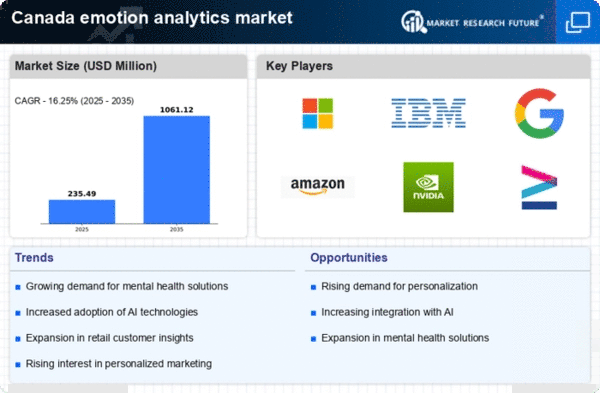
Technological advancements are playing a pivotal role in shaping the emotion analytics market in Canada. The proliferation of machine learning and natural language processing technologies has enabled more accurate emotion detection and analysis. As of November 2025, it is estimated that the market for AI-driven emotion analytics solutions has grown by over 40% in the past two years. This growth is attributed to the increasing availability of sophisticated tools that can analyze facial expressions, voice tones, and text sentiments. Consequently, businesses are more inclined to adopt these technologies to gain deeper insights into consumer behavior. The ongoing evolution of technology suggests that the emotion analytics market will continue to expand, providing organizations with innovative ways to engage with their customers and enhance their overall experience.
Expansion of E-commerce Platforms
The rapid expansion of e-commerce platforms in Canada is significantly influencing the emotion analytics market. As online shopping becomes increasingly prevalent, businesses are seeking ways to enhance the digital customer experience. Emotion analytics tools are being utilized to analyze customer interactions on e-commerce sites, providing insights into emotional responses during the shopping journey. Recent studies indicate that approximately 55% of Canadian e-commerce companies are integrating emotion analytics to optimize their platforms. This trend suggests that understanding consumer emotions can lead to improved conversion rates and customer satisfaction. As the e-commerce landscape continues to evolve, the demand for emotion analytics solutions is likely to grow, enabling businesses to create more engaging and personalized online experiences.
Rising Demand for Customer Insights
The emotion analytics market in Canada is experiencing a notable surge in demand for customer insights. Businesses are increasingly recognizing the value of understanding consumer emotions to enhance customer experiences and drive loyalty. According to recent data, approximately 70% of Canadian companies are investing in analytics tools to better comprehend customer sentiments. This trend is likely to propel the growth of the emotion analytics market, as organizations seek to leverage emotional data to tailor their marketing strategies and product offerings. The ability to analyze emotions can lead to improved customer satisfaction and retention rates, which are critical in a competitive landscape. As companies strive to differentiate themselves, the integration of emotion analytics into their operations appears to be a strategic move that could yield substantial returns in the long run.
Regulatory Support for Data Analytics
Regulatory frameworks in Canada are increasingly supportive of data analytics initiatives, which is positively impacting the emotion analytics market. The government has introduced policies that encourage the responsible use of data, fostering an environment conducive to innovation. As of November 2025, it is estimated that compliance with data protection regulations has led to a 25% increase in the adoption of emotion analytics solutions among Canadian businesses. This regulatory support not only enhances consumer trust but also incentivizes organizations to invest in advanced analytics tools. The alignment of regulatory frameworks with market needs suggests that the emotion analytics market will continue to thrive, as businesses seek to leverage data responsibly while gaining insights into consumer emotions.
Growing Importance of Mental Health Awareness
The heightened awareness surrounding mental health issues is influencing the emotion analytics market in Canada. Organizations are increasingly recognizing the need to monitor and support employee well-being, which has led to a rise in the adoption of emotion analytics tools. Approximately 60% of Canadian businesses are now implementing these tools to assess employee sentiments and foster a healthier workplace environment. This trend indicates a shift towards prioritizing mental health, which could potentially enhance productivity and employee satisfaction. As companies strive to create supportive work cultures, the integration of emotion analytics into human resource practices appears to be a promising avenue for addressing mental health concerns. This growing focus on well-being is likely to drive further investment in the emotion analytics market.