×
Request Free Sample ×

Kindly complete the form below to receive a free sample of this Report

* Please use a valid business email

Leading companies partner with us for data-driven Insights

clients tt-cursor
Hero Background

Brazil Threat Intelligence Management Market

ID: MRFR/ICT/62998-HCR
200 Pages
Aarti Dhapte
February 2026

Brazil Threat Intelligence Management Market Size, Share and Research Report: By Component (Solutions, Services) and By Enterprise Type (SMEs, Large Enterprises)- Industry Forecast to 2035

Share:
Download PDF ×

We do not share your information with anyone. However, we may send you emails based on your report interest from time to time. You may contact us at any time to opt-out.

Brazil Threat Intelligence Management Market Infographic
Purchase Options

Brazil Threat Intelligence Management Market Summary

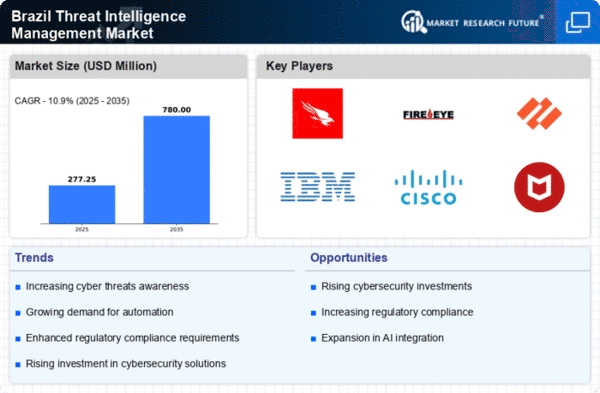
As per Market Research Future analysis, the Brazil threat intelligence-management market size was estimated at 250.0 USD Million in 2024. The Brazil threat intelligence-management market is projected to grow from 277.25 USD Million in 2025 to 780.0 USD Million by 2035, exhibiting a compound annual growth rate (CAGR) of 10% during the forecast period 2025 - 2035

Key Market Trends & Highlights

The Brazil threat intelligence-management market is experiencing robust growth driven by increasing cybersecurity investments and technological advancements.

  • Investment in cybersecurity solutions is on the rise, reflecting a growing commitment to safeguarding digital assets.
  • The adoption of AI and machine learning technologies is transforming threat detection and response capabilities.
  • Collaboration between sectors is becoming more prevalent, enhancing information sharing and collective defense strategies.
  • Rising cyber threats and regulatory compliance requirements are key drivers propelling market expansion.

Market Size & Forecast

2024 Market Size 250.0 (USD Million)
2035 Market Size 780.0 (USD Million)
CAGR (2025 - 2035) 10.9%

Major Players

CrowdStrike (US), FireEye (US), Palo Alto Networks (US), IBM (US), Cisco (US), McAfee (US), Check Point Software (IL), ThreatConnect (US), Recorded Future (US)

Our Impact
Enabled $4.3B Revenue Impact for Fortune 500 and Leading Multinationals
Partnering with 2000+ Global Organizations Each Year
30K+ Citations by Top-Tier Firms in the Industry

Brazil Threat Intelligence Management Market Trends

The threat intelligence-management market is currently experiencing notable evolution. This is driven by the increasing complexity of cyber threats and the growing need for organizations to safeguard their digital assets. In Brazil, the rise in cyber incidents has prompted businesses to invest in advanced threat intelligence solutions. This shift reflects a broader recognition of the importance of proactive security measures. As organizations face a diverse array of threats, including ransomware and phishing attacks, the demand for sophisticated threat intelligence tools is likely to grow. Furthermore, regulatory pressures and compliance requirements are pushing companies to adopt more robust security frameworks, thereby enhancing the overall landscape of the threat intelligence-management market. In addition, the integration of artificial intelligence and machine learning technologies into threat intelligence solutions is becoming more prevalent. These innovations enable organizations to analyze vast amounts of data more efficiently, allowing for quicker identification of potential threats. As Brazilian companies increasingly prioritize cybersecurity, the threat intelligence-management market is poised for further expansion. The collaboration between public and private sectors in sharing threat intelligence is also expected to strengthen, fostering a more resilient cybersecurity environment. Overall, the current trends indicate a dynamic and rapidly evolving market that is adapting to the challenges posed by modern cyber threats.

Increased Investment in Cybersecurity Solutions

Organizations are allocating more resources towards advanced threat intelligence tools to combat rising cyber threats. This trend reflects a growing awareness of the need for proactive security measures.

Adoption of AI and Machine Learning Technologies

The integration of AI and machine learning into threat intelligence solutions is enhancing data analysis capabilities. This allows for faster identification and response to potential threats.

Collaboration Between Sectors

There is a noticeable increase in collaboration between public and private sectors in sharing threat intelligence. This cooperation aims to create a more resilient cybersecurity framework.

Brazil Threat Intelligence Management Market Drivers

Rising Cyber Threats

The escalating frequency and sophistication of cyber threats in Brazil are driving the demand for the threat intelligence-management market. Organizations are increasingly recognizing the need for robust cybersecurity measures to protect sensitive data and maintain operational integrity. In 2025, cybercrime is estimated to cost Brazilian businesses over $20 billion annually. This highlights the urgency for effective threat intelligence solutions. This environment compels companies to invest in advanced threat detection and response systems. As businesses face potential financial losses and reputational damage, the focus on proactive threat management becomes paramount, indicating a strong market trajectory.

Increased Digital Transformation

The ongoing digital transformation across various sectors in Brazil significantly impacts the threat intelligence-management market. As businesses migrate to cloud-based solutions and adopt digital technologies, they become more vulnerable to cyber threats. In 2025, it is projected that over 70% of Brazilian companies will have adopted cloud services, creating a pressing need for effective threat intelligence strategies. This shift necessitates the implementation of advanced threat detection and response mechanisms to safeguard digital assets. Consequently, the threat intelligence-management market is poised for growth as organizations seek to enhance their cybersecurity posture amidst rapid technological advancements.

Collaboration with Law Enforcement

The collaboration between private sector organizations and law enforcement agencies in Brazil is emerging as a crucial driver for the threat intelligence-management market. By sharing threat intelligence and best practices, businesses can enhance their cybersecurity measures and contribute to a collective defense against cybercrime. This partnership not only aids in the identification and mitigation of threats but also fosters a culture of security awareness. As more organizations engage in collaborative efforts, the demand for threat intelligence-management solutions is likely to increase. This synergy between sectors indicates a promising outlook for the market, as it strengthens the overall cybersecurity framework in Brazil.

Regulatory Compliance Requirements

Brazil's regulatory landscape is evolving, with stricter data protection laws such as the General Data Protection Law (LGPD) influencing the threat intelligence-management market. Organizations are mandated to implement comprehensive security measures to safeguard personal data, which necessitates the adoption of advanced threat intelligence solutions. Compliance with these regulations not only mitigates legal risks but also enhances consumer trust. As companies strive to align with LGPD requirements, the demand for threat intelligence-management tools is likely to surge. This regulatory pressure serves as a significant driver, pushing organizations to prioritize cybersecurity investments and integrate threat intelligence into their operational frameworks.

Growing Awareness of Cybersecurity Risks

There is a notable increase in awareness regarding cybersecurity risks among Brazilian businesses, which is driving the threat intelligence-management market. As high-profile cyber incidents make headlines, organizations are becoming more cognizant of the potential threats they face. This heightened awareness is prompting companies to invest in threat intelligence solutions to better understand and mitigate risks. In 2025, surveys indicate that approximately 60% of Brazilian firms plan to increase their cybersecurity budgets, reflecting a shift in priorities towards proactive threat management. This trend suggests a robust growth trajectory for the threat intelligence-management market as organizations seek to fortify their defenses.


Market Segment Insights

By Component: Solutions (Largest) vs. Services (Fastest-Growing)

In the Brazil threat intelligence-management market, The Solutions segment holds the largest market share, reflecting a strong preference for packaged offerings that address various security needs. This segment includes integrated platforms that provide comprehensive threat intelligence capabilities, which have become crucial for organizations looking to bolster their defenses against cyber threats. Meanwhile, the Services segment, while smaller in share, is rapidly gaining traction as businesses increasingly seek expert guidance and tailored solutions from providers. Growth trends in the Brazil threat intelligence-management market are largely driven by the rising frequency of cyber attacks and a heightened awareness of the need for robust security measures. The increasing complexity of threats has led organizations to invest more in both Solutions and Services. Moreover, ongoing advancements in technology and a growing focus on regulatory compliance are compelling businesses to explore managed services that can offer specialized support and flexibility alongside anti-threat solutions.

Solutions (Dominant) vs. Services (Emerging)

The Solutions segment in the Brazil threat intelligence-management market is characterized by comprehensive, integrated platforms. These platforms offer a broad range of threat intelligence functionalities. This dominance is reflected in the growing adoption of automated systems, which help organizations analyze and respond to potential threats quickly. In contrast, the Services segment is emerging as a crucial sector, providing skilled expertise that helps businesses navigate complex cybersecurity landscapes. Services such as threat assessment, incident response, and compliance consulting are in high demand, driven by the need for tailored solutions that adapt to specific challenges. As such, both segments play a vital role in shaping the future of security in Brazil.

By Enterprise Type: SMEs (Largest) vs. Large Enterprises (Fastest-Growing)

In the Brazil threat intelligence-management market, SMEs hold the largest share among enterprise types, representing a significant portion of the user base. Their adaptability and focus on cost-effective solutions allow them to leverage threat intelligence effectively, catering to specific security needs and operational efficiencies. On the other hand, Large Enterprises, while smaller in market share, are rapidly gaining traction due to increasing investments in advanced cyber defense technologies and robust security infrastructures. Their scale and resource allocation enable them to implement more comprehensive threat management solutions, appealing to a broader spectrum of complexities in threat landscapes. Growth trends indicate that the demand for threat intelligence solutions is on the rise, particularly as both segments face escalating cyber threats. SMEs are driven by a necessity to protect sensitive customer data and maintain regulatory compliance. They are increasingly prioritizing risk management, leading to the adoption of tailored intelligence solutions. Conversely, Large Enterprises are motivated by the need for enhanced operational resilience, pushing for rapid deployment of integrated threat intelligence platforms. These trends suggest a favorable environment for both segments, with SMEs focusing on efficiency and agility while Large Enterprises strive for innovation and comprehensive security measures.

SMEs (Dominant) vs. Large Enterprises (Emerging)

SMEs represent the dominant segment in the Brazil threat intelligence-management market, characterized by their agility and focused approach to managing security threats. These organizations often opt for solutions that offer flexibility and affordability, allowing them to maintain a high level of security without overwhelming budgets. Their growth is fueled by a heightened awareness of cybersecurity risks and a commitment to safeguarding client data. In contrast, Large Enterprises are an emerging segment that is rapidly evolving in response to the complexities of global threats. With significant financial resources, they can invest in cutting-edge technologies and comprehensive security frameworks. This allows them to implement multi-layered defenses and proactive threat intelligence strategies, underscoring their importance in a landscape where cyber threats are increasingly sophisticated.

Get more detailed insights about Brazil Threat Intelligence Management Market

Key Players and Competitive Insights

The threat intelligence-management market in Brazil is characterized by a dynamic competitive landscape, driven by increasing cyber threats and the growing need for robust security solutions. Major players such as CrowdStrike (US), FireEye (US), and Palo Alto Networks (US) are strategically positioned to leverage their technological advancements and market expertise. CrowdStrike (US) focuses on cloud-native solutions, emphasizing rapid deployment and scalability, while FireEye (US) enhances its offerings through continuous innovation in threat detection and response capabilities. Palo Alto Networks (US) adopts a comprehensive approach, integrating AI and machine learning to bolster its threat intelligence services, thereby shaping a competitive environment that prioritizes advanced technology and customer-centric solutions.Key business tactics within this market include localized service offerings and strategic partnerships aimed at enhancing operational efficiency. The competitive structure appears moderately fragmented, with several key players vying for market share. This fragmentation is indicative of a landscape where innovation and customer engagement are paramount, as companies seek to differentiate themselves through unique value propositions and tailored services.

In September CrowdStrike (US) announced a strategic partnership with a leading Brazilian telecommunications provider to enhance its threat intelligence capabilities in the region. This collaboration is expected to facilitate the integration of advanced cybersecurity solutions into the telecommunications infrastructure, thereby improving threat detection and response times for local enterprises. Such partnerships are likely to strengthen CrowdStrike's market position and expand its reach within Brazil.

In October FireEye (US) launched a new threat intelligence platform specifically designed for the Brazilian market, incorporating localized threat data and insights. This initiative underscores FireEye's commitment to addressing the unique cybersecurity challenges faced by Brazilian organizations. By tailoring its offerings to local needs, FireEye aims to enhance its competitive edge and foster deeper customer relationships.

In August Palo Alto Networks (US) expanded its operations in Brazil by establishing a dedicated research and development center focused on AI-driven threat intelligence solutions. This move not only signifies a substantial investment in the region but also highlights the company's intent to innovate and adapt its technologies to better serve Brazilian clients. The establishment of this center is likely to enhance Palo Alto's capabilities in delivering cutting-edge cybersecurity solutions tailored to local market demands.

As of November current trends in the threat intelligence-management market include a pronounced shift towards digitalization, with companies increasingly integrating AI and machine learning into their operations. Strategic alliances are becoming more prevalent, as organizations recognize the value of collaboration in enhancing their cybersecurity posture. Looking ahead, competitive differentiation is expected to evolve, with a greater emphasis on innovation and technology rather than price-based competition. Companies that can reliably deliver advanced solutions while optimizing their supply chains are likely to emerge as leaders in this rapidly changing landscape.

Key Companies in the Brazil Threat Intelligence Management Market include

Industry Developments

In Brazil, the Threat Intelligence Management Market is witnessing notable growth driven by increasing cyber threats and the necessity for enhanced security measures among organizations. Recent developments in October 2023 highlighted a partnership between FireEye and local Brazilian enterprises to advance data protection strategies, reflecting the mounting demand for effective threat intelligence solutions. Additionally, in August 2023, CrowdStrike expanded its operations in Brazil, emphasizing the importance of real-time threat detection and response capabilities amid rising ransomware incidents. This growth trajectory is further buoyed by the influx of foreign investments and collaborations amongst top companies such as IBM and Cisco, which are actively investing in Research and Development within Brazil to enhance cyber resiliency. 

Notably, the Brazilian government is fostering innovation through funding initiatives aimed at bolstering cybersecurity startups, which, in turn, invigorates competition among established players like Palo Alto Networks and Trend Micro. Earlier events, such as the October 2022 acquisition of a local security firm by Check Point, illustrate the dynamic landscape of the Threat Intelligence Management sector in Brazil, driving advancements and collaborations making the market more robust and adaptive to evolving cyber threats.

Future Outlook

Brazil Threat Intelligence Management Market Future Outlook

The Threat Intelligence Management Market in Brazil is projected to grow at a 10.9% CAGR from 2025 to 2035, driven by increasing cyber threats and regulatory compliance demands.

New opportunities lie in:

  • Development of AI-driven threat detection platforms
  • Expansion of managed security service offerings
  • Integration of threat intelligence with IoT security solutions

By 2035, the market is expected to be robust, reflecting strong growth and innovation.

Market Segmentation

Brazil Threat Intelligence Management Market Component Outlook

  • Solutions
  • Services

Brazil Threat Intelligence Management Market Enterprise Type Outlook

  • SMEs
  • Large Enterprises

Report Scope

MARKET SIZE 2024 250.0(USD Million)
MARKET SIZE 2025 277.25(USD Million)
MARKET SIZE 2035 780.0(USD Million)
COMPOUND ANNUAL GROWTH RATE (CAGR) 10.9% (2025 - 2035)
REPORT COVERAGE Revenue Forecast, Competitive Landscape, Growth Factors, and Trends
BASE YEAR 2024
Market Forecast Period 2025 - 2035
Historical Data 2019 - 2024
Market Forecast Units USD Million
Key Companies Profiled CrowdStrike (US), FireEye (US), Palo Alto Networks (US), IBM (US), Cisco (US), McAfee (US), Check Point Software (IL), ThreatConnect (US), Recorded Future (US)
Segments Covered Component, Enterprise Type
Key Market Opportunities Integration of artificial intelligence enhances threat detection capabilities in the threat intelligence-management market.
Key Market Dynamics Rising demand for advanced threat intelligence solutions driven by regulatory compliance and evolving cyber threats in Brazil.
Countries Covered Brazil
Leave a Comment

FAQs

What is the expected market size of the Brazil Threat Intelligence Management Market in 2024?

The Brazil Threat Intelligence Management Market is expected to be valued at 288.29 million USD in 2024.

What will be the projected market value of the Brazil Threat Intelligence Management Market by 2035?

By 2035, the Brazil Threat Intelligence Management Market is projected to reach a value of 927.0 million USD.

What is the expected compound annual growth rate (CAGR) for the Brazil Threat Intelligence Management Market from 2025 to 2035?

The expected CAGR for the Brazil Threat Intelligence Management Market from 2025 to 2035 is 11.202%.

Which segment of the market is expected to dominate in terms of revenue by 2035?

The Solutions segment is anticipated to dominate the Brazil Threat Intelligence Management Market, reaching a value of 574.75 million USD by 2035.

What is the projected value of the Services segment of the Brazil Threat Intelligence Management Market in 2024?

The Services segment is projected to be valued at 116.0 million USD in 2024.

Who are the key players in the Brazil Threat Intelligence Management Market?

Major players in the Brazil Threat Intelligence Management Market include FireEye, Recorded Future, CrowdStrike, and Bitdefender among others.

How do current global trends impact the Brazil Threat Intelligence Management Market?

Current global trends are driving increased demand for cybersecurity solutions, which directly benefits the Brazil Threat Intelligence Management Market.

What are the growth drivers for the Brazil Threat Intelligence Management Market?

The growth drivers include heightened cybersecurity threats and the increasing adoption of digital transformation across organizations.

What is the expected market size for the Brazil Threat Intelligence Management Market in the year 2035?

The overall market size for the Brazil Threat Intelligence Management Market is expected to reach 927.0 million USD by the year 2035.

What challenges does the Brazil Threat Intelligence Management Market face in terms of growth?

Challenges include the rapidly evolving threat landscape and the need for continuous innovation and adaptation in security technologies.

Download Free Sample

Kindly complete the form below to receive a free sample of this Report

Compare Licence

×
Features License Type
Single User Multiuser License Enterprise User
Price $4,950 $5,950 $7,250
Maximum User Access Limit 1 User Upto 10 Users Unrestricted Access Throughout the Organization
Free Customization
Direct Access to Analyst
Deliverable Format
Platform Access
Discount on Next Purchase 10% 15% 15%
Printable Versions