×
Request Free Sample ×

Kindly complete the form below to receive a free sample of this Report

* Please use a valid business email

Leading companies partner with us for data-driven Insights

clients tt-cursor
Hero Background

Brazil Mobile Ticketing Market

ID: MRFR/ICT/56019-HCR
200 Pages
Aarti Dhapte
February 2026

Brazil Mobile Ticketing Market Size, Share and Trends Analysis Report By Type (SMS Ticketing, Mobile Applications), By Technology (OCR, 2D Bar Code, NFC) and By Application (Travel Tickets, Entertainment Tickets)- Forecast to 2035

Share:
Download PDF ×

We do not share your information with anyone. However, we may send you emails based on your report interest from time to time. You may contact us at any time to opt-out.

Brazil Mobile Ticketing Market Infographic
Purchase Options

Brazil Mobile Ticketing Market Summary

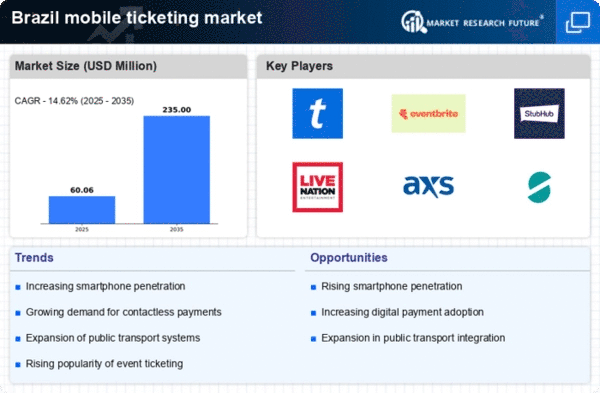
As per Market Research Future analysis, the Brazil Mobile Ticketing Market size was estimated at 52.4 USD Million in 2024. The Mobile Ticketing market is projected to grow from 60.06 USD Million in 2025 to 235.0 USD Million by 2035, exhibiting a compound annual growth rate (CAGR) of 14.6% during the forecast period 2025 - 2035

Key Market Trends & Highlights

The Brazil mobile ticketing market is experiencing robust growth driven by technological advancements and changing consumer preferences.

  • Smartphone penetration in Brazil continues to rise, facilitating greater access to mobile ticketing solutions.
  • Government initiatives aimed at digitalization are significantly enhancing the adoption of mobile ticketing services.
  • The integration of contactless payment solutions is becoming increasingly prevalent, streamlining the user experience.
  • Rising urbanization and consumer preference for digital solutions are key drivers propelling the growth of the mobile ticketing market.

Market Size & Forecast

2024 Market Size 52.4 (USD Million)
2035 Market Size 235.0 (USD Million)
CAGR (2025 - 2035) 14.62%

Major Players

Ticketmaster (US), Eventbrite (US), StubHub (US), Live Nation (US), Axs (US), See Tickets (GB), Billetto (DK), Viagogo (GB), Fandango (US)

Our Impact
Enabled $4.3B Revenue Impact for Fortune 500 and Leading Multinationals
Partnering with 2000+ Global Organizations Each Year
30K+ Citations by Top-Tier Firms in the Industry

Brazil Mobile Ticketing Market Trends

The Brazil Mobile Ticketing Market is experiencing notable growth, driven by the increasing adoption of smartphones and the rising demand for convenient ticket purchasing solutions. In Brazil, consumers are increasingly favoring digital platforms for their ticketing needs, which has led to a shift from traditional paper tickets to mobile alternatives. This transition is not only enhancing user experience but also streamlining operations for service providers. The integration of mobile payment systems further supports this trend, allowing for seamless transactions and improved accessibility. Moreover, the Brazilian government has been actively promoting digitalization across various sectors, which includes transportation and entertainment. This initiative aligns with the broader trend of enhancing urban mobility and reducing congestion. As a result, the mobile ticketing market is likely to see further innovations, such as the incorporation of QR codes and contactless payment options. These advancements may contribute to a more efficient and user-friendly ticketing experience, appealing to a wider audience. Overall, the landscape appears promising, with ongoing developments suggesting a robust future for mobile ticketing solutions in Brazil.

Increased Smartphone Penetration

The rise in smartphone usage among the Brazilian population is a key driver for the mobile ticketing market. As more individuals gain access to mobile devices, the convenience of purchasing tickets through apps becomes increasingly appealing. This trend indicates a shift in consumer behavior towards digital solutions.

Government Initiatives for Digitalization

Brazil's government is actively promoting digital solutions across various sectors, including transportation. This push for digitalization is likely to enhance the mobile ticketing market by encouraging more users to adopt mobile platforms for their ticketing needs.

Integration of Contactless Payment Solutions

The integration of contactless payment options within mobile ticketing platforms is becoming more prevalent. This trend not only improves transaction efficiency but also aligns with consumer preferences for quick and secure payment methods, potentially boosting market growth.

Brazil Mobile Ticketing Market Drivers

Rising Urbanization

The rapid urbanization in Brazil is a pivotal driver for the mobile ticketing market. As more individuals migrate to urban areas, the demand for efficient transportation solutions increases. Urban centers are experiencing a surge in public transport usage, which necessitates streamlined ticketing systems. In 2025, urban areas in Brazil are projected to account for over 85% of the population, leading to a heightened need for mobile ticketing solutions. This trend indicates that consumers are likely to prefer mobile ticketing for its convenience and speed, thereby enhancing user experience. The mobile ticketing market is poised to benefit from this demographic shift, as urban dwellers seek to minimize wait times and optimize their travel experiences.

Increased Focus on Sustainability

The growing emphasis on sustainability in Brazil is emerging as a significant driver for the mobile ticketing market. As environmental concerns gain traction, consumers and businesses alike are seeking eco-friendly alternatives. Mobile ticketing reduces the reliance on paper tickets, thereby contributing to lower waste levels. In 2025, it is estimated that the mobile ticketing market could help reduce paper usage by up to 50% in the transportation sector. This shift not only aligns with consumer values but also encourages public transport operators to adopt mobile ticketing solutions as part of their sustainability initiatives. The potential for reduced environmental impact is likely to resonate with a broader audience, further driving market adoption.

Expansion of Public Transport Networks

The expansion of public transport networks in Brazil is a critical driver for the mobile ticketing market. As cities invest in improving and expanding their public transport systems, the need for efficient ticketing solutions becomes paramount. In 2025, Brazil is expected to see a 15% increase in public transport ridership, necessitating the implementation of mobile ticketing systems to manage the growing demand. The mobile ticketing market stands to gain from this expansion, as it offers a streamlined approach to ticket purchasing and validation. Enhanced public transport accessibility is likely to encourage more users to adopt mobile ticketing, thereby fostering growth in the market.

Consumer Preference for Digital Solutions

There is a notable shift in consumer preference towards digital solutions in Brazil, which is a crucial driver for the mobile ticketing market. As consumers become more accustomed to digital transactions, the demand for traditional paper tickets is declining. Surveys indicate that over 70% of Brazilian consumers express a preference for mobile ticketing options due to their convenience and ease of use. This trend suggests that the mobile ticketing market is well-positioned to capitalize on this growing inclination towards digital solutions. The ability to purchase and manage tickets via mobile applications aligns with the lifestyle of tech-savvy consumers, further propelling market growth.

Technological Advancements in Mobile Devices

Technological advancements in mobile devices are significantly influencing the mobile ticketing market. With the continuous evolution of smartphones, features such as enhanced processing power, improved camera quality, and better connectivity are becoming standard. In Brazil, the smartphone penetration rate is expected to reach approximately 80% by the end of 2025, facilitating the adoption of mobile ticketing solutions. These advancements enable users to purchase, store, and validate tickets seamlessly through their devices. The mobile ticketing market is likely to see increased engagement as consumers leverage these technologies for a more efficient travel experience, thus driving growth in this sector.


Market Segment Insights

By Type: SMS Ticketing (Largest) vs. Mobile Applications (Fastest-Growing)

In the Brazil mobile ticketing market, SMS Ticketing dominates with the largest market share due to its established presence and widespread acceptance among consumers. This traditional method remains favored for its simplicity and reliability, allowing users to purchase and receive tickets quickly via text messages. In contrast, Mobile Applications are gaining traction, appealing to tech-savvy users who prefer the convenience of app-based services, leading to a shift in consumer preferences. Growth trends indicate a robust rise in the adoption of Mobile Applications driven by advancements in smartphone technology and increasing internet penetration. As consumers seek enhanced functionality and integration with digital wallets, mobile apps are emerging as the fastest-growing segment. The combined factors of convenience, user-friendly interfaces, and innovative features will continue to propel this transition towards mobile applications, reshaping the ticketing landscape in the market.

SMS Ticketing (Dominant) vs. Mobile Applications (Emerging)

SMS Ticketing remains a dominant force in the Brazil mobile ticketing market, characterized by its popularity among users who appreciate its straightforward functionality. This method facilitates quick ticket purchases and confirmations, making it particularly appealing for those who prefer quick, hassle-free transactions. Conversely, Mobile Applications represent an emerging segment, known for their rich features such as real-time updates, interactive user interfaces, and integration with other services like loyalty programs or social media platforms. These apps cater to a younger demographic that values innovation and seamless experiences, indicating a shift in market dynamics as they grow in popularity.

By Technology: OCR (Largest) vs. 2D Bar Code (Fastest-Growing)

In the Brazil mobile ticketing market, the distribution of market share among technologies indicates that OCR technology holds the largest share, primarily due to its efficiency in processing and validating tickets. In contrast, the 2D Bar Code technology is gaining traction and is projected to capture a more significant share as it offers enhanced usability for ticketing and entry processes. Together, these technologies are transforming the ticketing landscape by providing seamless solutions to users. The growth trends within this segment are driven by increased smartphone penetration and the growing preference for contactless transactions. NFC technology is emerging as a preferred choice for quick payments and ticket validation, while 2D Bar Code is popular because of its compatibility with existing mobile devices. These factors indicate a robust growth trajectory for all technologies involved in this segment, with ongoing innovations expected to further enhance user experiences.

Technology: OCR (Dominant) vs. 2D Bar Code (Emerging)

OCR technology is currently the dominant player in the Brazil mobile ticketing market, characterized by its ability to rapidly scan and validate tickets using optical recognition technology. It streamlines the ticketing process, providing a fast and efficient way to manage entries. On the other hand, 2D Bar Code technology, while emerging, shows strong potential due to its low implementation costs and ease of use. As a result, it is being increasingly adopted in various sectors, including public transportation and event management. The combination of OCR's established presence and the innovative growth of 2D Bar Code technology represents a dynamic landscape, where evolving consumer needs and technological advancements continue to shape market trends.

By Application: Travel Tickets (Largest) vs. Entertainment Tickets (Fastest-Growing)

In the Brazil mobile ticketing market, the distribution of market share between application segments shows that travel tickets hold a significant portion, catering extensively to both domestic and international travel needs. Their established presence and reliability make them a preferred choice for users. Conversely, entertainment tickets are capturing an increasing share as consumers show a growing preference for live events and attractions, signaling a shift in discretionary spending towards leisure activities. Growth trends within this segment are primarily driven by changing consumer behaviors and technological advancements. The convenience of purchasing tickets via mobile platforms enhances user experience, contributing to the rise in entertainment ticket sales. Moreover, the post-pandemic recovery in travel and events heightens the demand for both travel and entertainment tickets, indicating a positive trajectory for the overall application segment in the coming years.

Travel Tickets: Dominant vs. Entertainment Tickets: Emerging

The travel tickets segment remains dominant in the Brazil mobile ticketing market, characterized by a well-established infrastructure and strong demand from consumers who prioritize ease of travel planning. This segment often includes features such as real-time booking, cancellations, and travel itineraries, which resonate well with tech-savvy users. In contrast, the entertainment tickets segment is emerging rapidly, fueled by the appetite for events such as concerts, sports, and cultural festivals. This growth reflects a changing lifestyle where entertainment consumption is shifting increasingly towards mobile access, enabling fans to secure tickets instantly. As these trends develop, both segments are likely to coexist, catering to distinct user needs in the dynamic market.

Get more detailed insights about Brazil Mobile Ticketing Market

Key Players and Competitive Insights

The mobile ticketing market in Brazil is characterized by a dynamic competitive landscape, driven by technological advancements and evolving consumer preferences. Key players such as Ticketmaster (US), Eventbrite (US), and StubHub (US) are actively shaping the market through strategic initiatives aimed at enhancing user experience and expanding their market reach. Ticketmaster (US) has focused on digital transformation, leveraging data analytics to personalize ticket offerings, while Eventbrite (US) emphasizes community engagement and local event promotion. StubHub (US), on the other hand, has adopted a customer-centric approach, enhancing its platform's usability and integrating advanced security features to build consumer trust. Collectively, these strategies contribute to a competitive environment that prioritizes innovation and customer satisfaction.
In terms of business tactics, companies are increasingly localizing their operations to better cater to regional preferences and optimize supply chains. The market structure appears moderately fragmented, with several players vying for market share, yet the influence of major companies remains substantial. This competitive structure fosters a diverse range of offerings, allowing consumers to choose from various platforms that best meet their needs.
In October 2025, Ticketmaster (US) announced a partnership with a leading Brazilian fintech to streamline payment processes for mobile ticket purchases. This strategic move is likely to enhance the user experience by providing seamless payment options, thereby increasing conversion rates and customer loyalty. Such partnerships indicate a trend towards integrating financial technology within ticketing platforms, which may become a standard practice in the industry.
In September 2025, Eventbrite (US) launched a new feature aimed at promoting local events through targeted marketing campaigns. This initiative is significant as it not only supports local event organizers but also positions Eventbrite (US) as a community-focused platform. By fostering local engagement, the company may strengthen its brand presence and attract a broader audience, which is crucial in a competitive market.
In August 2025, StubHub (US) introduced an AI-driven recommendation system designed to enhance user engagement by suggesting events based on past purchases and browsing behavior. This innovation reflects a growing trend towards personalization in the mobile ticketing space, suggesting that companies are increasingly leveraging technology to create tailored experiences for consumers. Such advancements could potentially redefine customer interactions and loyalty in the market.
As of November 2025, current trends in the mobile ticketing market include a strong emphasis on digitalization, sustainability, and the integration of AI technologies. Strategic alliances are becoming increasingly important, as companies seek to enhance their service offerings and operational efficiencies. The competitive differentiation is likely to evolve from traditional price-based competition to a focus on innovation, technological advancements, and supply chain reliability. This shift suggests that companies that prioritize these aspects may gain a competitive edge in the rapidly changing landscape.

Key Companies in the Brazil Mobile Ticketing Market include

Industry Developments

In August 2023, Ingresso.com announced a partnership with major event organizers, enhancing its ticketing platform's capabilities to cater to larger audiences. PagueVeloz and its integration with mobile wallets have gained traction, promoting seamless ticket buying experiences across the nation. Sympla and Eventbrite continue to expand their services, capturing the interest of event organizers by providing advanced analytical tools to improve user experience.

In September 2023, PagSeguro reported an increase in its market valuation as the demand for digital ticketing solutions surged, reflecting changing consumer preferences towards contactless payments amid ongoing economic recovery.

In the acquisition landscape, Getnet acquired a minority stake in RecargaPay in October 2023, strengthening both companies' positions in the digital payments space, including ticketing. Overall, the competitive landscape is intensifying as companies innovate to meet the growing expectations of Brazilian consumers in the mobile ticketing sector.


Future Outlook

Brazil Mobile Ticketing Market Future Outlook

The mobile ticketing market in Brazil is projected to grow at a 14.62% CAGR from 2025 to 2035, driven by technological advancements and increasing smartphone penetration.

New opportunities lie in:

  • Integration of AI-driven customer support systems
  • Development of mobile ticketing solutions for public transport
  • Partnerships with local events for exclusive ticketing offers

By 2035, the mobile ticketing market is expected to be robust and highly competitive.

Market Segmentation

Brazil Mobile Ticketing Market Type Outlook

  • SMS Ticketing
  • Mobile Applications

Brazil Mobile Ticketing Market Technology Outlook

  • OCR
  • 2D Bar Code
  • NFC

Brazil Mobile Ticketing Market Application Outlook

  • Travel Tickets
  • Entertainment Tickets

Report Scope

MARKET SIZE 2024 52.4(USD Million)
MARKET SIZE 2025 60.06(USD Million)
MARKET SIZE 2035 235.0(USD Million)
COMPOUND ANNUAL GROWTH RATE (CAGR) 14.62% (2025 - 2035)
REPORT COVERAGE Revenue Forecast, Competitive Landscape, Growth Factors, and Trends
BASE YEAR 2024
Market Forecast Period 2025 - 2035
Historical Data 2019 - 2024
Market Forecast Units USD Million
Key Companies Profiled Ticketmaster (US), Eventbrite (US), StubHub (US), Live Nation (US), Axs (US), See Tickets (GB), Billetto (DK), Viagogo (GB), Fandango (US)
Segments Covered Type, Technology, Application
Key Market Opportunities Integration of advanced mobile payment solutions enhances user experience in the mobile ticketing market.
Key Market Dynamics Rising smartphone penetration drives mobile ticketing adoption, reshaping consumer behavior and competitive dynamics in Brazil.
Countries Covered Brazil
Leave a Comment

FAQs

What is the projected market size for the Brazil Mobile Ticketing Market in 2024?

The Brazil Mobile Ticketing Market is expected to be valued at 144.0 million USD in 2024.

What will be the market size of the Brazil Mobile Ticketing Market by 2035?

By 2035, the Brazil Mobile Ticketing Market is projected to reach a valuation of 935.0 million USD.

What is the expected CAGR for the Brazil Mobile Ticketing Market from 2025 to 2035?

The expected compound annual growth rate for the Brazil Mobile Ticketing Market is 18.538% during the period from 2025 to 2035.

What are the expected values of SMS Ticketing in 2024 and 2035?

SMS Ticketing is anticipated to be valued at 55.0 million USD in 2024 and grow to 365.0 million USD by 2035.

What are the expected values of Mobile Applications in the Brazil Mobile Ticketing Market for 2024 and 2035?

Mobile Applications are projected to be valued at 89.0 million USD in 2024 and increase to 570.0 million USD by 2035.

Who are the key players in the Brazil Mobile Ticketing Market?

Major players in the Brazil Mobile Ticketing Market include Movile, Ingresso.com, PagueVeloz, and Eventbrite among others.

What growth opportunities exist within the Brazil Mobile Ticketing Market?

The rising adoption of mobile applications and digital payment methods presents significant growth opportunities in the market.

How would the current global scenario impact the Brazil Mobile Ticketing Market?

The current global scenario may affect consumer behavior and technology adoption, influencing the growth of the Brazil Mobile Ticketing Market.

What is the expected market growth rate for SMS Ticketing from 2025 to 2035?

The SMS Ticketing segment is expected to grow significantly, aligning with the overall market growth rate during the 2025 to 2035 period.

What are the challenges faced by the Brazil Mobile Ticketing Market?

Challenges such as cybersecurity concerns and competition from traditional ticketing methods may hinder market growth.

Download Free Sample

Kindly complete the form below to receive a free sample of this Report

Compare Licence

×
Features License Type
Single User Multiuser License Enterprise User
Price $4,950 $5,950 $7,250
Maximum User Access Limit 1 User Upto 10 Users Unrestricted Access Throughout the Organization
Free Customization
Direct Access to Analyst
Deliverable Format
Platform Access
Discount on Next Purchase 10% 15% 15%
Printable Versions