×
Request Free Sample ×

Kindly complete the form below to receive a free sample of this Report

* Please use a valid business email

Leading companies partner with us for data-driven Insights

clients tt-cursor
Hero Background

Brazil Bluetooth Ic Market

ID: MRFR/SEM/63253-HCR
200 Pages
Aarti Dhapte
February 2026

Brazil Bluetooth IC Market Size, Share and Research Report By Type (Bluetooth, Bluetooth Low Energy, Bluetooth Classic, Others) and By Application (Smart Homes, Beacons, Audio Devices, Human Interface Devices, Health & Fitness, Remote Controls, Automotive, Industrial, Others) - Industry Forecast Till 2035

Share:
Download PDF ×

We do not share your information with anyone. However, we may send you emails based on your report interest from time to time. You may contact us at any time to opt-out.

Brazil Bluetooth Ic Market Infographic
Purchase Options

Brazil Bluetooth Ic Market Summary

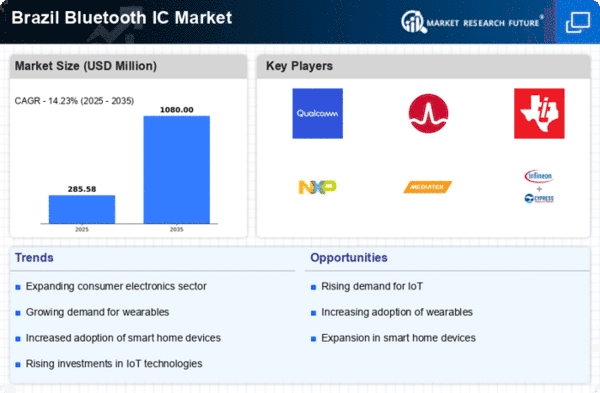
As per Market Research Future analysis, the Brazil bluetooth ic market Size was estimated at 250.0 USD Million in 2024. The Brazil bluetooth ic market is projected to grow from 285.58 USD Million in 2025 to 1080.0 USD Million by 2035, exhibiting a compound annual growth rate (CAGR) of 14.2% during the forecast period 2025 - 2035

Key Market Trends & Highlights

The Brazil bluetooth IC market is experiencing robust growth driven by technological advancements and increasing consumer demand.

  • The market is witnessing a rising demand for wireless connectivity across various sectors.
  • Energy efficiency is becoming a focal point for manufacturers in the bluetooth IC market.
  • The consumer electronics segment remains the largest, while the health and fitness devices segment is the fastest-growing.
  • Key market drivers include the surge in consumer electronics adoption and the expansion of smart home technologies.

Market Size & Forecast

2024 Market Size 250.0 (USD Million)
2035 Market Size 1080.0 (USD Million)
CAGR (2025 - 2035) 14.23%

Major Players

Qualcomm (US), Broadcom (US), Texas Instruments (US), NXP Semiconductors (NL), MediaTek (TW), Cypress Semiconductor (US), STMicroelectronics (CH), Nordic Semiconductor (NO), Silicon Labs (US)

Our Impact
Enabled $4.3B Revenue Impact for Fortune 500 and Leading Multinationals
Partnering with 2000+ Global Organizations Each Year
30K+ Citations by Top-Tier Firms in the Industry

Brazil Bluetooth Ic Market Trends

The bluetooth ic market is currently experiencing notable growth, driven by the increasing demand for wireless connectivity across various sectors. This trend is particularly evident in consumer electronics, automotive applications, and smart home devices. As technology continues to advance, the integration of bluetooth technology into everyday products is becoming more prevalent. The rise of the Internet of Things (IoT) is further propelling this market, as more devices require seamless communication capabilities. Additionally, the push for energy-efficient solutions is influencing the design and development of bluetooth integrated circuits, leading to innovations that enhance performance while reducing power consumption. Moreover, the regulatory environment in Brazil is evolving to support the expansion of the bluetooth ic market. Government initiatives aimed at promoting technological innovation and digital transformation are likely to create a conducive atmosphere for market players. The increasing focus on sustainability and environmental considerations is also shaping product development, as manufacturers seek to align with consumer preferences for eco-friendly solutions. As a result, the bluetooth ic market is poised for continued growth, with opportunities emerging in various applications and sectors, reflecting the dynamic nature of technological advancements and consumer demands.

Rising Demand for Wireless Connectivity

The bluetooth ic market is witnessing a surge in demand for wireless connectivity solutions. This trend is largely driven by the proliferation of smart devices and the growing need for seamless communication between them. As consumers increasingly adopt smart home technologies and wearable devices, the need for efficient and reliable bluetooth solutions becomes paramount.

Focus on Energy Efficiency

There is a marked emphasis on energy efficiency within the bluetooth ic market. Manufacturers are innovating to create circuits that not only deliver high performance but also consume less power. This focus aligns with global sustainability goals and consumer preferences for energy-saving technologies, potentially enhancing the appeal of products utilizing bluetooth technology.

Regulatory Support for Innovation

The regulatory landscape in Brazil is evolving to foster innovation in the bluetooth ic market. Government initiatives aimed at promoting technological advancements are likely to encourage investment and development in this sector. This supportive environment may lead to increased collaboration between industry players and research institutions, driving further growth.

Brazil Bluetooth Ic Market Drivers

Emergence of IoT Solutions

The emergence of Internet of Things (IoT) solutions in Brazil is reshaping the landscape of the bluetooth ic market. As industries adopt IoT technologies for improved efficiency and connectivity, the demand for bluetooth-enabled devices is expected to rise. Sectors such as agriculture, manufacturing, and logistics are increasingly utilizing IoT applications that rely on bluetooth technology for data transmission and device interconnectivity. The IoT market in Brazil is anticipated to grow significantly, with estimates suggesting a value of $30 billion by 2027. This growth presents a substantial opportunity for the bluetooth ic market, as companies seek to integrate bluetooth solutions into their IoT frameworks.

Growth in Automotive Applications

The automotive sector in Brazil is witnessing a transformation, with an increasing focus on integrating advanced technologies into vehicles. The bluetooth ic market is poised to benefit from this trend, as automotive manufacturers incorporate bluetooth technology for hands-free communication, infotainment systems, and vehicle-to-vehicle communication. Recent statistics indicate that the automotive electronics market in Brazil is expected to reach $10 billion by 2026, with bluetooth technology being a key driver of this growth. The bluetooth ic market is likely to see heightened demand as automakers prioritize connectivity features to enhance the driving experience and meet consumer expectations.

Rise of Health and Fitness Devices

The rise of health and fitness devices in Brazil is contributing to the growth of the bluetooth ic market. With an increasing awareness of health and wellness, consumers are turning to wearable devices such as fitness trackers and smartwatches that utilize bluetooth technology for data synchronization and communication. The wearable technology market in Brazil is projected to grow at a CAGR of around 12% in the coming years. This trend indicates a robust demand for bluetooth integrated circuits, as manufacturers strive to develop innovative health monitoring solutions. The bluetooth ic market is thus likely to see a surge in demand driven by the health-conscious consumer base.

Expansion of Smart Home Technologies

The expansion of smart home technologies in Brazil is significantly impacting the bluetooth ic market. As consumers increasingly seek convenience and automation in their living spaces, the demand for smart devices such as smart speakers, security systems, and home automation products is on the rise. This trend is reflected in the market, where the smart home segment is expected to grow by over 15% annually. Bluetooth technology plays a crucial role in enabling seamless communication between these devices, making the bluetooth ic market a vital component of this ecosystem. Manufacturers are likely to invest in advanced bluetooth solutions to meet the growing needs of smart home consumers.

Surge in Consumer Electronics Adoption

The bluetooth ic market in Brazil is experiencing a notable surge due to the increasing adoption of consumer electronics. With a growing middle class and rising disposable incomes, more Brazilians are purchasing smartphones, tablets, and wearables that utilize bluetooth technology. According to recent data, the consumer electronics sector in Brazil is projected to grow at a CAGR of approximately 8% over the next five years. This growth directly influences the demand for bluetooth integrated circuits, as manufacturers seek to enhance connectivity features in their devices. The bluetooth ic market is thus positioned to benefit from this trend, as more devices require efficient and reliable wireless communication capabilities.


Market Segment Insights

By Type: Bluetooth (Largest) vs. Bluetooth Low Energy (Fastest-Growing)

In the Brazil bluetooth ic market, Bluetooth technology holds the largest share, reflecting its established presence across various applications such as audio streaming and data transfer. Bluetooth Low Energy, while still growing, captures a significant portion of the market, catering to the rising demand for energy-efficient connectivity solutions, especially in wearable technology and IoT devices. Growth trends indicate a robust expansion trajectory for Bluetooth Low Energy as the prevalence of smart home devices and health-oriented wearables surges. This segment is driven by innovations in technology and increasing consumer awareness regarding energy consumption. Conversely, traditional Bluetooth continues to thrive, supported by its broad application in consumer electronics, indicating a balanced market between legacy and emerging technologies.

Bluetooth (Dominant) vs. Bluetooth Low Energy (Emerging)

Bluetooth remains the dominant technology in the Brazil bluetooth ic market due to its versatility and robust performance in a variety of consumer electronic devices. Its widespread adoption in smartphones, headphones, and automotive applications solidifies its position. On the other hand, Bluetooth Low Energy is emerging as a key player, tailored for applications requiring minimal power consumption, such as health monitors and fitness trackers. The rising trend towards IoT applications enhances its attractiveness, bringing in new market entrants focused on developing energy-efficient solutions. While Bluetooth technology is firmly established, Bluetooth Low Energy's innovative advancements position it strategically for future growth.

By Application: Audio Devices (Largest) vs. Smart Homes (Fastest-Growing)

The Brazil bluetooth ic market exhibits a diverse distribution among various application segments. Audio Devices hold the largest share, driven by the increasing popularity of wireless headphones and speakers that enhance the user experience. Smart Homes are emerging rapidly, capturing significant attention due to the rising demand for connected devices that offer convenience and automation. As technology continues to advance, the relevance of these segments is becoming more pronounced in the market. Growth trends indicate a robust expansion for Smart Homes, fueled by consumer interest in IoT solutions and the integration of smart technology into everyday living. Additionally, Audio Devices are expected to maintain their dominance as advancements in sound quality and battery life entice consumers. Overall, the competitive landscape signifies that while Audio Devices lead presently, Smart Homes are positioned for notable growth, influencing future market dynamics.

Audio Devices: Dominant vs. Smart Homes: Emerging

Audio Devices have established a commanding presence in the Brazil bluetooth ic market, appealing to consumers through a combination of superior sound quality and wireless convenience. This dominance is supported by a thriving entertainment sector that increasingly relies on bluetooth technology for seamless connectivity. In contrast, Smart Homes represent an emerging trend, characterized by a surge in demand for devices like smart speakers and home automation systems. These innovations are reshaping daily living, making homes more efficient and user-friendly. The interplay between these segments highlights a transformation in consumer preferences, where traditional audio solutions adapt to new technological advancements while smart home devices gain traction as essential components of modern households.

Get more detailed insights about Brazil Bluetooth Ic Market

Key Players and Competitive Insights

The bluetooth ic market in Brazil is characterized by a dynamic competitive landscape, driven by rapid technological advancements and increasing consumer demand for wireless connectivity. Major players such as Qualcomm (US), Broadcom (US), and NXP Semiconductors (NL) are strategically positioned to leverage innovation and regional expansion. Qualcomm (US) focuses on enhancing its product portfolio through continuous R&D, while Broadcom (US) emphasizes strategic partnerships to bolster its market presence. NXP Semiconductors (NL) is actively pursuing digital transformation initiatives, which collectively shape a competitive environment that is increasingly reliant on cutting-edge technology and collaborative efforts. Key business tactics within this market include localizing manufacturing and optimizing supply chains to enhance operational efficiency. The competitive structure appears moderately fragmented, with several key players exerting influence over market dynamics. This fragmentation allows for a diverse range of products and services, catering to various consumer needs while fostering healthy competition among established and emerging companies. In October 2025, Qualcomm (US) announced a strategic partnership with a leading Brazilian telecommunications provider to enhance 5G connectivity solutions. This collaboration is expected to significantly improve the performance of bluetooth ic products, positioning Qualcomm as a frontrunner in the market. The strategic importance of this partnership lies in its potential to accelerate the adoption of advanced wireless technologies in Brazil, thereby expanding Qualcomm's footprint in the region. In September 2025, Broadcom (US) unveiled a new line of bluetooth ic products designed specifically for IoT applications. This launch reflects Broadcom's commitment to innovation and its focus on meeting the growing demand for smart devices. The introduction of these products is likely to strengthen Broadcom's competitive edge, as it aligns with the increasing trend towards interconnected devices in various sectors, including healthcare and smart homes. In August 2025, NXP Semiconductors (NL) completed the acquisition of a Brazilian startup specializing in AI-driven connectivity solutions. This acquisition is poised to enhance NXP's capabilities in integrating AI with bluetooth technology, thereby offering more sophisticated solutions to customers. The strategic significance of this move lies in NXP's ability to leverage AI to improve product performance and user experience, which is becoming increasingly critical in the current market landscape. As of November 2025, current competitive trends in the bluetooth ic market are heavily influenced by digitalization, sustainability, and the integration of AI technologies. Strategic alliances are playing a crucial role in shaping the landscape, as companies seek to combine resources and expertise to drive innovation. Looking ahead, competitive differentiation is likely to evolve from traditional price-based competition towards a focus on technological advancements, supply chain reliability, and sustainable practices. This shift underscores the importance of innovation as a key driver of success in the bluetooth ic market.

Key Companies in the Brazil Bluetooth Ic Market include

Industry Developments

The Brazil Bluetooth IC Market has seen substantial developments recently, particularly driven by innovations from key players such as NXP Semiconductors and Texas Instruments. In March 2023, Microchip Technology launched a new line of Bluetooth Low Energy solutions tailored for automotive applications, catering to the increasing demand for connected vehicles in Brazil.

The Brazilian government started programs to help domestic semiconductor manufacturing in July 2025. These included incentives to increase the production and invention of Bluetooth ICs, which would lessen Brazil's reliance on imports and develop the country's tech environment. In the middle of 2025, major semiconductor companies formed more agreements with Brazilian tech businesses to make Bluetooth-enabled IoT devices for smart homes and industrial automation. This sped up the spread of these devices in the market and increased collaboration between the two industries. In August 2025, several worldwide Bluetooth IC makers released new ultra-low power and AI-enhanced Bluetooth chipsets to satisfy the growing needs of Brazil's automotive, consumer electronics, and telecommunications industries.

The overall valuation of companies engaged in Bluetooth IC production has witnessed a notable rise, fostering technological advancements and a competitive landscape that is expected to enhance product offerings and expand market reach. Noteworthy activity in the market over the past couple of years includes the increased adoption of Bluetooth technologies in the wearables sector, promoting healthy living and fitness trends among Brazilian consumers.


Future Outlook

Brazil Bluetooth Ic Market Future Outlook

The bluetooth IC market in Brazil is projected to grow at a 14.23% CAGR from 2025 to 2035, driven by increasing demand for wireless connectivity and IoT applications.

New opportunities lie in:

  • Development of low-power bluetooth ICs for wearable devices Expansion into automotive bluetooth solutions for enhanced connectivity Integration of AI capabilities in bluetooth ICs for smart home applications

By 2035, the market is expected to achieve substantial growth, driven by innovation and increased adoption.

Market Segmentation

Brazil Bluetooth Ic Market Type Outlook

  • Bluetooth
  • Bluetooth Low Energy
  • Bluetooth Classic
  • Others

Brazil Bluetooth Ic Market Application Outlook

  • Smart Homes
  • Beacons
  • Audio Devices
  • Human Interface Devices (HID)
  • Health & Fitness
  • Remote Controls
  • Automotive
  • Industrial
  • Others

Report Scope

MARKET SIZE 2024 250.0(USD Million)
MARKET SIZE 2025 285.58(USD Million)
MARKET SIZE 2035 1080.0(USD Million)
COMPOUND ANNUAL GROWTH RATE (CAGR) 14.23% (2025 - 2035)
REPORT COVERAGE Revenue Forecast, Competitive Landscape, Growth Factors, and Trends
BASE YEAR 2024
Market Forecast Period 2025 - 2035
Historical Data 2019 - 2024
Market Forecast Units USD Million
Key Companies Profiled Qualcomm (US), Broadcom (US), Texas Instruments (US), NXP Semiconductors (NL), MediaTek (TW), Cypress Semiconductor (US), STMicroelectronics (CH), Nordic Semiconductor (NO), Silicon Labs (US)
Segments Covered Type, Application
Key Market Opportunities Growing demand for low-power Bluetooth ICs in smart home and wearable devices.
Key Market Dynamics Rising demand for wireless audio devices drives innovation and competition in the Bluetooth integrated circuit market.
Countries Covered Brazil
Leave a Comment

FAQs

What is the expected market size of the Brazil Bluetooth IC Market in 2024?

The Brazil Bluetooth IC Market is expected to be valued at 250.0 million USD in 2024.

What is the projected market valuation for the Brazil Bluetooth IC Market by 2035?

By 2035, the Brazil Bluetooth IC Market is projected to reach a valuation of 1000.0 million USD.

What is the expected CAGR for the Brazil Bluetooth IC Market during the forecast period from 2025 to 2035?

The expected CAGR for the Brazil Bluetooth IC Market from 2025 to 2035 is 13.431%.

Which type of Bluetooth IC is anticipated to dominate the market in 2024?

In 2024, Bluetooth Low Energy is anticipated to dominate the market, valued at 100.0 million USD.

What is the expected market size for Bluetooth Classic in 2035?

The market size for Bluetooth Classic is expected to reach 200.0 million USD by 2035.

Who are the major players in the Brazil Bluetooth IC Market?

Major players include Texas Instruments, Qualcomm, NXP Semiconductors, and Broadcom.

What is the market size for Bluetooth by 2035?

The market size for Bluetooth is expected to be 300.0 million USD by 2035.

What are some key applications driving the growth of the Brazil Bluetooth IC Market?

Key applications include consumer electronics, automotive, and healthcare devices.

How is the Brazil Bluetooth IC Market expected to grow for different Bluetooth types from 2025 to 2035?

All Bluetooth types are expected to grow significantly, with Bluetooth Low Energy showing the highest growth.

What challenges may impact the growth of the Brazil Bluetooth IC Market?

Challenges include intense competition and rapid technological advancements in the semiconductor industry.

Download Free Sample

Kindly complete the form below to receive a free sample of this Report

Compare Licence

×
Features License Type
Single User Multiuser License Enterprise User
Price $4,950 $5,950 $7,250
Maximum User Access Limit 1 User Upto 10 Users Unrestricted Access Throughout the Organization
Free Customization
Direct Access to Analyst
Deliverable Format
Platform Access
Discount on Next Purchase 10% 15% 15%
Printable Versions