×
Request Free Sample ×

Kindly complete the form below to receive a free sample of this Report

* Please use a valid business email

Leading companies partner with us for data-driven Insights

clients tt-cursor
Hero Background

Bisphenol A Market

ID: MRFR/CnM/6845-HCR
111 Pages
Chitranshi Jaiswal
February 2026

Bisphenol A Market Research Report By Application (Polycarbonate Plastics, Epoxy Resins, Others) and By End-Use (Electronics, Automotive, Paints & Coatings, Medical, Packaging, Others) - Forecast to 2035

Share:
Download PDF ×

We do not share your information with anyone. However, we may send you emails based on your report interest from time to time. You may contact us at any time to opt-out.

Bisphenol A Market Infographic
Purchase Options

Bisphenol A Market Summary

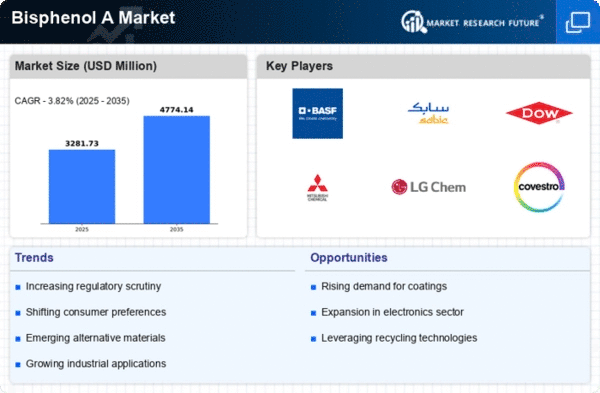
As per MRFR analysis, the Bisphenol A Market Size was estimated at 3160.98 USD Million in 2024. The Bisphenol A industry is projected to grow from 3281.72 USD Million in 2025 to 4774.14 USD Million by 2035, exhibiting a compound annual growth rate (CAGR) of 3.82 during the forecast period 2025 - 2035.

Key Market Trends & Highlights

The Bisphenol A market is experiencing a transformative shift towards sustainability and innovation.

  • The market is witnessing a notable shift towards safer alternatives as consumer awareness increases.
  • Sustainability initiatives are driving manufacturers to explore eco-friendly production methods, particularly in North America.
  • Technological advancements in production are enhancing efficiency and reducing environmental impact, especially in the Asia-Pacific region.
  • Regulatory pressures and rising demand for polycarbonate plastics are key drivers propelling growth in the automotive segment.

Market Size & Forecast

2024 Market Size 3160.98 (USD Million)
2035 Market Size 4774.14 (USD Million)
CAGR (2025 - 2035) 3.82%

Major Players

BASF (DE), SABIC (SA), Dow (US), Mitsubishi Chemical (JP), LG Chem (KR), Covestro (DE), Ineos (GB), Formosa Plastics (TW), Eastman Chemical (US)

Our Impact
Enabled $4.3B Revenue Impact for Fortune 500 and Leading Multinationals
Partnering with 2000+ Global Organizations Each Year
30K+ Citations by Top-Tier Firms in the Industry

Bisphenol A Market Trends

The Bisphenol A Market is currently experiencing a dynamic phase characterized by evolving consumer preferences and regulatory scrutiny. As awareness regarding the potential health impacts of Bisphenol A increases, manufacturers are compelled to innovate and adapt their product offerings. This shift is evident in the growing demand for alternatives that are perceived as safer, leading to a gradual decline in the use of traditional Bisphenol A in certain applications. Furthermore, the market landscape is influenced by the rising trend of sustainability, prompting companies to explore bio-based and recycled materials as substitutes. In addition to these shifts, the Bisphenol A Market is also witnessing a transformation in production processes. Technological advancements are enabling more efficient and environmentally friendly manufacturing methods, which may enhance the overall appeal of Bisphenol A derivatives. As industries such as automotive, electronics, and construction continue to evolve, the demand for high-performance materials remains robust. This interplay of factors suggests that while challenges persist, opportunities for growth and innovation within the Bisphenol A Market are likely to emerge, shaping its future trajectory.

Shift Towards Safer Alternatives

There is a noticeable trend towards the adoption of safer alternatives to Bisphenol A, driven by increasing consumer awareness and regulatory pressures. This shift is prompting manufacturers to explore and develop substitutes that align with health-conscious preferences.

Sustainability Initiatives

The Bisphenol A Market is increasingly influenced by sustainability initiatives, as companies seek to reduce their environmental footprint. This trend is leading to the exploration of bio-based and recycled materials, which may serve as viable alternatives.

Technological Advancements in Production

Innovations in production technologies are reshaping the Bisphenol A Market. Enhanced manufacturing processes that prioritize efficiency and environmental responsibility are becoming more prevalent, potentially improving the market's overall sustainability.

Bisphenol A Market Drivers

Rising Demand in End-User Industries

The Global Bisphenol-A Market Overview Industry experiences a robust demand surge from various end-user sectors, particularly in automotive, electronics, and construction. These industries utilize Bisphenol-A in the production of polycarbonate plastics and epoxy resins, which are essential for manufacturing durable and lightweight components. As the global automotive industry shifts towards electric vehicles, the need for high-performance materials is likely to increase. This trend is projected to contribute significantly to the market's growth, with the market value expected to reach 20.1 USD Billion in 2024, reflecting a growing reliance on Bisphenol-A in innovative applications.

Market Segment Insights

By Application: Polycarbonate Production (Largest) vs. Epoxy Resins (Fastest-Growing)

In the Bisphenol A market, the application segment is marked by distinct leaders and emerging players. Polycarbonate production holds a significant share due to its widespread use in electronics, automotive, and consumer goods, serving as a primary driver in the market. Meanwhile, epoxy resins are capturing attention as a fast-growing segment, largely fueled by increasing demand in constructions, automotive, and aerospace industries.

Polycarbonate Production (Dominant) vs. Epoxy Resins (Emerging)

Polycarbonate production dominates the Bisphenol A application segment owing to the material's exceptional clarity and impact resistance, making it ideal for a variety of uses including optical lenses and data storage. With strong demand in the automotive sector, driven by the push for lighter and more durable materials, polycarbonate remains a reliable choice for manufacturers. Conversely, epoxy resins are emerging as a critical player, favored for their excellent adhesive properties and robustness across varying environmental conditions. This segment is garnering growth through applications in construction and automotive coatings, where long-lasting durability and performance are prioritized.

By End Use: Automotive (Largest) vs. Electronics (Fastest-Growing)

The Bisphenol A market exhibits diverse applications across various end-use industries, with automotive and electronics leading the charge. The automotive sector commands the largest share in this market, leveraging Bisphenol A in the production of high-performance plastics, which are crucial for manufacturing lightweight and fuel-efficient vehicles. Meanwhile, the electronics sector is rapidly expanding, driven by increasing consumer demand for innovative electronic devices and components that require durable and heat-resistant materials made from Bisphenol A.

Automotive: Dominant vs. Electronics: Emerging

In the Bisphenol A market, the automotive sector stands out as the dominant segment, primarily driven by the growing emphasis on fuel efficiency and vehicle design advancements that necessitate lightweight materials. Bisphenol A-based resins are integral to creating components such as dashboards and insulation materials, which enhance vehicle performance. On the other hand, the electronics sector is emerging as a vital area of growth, influenced by the increasing reliance on electronic devices in daily life. Bisphenol A facilitates the creation of high-performance laminates and circuit boards, meeting the demand for smaller, multifunctional devices. This juxtaposition highlights the automotive sector's prevalent demand and the electronics sector's promising expansion potential.

By Distribution Channel: Online Sales (Largest) vs. Distributors (Fastest-Growing)

The Bisphenol A Market exhibits a diverse distribution channel landscape, with online sales emerging as the largest channel, dominating market share due to increasing reliance on digital platforms. Direct sales also contribute significantly, mainly through established B2B relationships, while traditional retailers maintain a steady presence. Distributors, although currently smaller in share, are gaining traction as they leverage expanding networks to enhance product availability across various regions.

Direct Sales (Dominant) vs. Retailers (Emerging)

In the Bisphenol A Market, direct sales have established themselves as the dominant channel due to their ability to foster personalized relationships and secure large-volume contracts directly with manufacturers. This approach allows for a more tailored sales strategy, maximizing customer satisfaction and brand loyalty. Retailers, however, are emerging as an influential segment as they adapt to consumer preferences for convenient shopping experiences. They are enhancing their offerings through partnerships with distributors, making Bisphenol A products readily available to a broader audience. As these retail strategies evolve, the segment is likely to see a significant increase in market presence.

By Formulation Type: Liquid (Largest) vs. Powder (Fastest-Growing)

In the Bisphenol A market, the formulation types are predominantly defined by liquid, solid, and powder forms. Liquid formulations currently command the largest market share, driven by their versatility and suitability for a wide range of applications, including production of epoxy resins and polycarbonate plastics. The solid form represents a significant segment but does not dominate, primarily serving niche applications. Conversely, powder formulations, while smaller in current share, are gaining traction as industries shift toward more sustainable practices and demand increased efficiency in material processing.

Formulation: Liquid (Dominant) vs. Powder (Emerging)

Liquid formulations are the dominant form in the Bisphenol A market, favored for their ease of use and compatibility with various manufacturing processes. They are primarily utilized in the production of high-performance polymers and coatings, offering fluidity that facilitates intricate application techniques. In contrast, powder formulations are emerging due to their environmentally friendly attributes and the minimal waste they generate during usage. As industries increasingly focus on sustainability, the adoption of powder formulations is expected to rise, attracting attention from manufacturers seeking to innovate while adhering to stricter environmental regulations.

Get more detailed insights about Bisphenol A Market

Regional Insights

North America : Established Market with Growth Potential

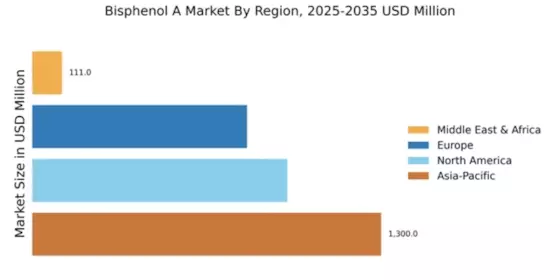
The North American Bisphenol A market is projected to reach $800.0 million by 2025, driven by increasing demand in the automotive and electronics sectors. Regulatory support for sustainable practices and the shift towards eco-friendly materials are key growth catalysts. The region's focus on innovation and technology adoption further enhances market dynamics, positioning it for steady growth in the coming years. Leading countries like the US and Canada dominate the market, with major players such as Dow and Eastman Chemical driving competition. The presence of established manufacturers and a robust supply chain contribute to the region's market strength. As companies invest in R&D, the competitive landscape is expected to evolve, fostering advancements in Bisphenol A applications.

Europe : Regulatory Focus on Sustainability

Europe's Bisphenol A market is valued at $600.0 million, influenced by stringent regulations aimed at reducing environmental impact. The European Union's REACH regulations and initiatives to promote circular economy practices are pivotal in shaping market dynamics. As sustainability becomes a priority, demand for bio-based alternatives is expected to rise, driving innovation in the sector. Germany, France, and the UK are leading countries in this market, with key players like BASF and Covestro actively participating. The competitive landscape is characterized by a mix of established firms and emerging startups focusing on sustainable solutions. As the market adapts to regulatory changes, collaboration among stakeholders will be crucial for future growth.

Asia-Pacific : Dominant Market with High Demand

The Asia-Pacific region leads the Bisphenol A market with a substantial share of $1600.0 million, driven by rapid industrialization and urbanization. The growing demand for plastics in packaging, automotive, and electronics sectors fuels market growth. Additionally, favorable government policies and investments in manufacturing capabilities are significant growth drivers, positioning the region as a manufacturing powerhouse. China, Japan, and South Korea are the primary contributors to this market, with major players like Mitsubishi Chemical and LG Chem at the forefront. The competitive landscape is intense, with numerous local and international companies vying for market share. As demand continues to rise, innovation and strategic partnerships will play a vital role in sustaining growth in this dynamic market.

Middle East and Africa : Emerging Market with Growth Opportunities

The Bisphenol A market in the Middle East and Africa is valued at $160.98 million, with growth driven by increasing industrial activities and rising demand for plastics. The region's strategic location and access to raw materials enhance its potential as a manufacturing hub. Government initiatives aimed at diversifying economies and promoting industrialization are expected to further stimulate market growth. Countries like South Africa and the UAE are leading the market, with a growing presence of key players such as Ineos and Formosa Plastics. The competitive landscape is evolving, with both local and international companies exploring opportunities in this emerging market. As investments in infrastructure and technology increase, the region is poised for significant growth in the Bisphenol A sector.


Bisphenol A Market Regional Image

Key Players and Competitive Insights

The Bisphenol A Market is currently characterized by a competitive landscape that is both dynamic and multifaceted. Key growth drivers include increasing demand for polycarbonate plastics and epoxy resins, which are integral to various industries such as automotive, electronics, and construction. Major players like BASF (DE), Dow (US), and Covestro (DE) are strategically positioned to leverage their extensive R&D capabilities and global manufacturing networks. These companies are focusing on innovation and sustainability, which are becoming critical differentiators in the market. Their collective strategies not only enhance their competitive edge but also shape the overall market dynamics, pushing for advancements in product quality and environmental compliance.In terms of business tactics, companies are increasingly localizing manufacturing to reduce logistics costs and enhance supply chain efficiency. The Bisphenol A Market appears moderately fragmented, with a mix of large multinational corporations and smaller regional players. The influence of key players is substantial, as they often set industry standards and drive technological advancements that smaller firms may follow.
In November Dow (US) announced a significant investment in a new production facility aimed at increasing its capacity for Bisphenol A and related derivatives. This move is expected to bolster Dow's market share and enhance its ability to meet the growing demand in North America. The strategic importance of this investment lies in its potential to streamline operations and reduce production costs, thereby improving profitability in a competitive environment.Similarly, in October 2025, Covestro (DE) launched a new line of sustainable Bisphenol A products derived from bio-based feedstocks. This initiative not only aligns with global sustainability trends but also positions Covestro as a leader in eco-friendly chemical solutions. The introduction of these products is likely to attract environmentally conscious customers and could lead to increased market penetration in sectors prioritizing sustainability.
In September BASF (DE) entered into a strategic partnership with a leading technology firm to develop AI-driven solutions for optimizing its Bisphenol A production processes. This collaboration is indicative of the growing trend towards digitalization in the chemical industry. By integrating AI technologies, BASF aims to enhance operational efficiency and reduce waste, which could significantly impact its competitive positioning.
As of December the competitive trends in the Bisphenol A Market are increasingly defined by digitalization, sustainability, and strategic alliances. Companies are recognizing the importance of forming partnerships to enhance innovation and market reach. The shift from price-based competition to a focus on technological advancement and supply chain reliability is evident. Moving forward, competitive differentiation will likely hinge on the ability to innovate and adapt to changing market demands, with a strong emphasis on sustainable practices and advanced manufacturing technologies.

Key Companies in the Bisphenol A Market include

Industry Developments

  • Q4 2024: Sinopec Mitsui Chemicals resumes Bisphenol A Market production at Caojing facility after extensive renovations Sinopec Mitsui Chemicals, a joint venture between Sinopec and Mitsui Chemicals, announced the successful restart of its Bisphenol A Market production at the Caojing facility in China, which has an annual capacity of 120,000 tons, following major upgrades.


Future Outlook

Bisphenol A Market Future Outlook

The Bisphenol A Market is projected to grow at a 3.82% CAGR from 2025 to 2035, driven by increasing demand in automotive and electronics sectors.

New opportunities lie in:

  • Development of bio-based BPA alternatives for sustainable product lines. Expansion into emerging markets with tailored BPA applications. Investment in advanced recycling technologies to enhance BPA recovery.

By 2035, the Bisphenol A Market is expected to solidify its position as a key player in various industrial applications.

Market Segmentation

Bisphenol A Market End Use Outlook

  • Automotive
  • Electronics
  • Construction
  • Consumer Goods
  • Healthcare

Bisphenol A Market Application Outlook

  • Polycarbonate Production
  • Epoxy Resins
  • Thermal Paper
  • Coatings
  • Adhesives

Bisphenol A Market Formulation Type Outlook

  • Liquid
  • Solid
  • Powder

Bisphenol A Market Distribution Channel Outlook

  • Direct Sales
  • Online Sales
  • Distributors
  • Retailers

Report Scope

MARKET SIZE 2024 3160.98(USD Million)
MARKET SIZE 2025 3281.72(USD Million)
MARKET SIZE 2035 4774.14(USD Million)
COMPOUND ANNUAL GROWTH RATE (CAGR) 3.82% (2025 - 2035)
REPORT COVERAGE Revenue Forecast, Competitive Landscape, Growth Factors, and Trends
BASE YEAR 2024
Market Forecast Period 2025 - 2035
Historical Data 2019 - 2024
Market Forecast Units USD Million
Key Companies Profiled BASF (DE), SABIC (SA), Dow (US), Mitsubishi Chemical (JP), LG Chem (KR), Covestro (DE), Ineos (GB), Formosa Plastics (TW), Eastman Chemical (US)
Segments Covered Application, End Use, Distribution Channel, Formulation Type
Key Market Opportunities Growing demand for sustainable alternatives drives innovation in the Bisphenol A Market.
Key Market Dynamics Regulatory scrutiny intensifies, driving innovation and shifts in consumer preferences within the Bisphenol A market.
Countries Covered North America, Europe, APAC, South America, MEA

Market Highlights

Author
Chitranshi Jaiswal
Research Analyst Level I

In her 3 years of experience in the market research field, she has handled critical cross-domain projects. She has an in-depth knowledge of market estimation & analysis, problem-solving, primary as well as secondary research, and team management.She holds an engineering degree and is an MBA professional from a well-known university, capable of evaluating the market and competitive conditions. An exceptional strategist with excellent communication skills and a passion for delivering cutting-edge & practical insights for the market. Proficient in multi-tasking, and can successfully deal with competing demands, while maintaining complete confidentiality. Generated business through active client and project development, networking, and high-quality responses. Her knowledge and skills have helped in making solid business decisions, securing funding from investors, and avoiding business failures.

Leave a Comment

FAQs

What is the projected market value of the global bisphenol A market?

Global bisphenol A market is expected to record a substantial market growth from its last recorded value of 18.1 billion in 2018.

What is the estimated growth rate of the global bisphenol A market?

Global bisphenol A market is projected to register a moderate 5.16% CAGR in the forecast period.

Which application is expected to witness the highest growth?

The Polycarbonate Plastics segment is poised to observe substantial demand over the review period.

What is the end-users segment of the global bisphenol A market expected to witness the highest growth?

The electronics segment is slated to expand as the fastest-growing segment.

Who are the significant players operative in the global bisphenol A market?

A few eminent market players operating in the global bisphenol A market are Convestro AG (Germany), KUMHO P&B CHEMICALS., INC (South Korea), LG Chem (South Korea) among others.

Download Free Sample

Kindly complete the form below to receive a free sample of this Report

Compare Licence

×
Features License Type
Single User Multiuser License Enterprise User
Price $4,950 $5,950 $7,250
Maximum User Access Limit 1 User Upto 10 Users Unrestricted Access Throughout the Organization
Free Customization
Direct Access to Analyst
Deliverable Format
Platform Access
Discount on Next Purchase 10% 15% 15%
Printable Versions