Aesthetic Trends
Aesthetic trends significantly impact the Architectural Paint Oxide Market. As design preferences evolve, the demand for unique colors and finishes is on the rise. In 2025, it is projected that the market will see a growing inclination towards bold colors and textured finishes, reflecting contemporary design philosophies. This trend is particularly relevant in residential and commercial sectors, where visual appeal is paramount. Manufacturers are responding by expanding their product lines to include a wider array of color palettes and innovative finishes. Additionally, the influence of social media and design platforms is shaping consumer choices, leading to increased demand for architectural paint oxides that cater to these aesthetic preferences. As a result, companies that can adapt to these changing trends are likely to thrive in the competitive market.
Urbanization Trends
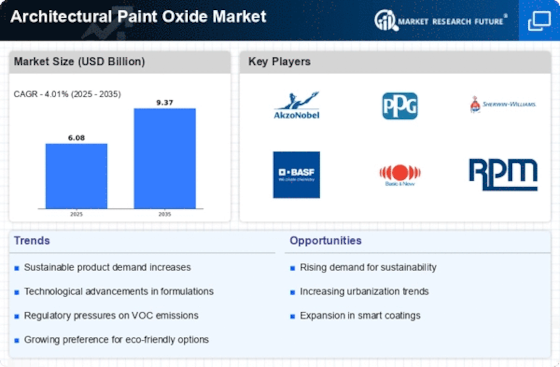
Urbanization is a driving force behind the growth of the Architectural Paint Oxide Market. As populations migrate towards urban centers, the demand for residential and commercial buildings escalates. This trend is particularly pronounced in developing regions, where rapid urban expansion is leading to increased construction activities. In 2025, it is anticipated that the architectural paint market will experience a compound annual growth rate of approximately 5%, largely fueled by urbanization. The need for aesthetically pleasing and durable finishes in new constructions is propelling the demand for architectural paint oxides. Additionally, urban renewal projects are further stimulating market growth, as older structures are renovated and modernized, necessitating the use of high-quality paint products.
Regulatory Compliance
Regulatory compliance is a critical factor influencing the Architectural Paint Oxide Market. Governments worldwide are implementing stringent regulations regarding the use of hazardous substances in paints, driving manufacturers to reformulate their products. Compliance with these regulations not only ensures consumer safety but also enhances market competitiveness. In 2025, it is expected that the architectural paint sector will increasingly focus on meeting these regulatory standards, particularly concerning VOC emissions and toxic materials. This shift may lead to a rise in the development of compliant paint formulations, which could capture a larger market share. As a result, companies that prioritize regulatory adherence are likely to gain a competitive edge in the evolving landscape of the architectural paint industry.
Technological Innovations
Technological advancements play a pivotal role in shaping the Architectural Paint Oxide Market. Innovations in formulation chemistry and application techniques are enhancing product performance and durability. For instance, the introduction of advanced pigments and binders has improved color retention and resistance to environmental factors. In 2025, the market is projected to witness a surge in the adoption of smart coatings, which offer functionalities such as self-cleaning and temperature regulation. These innovations not only elevate the aesthetic appeal of architectural surfaces but also contribute to energy efficiency in buildings. As technology continues to evolve, manufacturers are likely to focus on developing paints that meet the demands of modern architecture while ensuring compliance with stringent regulations.
Sustainability Initiatives
The Architectural Paint Oxide Market is increasingly influenced by sustainability initiatives. As consumers and regulatory bodies emphasize eco-friendly products, manufacturers are compelled to innovate. The demand for low-VOC and non-toxic paint options is rising, reflecting a broader trend towards environmental responsibility. In 2025, it is estimated that sustainable architectural paints will account for a significant portion of the market, potentially reaching 30%. This shift not only caters to consumer preferences but also aligns with global environmental goals, prompting companies to invest in research and development of sustainable materials. Furthermore, the integration of recycled materials into paint formulations is becoming more prevalent, enhancing the appeal of architectural paint oxides that prioritize sustainability.