Report Details:
15 Companies Covered
72 Pages
Pune, India, 16 June, 2022 /MRFR Press Release/- Market research future has a half cooked research report on Global Anti-nuclear Antibody (ANA) Testing Market. The global market for Anti-nuclear Antibody (ANA) testing market is growing continuously and expected to grow at a CAGR of 5.89% from 2025 to 2035
Anti-Nuclear Antibody (ANA) Testing Market Size Overview
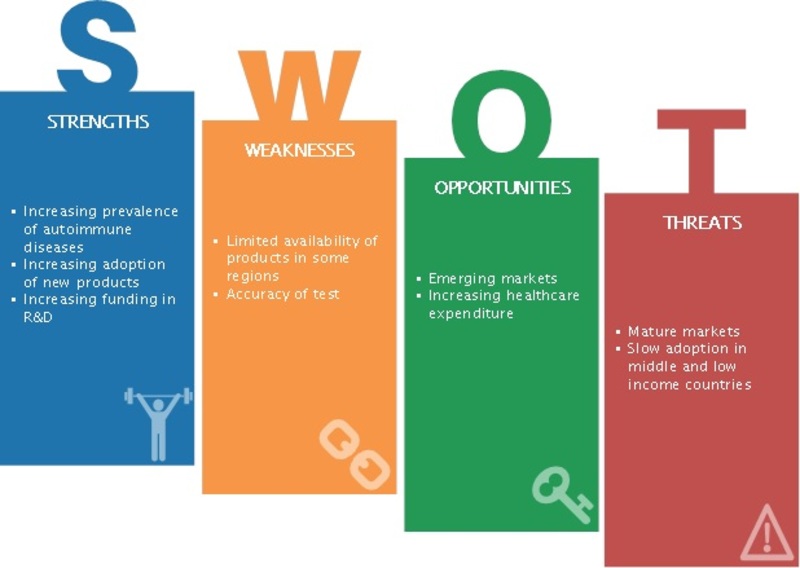
The global Anti-nuclear Antibody (ANA) Testing market has been evaluated as rapidly growing market and it is expected that the market will continue to grow similarly in the near future. Increasing demand for advanced tests and test kits, and increasing prevalence of autoimmune diseases are major driving forces of the global Anti-nuclear Antibody (ANA) Testing market. Increasing adoption of new techniques is also key driver for the market growth.
The Anti-Nuclear Antibody (ANA) Testing Market is expected to reach 3.5 (USD Billion) by 2035 at 5.89% CAGR during the forecast period 2025 to 2035
FIG.1 SWOT ANALYSIS: GLOBAL ANTI-NUCLEAR ANTIBODY (ANA) TESTING MARKET
Sources: Directorate of Industries, Annual report, White paper, Company Presentation, MRFR Analysis
Major Players in Anti-nuclear Antibody (ANA) Testing Market:
There are plenty of large and small market players which operate in this market: Abcam plc. (US), Alere (US), Antibodies Inc.(US), Bio-Rad Laboratories, Inc. (US), Erba Diagnostics (US), Indur Services, Inc. (US), MBL INTERNATIONAL (US), Merck KGaA (Germany), Trinity Biotech (Republic of Ireland)
Taste the market data and market information presented through more than 56 market data tables and figures spread over 72 numbers of pages of the project report. Avail the in-depth table of content TOC & market synopsis on “Anti-nuclear Antibody (ANA) Testing Market Research Report –Global Forecast to 2030.”
FIG. 2 MAJOR PLAYERS IN GLOBAL ANTI-NUCLEAR ANTIBODY (ANA) TESTING MARKET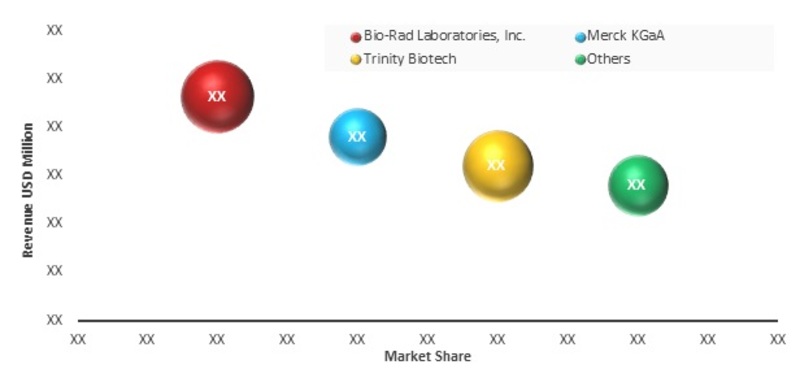
Sources: Directorate of Industries, Annual report, White paper, Company Presentation, MRFR Analysis
Increasing demand for Anti-nuclear Antibody (ANA) testing products and services are creating competitions within the market. Major players are investing huge money in R&D to develop advanced products for the market. Major players are holding about ~70% of the global Anti-nuclear Antibody (ANA) testing market while medium and small companies are also holding small but major piece of the market. ANA products manufacturing companies are collaborating with the hospitals to provide better solutions for the market. Companies adopting new technologies to meet customer need the Anti-nuclear Antibody (ANA) Due to rapid growth of this market, it is attracting many new players. The market for Anti-nuclear Antibody (ANA) testing in emerging economies is rising and most of major players are focusing on these regions.
Anti-Nuclear Antibody (ANA) Testing Regional Report Analysis
Considering the global scenario of the Anti-nuclear Antibody (ANA) Testing market, North America is holding largest market share in global Anti-nuclear Antibody (ANA) testing market in 2016. While the European market is second largest market and Western Europe region is the growing with the fastest rate and accounts largest share in European market. Due to rising healthcare expenditure and increasing awareness for the new products and therapies, Asia-Pacific region will be fastest growing market for Anti-nuclear Antibody (ANA) Testing during the forecast period. Middle East and Africa is expected to grow at steady pace during the forecast period.
Segmentation:
Global Anti-nuclear Antibody (ANA) Testing Market has been segmented on the basis of type which comprise immunofluorescence (Primary or direct and Secondary or indirect), enzymelinked, immunosorbent assay (ELISA) (Direct ELISA, Indirect ELISA, Sandwich ELISA, Competition/Inhibition ELISA), and others. On the basis of application, it segmented into Rheumatoid arthritis (Seropositive, Seronegative),Systemic lupus erythematosus (SLE) (Discoid lupus erythematosus, Subacute cutaneous lupus erythematosus, Neonatal lupus), Polymyositis, Scleroderma (localized scleroderma, systemic scleroderma), Sjögren's syndrome (Primary, secondary) , and others. On the basis of end user, it segmented into Hospitals and clinics, research laboratories, and others