Research Methodology on Postal Automation System Market
Research Goal:
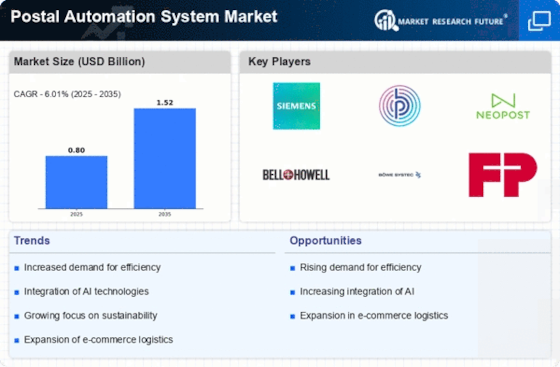
This research aims to analyze the market trends, potential opportunities and challenges associated with the postal automation system market and assess its current status and future potential. The scope of the study includes an analysis of the postal automation system market in terms of market size, market segmentation, market attractiveness, and key geographical areas of focus.
Research Objectives:
The objective of this research is to provide an in-depth understanding of the postal automation system market dynamics and to analyze the current market trends of the postal automation system. Additionally, the primary research objectives are to:
- Analyze the market size of the global postal automation system market for the study period (2023-2030).
- Analyse the various market segmentation of the global postal automation system market based on product type, end-user, and region.
- Identify and analyse the market attractiveness of the postal automation system.
- Assess the key market drivers and restraints associated with the postal automation system.
- Provide insights into the major market players operating in the global postal automation system market.
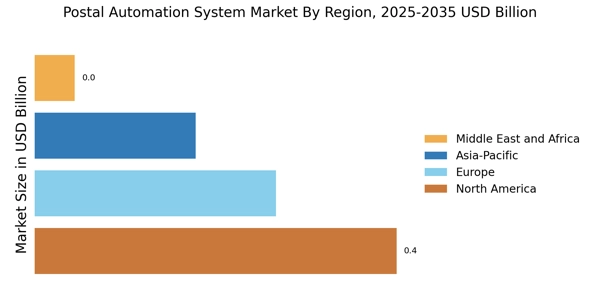
- Analyse the key geographical areas of the global postal automation system market.
- Identify and assess the various competitive strategies adopted by the major market players in the global postal automation system market.
Research Methodology:
A systematic research methodology was adopted for conducting this research in order to deliver detailed and accurate insights into the postal automation system market. Primary data was collected from industry experts and professionals. Secondary data was collected from market news, magazines, journals, online databases, and other published sources.
The research was carried out through a combination of both primary and secondary research. Primary research included interviews with industry experts, as well as surveys, and focus groups. Secondary research included reviewing and analyzing various reports, articles, surveys, and other published materials. To assess the market size and market attractiveness of the postal automation system, a bottom-up approach was adopted.
Data triangulation was used in order to validate the results of the primary and secondary research. For data triangulation, the same results or findings were obtained from different sources, and the results of one source were confirmed by the other sources. A funnel approach was adopted for data collection. In this approach, the research process starts with broad market definitions and narrows down to detailed information.
Market Estimation:
The market sizing and forecasting for the years 2023-2030 were conducted by using a combination of top-down and bottom-up approaches. The top-down method was used to estimate the global market size by assessing the market shares of the various segments. The bottom-up approach was used to validate the estimated market size.
In order to estimate the market size, first the total market size of all regions was estimated, and then the market size of each region was estimated. This was done by summing up the regional sales of all global segment leaders operating in those geographies. First, the absolute dollar opportunity was estimated for those segments for the base year. Second, the market opportunities from 2023 to 2030 were estimated. The forecasts were built on the assumption that all the current market trends will prevail during the forecast period 2023 to 2030.
Market Attractiveness:
The market attractiveness of all the segments was assessed by using a combination of top-down and bottom-up approaches. The relative market attractiveness of all the segments was evaluated based on the data obtained from the field interviews and secondary sources.
Competitive Analysis:
The key players that are operating in the global postal automation system market were identified, and their overall market share was also estimated to provide an overview of the market structure, scenario, and dynamics. To analyse and profile the competition, data about each of these players were collected, which included their financials, product portfolio, key strategies and developments, and SWOT analysis.