Research Methodology on HIV Diagnostics Market
Introduction
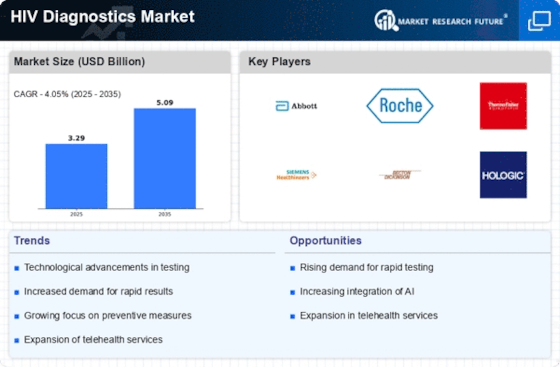
The HIV Diagnostics Market is a multifaceted market of products and services that diagnose and monitor the Human Immunodeficiency Virus (HIV). The Market Research Future recently published a report which stated that the Global HIV Diagnostic Market is expected to reach an all-time high revenue during the forecast period from 2023-2030.
The report was prepared to analyze the current market trends and contributing factors that have triggered the growth of the HIV Diagnostics Market. The report focused on the market segments, leading players, potential investment opportunities, challenges and the outlook of the market. This research study provides an in-depth analysis of the market and provides detailed information about the various market segments based on product type, technology, end users, and regions.
Research Methodology
The research methodology adopted for this study is a combination of primary and secondary research. To begin with, an extensive literature review was conducted, which included research studies, reports and articles related to HIV diagnostics, market trends, technology developments, and regulatory updates. The objective of the review was to obtain an extensive overview of the global HIV diagnostic market from various perspectives.
The primary research involved conducting interviews with key stakeholders including market players, research institutes, and industry experts. The industry experts included those with expertise in product development and the healthcare markets with a particular focus on HIV diagnostics.
The interviews revealed information such as the current market size and growth trends, market shares of leading players, factors influencing the growth of the market, the competitive landscape, regulatory scenarios, and the current scenario of the HIV diagnostics industry. These insights were used to validate and corroborate the information obtained from the secondary research.
Data Collection
Data collection for the research was conducted using both primary and secondary methods. The primary data was gathered through interviews with industry experts, market participants, and healthcare professionals. The secondary data was sourced from various reliable sources such as international trade organizations, government websites, trade journals, white papers, and journals.
To obtain a clear and comprehensive picture of the market size, the analysis of the data collected was conducted using top-down and bottom-up techniques. The top-down approach was used to estimate the total market size based on the data collected from the interviews. The bottom-up approach was used to extrapolate the market estimates based on the country-level data collected from primary and secondary sources.
The collected data was then verified and validated using other industry-standard techniques such as statistical triangulation and cross-validation. The results of the data analysis were then used to make informed decisions on the market trends and to also draw inferences on the market dynamics.
Data Analysis
The data collected was analyzed using various qualitative and quantitative techniques such as qualitative and quantitative analysis, descriptive analysis, trend analysis, and comparative analysis. The qualitative analysis consisted of analyzing the data to gain an understanding of the market dynamics, market segments, and the strategies used by the market players. The quantitative analysis consisted of analyzing the data to gain an understanding of the current market size and potential growth trends in the future.
The market size was estimated using the market share analysis technique which was based on the sales of the products in the market. The data was further analyzed to infer the market trends and the competitive landscape in the industry. The insights were then used to form the basis for the primary research.
Conclusion
This research study provides a comprehensive analysis of the HIV Diagnostics Market and is based on both primary and secondary research. The research methodology adopted for this study included an extensive literature review, primary and secondary research, data collection, and data analysis. The results of the study show that the Global HIV Diagnostic Market is likely to experience significant growth in the coming years, led by the increasing number of HIV infections, advancements in diagnostic technology, and the increasing demand for rapid and accurate diagnostics.