Research Methodology on Freight Management System Market
Definition:
A research methodology is a systematic approach used to identify, collect, analyze and present data in an organized manner. It involves various aspects such as research design, data collection methods, sampling techniques, data analysis and interpretation. It is a crucial step in the market research process and helps in providing appropriate solutions to the problems studied.
Research Design:
The research design used for this research is exploratory as this research provides an insight into the freight management system market in terms of its size, growth rate, trends and opportunities. The research employs both primary and secondary sources. The primary sources include interviews with major participants in the freight management system market and secondary sources include online databases such as market reports, vendor databases, journals and books. The research involved a comprehensive review of the market dynamics and its components.
Data Collection Methods:
For this research, both primary and secondary sources of data collection were used. The primary sources include telephonic interviews, market surveys and questionnaires. The participants were approached through e-mail and telephone and the interviewers were provided with the guidelines for data collection. The interviews were conducted from the perspective of the participants to ascertain their requirements. The secondary sources include online databases such as market reports, vendor databases, industry journals and websites.
Sampling Technique:
A sample size of 300 participants was used for data collection and analysis. The sample size includes participants from the international market and domestic markets. The sample size was chosen using a convenience sampling technique where the respondents were selected based on their availability and convenience to participate in the interviews.
Data Analysis and Interpretation:
The data collected is subjected to basic descriptive analysis, correlation and regression analysis. The analysis was performed using appropriate statistical tools and the results were interpreted. The results of the analysis were presented in tables and figures. The correlation and regression analysis helped to identify the relationship between the market dynamics and its components.
Conclusion:
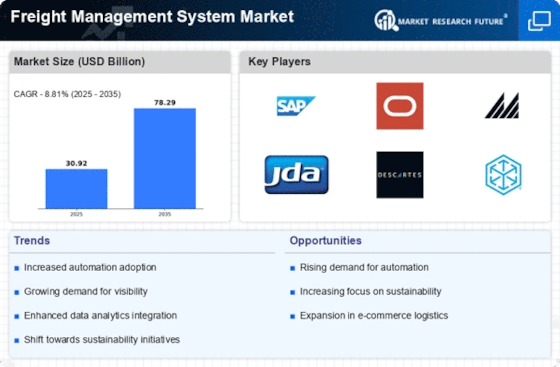
This research provides insights into the freight management system market in terms of its size, growth rate, trends and opportunities along with the market forecast from 2023 to 2030. The research employed both primary and secondary sources and the sample size of 300 participants was chosen by convenience sampling technique. The data collected was subjected to basic descriptive analysis, correlation and regression analysis and the results were presented in tables and figures. This research helped to understand the dynamics of the freight management system market.