Growing Importance of Data Privacy
The growing importance of data privacy is a crucial driver in the Digital Identity in Government Sector Market. As public awareness of data protection issues increases, citizens are demanding greater transparency and control over their personal information. Governments are responding by implementing policies that prioritize data privacy and security in digital identity solutions. This shift is prompting the development of identity management systems that incorporate privacy-by-design principles, ensuring that data protection is embedded in the technology from the outset. The emphasis on data privacy not only helps build trust between citizens and government but also aligns with international best practices. Consequently, the Digital Identity in Government Sector Market is likely to evolve towards solutions that prioritize user privacy while maintaining the necessary security measures.
Regulatory Compliance and Standards
Regulatory compliance is a significant driver in the Digital Identity in Government Sector Market. Governments are increasingly enacting stringent regulations to protect citizens' data and ensure secure digital interactions. Compliance with these regulations necessitates the adoption of advanced digital identity solutions that can meet legal requirements. For instance, the implementation of the General Data Protection Regulation (GDPR) has prompted many governments to reassess their digital identity frameworks. This regulatory landscape creates a pressing need for solutions that not only comply with existing laws but also adapt to evolving standards. As a result, the Digital Identity in Government Sector Market is likely to see a rise in demand for compliance-focused identity management systems, which can help governments mitigate risks associated with data breaches and non-compliance penalties.
Increased Focus on Citizen Engagement
The emphasis on citizen engagement is reshaping the Digital Identity in Government Sector Market. Governments are recognizing the importance of involving citizens in the design and implementation of digital identity solutions. This user-centric approach aims to enhance the overall experience and ensure that services meet the needs of the public. Data indicates that governments that prioritize citizen feedback in their digital identity initiatives experience higher satisfaction rates. By fostering a collaborative environment, governments can create more effective identity solutions that resonate with users. This trend is likely to drive innovation within the Digital Identity in Government Sector Market, as agencies seek to develop solutions that are not only secure but also user-friendly and accessible.
Rising Demand for Secure Digital Services
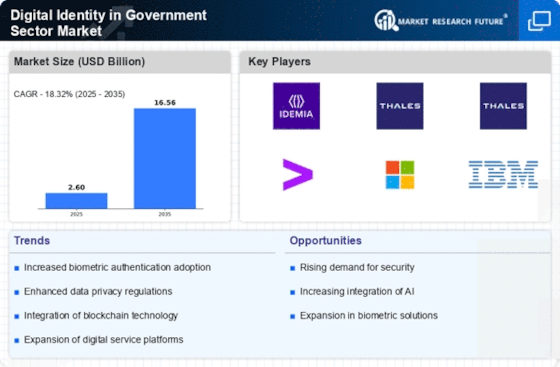
The increasing demand for secure digital services is a primary driver in the Digital Identity in Government Sector Market. As citizens expect seamless access to government services, the need for robust digital identity solutions becomes paramount. Governments are investing in advanced technologies to enhance security and protect sensitive information. According to recent data, the market for digital identity solutions is projected to grow at a compound annual growth rate of 15% over the next five years. This growth is fueled by the necessity for secure online transactions and the protection of personal data, which are critical in maintaining public trust in government services. Consequently, the Digital Identity in Government Sector Market is witnessing a surge in investments aimed at developing secure and efficient digital identity frameworks.
Technological Advancements in Identity Verification
Technological advancements in identity verification are propelling the Digital Identity in Government Sector Market forward. Innovations such as artificial intelligence, machine learning, and blockchain technology are being integrated into identity management systems to enhance security and efficiency. These technologies enable real-time verification of identities, reducing the risk of fraud and identity theft. Recent studies suggest that the adoption of AI-driven identity verification solutions can decrease processing times by up to 50%, significantly improving service delivery. As governments strive to modernize their operations, the integration of these advanced technologies is likely to become a cornerstone of the Digital Identity in Government Sector Market, facilitating faster and more secure access to services.