Research Methodology on Cryogenic Pump Market
Abstract
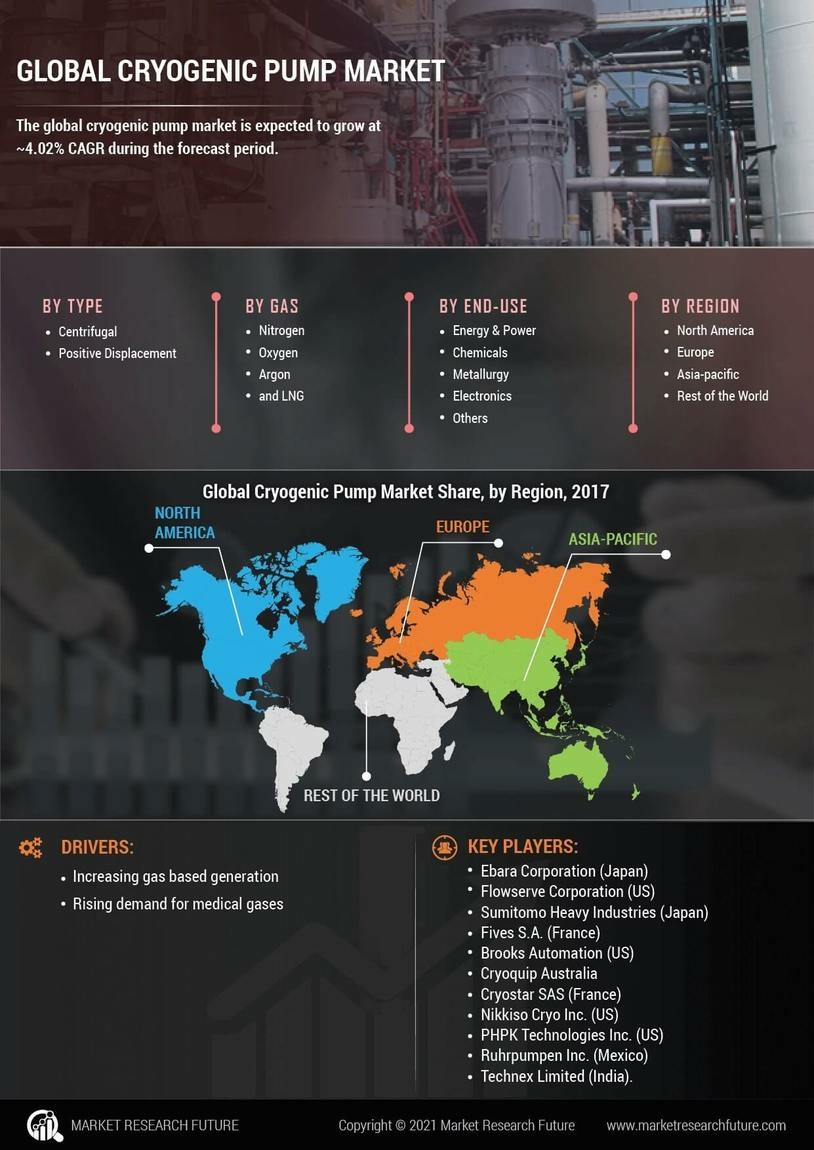
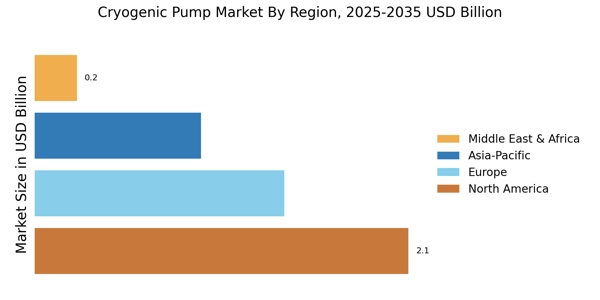
The published research report aims to understand the global environment of the cryogenic pump market and analyze its structure, trends, drivers, restraints, and opportunities. To understand the market better, the analysis of the market is conducted based on different segmentations such as types, applications, regions, and precisions. Furthermore, market attractiveness analysis and Porter’s Five Forces Analysis include giving a comprehensive understanding of the prevailing competition in the cryogenic pump market globally.
Introduction
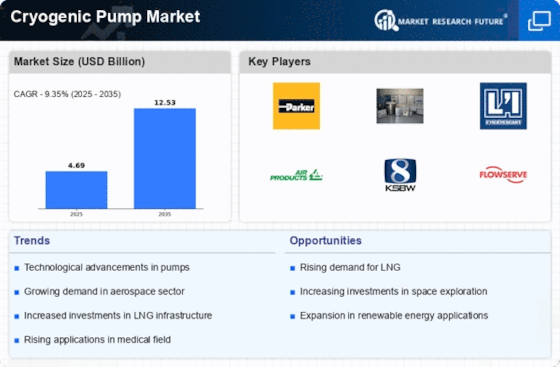
The cryogenic pump market is expected to witness substantial growth during the forecast period 2023 to 2030 as cryogenic pumps are becoming increasingly important for industrial purposes due to their ability to transport liquid gases at low temperatures. In general, cryogenic pumps are used in applications where cryogenic fluids, such as liquid nitrogen and liquid helium, are required to be handled at low temperatures such as in the medical and pharmaceutical industries, food processing, and space exploration. Moreover, the surge in the demand for cryogenic pumps in aerospace and aviation applications is boosting the growth of the cryogenic pump market as well.
Research Methodology
This research report is based on a market research approach combining primary and secondary sources which are collected from reliable sources including Journals and Conference Proceedings. The methods used to conduct this research are detailed below.
Research Design
For this research, both quantitative and qualitative approaches are used in combination for the data collection and analysis. The research design used is the Exploratory research design, as it helped in understanding the market from several angles with the help of primary and secondary sources.
Sampling Plan
To understand the market dynamics and pressure points, a sample size of 150 respondents is taken for primary research using snowball sampling methods for the different types of stakeholders such as consumers, vendors, and industry experts.
Data Sources
Both primary and secondary sources of data are used in this research and they included the following:
Primary sources:
- A structured questionnaire survey via email and online surveys
- Interviews with industry experts, consumers and vendors
- Focus group discussions with stakeholders
Secondary sources:
- Annual reports of key market players
- Research journals and articles
- Industry and trade associations
Data Analysis Techniques
The data collected through primary and secondary sources is analyzed statistically as well as qualitatively. The statistical analysis methods used are:
Regression Analysis
Confirmatory Factor Analysis
Correlation Analysis
ANOVA
Multiple Regression
Central Limit Theorem.
Besides statistical analysis, qualitative analysis of the data is performed with the help of:
Interpreting the results
Drawing conclusions
Analyzing the trends
Building hypotheses
Identifying drivers and restraints
At the end of the analysis process, the statistical models used are validated to ensure accuracy.
Data Validation
To ensure that the data remain credible, a three-stage process is followed:
- Primary sources are cross-checked with secondary sources to ensure the accuracy of the data
- Cross-checking is conducted to verify the responses from the sample taken
- Data from the survey is validated against industry benchmarks
By using this validation approach for the data collection, it is possible to ensure accurate and reliable results regarding the overall global cryogenic pump market.
Conclusion
This research report provides a comprehensive understanding of the global cryogenic pump market and emphasized the structure, trends, drivers, restraints, and opportunities of the market. The research approach applied in this report used a combination of primary and secondary sources and regression analysis, correlation analysis, and multiple regression techniques for data analysis and data validation. This approach eventually led to a better understanding of the market and its associated dynamics.