Research Methodology on Conductive Textile Market
Introduction
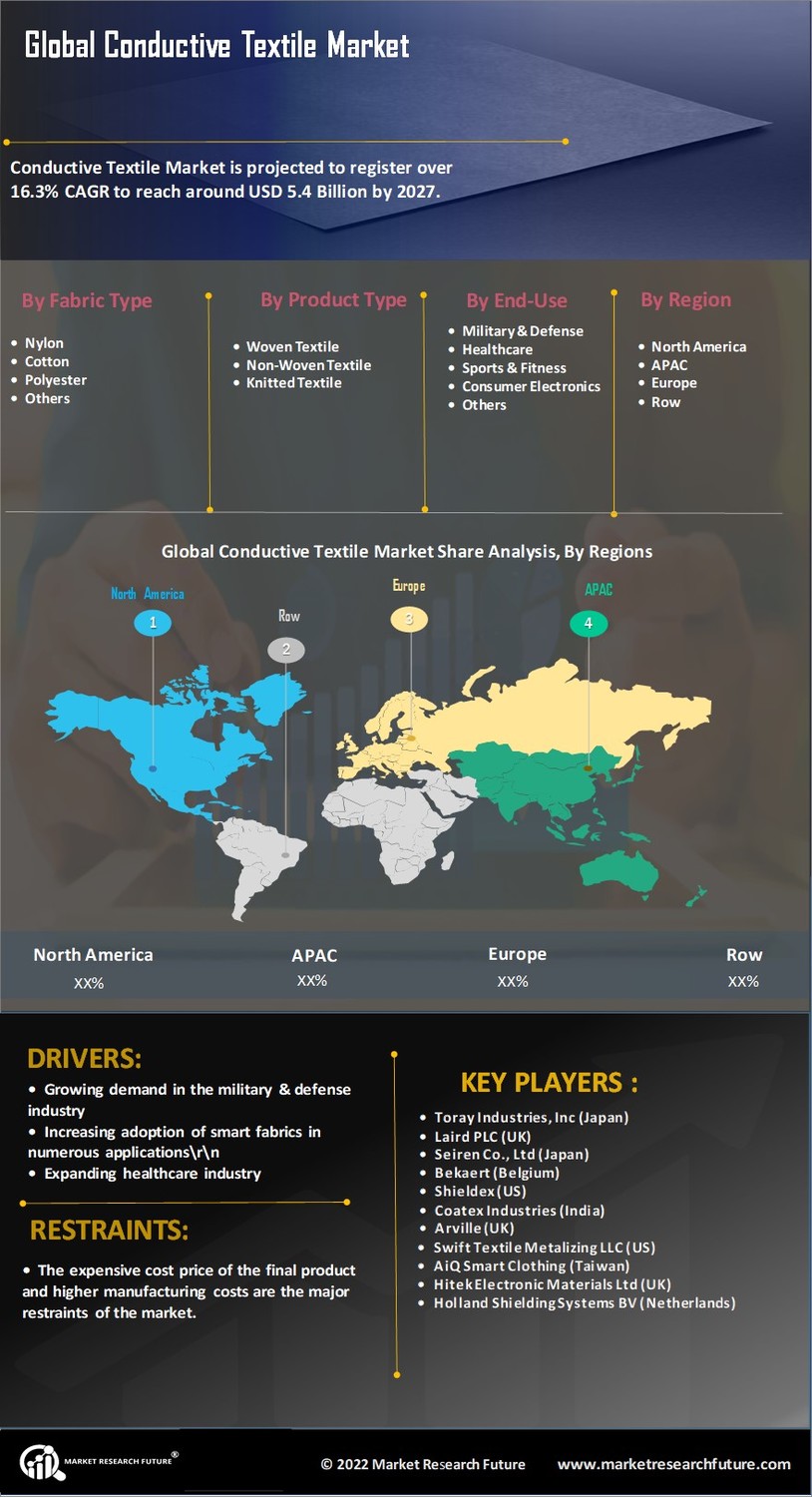
The purpose of this research is to understand the Conductive Textiles market, which includes the drivers, restraints, and opportunities of the industry. Market Research Future (MRFR) has used a mix of both primary and secondary research to thoroughly analyze the market and arrive at accurate and reliable market estimates. The analysis was conducted using qualitative and quantitative techniques.
Research variegates
The research was conducted using multiple analysis methods and contemporary research techniques. It took into account both macro and micro factors that impact the conductive textiles market’s course at any given time.
Research Methodology
This study has been conducted with both qualitative and quantitative research methodologies in order to understand the market potential and to accurately forecast the market figures. We have considered interviews, surveys, financial data analysis, competitor analysis, and more to arrive at the current market trends and figures.
Data collection
Data was collected using both primary and secondary methods. Primary data was collected through telephonic interviews, face-to-face meetings, meetings with industry experts, and online surveys. Secondary research was mainly done through extensive market analysis using electronic and print databases such as Hoovers, Bloomberg Businessweek, Factiva, Edelweiss, PCA Market Research, and Value Market Research.
Data analysis
The data was further analyzed using different analytical tools such as Porter’s 5 Forces Model, PESTLE Analysis, and Gap Analysis. These were used to gain an in-depth understanding of the market and to identify potential opportunities for growth. Furthermore, the data were analyzed to get precise industry estimates and conducted a comprehensive validation by gathering data from industry stakeholders and industry experts.
Research Findings
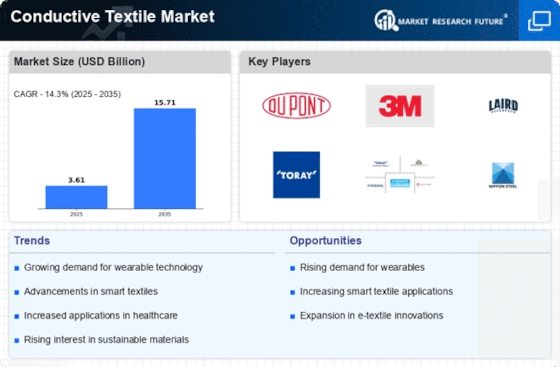
The research found that the global conductive textiles market will witness a steady CAGR during the forecast period from 2023 to 2030. The key drivers contributing to the growth of the market are the increasing demand for lightweight fabrics, rising awareness regarding the health benefits of wearable technology, and the increasing demand for smart fabrics and materials in the apparel industry. Apart from that, the growing demand for comfort and convenience in the medical and healthcare industries and the increasing interest in automated homes and vehicles are further driving the market growth.
Conclusion
The research provided in this report was conducted with the help of extensive research techniques and the usage of both primary and secondary research methods. The research conducted was further validated by gathering data from industry stakeholders and industry experts. The report also provides a comprehensive view of the market and its potential in terms of drivers, restraints, and opportunities that will help stakeholders in making decisions regarding investments.