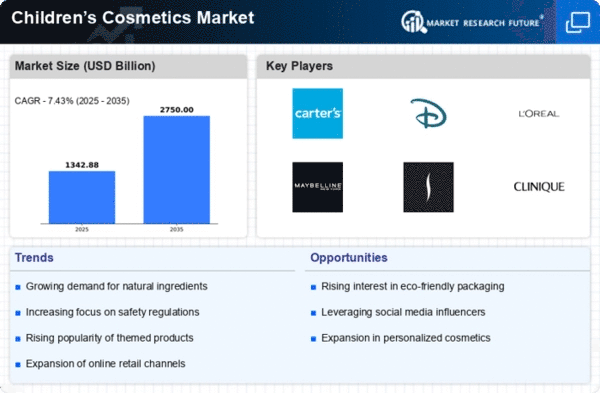
The Children’s Cosmetics Market is currently characterized by a dynamic competitive landscape, driven by increasing consumer awareness regarding product safety and the growing demand for innovative, age-appropriate cosmetic solutions. Key players such as L'Oreal (FR), Disney (US), and Burt's Bees (US) are strategically positioning themselves through a combination of product innovation, sustainability initiatives, and digital engagement. L'Oreal (FR) has been focusing on expanding its product lines tailored for children, emphasizing natural ingredients and dermatological safety, which resonates with health-conscious parents. Meanwhile, Disney (US) leverages its brand equity to introduce themed cosmetic products that appeal to children, thereby enhancing brand loyalty and market penetration. Burt's Bees (US) is also making strides by promoting eco-friendly packaging and formulations, aligning with the increasing consumer preference for sustainable products.
In terms of business tactics, companies are increasingly localizing manufacturing to reduce supply chain vulnerabilities and enhance responsiveness to market demands. The competitive structure of the market appears moderately fragmented, with several players vying for market share, yet dominated by a few key brands that significantly influence trends and consumer preferences. This fragmentation allows for niche players to emerge, focusing on specific demographics or product categories, thereby enriching the overall market offering.
In January 2026, L'Oreal (FR) announced the launch of a new line of children’s cosmetics that incorporates organic ingredients, aiming to capture the growing segment of health-conscious consumers. This strategic move not only enhances L'Oreal's product portfolio but also positions the company as a leader in the safe cosmetics space for children, potentially increasing its market share in this niche. The emphasis on organic ingredients is likely to resonate well with parents who prioritize safety and sustainability in their purchasing decisions.
In December 2025, Disney (US) unveiled a partnership with a leading educational platform to create interactive content that educates children about safe cosmetic use. This initiative not only strengthens Disney's brand presence in the cosmetics market but also aligns with the growing trend of educational marketing, which could foster a deeper connection with its young audience. By integrating entertainment with education, Disney (US) is likely to enhance customer engagement and loyalty.
In November 2025, Burt's Bees (US) launched a campaign promoting its new biodegradable packaging for children's cosmetics, which underscores the brand's commitment to sustainability. This initiative is strategically significant as it addresses the increasing consumer demand for environmentally friendly products, potentially attracting a broader customer base that values corporate responsibility. Burt's Bees (US) is thus positioning itself as a frontrunner in the sustainable cosmetics segment, which may yield competitive advantages in the long run.
As of February 2026, the Children’s Cosmetics Market is witnessing trends such as digitalization, sustainability, and the integration of AI in product development and marketing strategies. Companies are increasingly forming strategic alliances to enhance their technological capabilities and market reach. The competitive differentiation is likely to evolve from traditional price-based competition to a focus on innovation, technology, and supply chain reliability. This shift suggests that brands that prioritize unique product offerings and sustainable practices will be better positioned to thrive in the future.