Research Methodology on BLE Beacons Market
1. Introduction
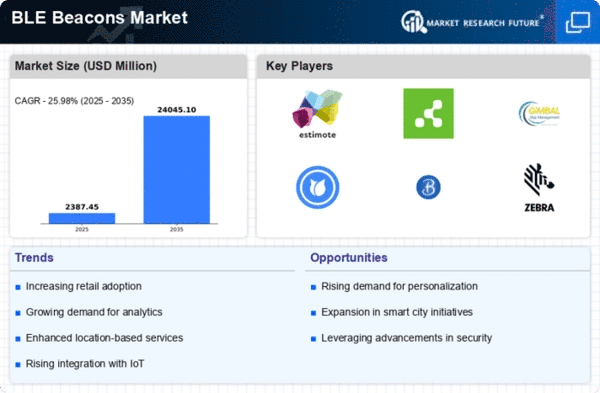
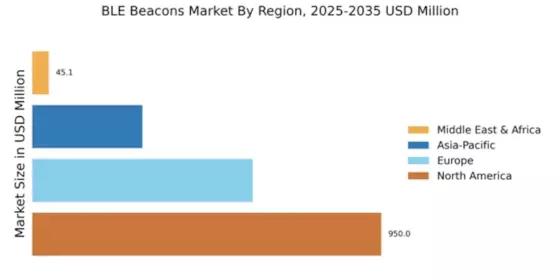
This research project is intended to study and evaluate the global market for BLE Beacons. This study entails the market size, revenue growth, and segmental and geographical analysis of this global market. The study also incorporates the expected market trends and dynamics, trends in trends in the overall market and its segments, competitive insights of the key players operating in the market, and an unbiased opinion of the potential growth of the BLE Beacons market in the forecast period of 2023-2030.
2. Research Objective
The primary objective of this research project is to provide a more concise and competent assessment of the global BLE Beacons market. The research includes an in-depth evaluation of the drivers and restraints of the market, along with other factors such as regional trends, macroeconomic and microeconomic indicators, popular market segments, market sizes, opportunities and potential of market growth, the competitive landscape, market attractiveness, and also the competitive strategies of the top players.
In addition, the research project also aims at providing the most detailed segmentation of the BLE Beacons market in terms of lessons such as product/service, application, distribution channel, end-user, and geography. To understand the demand-supply gap, price analysis, trends of pricing, volume-based trends, and qualitative/quantitative analysis of various other aspects of the global BLE Beacons market are also studied in the research project.
3. Research Design
The research design adopted for this project is a combination of secondary, primary, and qualitative research. Secondary research involves the use of information from published sources such as government databases, books, case studies, magazines, research papers, industry journals, trade magazines, and annual reports. This served as the basis for the identification of the current market trends which have been used as the foundation for this research.
The primary research was conducted using interviews with industry experts, and opinion leaders, as well as through dedicated interactions with industry participants and decision-makers. These experts and opinion-makers have provided valuable insights into the current market scenario and helped to spot emerging opportunities and potential growth drivers for the BLE Beacons market.
The qualitative research approach has been used to assess the market attractiveness, regional market growth, and other aspects of the BLE Beacons market. The factors used to make a qualitative assessment are the expert panel reviews, surveys, and interviews conducted with industry experts and key decision-makers, the Habit Reportologists survey findings, and the company’s analyst survey findings.
4. Data Sources
The data used for the study has been sourced from various reputable sources, such as published industry reports, government databases, industry associations, market research studies, company websites, and trade magazines.
For secondary research, the following sources have been sourced:
• Government databases and publications
• Industry associations
• Market research studies
• Company websites
• Trade-specific magazines and publications
• Market research reports
• Online library databases
For primary research, the following sources have been accessed:
• In-depth interviews
• Interviews with industry experts
• The Habit Reportologists survey findings
• The company’s analyst survey findings
• Key opinion-makers
5. Approach Used
The research approach for this project is a combination of the bottom-up approach and the top-down approach. Through the bottom-up approach, the individual segment growth has been projected, and based on the potential of each segment, the overall market has been estimated. The bottom-up approach included gathering the revenue, sales and volume information of the BLE Beacons market from the regional level to the global level. The data is collected from the companies in the BLE Beacons market and the data collected is validated from the revenue and sales figures from the market reports and the market participants.
The top-down approach includes the analysis of the industry value chain and the mapping of the macroeconomic and microeconomic indicators from the global and regional standpoint. The macro-level analysis includes the analysis of the regional economic and political climate. The micro-level analysis includes the analysis of the current market trends of BLE Beacons, the recent technological advancements, the industry partnerships, the corporate activities, and the competitive landscape.
6. Data Triangulation
The data triangulation used for this research project included demand-side triangulation and supply-side triangulation. Through demand-side triangulation, the data collected from industry participants, market participants, and other stakeholders was validated from third-party sources such as industry reports, market research reports, and government publications.
The supply-side triangulation used for the project is based on the analysis of the market size, market share, and market trends of the top players operating in the BLE Beacons market. The data was collected from the company profiles, press releases, company websites, and annual reports of the competitors in the market.
7. Forecasting Model
The data used for the study has been analyzed using time-series analysis and factor analysis. The factor analysis used includes the analysis of the drivers and restraints of the BLE Beacons market, the competitive landscape, the regulatory trends, the market attractiveness of each segment, and the attractiveness of each region. The time-series analysis is used to predict the growth rate of the BLE Beacons market in the forecast period 2023 to 2030. The forecasting model used for the study is the weighted average model, which is based on the collected data and market parameters.
8. Market Estimation
The market estimation for the study has been done using the base-year methodology which is an important method of market estimation. The base-year sales and revenue data of the BLE Beacons market have been collected from various reliable secondary and primary sources. The base-year sales and revenue figures have been adjusted for any inflationary or deflationary effects. The study also incorporates the incremental dynamics of the market to ascertain the market growth rate over the forecast period 2023 to 2030.
9. Conclusion
The study of the global BLE Beacons market is a comprehensive research project that incorporates a detailed analysis of the current market trends, macroeconomic and microeconomic indicators, market attractiveness, competitive landscape, and segmental, and regional trends. The study has been done using secondary, primary, and qualitative research techniques. The research includes an in-depth evaluation of the drivers and restraints of the market, along with other aspects such as regional trends, macroeconomic and microeconomic indicators, popular market segments, market sizes, opportunities and potential of market growth, the competitive landscape, market attractiveness, and also the competitive strategies of the top players. The data used for the study has been sourced from various reliable sources, and the market estimation has been done using the base-year methodology. The forecasting model used for the study is the weighted average model which is based on the collected data and market parameters. The study aims at providing the most detailed and concise evaluation of the global BLE Beacons market.