Increased Focus on Vector Control
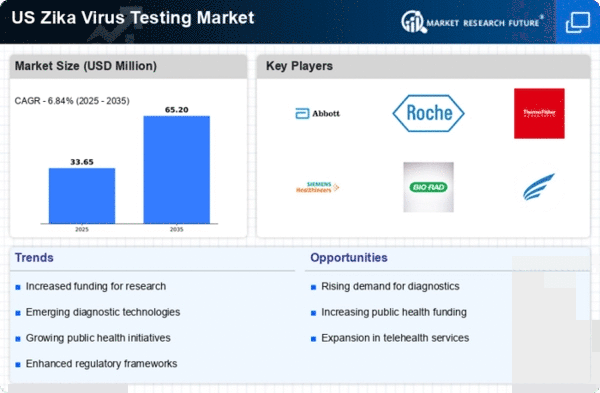
The zika virus-testing market is also driven by an increased focus on vector control measures. As the primary mode of transmission for the zika virus is through mosquito bites, public health campaigns aimed at controlling mosquito populations have become more prevalent. This heightened focus on vector control has led to a corresponding increase in the demand for testing, as effective control measures require accurate data on zika virus prevalence. The market is likely to see growth as health authorities emphasize the importance of testing in conjunction with vector control strategies, ensuring that the zika virus-testing market remains relevant in public health discussions.
Government Initiatives and Funding
Government initiatives and funding play a crucial role in shaping the zika virus-testing market. Federal and state health agencies are allocating resources to combat the zika virus, which includes funding for research and development of testing methods. For instance, the National Institutes of Health (NIH) has invested millions in zika virus research, which indirectly supports the testing market by fostering innovation. This financial backing is likely to stimulate the development of new testing technologies and improve existing ones, thereby expanding the zika virus-testing market. As public health priorities shift towards infectious disease management, the market is poised for growth.
Rising Incidence of Zika Virus Cases
The zika virus-testing market is experiencing growth due to the rising incidence of zika virus cases in the US. As the number of reported cases increases, healthcare providers are more likely to recommend testing, thereby driving demand for testing services and products. According to the Centers for Disease Control and Prevention (CDC), there were approximately 1,000 reported cases of zika virus in the US in recent years, highlighting the need for effective testing solutions. This trend suggests that as awareness of zika virus transmission rises, the zika virus-testing market will likely expand to meet the growing healthcare needs of the population.
Advancements in Diagnostic Technologies
The zika virus-testing market is significantly influenced by advancements in diagnostic technologies. Innovations such as polymerase chain reaction (PCR) testing and serological assays have improved the accuracy and speed of zika virus detection. These technological advancements not only enhance the reliability of test results but also reduce the time required for diagnosis, which is crucial for effective patient management. The market for diagnostic testing is projected to reach $1 billion by 2026, indicating a robust growth trajectory. As healthcare providers increasingly adopt these advanced testing methods, the zika virus-testing market is expected to benefit from enhanced testing capabilities.
Rising Demand for Preventive Healthcare
The zika virus-testing market benefits from a rising demand for preventive healthcare measures. As individuals become more health-conscious, there is a growing inclination towards early detection and prevention of diseases, including those caused by the zika virus. This trend is reflected in the increasing number of people seeking testing services, particularly in areas where zika virus transmission is a concern. The preventive healthcare market is projected to grow at a CAGR of 7% over the next five years, indicating a favorable environment for the zika virus-testing market. As awareness of preventive measures continues to rise, the market is likely to expand to accommodate this shift in consumer behavior.