×
Request Free Sample ×

Kindly complete the form below to receive a free sample of this Report

* Please use a valid business email

Leading companies partner with us for data-driven Insights

clients tt-cursor
Hero Background

US Uterine Sarcoma Market

ID: MRFR/LS/18533-HCR
100 Pages
Rahul Gotadki
February 2026

US Uterine Sarcoma Market Research Report By Type (LMS, Undifferentiated sarcoma), By Diagnosis (Sampling & testing, Imaging tests), By Treatment (Surgery, Radiation therapy, Hormone therapy) and By End User (Hospitals, Research Organization) - Growth & Industry Forecast 2025 To 2035

Share:
Download PDF ×

We do not share your information with anyone. However, we may send you emails based on your report interest from time to time. You may contact us at any time to opt-out.

US Uterine Sarcoma Market Infographic
Purchase Options

US Uterine Sarcoma Market Summary

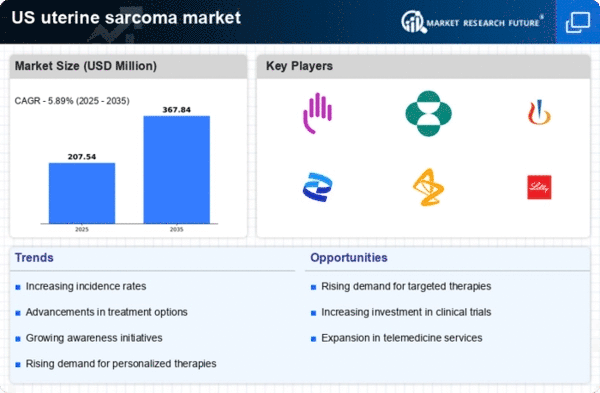
As per Market Research Future analysis, the US uterine sarcoma market size was estimated at 196.0 USD Million in 2024. The US uterine sarcoma market is projected to grow from 207.54 USD Million in 2025 to 367.84 USD Million by 2035, exhibiting a compound annual growth rate (CAGR) of 5.8% during the forecast period 2025 - 2035

Key Market Trends & Highlights

The US uterine sarcoma market is poised for growth driven by advancements in treatment and increasing awareness.

  • Advancements in diagnostic techniques are enhancing early detection and treatment outcomes for uterine sarcoma.
  • The emergence of targeted therapies is transforming the treatment landscape, offering more personalized options for patients.
  • Increased patient awareness and support initiatives are contributing to higher diagnosis rates and treatment engagement.
  • The rising incidence of uterine sarcoma and advancements in surgical techniques are key drivers propelling market growth.

Market Size & Forecast

2024 Market Size 196.0 (USD Million)
2035 Market Size 367.84 (USD Million)
CAGR (2025 - 2035) 5.89%

Major Players

Bristol-Myers Squibb (US), Merck & Co (US), Novartis (CH), Pfizer (US), AstraZeneca (GB), Eli Lilly and Company (US), Bayer (DE), Amgen (US), Roche (CH)

Our Impact
Enabled $4.3B Revenue Impact for Fortune 500 and Leading Multinationals
Partnering with 2000+ Global Organizations Each Year
30K+ Citations by Top-Tier Firms in the Industry

US Uterine Sarcoma Market Trends

The uterine sarcoma market is characterized by a complex interplay of factors influencing diagnosis, treatment, and patient outcomes. Recent advancements in medical technology and research have led to improved diagnostic methods, enabling earlier detection of this rare form of cancer. This shift is crucial, as early intervention is often associated with better prognoses. Furthermore, the development of targeted therapies and personalized medicine approaches appears to be reshaping treatment paradigms, offering hope for more effective management of uterine sarcomas. As healthcare providers increasingly adopt these innovative strategies, the landscape of care is evolving, potentially leading to enhanced survival rates for patients. In addition to advancements in treatment, the uterine sarcoma market is also witnessing a growing emphasis on patient education and support. Awareness campaigns and resources aimed at informing patients about the disease and available treatment options are becoming more prevalent. This trend may empower patients to make informed decisions regarding their care, fostering a more collaborative relationship with healthcare professionals. Overall, the uterine sarcoma market is poised for continued evolution, driven by technological advancements, increased awareness, and a focus on patient-centered care.

Advancements in Diagnostic Techniques

Recent innovations in imaging and biopsy methods are enhancing the accuracy of uterine sarcoma diagnoses. These advancements facilitate earlier detection, which is critical for improving treatment outcomes.

Emergence of Targeted Therapies

The uterine sarcoma market is experiencing a shift towards targeted therapies that focus on specific genetic mutations. This approach may lead to more effective treatment options tailored to individual patient profiles.

Increased Patient Awareness and Support

There is a growing trend towards enhancing patient education regarding uterine sarcoma. Awareness initiatives are empowering patients to engage actively in their treatment decisions, fostering better communication with healthcare providers.

US Uterine Sarcoma Market Drivers

Increased Research Funding

The uterine sarcoma market is bolstered by increased research funding from both governmental and private sectors. The National Institutes of Health (NIH) has allocated substantial resources towards understanding uterine sarcomas, which may lead to breakthroughs in treatment and management. This influx of funding supports clinical trials and the development of novel therapies, potentially enhancing the therapeutic landscape for patients. As research progresses, the uterine sarcoma market could witness the introduction of innovative treatment options, thereby improving patient outcomes and expanding the overall market.

Rising Demand for Palliative Care

The growing recognition of the importance of palliative care in managing uterine sarcoma is shaping the market landscape. As patients seek comprehensive care that addresses not only the disease but also quality of life, there is an increasing demand for palliative services. This trend is prompting healthcare systems to integrate palliative care into treatment plans, ensuring that patients receive holistic support. The emphasis on palliative care may lead to a more patient-centered approach in the uterine sarcoma market, ultimately enhancing patient satisfaction and outcomes.

Advancements in Surgical Techniques

Innovations in surgical techniques are significantly impacting the uterine sarcoma market. Minimally invasive procedures, such as laparoscopic surgeries, have gained traction, offering patients reduced recovery times and lower complication rates. The adoption of robotic-assisted surgeries is also on the rise, enhancing precision and control during operations. These advancements not only improve surgical outcomes but also increase the number of patients eligible for surgical intervention. As surgical techniques evolve, the uterine sarcoma market is likely to see a shift towards more effective treatment modalities, ultimately benefiting patient care and expanding market opportunities.

Rising Incidence of Uterine Sarcoma

The uterine sarcoma market is experiencing growth due to the increasing incidence of uterine sarcoma cases in the US. According to the National Cancer Institute, the estimated number of new uterine sarcoma cases is projected to reach approximately 13,000 annually. This rise in cases necessitates enhanced treatment options and diagnostic tools, thereby driving market demand. Furthermore, the aging population contributes to this trend, as older women are at a higher risk for developing uterine sarcomas. As awareness of this malignancy grows, healthcare providers are likely to invest more in research and development, leading to innovative therapies and improved patient outcomes in the uterine sarcoma market.

Growing Focus on Personalized Medicine

The shift towards personalized medicine is influencing the uterine sarcoma market. Tailoring treatment plans based on individual genetic profiles and tumor characteristics appears to enhance therapeutic efficacy. As genomic testing becomes more accessible, oncologists are increasingly able to identify specific mutations and select targeted therapies accordingly. This trend may lead to improved survival rates and reduced side effects for patients. Consequently, the uterine sarcoma market is likely to expand as healthcare providers adopt personalized approaches, fostering a more effective treatment paradigm.


Market Segment Insights

By Type: Liposarcoma (Largest) vs. Leimyosarcoma (Fastest-Growing)

In the US uterine sarcoma market, Liposarcoma holds the largest market share, primarily due to its higher prevalence and recognition in medical communities. This type has been prominent in treatment regimens, allowing it to capture a significant proportion of patient cases. Conversely, Leimyosarcoma is witnessing rapid growth, sparking interest from pharmaceutical companies eager to address its unique challenges. The dynamics between these two types reflect the diverse landscape of uterine sarcoma treatments. The growth trends within the segment are influenced by several factors, including advancements in diagnostic technologies and increasing awareness about various uterine sarcomas. Enhanced research and development initiatives are driving innovation in treatment methods, particularly for Leimyosarcoma, which is gradually gaining traction. This ongoing shift in focus showcases the evolving needs of patients and the healthcare system in addressing specific types of uterine sarcoma more effectively.

Liposarcoma (Dominant) vs. Endometrial Stromal Sarcoma (Emerging)

Liposarcoma is characterized by its complex pathology and is often recognized for its predominance in the US uterine sarcoma market. It is associated with a range of treatment options, including surgical resection and chemotherapy, which further cement its dominant position. On the other hand, Endometrial Stromal Sarcoma, while classified as an emerging segment, is gaining attention due to its distinct presentation and treatment challenges. It is often less recognized but is crucial for ongoing research efforts. As treatment modalities evolve, both types chart different paths; Liposarcoma continues to lead while Endometrial Stromal Sarcoma gradually rises, demanding more focus from the healthcare industry.

By Diagnosis Method: Imaging Techniques (Largest) vs. Biopsy (Fastest-Growing)

The analysis of the diagnosis methods used in the US uterine sarcoma market reveals that imaging techniques account for a significant share of the market. This segment includes technologies such as MRI and CT scans, which are widely adopted due to their effectiveness in visualizing tumors. Meanwhile, the biopsy segment, important for confirming diagnoses, also shows a growing presence in the landscape, propelled by advancements in minimally invasive techniques. In terms of growth trends, the biopsy segment is emerging rapidly as healthcare providers and patients prefer more accurate and less invasive diagnostic options. Technological advancements in biopsy procedures, including improved imaging guidance, contribute to this trend. This dynamic environment is driven by the increasing need for precise diagnosis, establishing biopsy as the fastest-growing method among the various diagnosis techniques available in this market.

Biopsy (Dominant) vs. Blood Tests (Emerging)

The biopsy segment is solidifying its position as a dominant method for diagnosing uterine sarcoma, thanks to its accuracy and reliability. It allows for direct tissue examination, providing critical information that imaging techniques alone cannot offer. As healthcare continues to advance, the efficacy of biopsy techniques, especially with technologies that reduce patient discomfort, is enhancing its appeal. Conversely, blood tests are emerging as a complementary diagnostic tool, offering a non-invasive option that enables early detection of specific cancer markers. While still in the developing stage, blood tests benefit from innovative research aimed at improving their sensitivity and specificity, indicating a promising future in the landscape of uterine sarcoma diagnosis.

By Treatment Type: Surgery (Largest) vs. Targeted Therapy (Fastest-Growing)

In the US uterine sarcoma market, Surgery is the largest treatment type, representing a significant portion of the overall share. This is closely followed by Radiation Therapy, Chemotherapy, and the emerging Targeted Therapy segment. These treatment options collectively address the complex needs of uterine sarcoma patients, contributing to the diverse landscape of care available. Growth trends in this segment reflect an increasing shift towards less invasive approaches, particularly with advancements in Targeted Therapy. Factors such as rising awareness, improving diagnostics, and innovative treatment methodologies are driving the expansion of these therapies. The healthcare system's emphasis on personalized medicine is further propelling Targeted Therapy, making it a pivotal focus for future developments.

Surgery (Dominant) vs. Targeted Therapy (Emerging)

Surgery remains the dominant treatment for uterine sarcoma, often regarded as the first line of attack due to its potential for complete tumor removal. This method, while highly effective, mandates significant recovery time and can vary in effectiveness based on individual patient circumstances. Targeted Therapy, conversely, is emerging as a significant alternative, focusing on specific molecular targets associated with tumor growth. This therapy offers a tailored approach with potentially fewer side effects and improved efficacy for certain patient profiles. The market dynamics are shifting as Targeted Therapy gains traction, promising to enhance treatment outcomes while addressing the limitations of traditional methods.

By End User: Hospitals (Largest) vs. Cancer Research Centers (Fastest-Growing)

In the US uterine sarcoma market, the distribution of market share among end users reveals a significant presence of hospitals, which hold the largest share. Hospitals are equipped with advanced treatment facilities and healthcare professionals who provide comprehensive care for uterine sarcoma patients, making them a preferred choice for many. On the other hand, cancer research centers play a crucial role in the treatment landscape, representing a rapidly growing segment due to increasing investments in research and development. The growth trends in the US uterine sarcoma market are heavily influenced by the rising incidence of uterine sarcoma and the growing emphasis on research initiatives. Hospitals continue to innovate in treatment modalities and patient care strategies, resulting in a steady demand for surgical interventions and therapies. Meanwhile, cancer research centers are emerging as vital contributors to this market, driven by advancements in clinical trials and targeted therapies, thus addressing unmet medical needs and improving patient outcomes.

Hospitals (Dominant) vs. Cancer Research Centers (Emerging)

Hospitals are the dominant end users in the US uterine sarcoma market, characterized by their extensive resources, multidisciplinary teams, and established protocols for diagnosing and managing uterine sarcoma. They provide integrated treatment approaches that combine surgery, chemotherapy, and radiation, making them a pivotal component of patient care. On the other hand, cancer research centers represent an emerging segment with a strong focus on innovative treatment options and clinical research. They attract significant funding for studies aimed at understanding uterine sarcoma's molecular mechanisms, leading to novel therapeutic strategies. While hospitals cater to immediate patient needs, cancer research centers are essential for long-term advancements in treatment, positioning them as crucial players in the evolving landscape of uterine sarcoma management.

Get more detailed insights about US Uterine Sarcoma Market

Key Players and Competitive Insights

The uterine sarcoma market is characterized by a competitive landscape that is increasingly shaped by innovation, strategic partnerships, and a focus on patient-centric solutions. Key players such as Bristol-Myers Squibb (US), Merck & Co (US), and Pfizer (US) are actively engaged in developing novel therapies and expanding their portfolios. Bristol-Myers Squibb (US) has positioned itself as a leader in immunotherapy, focusing on enhancing treatment efficacy through combination therapies. Meanwhile, Merck & Co (US) emphasizes its commitment to research and development, particularly in the realm of targeted therapies, which aligns with the growing demand for personalized medicine. Pfizer (US) is also making strides in this area, leveraging its extensive pipeline to address unmet medical needs in uterine sarcoma, thereby shaping the competitive dynamics of the market.The business tactics employed by these companies reflect a concerted effort to optimize operations and enhance market presence. Localizing manufacturing and optimizing supply chains are critical strategies that enable these firms to respond swiftly to market demands. The competitive structure of the uterine sarcoma market appears moderately fragmented, with several players vying for market share. However, the influence of major companies is substantial, as they drive innovation and set industry standards, thereby shaping the overall market dynamics.

In October Merck & Co (US) announced a strategic collaboration with a leading biotechnology firm to develop a novel combination therapy for uterine sarcoma. This partnership is expected to leverage both companies' strengths in drug development, potentially accelerating the timeline for bringing new treatments to market. The strategic importance of this collaboration lies in its potential to enhance treatment options for patients, thereby addressing a critical gap in the current therapeutic landscape.

In September Pfizer (US) launched a new clinical trial aimed at evaluating the efficacy of its latest drug candidate in patients with advanced uterine sarcoma. This initiative underscores Pfizer's commitment to advancing research in this area and highlights its proactive approach to addressing the needs of patients with limited treatment options. The trial's outcomes could significantly influence the company's future product offerings and market positioning.

As of November the uterine sarcoma market is witnessing trends that emphasize digitalization, sustainability, and the integration of artificial intelligence in drug development. Strategic alliances are increasingly shaping the competitive landscape, as companies recognize the value of collaboration in driving innovation. Looking ahead, it is likely that competitive differentiation will evolve, with a shift from price-based competition to a focus on technological advancements, innovative therapies, and reliable supply chains. This transition may redefine how companies approach market entry and product development, ultimately benefiting patients through improved treatment options.

Key Companies in the US Uterine Sarcoma Market include

Industry Developments

Recent developments in the US Uterine Sarcoma Market have highlighted significant advancements in research and treatment options, particularly from companies such as Merck and Co, Genentech, and Bristol Myers Squibb. In early 2023, Pfizer announced the initiation of a critical clinical trial aimed at evaluating the efficacy of a new therapeutic agent for treating uterine sarcoma, marking a considerable advancement in targeted therapies.

The collaboration between AstraZeneca and Incyte Corporation in September 2022 focused on combination therapies, enhancing treatment frameworks for patients. Additionally, market analysts observed a steady increase in revenue for Celgene and Novartis due to innovative treatments introduced over the past couple of years. Reports indicate that as of August 2023, Eli Lilly's latest drug showed promising results in preliminary studies, driving market optimism.

Furthermore, in November 2022, Merck and Co completed their acquisition of a smaller biotech firm, enhancing their pipeline specifically targeting sarcomas, further solidifying their position in the market. The U.S. Food and Drug Administration has been more proactive in approving investigational new drugs, accelerating the potential to provide more effective solutions for patients suffering from uterine sarcoma.

Future Outlook

US Uterine Sarcoma Market Future Outlook

The Uterine Sarcoma Market is projected to grow at a 5.89% CAGR from 2025 to 2035, driven by advancements in treatment options, increasing awareness, and improved diagnostic technologies.

New opportunities lie in:

  • Development of targeted therapies for specific sarcoma subtypes.
  • Expansion of telemedicine services for remote patient monitoring.
  • Investment in AI-driven diagnostic tools for early detection.

By 2035, the uterine sarcoma market is expected to achieve substantial growth and innovation.

Market Segmentation

US Uterine Sarcoma Market Type Outlook

  • Liposarcoma
  • Leimyosarcoma
  • Endometrial Stromal Sarcoma
  • Undifferentiated Sarcoma

US Uterine Sarcoma Market End User Outlook

  • Hospitals
  • Cancer Research Centers
  • Diagnostic Laboratories

US Uterine Sarcoma Market Treatment Type Outlook

  • Surgery
  • Radiation Therapy
  • Chemotherapy
  • Targeted Therapy

US Uterine Sarcoma Market Diagnosis Method Outlook

  • Imaging Techniques
  • Biopsy
  • Blood Tests

Report Scope

MARKET SIZE 2024 196.0(USD Million)
MARKET SIZE 2025 207.54(USD Million)
MARKET SIZE 2035 367.84(USD Million)
COMPOUND ANNUAL GROWTH RATE (CAGR) 5.89% (2025 - 2035)
REPORT COVERAGE Revenue Forecast, Competitive Landscape, Growth Factors, and Trends
BASE YEAR 2024
Market Forecast Period 2025 - 2035
Historical Data 2019 - 2024
Market Forecast Units USD Million
Key Companies Profiled Bristol-Myers Squibb (US), Merck & Co (US), Novartis (CH), Pfizer (US), AstraZeneca (GB), Eli Lilly and Company (US), Bayer (DE), Amgen (US), Roche (CH)
Segments Covered Type, Diagnosis Method, Treatment Type, End User
Key Market Opportunities Advancements in targeted therapies and personalized medicine enhance treatment options in the uterine sarcoma market.
Key Market Dynamics Rising demand for targeted therapies drives innovation and competition in the uterine sarcoma market.
Countries Covered US
Leave a Comment

FAQs

What is the expected market size of the US Uterine Sarcoma Market in 2024?

The US Uterine Sarcoma Market is expected to be valued at 700.0 USD Million in 2024.

What will the market size reach by 2035?

By 2035, the US Uterine Sarcoma Market is projected to grow to 1500.0 USD Million.

What is the expected CAGR for the US Uterine Sarcoma Market during the forecast period?

The compound annual growth rate (CAGR) for the US Uterine Sarcoma Market is expected to be 7.174% from 2025 to 2035.

Which segment leads the market by type in 2024?

In 2024, the Undifferentiated Sarcoma segment leads the market with a value of 450.0 USD Million.

What is the projected market size for LMS in 2035?

The market size for LMS is projected to reach 550.0 USD Million by 2035.

Who are the key players in the US Uterine Sarcoma Market?

Major players in the US Uterine Sarcoma Market include Merck and Co, Genentech, and Bristol Myers Squibb among others.

What will be the market value for Undifferentiated Sarcoma by 2035?

The Undifferentiated Sarcoma segment is expected to grow to 950.0 USD Million by 2035.

What are the growth drivers for the US Uterine Sarcoma Market?

Key growth drivers include advancements in treatment options and increased awareness about uterine sarcoma.

What is the size of the US Uterine Sarcoma Market in 2025?

While specific figures for 2025 are not provided, the market is anticipated to grow significantly after 2024.

How do current market trends impact the US Uterine Sarcoma Market?

Emerging treatment protocols and increased research activities are positively influencing the US Uterine Sarcoma Market growth.

Download Free Sample

Kindly complete the form below to receive a free sample of this Report

Compare Licence

×
Features License Type
Single User Multiuser License Enterprise User
Price $4,950 $5,950 $7,250
Maximum User Access Limit 1 User Upto 10 Users Unrestricted Access Throughout the Organization
Free Customization
Direct Access to Analyst
Deliverable Format
Platform Access
Discount on Next Purchase 10% 15% 15%
Printable Versions