×
Request Free Sample ×

Kindly complete the form below to receive a free sample of this Report

* Please use a valid business email

Leading companies partner with us for data-driven Insights

clients tt-cursor
Hero Background

US Unified Facility Management Market

ID: MRFR/ICT/13945-HCR
100 Pages
Garvit Vyas
February 2026

US Unified Facility Management Market, By Components (Software, Service, Solution), By Deployment Type (On Cloud, On Premises), By Applications (BFSI, IT & Telecom, Healthcare, Education, Retail) - Forecast 2030

Share:
Download PDF ×

We do not share your information with anyone. However, we may send you emails based on your report interest from time to time. You may contact us at any time to opt-out.

US Unified Facility Management Market Infographic
Purchase Options

US Unified Facility Management Market Summary

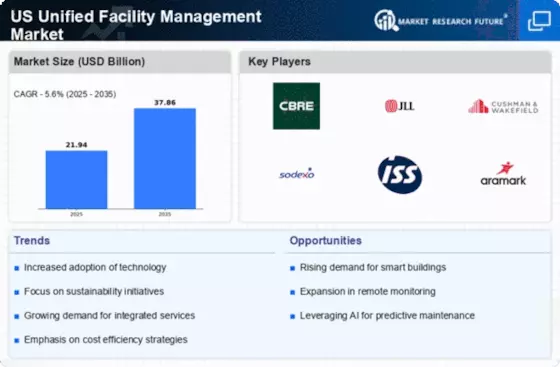
As per analysis, the US Unified Facility Management Market is projected to grow from USD 20.78 Billion in 2024 to USD 37.86 Billion by 2035, exhibiting a compound annual growth rate (CAGR) of 5.6% during the forecast period (2025 - 2035).

Key Market Trends & Highlights

The US Unified Facility Management Market is poised for growth driven by technological integration and sustainability efforts.

  • The Space Management segment remains the largest contributor to the market, reflecting a strong demand for efficient space utilization.
  • Workplace Management is emerging as the fastest-growing segment, driven by evolving work environments and employee needs.
  • The Commercial sector continues to dominate the market, while the Healthcare segment is experiencing rapid growth due to increased regulatory demands.
  • Key market drivers include the integration of advanced technologies and a heightened focus on sustainability and energy efficiency.

Market Size & Forecast

2024 Market Size 20.78 (USD Billion)
2035 Market Size 37.86 (USD Billion)
CAGR (2025 - 2035) 5.6%

Major Players

CBRE Group (US), JLL (US), Cushman & Wakefield (US), Sodexo (US), ISS Facility Services (US), Aramark (US), Gartner (US), ABM Industries (US), Colliers International (US)

Our Impact
Enabled $4.3B Revenue Impact for Fortune 500 and Leading Multinationals
Partnering with 2000+ Global Organizations Each Year
30K+ Citations by Top-Tier Firms in the Industry

US Unified Facility Management Market Trends

The US Unified Facility Management Market is currently experiencing a transformative phase, driven by the increasing need for efficiency and cost-effectiveness in facility operations. Organizations across various sectors are recognizing the value of integrating multiple facility management services into a cohesive framework. This integration not only streamlines operations but also enhances the overall user experience within facilities. As technology continues to evolve, the adoption of advanced software solutions and automation tools is becoming more prevalent, allowing for real-time monitoring and management of resources. Furthermore, sustainability initiatives are gaining traction, prompting organizations to seek environmentally friendly practices within their facility management strategies. In January 2026, the emphasis on data-driven decision-making is particularly noteworthy. Facility managers are leveraging analytics to optimize resource allocation and improve service delivery. This trend is likely to foster a more proactive approach to maintenance and operations, ultimately leading to enhanced operational resilience. As the market evolves, collaboration between service providers and clients appears to be strengthening, with a focus on tailored solutions that meet specific organizational needs. The US Unified Facility Management Market is poised for continued growth, driven by these dynamic trends and the ongoing pursuit of operational excellence.

Integration of Technology

The US Unified Facility Management Market is witnessing a notable shift towards the integration of advanced technologies. This trend encompasses the adoption of Internet of Things (IoT) devices, artificial intelligence, and cloud-based solutions. These technologies facilitate real-time data collection and analysis, enabling facility managers to make informed decisions and enhance operational efficiency.

Sustainability Initiatives

Sustainability is becoming a central theme within the US Unified Facility Management Market. Organizations are increasingly prioritizing eco-friendly practices, such as energy-efficient systems and waste reduction strategies. This trend reflects a broader societal shift towards environmental responsibility, influencing facility management strategies across various sectors.

Data-Driven Decision Making

The emphasis on data-driven decision-making is gaining momentum in the US Unified Facility Management Market. Facility managers are utilizing analytics to optimize resource allocation and improve service delivery. This approach not only enhances operational efficiency but also fosters a proactive maintenance culture, ultimately leading to better facility performance.

US Unified Facility Management Market Drivers

Growing Importance of Data Analytics

Data-driven decision-making is becoming increasingly vital in the US Unified Facility Management Market. The ability to analyze and interpret data allows facility managers to make informed decisions that enhance operational efficiency and reduce costs. Advanced analytics tools provide insights into energy consumption, space utilization, and maintenance needs, enabling proactive management strategies. Recent studies indicate that organizations leveraging data analytics in their facility management practices can achieve up to a 30% improvement in resource allocation. As the importance of data continues to rise, the market is likely to see a surge in demand for analytics-driven facility management solutions.

Integration of Advanced Technologies

The US Unified Facility Management Market is increasingly influenced by the integration of advanced technologies such as IoT, AI, and automation. These technologies enhance operational efficiency and reduce costs by streamlining processes. For instance, IoT devices enable real-time monitoring of facility conditions, leading to proactive maintenance and reduced downtime. According to recent data, the adoption of AI-driven analytics in facility management has shown to improve decision-making processes, resulting in a potential 20% reduction in operational costs. As organizations seek to optimize their resources, the demand for technology-driven solutions in the US Unified Facility Management Market is expected to grow significantly.

Regulatory Compliance and Safety Standards

The US Unified Facility Management Market is significantly shaped by the need for regulatory compliance and adherence to safety standards. Facility managers are tasked with ensuring that their operations meet federal, state, and local regulations, which can be complex and multifaceted. Non-compliance can lead to severe penalties and operational disruptions. The Occupational Safety and Health Administration (OSHA) sets forth guidelines that facility managers must follow to ensure workplace safety. As regulations evolve, the demand for compliance-focused facility management solutions is likely to increase, driving growth in the market as organizations seek to mitigate risks associated with non-compliance.

Focus on Sustainability and Energy Efficiency

Sustainability initiatives are becoming a cornerstone of the US Unified Facility Management Market. Organizations are increasingly prioritizing energy efficiency and sustainable practices to meet regulatory requirements and corporate social responsibility goals. The US government has implemented various policies promoting green building standards, which encourage facility managers to adopt eco-friendly practices. For example, the Energy Policy Act incentivizes energy-efficient upgrades, which can lead to substantial cost savings. As a result, the market is witnessing a shift towards sustainable facility management solutions, with a projected growth rate of 15% in the next five years, driven by these sustainability efforts.

Increased Demand for Remote Facility Management Solutions

The rise of remote work has led to a notable shift in the US Unified Facility Management Market, with an increased demand for remote facility management solutions. Organizations are seeking ways to manage their facilities efficiently without the need for on-site personnel. This trend has prompted the development of cloud-based management platforms that allow for remote monitoring and control of facility operations. According to industry reports, the market for remote facility management solutions is expected to grow by 25% over the next few years, as businesses adapt to new operational models and seek to maintain productivity in a changing work environment.


Market Segment Insights

By Application: Space Management (Largest) vs. Workplace Management (Fastest-Growing)

In the US Unified Facility Management Market, Space Management stands out as the largest application segment, commanding a significant share of the market. It encompasses various functions including planning and optimization of physical space, ensuring efficient usage aligned with organizational needs. Meanwhile, Workplace Management is emerging rapidly, reflecting heightened emphasis on employee experience and productivity, positioning itself as the fastest-growing segment in the market. Organizations increasingly recognize that a well-managed workplace environment directly impacts employee engagement and satisfaction, thereby driving this segment's expansion.

Space Management (Dominant) vs. Workplace Management (Emerging)

Space Management's dominance in the US Unified Facility Management Market stems from its critical role in creating efficient and optimized working environments. It involves comprehensive planning to maximize the use of available space while minimizing wastage, which is essential for organizations looking to streamline operations. Conversely, Workplace Management represents an emerging focus, driven by trends such as remote work and flexible office arrangements. This segment prioritizes the overall employee experience, integrating technology to enhance workspace functionality and comfort. As organizations adapt to changing work patterns, the importance of Workplace Management in fostering a conducive environment for productivity continues to grow.

By End Use: Commercial (Largest) vs. Healthcare (Fastest-Growing)

In the US Unified Facility Management Market, the end use segments are primarily divided into Commercial, Residential, Industrial, Government, Healthcare. Among these, the Commercial segment holds the largest market share, largely driven by the increasing need for efficient facility management solutions in office buildings, retail spaces, and mixed-use complexes. Following closely are the Healthcare and Government segments, which also play significant roles, especially in light of ongoing investments in infrastructure and regulatory compliance. The Residential and Industrial sectors, while essential, contribute less compared to their counterparts in overall market share.

Commercial: Leading (Dominant) vs. Healthcare: Innovative (Emerging)

The Commercial sector, characterized by a high volume of transactions and diverse property types, is presently the dominant player in the US Unified Facility Management Market. It thrives on innovations in building management technologies and energy-efficient solutions that respond to tenants' needs for sustainable operations. In contrast, the Healthcare segment, recognized for its rapid growth, is emerging due to the urgent requirement for specialized facility management services that cater to hospitals, clinics, and care facilities, especially in the wake of increasing health regulations and the need for enhanced patient experience.

By Deployment Type: Cloud-Based (Largest) vs. Hybrid (Fastest-Growing)

In the US Unified Facility Management Market, the deployment type segmentation reveals a clear leader: the Cloud-Based solution, which has established a dominant position among users due to its scalability and accessibility. This segment accounts for the largest share of the market, driven by companies seeking to streamline operations and enhance overall efficiency through centralized management systems. Following closely is the Hybrid deployment model, which, while not as widely adopted, is rapidly gaining traction among organizations that wish to combine the security of on-premises systems with the flexibility offered by cloud technologies. Growth trends within the deployment type segment are primarily influenced by ongoing digital transformation initiatives and the increasing shift towards remote facility management solutions. The demand for flexible and scalable systems is pushing businesses to explore hybrid models, allowing them to leverage existing infrastructures while also adopting cloud capabilities. Additionally, rising concerns over data security and regulatory compliance are contributing factors driving companies towards hybrid solutions in the facility management landscape.

Cloud-Based: Dominant vs. Hybrid: Emerging

Within the US Unified Facility Management Market, the Cloud-Based deployment model stands out as the dominant force, offering comprehensive solutions that provide improved accessibility, real-time data analytics, and enhanced collaboration opportunities. Organizations adopting cloud solutions benefit from reduced IT overhead and the ability to quickly adapt to market changes. In contrast, the Hybrid deployment model is emerging as a favored choice for many facilities. It combines the reliability and control provided by on-premises systems with the agility of cloud technology. This emerging model is particularly attractive to businesses looking to retain sensitive data on-site while enjoying the benefits of cloud functionalities. As a result, maintaining a balance between security and innovation, hybrid solutions are positioned to play a crucial role in the evolving landscape of facility management.

By Service Type: Integrated Services (Largest) vs. Consulting Services (Fastest-Growing)

In the US Unified Facility Management Market, Integrated Services holds the largest share among service types, showcasing its widespread adoption across various sectors. It encompasses a comprehensive approach, allowing organizations to manage their facility operations efficiently. Consulting Services, while not the largest, is experiencing the fastest growth. This can be attributed to the increasing need for expert guidance in optimizing facility management processes and enhancing operational efficiency.

Integrated Services (Dominant) vs. Consulting Services (Emerging)

Integrated Services in the Unified Facility Management Market is characterized by its all-encompassing nature, providing organizations with a streamlined approach that integrates multiple facility management functions. This dominance stems from organizations seeking efficiency and cost-effectiveness. On the other hand, Consulting Services is an emerging segment, responding to the growing demand for specialized expertise. As businesses face evolving challenges in facility management, they increasingly turn to consultants for tailored solutions, indicating a shift towards valuing strategic insights and customized management approaches.

Get more detailed insights about US Unified Facility Management Market

Key Players and Competitive Insights

The Unified Facility Management Market is characterized by a dynamic competitive landscape, driven by the increasing demand for integrated services that enhance operational efficiency and reduce costs. Key players such as CBRE Group (US), JLL (US), and Cushman & Wakefield (US) are strategically positioned to leverage their extensive service portfolios and technological capabilities. These companies focus on innovation and digital transformation, which are pivotal in shaping their operational frameworks. The competitive environment is further influenced by mergers and acquisitions, as firms seek to consolidate their market presence and expand their service offerings.

In terms of business tactics, companies are increasingly localizing their operations and optimizing supply chains to enhance service delivery. The market structure appears moderately fragmented, with several key players exerting considerable influence. This fragmentation allows for a diverse range of service offerings, catering to various client needs while fostering competition among established and emerging firms.

In December 2025, CBRE Group (US) announced a strategic partnership with a leading technology firm to enhance its digital service offerings. This collaboration aims to integrate advanced analytics and AI into facility management processes, thereby improving operational efficiency and client satisfaction. The strategic importance of this partnership lies in its potential to position CBRE as a frontrunner in the digital transformation of facility management, enabling it to offer more tailored solutions to clients.

In November 2025, JLL (US) expanded its service capabilities by acquiring a regional facility management company. This acquisition is expected to bolster JLL's market share and enhance its service delivery in key metropolitan areas. The strategic significance of this move is underscored by JLL's commitment to providing comprehensive solutions that meet the evolving needs of clients, particularly in urban environments where demand for integrated services is on the rise.

In October 2025, Cushman & Wakefield (US) launched a sustainability initiative aimed at reducing the carbon footprint of its managed properties. This initiative reflects a growing trend towards sustainability in facility management, as clients increasingly prioritize environmentally responsible practices. The strategic importance of this initiative is twofold: it not only enhances Cushman & Wakefield's brand reputation but also aligns with the broader market shift towards sustainable operations, potentially attracting a new client base.

As of January 2026, the competitive trends in the Unified Facility Management Market are heavily influenced by digitalization, sustainability, and AI integration. Strategic alliances are becoming increasingly vital, as companies recognize the need to collaborate to enhance service offerings and operational capabilities. Looking ahead, competitive differentiation is likely to evolve from traditional price-based competition to a focus on innovation, technology, and supply chain reliability. This shift suggests that companies that can effectively integrate advanced technologies and sustainable practices into their operations will be better positioned to thrive in this competitive landscape.

Key Companies in the US Unified Facility Management Market include

Future Outlook

US Unified Facility Management Market Future Outlook

The US Unified Facility Management Market is projected to grow at a 5.6% CAGR from 2025 to 2035, driven by technological advancements, sustainability initiatives, and increasing operational efficiency demands.

New opportunities lie in:

  • Integration of IoT for real-time facility monitoring
  • Development of AI-driven predictive maintenance solutions
  • Expansion of cloud-based facility management platforms

By 2035, the market is expected to be robust, reflecting substantial growth and innovation.

Market Segmentation

US Unified Facility Management Market End Use Outlook

  • Commercial
  • Residential
  • Industrial
  • Government
  • Healthcare

US Unified Facility Management Market Application Outlook

  • Space Management
  • Maintenance Management
  • Asset Management
  • Energy Management
  • Workplace Management

US Unified Facility Management Market Service Type Outlook

  • Integrated Services
  • Consulting Services
  • Support Services
  • Training Services

US Unified Facility Management Market Deployment Type Outlook

  • On-Premises
  • Cloud-Based
  • Hybrid

Report Scope

MARKET SIZE 202420.78(USD Billion)
MARKET SIZE 202522.07(USD Billion)
MARKET SIZE 203537.86(USD Billion)
COMPOUND ANNUAL GROWTH RATE (CAGR)5.6% (2024 - 2035)
REPORT COVERAGERevenue Forecast, Competitive Landscape, Growth Factors, and Trends
BASE YEAR2024
Market Forecast Period2025 - 2035
Historical Data2019 - 2024
Market Forecast UnitsUSD Billion
Key Companies ProfiledCBRE Group (US), JLL (US), Cushman & Wakefield (US), Sodexo (US), ISS Facility Services (US), Aramark (US), Gartner (US), ABM Industries (US), Colliers International (US)
Segments CoveredApplication, End Use, Deployment Type, Service Type
Key Market OpportunitiesIntegration of smart technologies enhances operational efficiency in the US Unified Facility Management Market.
Key Market DynamicsGrowing emphasis on sustainability drives technological advancements in the US Unified Facility Management Market.
Countries CoveredUS
Leave a Comment

FAQs

What is the current valuation of the US Unified Facility Management Market?

The market valuation was 20.78 USD Billion in 2024.

What is the projected market size for the US Unified Facility Management Market by 2035?

The market is projected to reach 37.86 USD Billion by 2035.

What is the expected CAGR for the US Unified Facility Management Market during the forecast period 2025 - 2035?

The expected CAGR is 5.6% during the forecast period 2025 - 2035.

Which segments are included in the US Unified Facility Management Market by application?

Key segments by application include Space Management, Maintenance Management, Asset Management, Energy Management, and Workplace Management.

What are the projected valuations for the Workplace Management segment by 2035?

The Workplace Management segment is projected to grow from 7.78 USD Billion to 13.86 USD Billion by 2035.

Who are the key players in the US Unified Facility Management Market?

Key players include CBRE Group, JLL, Cushman & Wakefield, Sodexo, and ISS Facility Services.

What is the projected growth for the Energy Management segment by 2035?

The Energy Management segment is expected to increase from 2.5 USD Billion to 4.5 USD Billion by 2035.

How does the market perform in the commercial sector?

The commercial sector is projected to grow from 5.0 USD Billion to 9.0 USD Billion by 2035.

What are the projected valuations for cloud-based deployment in the market?

Cloud-based deployment is expected to grow from 7.12 USD Billion to 13.45 USD Billion by 2035.

What services are included in the US Unified Facility Management Market?

Services include Integrated Services, Consulting Services, Support Services, and Training Services.

Download Free Sample

Kindly complete the form below to receive a free sample of this Report

Compare Licence

×
Features License Type
Single User Multiuser License Enterprise User
Price $4,950 $5,950 $7,250
Maximum User Access Limit 1 User Upto 10 Users Unrestricted Access Throughout the Organization
Free Customization
Direct Access to Analyst
Deliverable Format
Platform Access
Discount on Next Purchase 10% 15% 15%
Printable Versions