×
Request Free Sample ×

Kindly complete the form below to receive a free sample of this Report

* Please use a valid business email

Leading companies partner with us for data-driven Insights

clients tt-cursor
Hero Background
English
Chinese
French
Japanese
Korean
German
Spanish

US Medical Sector Contract Electronic Manufacturing Market Analysis

ID: MRFR/MED/2303-CR
107 Pages
Rahul Gotadki
June 2017

U.S. Medical Sector Contract Electronic Manufacturing Market Research Report Information, by Industry Subsectors (Surgical Appliances and medical Instruments, Electro-medical apparatus, Diagnostics, Irradiation apparatuses, Dental equipment and supplies), by Contract Service Type and by End User - Forecast till 2035

Share:
Download PDF ×

We do not share your information with anyone. However, we may send you emails based on your report interest from time to time. You may contact us at any time to opt-out.

US Medical Sector Contract Electronic Manufacturing Market Infographic
Purchase Options

Market Analysis

In-depth Analysis of US Medical Sector Contract Electronic Manufacturing Market Industry Landscape

The U.S. medical sector contract electronic manufacturing market encompasses the outsourcing of electronic manufacturing services by medical device companies to specialized third-party manufacturers.

Growing Demand for Outsourcing : With the increasing complexity of medical devices and the need for advanced technologies, medical companies are turning to contract electronic manufacturers for cost-effective and efficient production.

Regulatory Compliance Requirements : The stringent regulatory requirements in the medical sector necessitate compliance with standards such as ISO 13485 and FDA regulations. Contract manufacturers specializing in the medical sector must adhere to these standards, ensuring the quality and safety of the produced devices.

Market Drivers : Factors driving the growth of the U.S. medical sector CEM market include the increasing prevalence of chronic diseases, technological advancements in medical devices, cost pressures on medical companies, and the trend towards miniaturization and wearable devices.

Specialization and Expertise : Contract electronic manufacturers catering to the medical sector often possess specialized expertise in areas such as cleanroom manufacturing, sterilization processes, and biocompatibility testing, essential for producing medical devices.

Supply Chain Optimization : Outsourcing electronic manufacturing allows medical companies to focus on core competencies such as research, development, and marketing while benefiting from the contract manufacturer's expertise in supply chain management and logistics.

Market Challenges : Challenges in the U.S. medical sector CEM market include navigating complex regulatory landscapes, maintaining quality standards, ensuring intellectual property protection, and managing risks associated with supply chain disruptions.

Technological Advancements : The convergence of technologies such as Internet of Things (IoT), artificial intelligence (AI), and robotics is driving innovation in medical devices, presenting opportunities for contract electronic manufacturers to offer specialized services in these domains.

Geographical Considerations : The geographical proximity of contract manufacturers to medical companies can impact factors such as lead times, shipping costs, and communication efficiency, influencing the choice of manufacturing partners.

Competitive Landscape : The U.S. medical sector CEM market is characterized by a competitive landscape with both large established players and smaller specialized firms vying for market share through differentiation in services, quality, and innovation.

Collaboration and Partnerships : Collaborative partnerships between medical companies and contract manufacturers are becoming increasingly common, allowing for joint research and development efforts, streamlined production processes, and enhanced product innovation.

Market Outlook : The U.S. medical sector CEM market is poised for continued growth driven by factors such as increasing healthcare expenditure, technological advancements, and the trend towards personalized medicine, presenting opportunities for both medical companies and contract manufacturers.

Author
Rahul Gotadki
Assistant Manager

He holds an experience of about 7+ years in Market Research and Business Consulting, working under the spectrum of Life Sciences and Healthcare domains. Rahul conceptualizes and implements a scalable business strategy and provides strategic leadership to the clients. His expertise lies in market estimation, competitive intelligence, pipeline analysis, customer assessment, etc. In addition to the above, his other responsibility includes strategic tracking of high growth markets & advising clients on the potential areas of focus they could direct their business initiatives

Leave a Comment

Market Summary

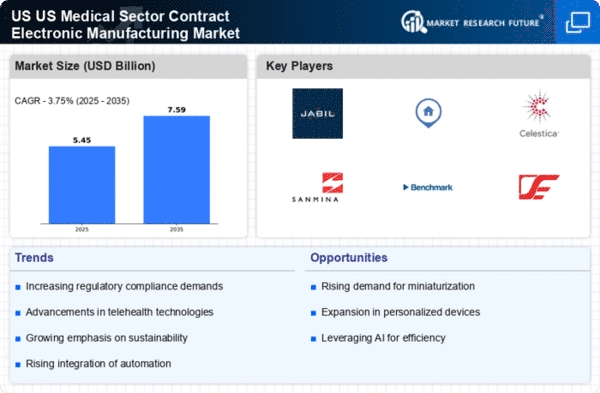
As per analysis, the US Medical Sector Contract Electronic Manufacturing Market is projected to grow from USD 5.45 Billion in 2025 to USD 7.59 Billion by 2035, exhibiting a compound annual growth rate (CAGR) of 3.4% during the forecast period (2025 - 2035).

Key Market Trends & Highlights

The US Medical Sector Contract Electronic Manufacturing Market is poised for growth driven by technological advancements and increasing demand for medical devices.

  • Technological integration is reshaping manufacturing processes, enhancing efficiency and precision in production.
  • The focus on quality and compliance remains paramount, particularly in the diagnostic equipment segment, which is the largest in the market.
  • Sustainability initiatives are gaining traction, reflecting a broader industry commitment to environmentally responsible practices.
  • Rising demand for medical devices and regulatory compliance are key drivers propelling growth in both the diagnostic equipment and home healthcare segments.

Market Size & Forecast

2024 Market Size 5.25 (USD Billion)
2035 Market Size 7.59 (USD Billion)
CAGR (2025 - 2035) 3.4%

Major Players

<p>Jabil (US), Flex (US), Celestica (US), Sanmina (US), Benchmark Electronics (US), Plexus (US), Venture Electronics (US), NexLogic Technologies (US), Kimball Electronics (US)</p>

Market Trends

The US Medical Sector Contract Electronic Manufacturing Market is currently experiencing a dynamic evolution, driven by advancements in technology and increasing demand for medical devices. This market encompasses a wide range of services, including design, assembly, and testing of electronic components specifically tailored for healthcare applications. As the healthcare landscape continues to shift towards more personalized and efficient solutions, contract manufacturers are adapting by integrating innovative technologies such as automation and artificial intelligence into their processes. This adaptation not only enhances production efficiency but also ensures compliance with stringent regulatory standards that govern the medical sector. Moreover, the emphasis on cost-effectiveness and quality assurance is reshaping the competitive landscape of the US Medical Sector Contract Electronic Manufacturing Market. Companies are increasingly focusing on building strategic partnerships with healthcare providers and technology firms to enhance their service offerings. This collaborative approach appears to foster innovation and improve product development timelines, ultimately benefiting patient care. As the market progresses, it is likely that the integration of sustainable practices will also gain traction, reflecting a broader commitment to environmental responsibility within the medical manufacturing sector.

Technological Integration

The US Medical Sector Contract Electronic Manufacturing Market is witnessing a trend towards the integration of advanced technologies. Automation and artificial intelligence are being increasingly adopted to streamline production processes, enhance precision, and reduce operational costs. This shift not only improves efficiency but also aligns with the growing demand for high-quality medical devices that meet rigorous regulatory standards.

Focus on Quality and Compliance

Quality assurance and regulatory compliance are becoming paramount in the US Medical Sector Contract Electronic Manufacturing Market. Manufacturers are prioritizing adherence to strict guidelines set forth by regulatory bodies, ensuring that products meet safety and efficacy standards. This focus on quality is essential for maintaining trust and reliability in medical devices.

Sustainability Initiatives

Sustainability is emerging as a key consideration within the US Medical Sector Contract Electronic Manufacturing Market. Companies are increasingly adopting eco-friendly practices in their manufacturing processes, reflecting a commitment to environmental stewardship. This trend not only addresses regulatory pressures but also resonates with consumers who are becoming more environmentally conscious.

US Medical Sector Contract Electronic Manufacturing Market Market Drivers

Growing Focus on Cost Efficiency

Cost efficiency is becoming a critical driver in the US Medical Sector Contract Electronic Manufacturing Market. As healthcare costs continue to rise, medical device companies are under pressure to reduce expenses while maintaining high-quality standards. Contract manufacturers are responding by optimizing their supply chains and leveraging economies of scale to offer competitive pricing. This trend is evident in the increasing number of partnerships between medical firms and contract manufacturers, as companies seek to streamline operations and focus on core competencies. By outsourcing electronic manufacturing, medical device companies can allocate resources more effectively, ultimately enhancing their market position and profitability.

Rising Demand for Medical Devices

The US Medical Sector Contract Electronic Manufacturing Market is experiencing a notable increase in demand for medical devices. This surge is driven by an aging population and a growing prevalence of chronic diseases, which necessitate advanced medical technologies. According to recent data, the medical device market in the US is projected to reach approximately 208 billion USD by 2026. This growth creates opportunities for contract manufacturers to provide specialized electronic components and assemblies tailored to the needs of medical device companies. As healthcare providers seek innovative solutions, the collaboration between manufacturers and medical firms becomes crucial, thereby enhancing the overall efficiency and effectiveness of healthcare delivery.

Regulatory Compliance and Quality Standards

In the US Medical Sector Contract Electronic Manufacturing Market, adherence to stringent regulatory compliance and quality standards is paramount. The Food and Drug Administration (FDA) imposes rigorous guidelines that manufacturers must follow to ensure the safety and efficacy of medical devices. This regulatory landscape compels contract manufacturers to invest in quality management systems and certifications, such as ISO 13485. As a result, companies that prioritize compliance are likely to gain a competitive edge, attracting clients who value reliability and safety. The emphasis on quality not only enhances product integrity but also fosters trust among healthcare providers and patients, ultimately driving market growth.

Increased Investment in Research and Development

Investment in research and development (R&D) is a significant driver of growth in the US Medical Sector Contract Electronic Manufacturing Market. As medical technology evolves, companies are allocating substantial resources to innovate and develop new products. This trend is reflected in the rising number of patents filed in the medical device sector, indicating a robust pipeline of new technologies. Contract manufacturers play a crucial role in this ecosystem by providing the necessary expertise and resources to bring innovative ideas to fruition. By collaborating with R&D teams, these manufacturers can help accelerate the development process, ensuring that new medical devices meet market needs and regulatory requirements.

Technological Advancements in Manufacturing Processes

Technological advancements are reshaping the US Medical Sector Contract Electronic Manufacturing Market. Innovations such as automation, artificial intelligence, and advanced robotics are streamlining manufacturing processes, leading to increased efficiency and reduced production costs. For instance, the integration of smart manufacturing technologies allows for real-time monitoring and predictive maintenance, minimizing downtime. As manufacturers adopt these technologies, they can respond more swiftly to market demands and enhance product quality. This trend is particularly relevant as the medical device sector increasingly requires rapid prototyping and customization, positioning contract manufacturers as vital partners in the development of next-generation medical solutions.

Market Segment Insights

By Application: Diagnostic Equipment (Largest) vs. Surgical Instruments (Fastest-Growing)

<p>In the US Medical Sector Contract Electronic Manufacturing Market, Diagnostic Equipment commands the largest market share among application segments, primarily due to its critical role in early disease detection and management. This segment includes various tools and technologies that facilitate accurate diagnostics, making them pivotal in healthcare settings. Surgical Instruments, while currently smaller in market share, are the fastest-growing segment driven by advancements in minimally invasive surgical technologies and an increasing number of surgical procedures performed annually.</p>

<p>Diagnostic Equipment (Dominant) vs. Surgical Instruments (Emerging)</p>

<p>Diagnostic Equipment encompasses a broad array of products, such as imaging devices, laboratory analyzers, and point-of-care testing kits, which are integral to patient care and treatment pathways. Its dominant market position reflects the increasing demand for accurate diagnostics in chronic disease management. In contrast, Surgical Instruments, although emerging, are gaining momentum due to innovative designs and materials that enhance surgical efficiency and safety. The rise in outpatient surgeries and specialty procedures is propelling this segment's growth, highlighting its importance in the evolving landscape of medical technology.</p>

By End Use: Hospitals (Largest) vs. Home Healthcare (Fastest-Growing)

<p>In the US Medical Sector Contract Electronic Manufacturing Market, hospitals are the largest segment, commanding significant market share due to their extensive demand for specialized electronic devices and equipment. Clinics also contribute noteworthy shares, but they are comparatively smaller than those of hospitals. Research laboratories have a steady demand for contract manufacturing services, although their overall market presence remains moderate. Home healthcare is emerging rapidly, reflecting a growing need for personalized medical devices and at-home patient monitoring solutions, indicating a shift towards more decentralized healthcare delivery systems.</p>

<p>Hospitals (Dominant) vs. Home Healthcare (Emerging)</p>

<p>Hospitals represent the dominant segment in the US Medical Sector Contract Electronic Manufacturing Market, characterized by their comprehensive infrastructure and substantial procurement needs for high-tech medical devices. They typically engage with contract manufacturers for sophisticated equipment like surgical robots and imaging systems. On the other hand, the home healthcare segment is emerging due to a significant increase in home-based care for chronic illnesses and the aging population. This segment demands more compact, user-friendly devices that enable effective remote monitoring and management of health conditions, driving innovation and adaptability among manufacturers. Both segments highlight the diversity in the medical electronics landscape, catering to distinct needs.</p>

By Product Type: Printed Circuit Boards (Largest) vs. Electromechanical Assemblies (Fastest-Growing)

<p>In the US Medical Sector Contract Electronic Manufacturing Market, Printed Circuit Boards (PCBs) hold the largest market share, driven by their critical role in medical devices and equipment. Their ability to efficiently connect electronic components makes them indispensable for a range of applications, from monitoring devices to therapeutic equipment. In contrast, Electromechanical Assemblies are witnessing rapid growth due to increasing demand for equipment that integrates both electrical and mechanical functions. This growth is fueled by advancements in technology and the need for more compact and efficient medical devices.</p>

<p>Assembly: Printed Circuit Boards (Dominant) vs. Electromechanical Assemblies (Emerging)</p>

<p>Printed Circuit Boards (PCBs) are the dominant product type in the US medical sector, vital for the functionality of various devices. They provide essential interconnectivity within electronic systems, especially in critical applications like diagnostic imaging and patient monitoring systems. As the backbone of modern medical technology, they offer reliability and efficiency. Electromechanical Assemblies, on the other hand, are emerging rapidly, integrating mechanical components with electronic systems. This trend is driven by the industry's shift towards more integrated solutions that combine various functionalities into single units, optimizing device performance and utilization.</p>

By Manufacturing Process: Surface Mount Technology (Largest) vs. Hybrid Manufacturing (Fastest-Growing)

<p>In the US Medical Sector Contract Electronic Manufacturing Market, Surface Mount Technology (SMT) holds the largest share, dominating much of the manufacturing landscape. This method's efficiency and ability to accommodate high component density contributes significantly to its market presence. In contrast, Hybrid Manufacturing is rapidly gaining traction, characterized by its flexibility to combine different assembly techniques, appealing to manufacturers seeking versatile production solutions. As the medical sector increasingly demands innovative designs and rapid turnaround times, the growth of Hybrid Manufacturing is driven by the need for customization and responsiveness to market changes. This process is becoming essential for developing complex medical devices and equipment, pushing it to the forefront of manufacturing strategies within the industry, and reflecting an overall trend towards more integrated manufacturing approaches.</p>

<p>Manufacturing Process: Surface Mount Technology (Dominant) vs. Box Build Assembly (Emerging)</p>

<p>Surface Mount Technology (SMT) is recognized as the dominant force in the manufacturing process of the US Medical Sector, providing precision and high-speed capabilities that cater to the increasing complexity of medical devices. It allows for smaller and lighter products, which are crucial in the medical field. On the other hand, Box Build Assembly is emerging as a vital component in the market, providing value-added services like integration and packaging in one consolidated solution. This assembly process is crucial for companies looking to streamline production and ensure compliance with medical regulations, making it an attractive option for manufacturers looking to enhance operational efficiency.</p>

By Regulatory Compliance: FDA Compliance (Largest) vs. ISO Certification (Fastest-Growing)

<p>The Regulatory Compliance segment in the US Medical Sector Contract Electronic Manufacturing Market exhibits varied market share distribution, with FDA Compliance leading the sector significantly. This segment has established itself as crucial, considering the stringent regulations imposed on medical device manufacturers. Conversely, ISO Certification is experiencing rapid growth, driven by a global emphasis on quality assurance and standardization. As manufacturers seek to establish credibility and reliability, the market is witnessing an increasing shift toward obtaining ISO certifications. Growth trends in this segment are influenced by the rising need for compliance in the medical sector, coupled with technological advancements. FDA Compliance remains dominant due to regulatory mandates, whereas ISO Certification is gaining traction among companies aiming to differentiate themselves in a competitive marketplace. Additionally, regulatory bodies continue to enhance their frameworks, pushing manufacturers to adapt and comply with evolving standards, which in turn propels the growth of certification services.</p>

<p>FDA Compliance (Dominant) vs. IEC Standards (Emerging)</p>

<p>FDA Compliance is the cornerstone of regulatory adherence within the US Medical Sector Contract Electronic Manufacturing Market, ensuring that products meet the necessary safety and efficacy requirements dictated by the Food and Drug Administration. This segment's dominant position is reinforced through rigorous inspections and approval processes. On the other hand, IEC Standards are emerging as a critical compliance framework, focusing on electrical safety and performance benchmarks. While IEC compliance is becoming increasingly important, particularly for electronic components in medical devices, it is still catching up with FDA standards in terms of market adoption. The dual presence of these compliance mandates ensures that manufacturers not only adhere to safety norms but also enhance product reliability and market acceptability.</p>

Get more detailed insights about U.S. Medical Sector Contract Electronic Manufacturing Market Research Report- Forecast to 2035

Regional Insights

Key Players and Competitive Insights

The Medical Sector Contract Electronic Manufacturing Market in the US is characterized by a competitive landscape that is increasingly shaped by innovation, strategic partnerships, and a focus on operational efficiency. Key players such as Jabil (US), Flex (US), and Sanmina (US) are at the forefront, leveraging their extensive capabilities to meet the growing demand for advanced medical devices and equipment. Jabil (US) has positioned itself as a leader in digital transformation, emphasizing the integration of smart manufacturing technologies to enhance production efficiency and product quality. Meanwhile, Flex (US) has adopted a strategy centered on sustainability, aiming to reduce its carbon footprint while expanding its service offerings in the medical sector. Sanmina (US) focuses on vertical integration, which allows for greater control over the supply chain and improved responsiveness to customer needs. Collectively, these strategies contribute to a dynamic competitive environment where innovation and operational excellence are paramount.

In terms of business tactics, companies are increasingly localizing manufacturing to mitigate supply chain disruptions and enhance responsiveness to market demands. This trend is particularly evident in the context of a moderately fragmented market structure, where the influence of key players is significant but not overwhelming. The collective actions of these companies indicate a shift towards optimizing supply chains and enhancing operational capabilities, which is essential for maintaining competitiveness in a rapidly evolving landscape.

In December 2025, Jabil (US) announced a strategic partnership with a leading medical device manufacturer to co-develop next-generation diagnostic equipment. This collaboration is expected to leverage Jabil's advanced manufacturing capabilities and the partner's expertise in medical technology, potentially leading to innovative solutions that address unmet clinical needs. The strategic importance of this partnership lies in its potential to accelerate product development cycles and enhance market entry for new technologies.

In November 2025, Flex (US) unveiled its new sustainability initiative aimed at achieving carbon neutrality by 2030. This initiative includes investments in renewable energy sources and the implementation of circular economy principles in its manufacturing processes. The strategic significance of this move is twofold: it not only positions Flex as a responsible corporate citizen but also aligns with the increasing demand from consumers and regulators for environmentally sustainable practices in the medical sector.

In October 2025, Sanmina (US) expanded its manufacturing footprint by opening a new facility dedicated to the production of advanced medical devices in Texas. This expansion is strategically important as it enhances Sanmina's capacity to serve its growing customer base while also creating local jobs. The facility is expected to incorporate state-of-the-art technologies, further solidifying Sanmina's position as a key player in the market.

As of January 2026, current competitive trends in the Medical Sector Contract Electronic Manufacturing Market are heavily influenced by digitalization, sustainability, and the integration of artificial intelligence (AI) into manufacturing processes. Strategic alliances are increasingly shaping the landscape, enabling companies to pool resources and expertise to drive innovation. Looking ahead, competitive differentiation is likely to evolve from traditional price-based competition to a focus on technological advancement, supply chain reliability, and sustainable practices. This shift underscores the importance of innovation and operational excellence as critical drivers of success in the market.

Key Companies in the US Medical Sector Contract Electronic Manufacturing Market include

Industry Developments

Future Outlook

US Medical Sector Contract Electronic Manufacturing Market Future Outlook

The US Medical Sector Contract Electronic Manufacturing Market is projected to grow at a 3.4% CAGR from 2025 to 2035, driven by technological advancements and increasing demand for medical devices.

New opportunities lie in:

  • Integration of AI-driven quality control systems
  • Expansion into telehealth device manufacturing
  • Development of customized electronic components for wearable health tech

By 2035, the market is expected to be robust, reflecting sustained growth and innovation.

Market Segmentation

US Medical Sector Contract Electronic Manufacturing Market End Use Outlook

  • Hospitals
  • Clinics
  • Research Laboratories
  • Home Healthcare

US Medical Sector Contract Electronic Manufacturing Market Application Outlook

  • Diagnostic Equipment
  • Therapeutic Equipment
  • Monitoring Devices
  • Surgical Instruments

US Medical Sector Contract Electronic Manufacturing Market Product Type Outlook

  • Printed Circuit Boards
  • Electromechanical Assemblies
  • Cable Assemblies
  • Custom Electronic Components

US Medical Sector Contract Electronic Manufacturing Market Manufacturing Process Outlook

  • Surface Mount Technology
  • Through-Hole Technology
  • Hybrid Manufacturing
  • Box Build Assembly

US Medical Sector Contract Electronic Manufacturing Market Regulatory Compliance Outlook

  • FDA Compliance
  • ISO Certification
  • IEC Standards
  • RoHS Compliance

Report Scope

MARKET SIZE 20245.25(USD Billion)
MARKET SIZE 20255.45(USD Billion)
MARKET SIZE 20357.59(USD Billion)
COMPOUND ANNUAL GROWTH RATE (CAGR)3.4% (2024 - 2035)
REPORT COVERAGERevenue Forecast, Competitive Landscape, Growth Factors, and Trends
BASE YEAR2024
Market Forecast Period2025 - 2035
Historical Data2019 - 2024
Market Forecast UnitsUSD Billion
Key Companies ProfiledJabil (US), Flex (US), Celestica (US), Sanmina (US), Benchmark Electronics (US), Plexus (US), Venture Electronics (US), NexLogic Technologies (US), Kimball Electronics (US)
Segments CoveredApplication, End Use, Product Type, Manufacturing Process, Regulatory Compliance
Key Market OpportunitiesIntegration of advanced automation technologies enhances efficiency in the US Medical Sector Contract Electronic Manufacturing Market.
Key Market DynamicsRising demand for advanced medical devices drives innovation in the US Medical Sector Contract Electronic Manufacturing Market.
Countries CoveredUS

FAQs

  1. Report Prologue
  2. Introduction
    1. Scope Of Study 12
    2. Research Objective 12
    3. Assumptions & Limitations 12
      1. Assumptions 12
      2. Limitations 12
    4. Market Structure 13
  3. Research Methodology
    1. Primary Research 15
    2. Secondary Research 15
  4. Market Dynamics
    1. Introduction 16
    2. Drivers 17
      1. Technological Advancements 17
      2. Product Development 17
      3. Economics Of Production And Trade 17
      4. Economies Of Scale 18
      5. Focus On Core Competencies 18
      6. Mutual Benefit To Both Contract Manufacturer And Client 18
      7. Poor Growth Of Other Electronic Subsectors Particularly Defence Electronic Manufacturing Sector And Higher Growth Of Medical Electronics Manufacturing Sector 18
      8. Consolidation Of Healthcare Providers And Rising Number Of Large Multi-Speciality Hospitals 19
      9. Growing Cost Of Noncompliance 19
    3. Restraints 20
      1. High Cost Of Labour 20
      2. Structural Changes In Industry And Employment 20
      3. Standardization And Interoperability 20
      4. Taxes 20
      5. Exchange Rate Volatility 21
      6. Flight Of Manufacturing To Developing Regions 21
    4. Opportunities 22
      1. Research And Development 22
      2. Personalization And Customization 22
      3. Proximity To Ecology Of Innovation And Development 22
      4. Automation And Robotics 22
    5. Challenges 23
      1. Growing International Competition And Diplomacy 23
      2. Internal Government Policies And Regulations 23
      3. Supply Chain Complexity And Control Of 3rd Parties 23
      4. Growth In Exposure To Natural And Man-Made Threats 24
      5. Longer Commercialization Times 24
      6. Lean Manufacturing And Agility 24
    6. Macroeconomic Indicators 25
      1. Electronics Manufacturing Services (EMS) Has Good Growth Despite Poor Performance By Electronics Manufacturing As A Whole 25
      2. Growth Of Design Services In U.S. Medical Sector Contract Electronics Manufacturing 25
      3. Growth Of Testing Services 25
      4. Micro Logistics 26
      5. Growing Opportunity In Used And Upgrading Of Medical Sector Electronics 26
    7. Mega Trends In Medical Sector Electronics Manufacturing 27
      1. Smart And Connected Electronic Products 27
      2. Green Electronics Manufacturing 27
      3. Energy-Efficient Electronics 27
      4. 2-D Electronics 27
      5. 3D Printing 28
      6. Organic Electronics, Nanotechnology And Molecular Electronics 28
  5. Market Factor Analysis
    1. Porter’s Five Force Analysis 29
      1. Threat From A New Entrant 30
      2. Bargaining Power Of Buyer 31
      3. Bargaining Power Of Supplier 32
      4. Threat From Substitute 33
      5. Intensity Of Competitive Rivalry 33
    2. Supply Chain Analysis 34
      1. Raw Material 34
      2. Supplier 35
      3. Manufacturer 36
      4. Distributer 36
      5. Customer 37
      6. Consumer 37
      7. Changes In The Supply Chain Of U.S. Medical Sector Electronics Manufacturing Industry 38
    3. Merger And Acquisition Landscape 39
    4. Product Pricing Analysis 41
    5. Investment Opportunity Analysis 42
      1. Market Size (Current And Future), Growth Rate And Profitability 42
      2. Investment Risks 42
      3. Market Outlook 43
      4. Competitors 43
      5. Projections 44
    6. Pestle Analysis 45
      1. Political 45
      2. Economic 46
      3. Social 46
      4. Technological 46
      5. Legal 47
      6. Environmental 48
    7. Public Private Market Share 49
    8. Reimbursement Scenario 49
    9. Medical Sector Electronics Import-Exports 51
  6. U.S. US Medical Sector Contract Electronic Manufacturing Market, By Industry Subsectors
    1. Introduction 53
    2. Surgical Appliances And Medical Instruments 55
    3. Electro-Medical Apparatus 56
    4. Diagnostics 57
    5. Irradiation Apparatuses 58
    6. Dental Equipment And Supplies 59
  7. U.S. US Medical Sector Contract Electronic Manufacturing Market, By Contract Service Type
    1. Introduction 60
    2. Electronic Manufacturing Services 62
    3. Original Design Manufacturing Services 63
  8. U.S. US Medical Sector Contract Electronic Manufacturing Market, By End User
    1. Introduction 64
    2. Hospitals & Clinics 66
    3. Diagnostic Centers 67
    4. Academic & Research Institutes 68
  9. U.S. US Medical Sector Contract Electronic Manufacturing Market, By Region
    1. Introduction 69
    2. South 71
  10. U.S. US Medical Sector Contract Electronic Manufacturing Market, By Industry Subsectors
  11. U.S. US Medical Sector Contract Electronic Manufacturing Market, By Contract Service Type
  12. U.S. US Medical Sector Contract Electronic Manufacturing Market, By End User
    1. Northeast 73
  13. U.S. US Medical Sector Contract Electronic Manufacturing Market, By Industry Subsectors
  14. U.S. US Medical Sector Contract Electronic Manufacturing Market, By Contract Service Type
  15. U.S. US Medical Sector Contract Electronic Manufacturing Market, By End User
    1. Midwest 75
  16. U.S. US Medical Sector Contract Electronic Manufacturing Market, By Industry Subsectors
  17. U.S. US Medical Sector Contract Electronic Manufacturing Market, By Contract Service Type
  18. U.S. US Medical Sector Contract Electronic Manufacturing Market, By End User
    1. West 77
  19. U.S. US Medical Sector Contract Electronic Manufacturing Market, By Industry Subsectors
  20. U.S. US Medical Sector Contract Electronic Manufacturing Market, By Contract Service Type
  21. U.S. US Medical Sector Contract Electronic Manufacturing Market, By End User
  22. Company Profile
    1. Benchmark Electronics, Inc. 79
      1. Company Overview 79
      2. Product/Business Segment Overview 79
      3. Financial Overview 80
      4. Key Development 81
      5. SWOT Analysis 82
    2. FLEX LTD. 83
      1. Company Overview 83
      2. Product/Business Segment Overview 83
      3. Financial Overview 84
      4. Key Development 85
      5. SWOT Analysis 86
    3. Celestica Inc. 87
      1. Company Overview 87
      2. Product/Business Segment Overview 87
      3. Financial Overview 88
      4. Key Development 89
      5. SWOT Analysis 89
    4. Jabil Circuit Inc. 90
      1. Company Overview 90
      2. Product/Business Segment Overview 90
      3. Financial Overview 91
      4. Key Development 92
      5. SWOT Analysis 92
    5. Sanmina Corporation. 93
      1. Company Overview 93
      2. Product/Business Segment Overview 93
      3. Financial Overview 94
      4. Key Development 95
      5. SWOT Analysis 96
    6. Nortech Systems, Inc. 97
      1. Company Overview 97
      2. Product/Business Segment Overview 97
      3. Financial Overview 98
      4. Key Development 99
      5. SWOT Analysis 99
    7. TE Connectivity Corporation. 100
      1. Company Overview 100
      2. Product/Business Segment Overview 100
      3. Financial Overview 101
      4. Key Development 102
      5. SWOT Analysis 103
    8. Forefront Medical Technologies. 104
      1. Company Overview 104
      2. Product/Business Segment Overview 104
      3. Financial Overview 104
      4. Key Development 104
      5. SWOT Analysis 105
  23. MRFR Conclusion
    1. Key Findings 106
      1. From CEO’s View Point 106
      2. Unmet Needs 106
      3. Key Companies To Watch 106
  24. List Of Tables
  25. U.S. US Medical Sector Contract Electronic Manufacturing Market, BY INDUSTRY SUBSECTORS, 2020-2027 (USD MILLION) 54
  26. U.S. US Medical Sector Contract Electronic Manufacturing Market, BY REGION 2020-2027 (USD MILLION) 55
  27. U.S. US Medical Sector Contract Electronic Manufacturing Market, BY REGION 2020-2027 (USD MILLION) 56
  28. U.S. US Medical Sector Contract Electronic Manufacturing Market, BY REGION 2020-2027 (USD MILLION) 57
  29. U.S. US Medical Sector Contract Electronic Manufacturing Market, BY REGION 2020-2027 (USD MILLION) 58
  30. U.S. US Medical Sector Contract Electronic Manufacturing Market, BY REGION 2020-2027 (USD MILLION) 59
  31. U.S. US Medical Sector Contract Electronic Manufacturing Market, BY CONTRACT SERVICE TYPE, 2020-2027 (USD MILLION) 61
  32. U.S. US Medical Sector Contract Electronic Manufacturing Market, BY REGION 2020-2027 (USD MILLION) 62
  33. U.S. US Medical Sector Contract Electronic Manufacturing Market, BY REGION 2020-2027 (USD MILLION) 63
  34. U.S. US Medical Sector Contract Electronic Manufacturing Market, BY END USER, 2020-2027 (USD MILLION) 65
  35. U.S. HOSPITALS & US Medical Sector Contract Electronic Manufacturing Market, BY REGION 2020-2027 (USD MILLION) 66
  36. U.S. US Medical Sector Contract Electronic Manufacturing Market, BY REGION 2020-2027 (USD MILLION) 67
  37. U.S. ACADEMIC & US Medical Sector Contract Electronic Manufacturing Market, BY REGION 2020-2027 (USD MILLION) 68
  38. U.S. US Medical Sector Contract Electronic Manufacturing Market, BY REGION, 2020-2027 (USD MILLION) 70
  39. SOUTH U.S. US Medical Sector Contract Electronic Manufacturing Market, BY INDUSTRY SUBSECTORS, 2020-2027 (USD MILLION) 71
  40. SOUTH U.S. US Medical Sector Contract Electronic Manufacturing Market, BY CONTRACT SERVICE TYPE, 2020-2027 (USD MILLION) 71
  41. SOUTH U.S. US Medical Sector Contract Electronic Manufacturing Market, BY END USER, 2020-2027 (USD MILLION) 72
  42. NORTHEAST U.S. US Medical Sector Contract Electronic Manufacturing Market, BY INDUSTRY SUBSECTORS, 2020-2027 (USD MILLION) 73
  43. NORTHEAST U.S. US Medical Sector Contract Electronic Manufacturing Market, BY CONTRACT SERVICE TYPE, 2020-2027 (USD MILLION) 73
  44. NORTHEAST U.S. US Medical Sector Contract Electronic Manufacturing Market, BY END USER, 2020-2027 (USD MILLION) 74
  45. MIDWEST U.S. US Medical Sector Contract Electronic Manufacturing Market, BY INDUSTRY SUBSECTORS, 2020-2027 (USD MILLION) 75
  46. MIDWEST U.S. US Medical Sector Contract Electronic Manufacturing Market, BY CONTRACT SERVICE TYPE, 2020-2027 (USD MILLION) 75
  47. MIDWEST U.S. US Medical Sector Contract Electronic Manufacturing Market, BY END USER, 2020-2027 (USD MILLION) 76
  48. WEST U.S. US Medical Sector Contract Electronic Manufacturing Market, BY INDUSTRY SUBSECTORS, 2020-2027 (USD MILLION) 77
  49. WEST U.S. US Medical Sector Contract Electronic Manufacturing Market, BY CONTRACT SERVICE TYPE, 2020-2027 (USD MILLION) 77
  50. WEST U.S. US Medical Sector Contract Electronic Manufacturing Market, BY END USER, 2020-2027 (USD MILLION) 78
  51. BENCHMARK ELECTRONICS, INC.: KEY DEVELOPMENT 81
  52. FLEX LTD.: KEY DEVELOPMENT 85
  53. SANMINA CORPORATION.: KEY DEVELOPMENT 95
  54. NORTECH SYSTEMS, INC.: KEY DEVELOPMENT 99
  55. TE CONNECTIVITY CORPORATION.: KEY DEVELOPMENT 102
  56. List Of Figures
  57. U.S. MEDICAL SECTOR CONTRACT ELECTRONIC MANUFACTURING MARKET: MARKET STRUCTURE 13
  58. RESEARCH PROCESS 14
  59. DRIVERS & RESTRAINTS IMPACT ANALYSIS OF U.S. MEDICAL SECTOR CONTRACT ELECTRONIC MANUFACTURING MARKET 16
  60. U.S. MEDICAL SECTOR CONTRACT ELECTRONIC MANUFACTURING MARKET: PORTER FIVE FORCES ANALYSIS 30
  61. PUBLIC PRIVATE MARKET SHARE 49
  62. U.S. US Medical Sector Contract Electronic Manufacturing Market, BY INDUSTRY SUBSECTORS, (2020) 54
  63. U.S. US Medical Sector Contract Electronic Manufacturing Market, BY CONTRACT SERVICE TYPE, (2020) 60
  64. U.S. US Medical Sector Contract Electronic Manufacturing Market, BY END USER (2020) 64
  65. U.S. US Medical Sector Contract Electronic Manufacturing Market, BY REGION (2020) 70
  66. BENCHMARK ELECTRONICS, INC.: KEY FINANCIALS 80
  67. ABENCHMARK ELECTRONICS, INC.: SEGMENTAL REVENUE 80
  68. BENCHMARK ELECTRONICS, INC.: GEOGRAPHIC REVENUE 81
  69. FLEX LTD.: KEY FINANCIALS 84
  70. FLEX LTD.: SEGMENTAL REVENUE 84
  71. FLEX LTD.: GEOGRAPHIC REVENUE 85
  72. CELESTICA INC.: KEY FINANCIALS 88
  73. CELESTICA INC.: SEGMENTAL REVENUE 88
  74. CELESTICA INC.: GEOGRAPHIC REVENUE (MANUFACTURING LOCATION) 89
  75. JABIL CIRCUIT INC.: KEY FINANCIALS 91
  76. JABIL CIRCUIT INC.: SEGMENTAL REVENUE 91
  77. JABIL CIRCUIT INC.: GEOGRAPHIC REVENUE 92
  78. SANMINA CORPORATION.: KEY FINANCIALS 94
  79. SANMINA CORPORATION.: SEGMENTAL REVENUE 94
  80. SANMINA CORPORATION.: GEOGRAPHIC REVENUE 95
  81. NORTECH SYSTEMS, INC.: KEY FINANCIALS 98
  82. NORTECH SYSTEMS, INC.: SEGMENTAL REVENUE 98
  83. TE CONNECTIVITY CORPORATION.: KEY FINANCIALS 101
  84. TE CONNECTIVITY CORPORATION.: SEGMENTAL REVENUE 101
  85. TE CONNECTIVITY CORPORATION.: GEOGRAPHIC REVENUE 102

U.S. Medical Sector Contract Electronic Manufacturing Market Segmentation

Market Segmentation Overview

  • Detailed segmentation data will be available in the full report
  • Comprehensive analysis by multiple parameters
  • Regional and country-level breakdowns
  • Market size forecasts by segment
Infographic

Free Sample Request

Kindly complete the form below to receive a free sample of this Report

Get Free Sample

Customer Strories

Compare Licence

×
Features License Type
Single User Multiuser License Enterprise User
Price $4,950 $5,950 $7,250
Maximum User Access Limit 1 User Upto 10 Users Unrestricted Access Throughout the Organization
Free Customization
Direct Access to Analyst
Deliverable Format
Platform Access
Discount on Next Purchase 10% 15% 15%
Printable Versions