×
Request Free Sample ×

Kindly complete the form below to receive a free sample of this Report

* Please use a valid business email

Leading companies partner with us for data-driven Insights

clients tt-cursor
Hero Background

US GRP Pipes Market

ID: MRFR/PCM/18961-HCR
111 Pages
Snehal Singh
February 2026

US GRP Pipes Market Research Report: By Resin Type (Epoxy, Polyester, Vinyl Ester) and By End-User Type (Oil and Gas, Chemicals, Wastewater Treatment, Irrigation, Other) - Forecast to 2035

Share:
Download PDF ×

We do not share your information with anyone. However, we may send you emails based on your report interest from time to time. You may contact us at any time to opt-out.

US GRP Pipes Market Infographic
Purchase Options

US GRP Pipes Market Summary

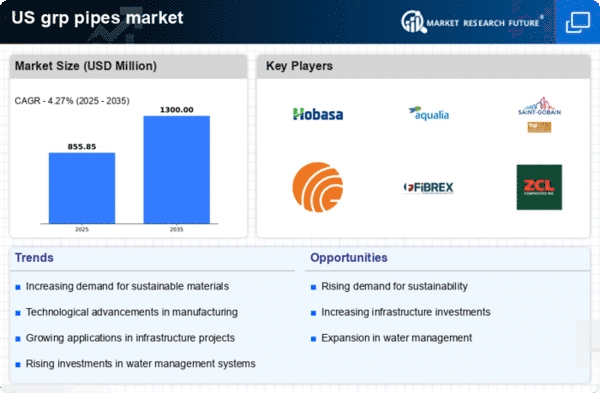
As per Market Research Future analysis, the US GRP Pipes Market size was estimated at 820.8 USD Million in 2024. The Grp Pipes market is projected to grow from 855.85 USD Million in 2025 to 1300.0 USD Million by 2035, exhibiting a compound annual growth rate (CAGR) of 4.2% during the forecast period 2025 - 2035

Key Market Trends & Highlights

The US GRP pipes market is experiencing a robust growth trajectory driven by sustainability and technological advancements.

  • Sustainability initiatives are increasingly shaping the US GRP pipes market, reflecting a broader commitment to environmental responsibility.
  • Technological advancements in manufacturing processes are enhancing the performance and durability of GRP pipes, making them more appealing to various industries.
  • Infrastructure development remains a critical focus, with significant investments aimed at upgrading aging water systems and expanding utility networks.
  • The growing demand for water infrastructure and increased focus on environmental regulations are key drivers propelling the market forward.

Market Size & Forecast

2024 Market Size 820.8 (USD Million)
2035 Market Size 1300.0 (USD Million)
CAGR (2025 - 2035) 4.27%

Major Players

Hobas (CH), Aqualia (ES), Saint-Gobain (FR), Enduro Composites (US), Fibrex (US), ZCL Composites (CA), Sika (CH), Pultrall (NL), KWH Pipe (FI)

Our Impact
Enabled $4.3B Revenue Impact for Fortune 500 and Leading Multinationals
Partnering with 2000+ Global Organizations Each Year
30K+ Citations by Top-Tier Firms in the Industry

US GRP Pipes Market Trends

The US GRP Pipes Market is currently experiencing a notable transformation, driven by increasing demand for lightweight and corrosion-resistant materials across various sectors. Industries such as construction, water management, and oil and gas are increasingly adopting grp pipes due to their durability and cost-effectiveness. This shift is further supported by advancements in manufacturing technologies, which enhance the performance characteristics of grp pipes. As environmental concerns gain prominence, the market is also witnessing a rise in the use of sustainable materials, aligning with regulatory frameworks aimed at reducing carbon footprints. In addition, the grp pipes market is likely to benefit from ongoing infrastructure projects and investments in water supply systems. The emphasis on upgrading aging infrastructure in urban areas presents opportunities for grp pipes, which offer superior performance compared to traditional materials. Furthermore, the growing trend of using grp pipes in renewable energy applications, such as wind and solar energy, indicates a diversification of their usage. Overall, the grp pipes market appears poised for growth, driven by innovation and a shift towards more sustainable practices.

Sustainability Initiatives

The grp pipes market is increasingly influenced by sustainability initiatives, as industries seek to minimize environmental impact. The adoption of eco-friendly materials and manufacturing processes is becoming a priority, aligning with regulatory requirements and consumer preferences for greener solutions.

Technological Advancements

Technological advancements in the production of grp pipes are enhancing their performance and application range. Innovations in resin formulations and manufacturing techniques are leading to improved durability, resistance to chemicals, and overall efficiency, making them more appealing to various sectors.

Infrastructure Development

Ongoing infrastructure development projects are significantly impacting the grp pipes market. As urban areas focus on modernizing water supply and drainage systems, the demand for reliable and efficient piping solutions is expected to rise, positioning grp pipes as a preferred choice.

US GRP Pipes Market Drivers

Rising Construction Activities

The grp pipes market is benefiting from a surge in construction activities across various sectors, including residential, commercial, and industrial. The US construction industry is projected to grow at a CAGR of approximately 4.5% through 2025, which is likely to drive demand for grp pipes. These pipes are increasingly favored for their lightweight nature, ease of installation, and resistance to corrosion, making them ideal for a variety of applications. The grp pipes market is poised to capitalize on this trend as builders and contractors seek efficient and reliable materials to meet project timelines and budgets. Furthermore, the ongoing urbanization and population growth in metropolitan areas are expected to further fuel the demand for grp pipes, as infrastructure development becomes a priority.

Growing Demand for Water Infrastructure

The grp pipes market is experiencing a notable increase in demand driven by the urgent need for improved water infrastructure across the United States. Aging water systems require replacement and upgrades, which presents a significant opportunity for grp pipes, known for their durability and corrosion resistance. According to recent estimates, the US water infrastructure market is projected to reach approximately $1 trillion by 2025, with grp pipes playing a crucial role in this transformation. The grp pipes market is well-positioned to benefit from government initiatives aimed at enhancing water quality and accessibility, as well as addressing the challenges posed by climate change. As municipalities seek cost-effective and long-lasting solutions, the adoption of grp pipes is likely to rise, further solidifying their importance in the water infrastructure sector.

Investment in Renewable Energy Projects

The grp pipes market is increasingly influenced by the growing investment in renewable energy projects across the United States. As the country shifts towards sustainable energy sources, the demand for grp pipes in applications such as wind and solar energy infrastructure is on the rise. These pipes are utilized in various capacities, including water management systems for cooling and irrigation in solar farms. The grp pipes market is likely to see substantial growth as energy companies seek reliable and efficient materials to support their projects. With the renewable energy sector projected to grow significantly, the grp pipes market stands to gain from the associated infrastructure developments, further solidifying its role in the transition to a greener economy.

Technological Innovations in Manufacturing

The grp pipes market is witnessing advancements in manufacturing technologies that enhance the performance and application of grp pipes. Innovations such as automated production processes and improved resin formulations are contributing to the efficiency and quality of grp pipes. The grp pipes market is likely to benefit from these technological developments, which not only reduce production costs but also improve the overall durability and lifespan of the pipes. As manufacturers adopt these new technologies, they can offer more competitive pricing and better products to consumers. This trend is expected to attract a broader customer base, including industries that require specialized piping solutions, thereby expanding the market reach of grp pipes.

Increased Focus on Environmental Regulations

The grp pipes market is significantly influenced by the tightening of environmental regulations in the United States. As regulatory bodies impose stricter standards on materials used in construction and infrastructure projects, grp pipes emerge as a favorable option due to their low environmental impact and recyclability. The grp pipes market is likely to see growth as companies and municipalities strive to comply with these regulations while also seeking sustainable solutions. The Environmental Protection Agency (EPA) has been actively promoting the use of materials that minimize ecological footprints, which aligns with the properties of grp pipes. This regulatory landscape not only encourages the adoption of grp pipes but also fosters innovation within the industry, as manufacturers develop new formulations and applications to meet evolving standards.


Market Segment Insights

By Type: Pultruded GRP Pipes (Largest) vs. Filament Wound GRP Pipes (Fastest-Growing)

In the US grp pipes market, Pultruded GRP Pipes hold the largest market share, reflecting their widespread applicability across various industries. Following closely, Filament Wound GRP Pipes are recognized for their increasing adoption, particularly in large-scale projects, thereby enhancing their market presence. Recent trends indicate a robust growth trajectory for Filament Wound GRP Pipes as industries seek lightweight, corrosion-resistant materials for demanding applications. The shift towards sustainable and efficient infrastructure is further propelling the adoption of Pultruded GRP Pipes, while innovations in manufacturing processes contribute to the enhanced performance of these products, securing their position in a competitive landscape.

Pultruded GRP Pipes (Dominant) vs. Filament Wound GRP Pipes (Emerging)

Pultruded GRP Pipes are established as the dominant segment in the US grp pipes market due to their robust mechanical properties and versatility, making them suitable for a broad range of applications. Their resistance to corrosion and low weight adds to their appeal, contributing to their leading market share. On the other hand, Filament Wound GRP Pipes, while emerging, are rapidly gaining traction due to their superior strength-to-weight ratio and adaptability for customized solutions in specific industrial applications. The increasing need for durable piping solutions in sectors such as water treatment and construction is driving their growth as manufacturers innovate and optimize production techniques.

By Manufacturing Process: Pultrusion (Largest) vs. Filament Winding (Fastest-Growing)

The manufacturing process segment of the US grp pipes market showcases distinct leaders among its values. Pultrusion has emerged as the largest manufacturing process segment, commanding a significant share, attributed to its efficiency in producing strong and lightweight pipes. Following this, filament winding is rapidly gaining traction, appealing to manufacturers for its suitability in creating high-performance, corrosion-resistant products that meet growing specifications in various applications. The landscape of manufacturing processes is evolving, with filament winding seen as the fastest-growing method. Key drivers of growth include rising demand for customized and resilient piping solutions. Additionally, advancements in technology and materials enhancement are propelling manufacturers to favor methods that allow for better design flexibility and improved product performance, further solidifying the position of these manufacturing techniques within the US grp pipes market.

Pultrusion (Dominant) vs. Hand Lay-up (Emerging)

Pultrusion stands out as the dominant force in the manufacturing processes for grp pipes, characterized by its ability to produce continuous lengths of composite materials with remarkable consistency and strength. This method is highly regarded for creating customized profiles and is increasingly preferred in infrastructure projects. On the other hand, hand lay-up, while considered an emerging technique, offers significant advantages in crafting complex shapes and sizes, completing projects with lower initial investments. However, it is labor-intensive and thus, while gaining popularity, it faces challenges in scalability and efficiency. The combination of both methods illustrates the diverse strategies manufacturers are leveraging to meet the growing demands of the US grp pipes market.

By Diameter Size: Medium Diameter (Largest) vs. Small Diameter (Fastest-Growing)

In the diameter size segment of the US grp pipes market, medium diameter pipes (200-800 mm) hold the largest share, significantly impacting market dynamics due to their extensive applications in various industries. Small diameter pipes (up to 200 mm), while having a smaller market share, are gaining traction as they cater to specific needs in residential and light commercial applications, especially in plumbing and electrical conduits. The growth trends in this segment are driven by several factors, including the increasing demand for infrastructure development and urbanization. Medium diameter pipes are widely utilized in municipal services and industrial sectors, ensuring steady demand. On the other hand, small diameter pipes are seeing rapid growth owing to advancements in construction technologies and rising preferences for energy-efficient solutions, marking them as the emerging choice in the market.

Medium Diameter (Dominant) vs. Small Diameter (Emerging)

Medium diameter pipes (200-800 mm) are considered the dominant players in the US grp pipes market due to their versatility and application across varied sectors, including water supply, wastewater management, and industrial services. Their robust construction allows them to withstand high-pressure conditions, making them ideal for municipal and industrial uses. Conversely, small diameter pipes (up to 200 mm) are the emerging segment, meeting the rising demand for lightweight and flexible piping solutions suited for residential plumbing and electrical applications. This segment's growth is supported by the drive for efficient, cost-effective, and sustainable piping systems, appealing to both consumer and contractor preferences.

By Pressure Rating: Medium Pressure (Largest) vs. High Pressure (Fastest-Growing)

In the US grp pipes market, the pressure rating segment is characterized by three primary categories: low pressure, medium pressure, and high pressure. Among these, medium pressure pipes (10-25 bar) hold the largest share, dominating the market due to their versatile applications in various industries. Meanwhile, high pressure pipes (above 25 bar) are emerging rapidly, attractive to sectors requiring robust solutions for demanding environments. Growth trends in the US grp pipes market indicate a significant shift towards high pressure applications driven by increased industrialization and the need for durable piping solutions. Rising construction activities and infrastructure development are fueling demand across the market, with high pressure pipes benefiting the most. As industries look for reliability and efficiency, medium pressure systems remain essential, but high pressure solutions are quickly gaining traction as the preferred choice.

Medium Pressure (Dominant) vs. High Pressure (Emerging)

Medium pressure pipes (10-25 bar) are widely utilized across diverse sectors such as construction, water distribution, and manufacturing, owing to their adaptability and proven performance. They represent the backbone of many infrastructural projects due to their balance of strength and flexibility. In contrast, high pressure pipes (above 25 bar) are tailored for more specialized applications, such as oil and gas transmission, where superior durability is crucial. The ability of high pressure pipes to withstand extreme conditions makes them increasingly favored industrially, signaling a transition towards these robust solutions as industries expand and evolve. Consequently, both segments play vital roles, but the emergence of high pressure solutions highlights a shift in focus towards higher performance capabilities.

By Resin Type: Polyester Resin (Largest) vs. Vinyl Ester Resin (Fastest-Growing)

The US grp pipes market showcases a diverse range of resin types, with Polyester Resin holding the largest market share, as it is widely preferred for its durability and cost-effectiveness. Other notable types include Epoxy, Phenolic, and Vinyl Ester Resins, each contributing uniquely to the market dynamics. The increasing needs for specialized applications continue to drive the preference in resin types among manufacturers and consumers, influencing their market presence. Growth trends within the resin segment of the US grp pipes market indicate a steady rise in the demand for Vinyl Ester Resin, known for its superior performance in corrosive environments. This resin type is becoming increasingly favorable due to advancements in manufacturing techniques and growing industries that require high-stress applications. The evolving construction and infrastructure sectors are anticipated to be key drivers, bolstering the overall market growth.

Polyester Resin (Dominant) vs. Vinyl Ester Resin (Emerging)

Polyester Resin is recognized as the dominant force in the resin segment, primarily due to its favorable cost-performance ratio and widespread applicability in grp pipe manufacturing. It exhibits excellent tensile strength and corrosion resistance, making it suitable for various construction and industrial applications. On the other hand, Vinyl Ester Resin is emerging as a strong contender, especially for projects that demand higher resistance to chemical and thermal stress. Its ability to withstand harsh environments and excellent bonding properties are increasingly attracting attention, especially in specialized and high-durability applications. This shift indicates a trend towards enhancing performance and sustainability in material selection as industry standards evolve.

By Application: Water Wastewater (Largest) vs. Oil & Gas (Fastest-Growing)

The US grp pipes market exhibits a diverse distribution across applications, with the Water Wastewater segment capturing the largest share. It is supported by the ongoing need for infrastructure upgrades and maintenance, reflecting a strong demand for durable piping solutions. Conversely, the Oil & Gas segment, while smaller, is rapidly expanding due to the increasing exploration and production activities that require specialized pipes. Growth trends in the application segment are influenced by economic recovery and environmental regulations. The push for sustainable water management solutions is boosting the Water Wastewater segment, while the Oil & Gas sector is witnessing significant advancements in extraction technologies. The Chemical & Industrial segment remains stable but is characterized by moderate growth, while Other Applications represent niche markets with unique demands.

Water Wastewater (Dominant) vs. Oil & Gas (Emerging)

Water Wastewater is the dominant segment in the US grp pipes market, driven by extensive public and private investments in water infrastructure. This segment's products are essential for ensuring safe drinking water and effective wastewater management systems. High durability and corrosion resistance are key characteristics of pipes used in this application, making them crucial for long-term sustainability. In contrast, the Oil & Gas segment is emerging as a vital area of growth, influenced by the demand for technologically advanced piping solutions capable of handling challenging environments. Innovations and regulatory demands are shaping the requirements for materials, making this an exciting segment to watch in the coming years.

By End-Use Industry: Water Utilities (Largest) vs. Oil & Gas (Fastest-Growing)

In the US grp pipes market, the distribution of market share among the end-use industries reveals that Water Utilities hold a significant share, making it the largest segment. This is primarily due to the continuous demand for pipeline infrastructure to ensure clean drinking water and efficient waste management. Following closely, the Oil & Gas sector shows considerable presence, although it is undergoing transformations influenced by energy transition policies and investments in sustainability. The growth trends in the US grp pipes market indicate a robust increase in the Oil & Gas segment, often cited as the fastest-growing sector. This surge is driven by the exploration of new oil reserves and the modernization of existing pipelines to enhance safety and efficiency. Additionally, rising environmental regulations are prompting industries to invest in advanced piping technologies that ensure compliance and sustainability, thus influencing growth patterns across all segments.

Water Utilities: Dominant vs. Oil & Gas: Emerging

Water Utilities remain the dominant force within the US grp pipes market, driven by municipal investments and the necessity for reliable infrastructure for public health. Modernization efforts and aging pipeline replacements contribute significantly to its strength. Conversely, the Oil & Gas segment, while emerging, is increasingly significant. The demand for new pipelines to accommodate growing reserves and the shift towards cleaner energy sources mark its potential for growth. The adaptability of grp pipes in extreme conditions makes them particularly well-suited for both markets, showcasing their versatility and resilience within the evolving landscape of the industry.

Get more detailed insights about US GRP Pipes Market

Key Players and Competitive Insights

The grp pipes market is currently characterized by a dynamic competitive landscape, driven by increasing demand for durable and corrosion-resistant materials across various applications, including water management and infrastructure development. Key players such as Enduro Composites (US), Saint-Gobain (FR), and Hobas (CH) are strategically positioning themselves through innovation and regional expansion. Enduro Composites (US) focuses on enhancing its product offerings with advanced composite materials, while Saint-Gobain (FR) emphasizes sustainability in its manufacturing processes. Hobas (CH) is leveraging its strong brand reputation to penetrate new markets, thereby shaping a competitive environment that prioritizes quality and innovation.In terms of business tactics, companies are increasingly localizing manufacturing to reduce lead times and optimize supply chains. The market structure appears moderately fragmented, with several players vying for market share. This fragmentation allows for a diverse range of products and services, but also intensifies competition among key players, who are compelled to differentiate themselves through unique value propositions.

In October Enduro Composites (US) announced a strategic partnership with a leading environmental organization to develop eco-friendly grp pipes. This collaboration is expected to enhance the company's sustainability credentials and appeal to environmentally conscious consumers, reflecting a broader industry trend towards greener solutions. Such initiatives may not only bolster Enduro's market position but also set a precedent for competitors to follow.

In September Saint-Gobain (FR) unveiled a new line of grp pipes designed specifically for high-pressure applications, showcasing its commitment to innovation. This product launch is significant as it addresses a growing need in the market for robust solutions capable of withstanding extreme conditions. By expanding its product range, Saint-Gobain (FR) is likely to capture additional market share and reinforce its leadership position.

In August Hobas (CH) completed the acquisition of a regional competitor, which is anticipated to enhance its operational capabilities and market reach. This strategic move not only consolidates Hobas's position in the market but also allows for greater resource allocation towards research and development, potentially leading to innovative product advancements.

As of November current competitive trends indicate a strong emphasis on digitalization, sustainability, and the integration of AI technologies within the grp pipes market. Strategic alliances are increasingly shaping the landscape, enabling companies to pool resources and expertise to drive innovation. The shift from price-based competition to a focus on technological advancement and supply chain reliability is evident, suggesting that future competitive differentiation will hinge on the ability to innovate and adapt to evolving market demands.

Key Companies in the US GRP Pipes Market include

Industry Developments

Recent developments in the US Glass Reinforced Plastic Pipes (GRP Pipes) Market indicate a growing emphasis on sustainability and technological advancements. Companies such as HawkeyePedershaab and FRP Technology are investing in eco-friendly production practices and enhanced material quality to meet increasing regulatory standards and sustainability goals. ZCL Composites recently announced an expansion of its manufacturing facilities in Texas to meet rising demand, while Chemline continues to innovate with new product lines designed for durability and cost-effectiveness.

In terms of mergers and acquisitions, there were notable activities in July 2023, where Enduro Composites acquired Molded Fiber Glass Companies to enhance its product portfolio and market reach, strengthening its position in the GRP sector. The market valuation of key players is on an upward trajectory, driven by the demand for GRP pipes in water management and construction projects across various states in the US.

The last few years have seen significant projects initiated, particularly in urban infrastructure upgrades and environmental initiatives, with many companies focusing on Research and Development to better meet market needs and enhance performance characteristics of GRP products.

Future Outlook

US GRP Pipes Market Future Outlook

The grp pipes market is projected to grow at a 4.27% CAGR from 2025 to 2035, driven by infrastructure development, environmental regulations, and technological advancements.

New opportunities lie in:

  • Expansion into renewable energy sector applications
  • Development of smart pipe monitoring systems
  • Partnerships with construction firms for integrated solutions

By 2035, the market is expected to achieve robust growth, driven by innovation and strategic partnerships.

Market Segmentation

US GRP Pipes Market Type Outlook

  • Pultruded GRP Pipes
  • Filament Wound GRP Pipes
  • Centrifugally Cast GRP Pipes
  • Hand Lay-up GRP Pipes
  • Other Types

US GRP Pipes Market Resin Type Outlook

  • Polyester Resin
  • Epoxy Resin
  • Phenolic Resin
  • Other Resins Type
  • Vinyl Ester Resin

US GRP Pipes Market Application Outlook

  • Water Wastewater
  • Oil & Gas
  • Chemical & Industrial
  • Other App

US GRP Pipes Market Diameter Size Outlook

  • Small Diameter (Up to 200 mm)
  • Medium Diameter (200-800 mm)
  • Large Diameter (Above 800 mm)

US GRP Pipes Market Pressure Rating Outlook

  • Low Pressure (Up to 10 bar)
  • Medium Pressure (10-25 bar)
  • High Pressure (Above 25 bar)

US GRP Pipes Market End-Use Industry Outlook

  • Water Utilities
  • Oil & Gas
  • Chemicals & Fertilizers
  • Construction & Infrastructure
  • Marine
  • Others (Agriculture, HVAC, etc.)

US GRP Pipes Market Manufacturing Process Outlook

  • Pultrusion
  • Filament Winding
  • Centrifugal Casting
  • Hand Lay-up
  • Other MP

Report Scope

MARKET SIZE 2024 820.8(USD Million)
MARKET SIZE 2025 855.85(USD Million)
MARKET SIZE 2035 1300.0(USD Million)
COMPOUND ANNUAL GROWTH RATE (CAGR) 4.27% (2025 - 2035)
REPORT COVERAGE Revenue Forecast, Competitive Landscape, Growth Factors, and Trends
BASE YEAR 2024
Market Forecast Period 2025 - 2035
Historical Data 2019 - 2024
Market Forecast Units USD Million
Key Companies Profiled Hobas (CH), Aqualia (ES), Saint-Gobain (FR), Enduro Composites (US), Fibrex (US), ZCL Composites (CA), Sika (CH), Pultrall (NL), KWH Pipe (FI)
Segments Covered Type, Manufacturing Process, Diameter Size, Pressure Rating, Resin Type, Application, End-Use Industry
Key Market Opportunities Growing demand for sustainable infrastructure solutions drives innovation in the grp pipes market.
Key Market Dynamics Rising demand for lightweight, corrosion-resistant materials drives innovation in the grp pipes market.
Countries Covered US
Leave a Comment

FAQs

What is the projected market size of the US GRP Pipes Market in 2024?

The US GRP Pipes Market is expected to be valued at 834.23 million USD in 2024.

What is the expected market value for the US GRP Pipes Market by 2035?

By 2035, the US GRP Pipes Market is anticipated to reach a value of 1334.66 million USD.

What is the expected CAGR for the US GRP Pipes Market from 2025 to 2035?

The expected compound annual growth rate (CAGR) for the US GRP Pipes Market from 2025 to 2035 is 4.365%.

Which resin type is expected to dominate the US GRP Pipes Market?

The Polyester resin type is expected to be the largest segment, projected to reach 665.52 million USD by 2035.

Who are the key players in the US GRP Pipes Market?

Major players in the US GRP Pipes Market include HawkeyePedershaab, FRP Technology, Arabian Pipes Company, and ZCL Composites among others.

What is the forecasted market size for Epoxy resin in the US GRP Pipes Market by 2035?

The Epoxy resin segment is projected to be valued at 404.66 million USD by 2035.

What are the key applications driving the growth of the US GRP Pipes Market?

Key applications driving growth include water supply, sewage systems, and industrial installations.

What is the expected market value for Vinyl Ester resin by 2035?

By 2035, the Vinyl Ester resin type is expected to reach a value of 264.48 million USD.

What growth opportunities exist in the US GRP Pipes Market?

Growth opportunities exist in infrastructure development and demand for lightweight, corrosion-resistant pipe solutions.

What challenges does the US GRP Pipes Market face?

Challenges in the market include fluctuating raw material prices and competition from alternative materials.

Download Free Sample

Kindly complete the form below to receive a free sample of this Report

Compare Licence

×
Features License Type
Single User Multiuser License Enterprise User
Price $4,950 $5,950 $7,250
Maximum User Access Limit 1 User Upto 10 Users Unrestricted Access Throughout the Organization
Free Customization
Direct Access to Analyst
Deliverable Format
Platform Access
Discount on Next Purchase 10% 15% 15%
Printable Versions