×
Request Free Sample ×

Kindly complete the form below to receive a free sample of this Report

* Please use a valid business email

Leading companies partner with us for data-driven Insights

clients tt-cursor
Hero Background

US Golf Cart Market

ID: MRFR/AT/63904-HCR
128 Pages
Sejal Akre
February 2026

US Golf Cart Market Research Report By Application (Golf Course, Commercial Services, Others) and By Fuel Type (Gasoline Powered, Electric Solar Powered) - Forecast to 2035

Share:
Download PDF ×

We do not share your information with anyone. However, we may send you emails based on your report interest from time to time. You may contact us at any time to opt-out.

US Golf Cart Market Infographic
Purchase Options

US Golf Cart Market Summary

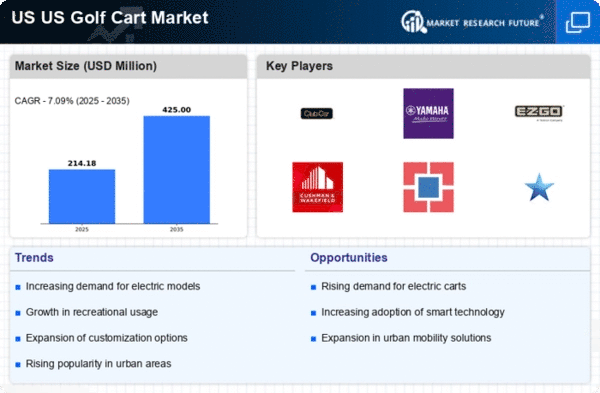
As per analysis, the US golf cart market Size was estimated at 200.0 USD Million in 2024. The US golf cart market is projected to grow from 214.18 USD Million in 2025 to 425.0 USD Million by 2035, exhibiting a compound annual growth rate (CAGR) of 7.0% during the forecast period 2025 - 2035

Key Market Trends & Highlights

The US golf cart market is experiencing a transformative shift towards electric models and smart technologies.

  • The market is witnessing a notable rise in electric golf cart models, driven by eco-conscious consumer preferences.
  • Integration of smart technologies is enhancing user experience and operational efficiency in golf carts.
  • The recreational segment, particularly in golf and resort activities, is expanding rapidly, contributing to market growth.
  • Key drivers include the growing demand for eco-friendly transportation and the expansion of golf courses and resorts.

Market Size & Forecast

2024 Market Size 200.0 (USD Million)
2035 Market Size 425.0 (USD Million)
CAGR (2025 - 2035) 7.09%

Major Players

Club Car (US), Yamaha (JP), E-Z-GO (US), Cushman (US), Garia (DK), Star EV (US), Polaris (US), Adger Golf Cars (US)

Our Impact
Enabled $4.3B Revenue Impact for Fortune 500 and Leading Multinationals
Partnering with 2000+ Global Organizations Each Year
30K+ Citations by Top-Tier Firms in the Industry

US Golf Cart Market Trends

The golf cart market is currently experiencing a notable transformation, driven by various factors including technological advancements and changing consumer preferences. The increasing popularity of electric models is particularly evident, as they offer eco-friendly alternatives to traditional gas-powered carts. This shift aligns with broader environmental trends, where sustainability plays a crucial role in purchasing decisions. Additionally, the rise in leisure activities and the growing number of golf courses contribute to the demand for these vehicles, suggesting a robust market outlook. Furthermore, the integration of smart technologies into golf carts enhances user experience, making them more appealing to a wider audience. As a result, manufacturers are likely to focus on innovation to meet evolving consumer expectations. In the current landscape, the golf cart market appears poised for growth, with several factors influencing its trajectory. The increasing adoption of electric models, coupled with advancements in technology, indicates a shift towards more sustainable and efficient options. Moreover, the expansion of recreational activities and the rise in golf course establishments may further bolster demand. Overall, the market seems to be adapting to contemporary trends, which could lead to a dynamic and competitive environment in the coming years.

Rise of Electric Models

The transition towards electric golf carts is gaining momentum, as consumers increasingly prioritize sustainability. Electric models offer lower operational costs and reduced environmental impact, making them an attractive choice for both recreational and commercial use.

Integration of Smart Technologies

The incorporation of smart technologies into golf carts is becoming more prevalent. Features such as GPS navigation, Bluetooth connectivity, and advanced safety systems enhance user experience, appealing to tech-savvy consumers.

Expansion of Recreational Activities

The growth in recreational activities, including golf and community events, is driving demand for golf carts. As more individuals seek leisure options, the need for versatile and efficient transportation solutions within these settings is likely to increase.

US Golf Cart Market Drivers

Expansion of Golf Courses and Resorts

The expansion of golf courses and resorts across the US is significantly impacting the golf cart market. As new facilities are developed, the demand for golf carts increases, as they are essential for transporting players and equipment. According to industry reports, the number of golf courses in the US has seen a steady increase, with over 15,000 courses currently operational. This growth not only boosts sales of golf carts but also encourages manufacturers to innovate and improve their offerings. The golf cart market is likely to benefit from this trend, as more facilities seek to enhance the player experience through efficient transportation solutions.

Regulatory Support for Electric Vehicles

Regulatory support for electric vehicles is influencing the golf cart market positively. Various state and local governments in the US are implementing incentives for electric vehicle adoption, including tax credits and rebates. This support extends to electric golf carts, making them more financially accessible to consumers. As a result, the golf cart market is likely to see an increase in electric model sales, as consumers take advantage of these incentives. Furthermore, the push for cleaner transportation options aligns with broader environmental goals, potentially leading to a more robust market for electric golf carts in the coming years.

Growing Demand for Eco-Friendly Transportation

The increasing awareness of environmental issues is driving the golf cart market. Consumers are seeking sustainable alternatives to traditional vehicles, leading to a rise in demand for electric golf carts. In the US, the market for electric golf carts is projected to grow at a CAGR of approximately 6.5% from 2025 to 2030. This shift towards eco-friendly transportation options is not only beneficial for the environment but also aligns with the preferences of younger consumers who prioritize sustainability. As a result, manufacturers in the golf cart market are focusing on developing more energy-efficient models, which could further enhance their market share and appeal to eco-conscious buyers.

Technological Advancements in Golf Cart Design

Technological advancements are playing a crucial role in shaping the golf cart market. Innovations such as improved battery technology, enhanced safety features, and smart connectivity options are attracting consumers. The integration of GPS systems and mobile app compatibility in golf carts is becoming increasingly common, providing users with enhanced navigation and tracking capabilities. As these technologies evolve, they are likely to drive consumer interest and increase sales in the golf cart market. Manufacturers that prioritize research and development in this area may gain a competitive edge, appealing to tech-savvy consumers looking for modern solutions.

Increased Popularity of Golf as a Leisure Activity

The rising popularity of golf as a leisure activity is a key driver for the golf cart market. More individuals are taking up golf, leading to an increase in demand for golf carts for personal use. Recent surveys indicate that participation in golf has grown by approximately 10% in the last few years, particularly among younger demographics. This trend suggests that the golf cart market could see a surge in sales as more players invest in personal carts for convenience and enjoyment. Additionally, the golf cart market may experience growth as golf becomes a favored recreational activity for families and social gatherings.


Market Segment Insights

By Fuel Type: Electric & Solar Powered (Largest) vs. Gasoline Powered (Fastest-Growing)

In the US golf cart market, the fuel type segment is distinctly divided into Electric & Solar Powered and Gasoline Powered carts. The Electric & Solar Powered segment holds a significant share, reflecting a strong preference for eco-friendly options among consumers. As awareness about sustainability increases, more users are leaning towards electric alternatives, contributing to their substantial market presence. However, Gasoline Powered carts are experiencing rapid growth, driven by their enhanced performance and lower initial costs compared to electric models. With the increasing diversity of applications for golf carts, including utility and recreational use, gasoline options are becoming a preferred choice for many buyers looking for versatility and extended range, making this segment the fastest-growing in the market.

Electric & Solar Powered (Dominant) vs. Gasoline Powered (Emerging)

Electric & Solar Powered golf carts dominate the market due to their sustainable nature and operational cost advantages. These models are increasingly favored for personal and commercial use, driven by incentives for eco-friendly transportation. They are equipped with advanced battery technology and solar charging capabilities, resulting in lower energy costs over time. On the other hand, Gasoline Powered carts, while traditionally popular, are emerging rapidly as manufacturers innovate to improve fuel efficiency and reduce emissions. Their ability to cover longer distances and provide higher power output makes them attractive for varied applications. This blend of features is positioning gasoline carts to capture a larger customer base, creating a dynamic competition within the US golf cart market.

By Application Type: Golf Course (Largest) vs. Commercial Services (Fastest-Growing)

In the US golf cart market, the application type segment is primarily dominated by golf courses, which account for the largest share of the market. This segment benefits from consistent demand due to the popularity of golf as a leisure activity and a growing number of golf courses across the country. Commercial services, while smaller in market share compared to golf courses, are experiencing significant interest with increasing adoption in various sectors, including tourism and event management. The growth trends for the application type segment indicate a shift towards commercial services, which are benefiting from new developments in hospitality. The need for eco-friendly and efficient transportation methods on commercial properties is driving innovation and adoption of advanced golf carts. As such, the commercial services segment is set to see rapid growth, appealing to businesses seeking to enhance customer experiences and operations.

Golf Course: Dominant vs. Commercial Services: Emerging

The dominant segment of golf courses in the US golf cart market is characterized by a well-established infrastructure and strong consumer loyalty. Golf courses utilize golf carts to enhance the player experience, providing convenience and improving access to facilities. Notably, this segment is supported by ongoing investments in course development and upgrades. On the other hand, commercial services represent an emerging segment that is rapidly gaining traction. These services include rentals for events, tours, and as part of hospitality offerings. The increased emphasis on sustainability and green transport solutions is fostering interest in electric golf carts for commercial use, indicating a shift that aligns with broader environmental trends.

Get more detailed insights about US Golf Cart Market

Key Players and Competitive Insights

The golf cart market in the US exhibits a dynamic competitive landscape characterized by innovation and strategic partnerships. Key players such as Club Car (US), E-Z-GO (US), and Yamaha (JP) are actively shaping the market through various operational focuses. Club Car (US) emphasizes sustainability and electric vehicle technology, aiming to enhance its product offerings with eco-friendly solutions. E-Z-GO (US), on the other hand, is concentrating on expanding its market reach through strategic collaborations and enhancing customer experience. Yamaha (JP) appears to be investing in digital transformation, integrating advanced technologies into its manufacturing processes to improve efficiency and product quality. Collectively, these strategies contribute to a competitive environment that prioritizes innovation and customer-centric solutions.In terms of business tactics, companies are increasingly localizing manufacturing to reduce costs and improve supply chain efficiency. This approach is particularly relevant in a moderately fragmented market where several players vie for market share. The collective influence of these key players fosters a competitive structure that encourages continuous improvement and adaptation to market demands.

In October Club Car (US) announced a partnership with a leading battery technology firm to develop next-generation electric golf carts. This strategic move is likely to enhance Club Car's position in the market by offering more efficient and longer-lasting battery solutions, aligning with the growing consumer demand for sustainable transportation options. The collaboration may also facilitate advancements in charging infrastructure, further solidifying Club Car's commitment to sustainability.

In September E-Z-GO (US) launched a new line of customizable golf carts aimed at enhancing user experience. This initiative reflects E-Z-GO's strategy to cater to diverse consumer preferences and increase brand loyalty. By allowing customers to personalize their carts, E-Z-GO not only differentiates itself from competitors but also taps into the growing trend of personalization in consumer products.

In August Yamaha (JP) unveiled a new digital platform designed to streamline the purchasing process for golf carts. This platform integrates advanced analytics to provide customers with tailored recommendations based on their preferences. By leveraging technology, Yamaha (JP) aims to enhance customer engagement and streamline operations, positioning itself as a leader in digital innovation within the golf cart market.

As of November current competitive trends indicate a strong emphasis on digitalization, sustainability, and the integration of AI technologies. Strategic alliances are increasingly shaping the landscape, enabling companies to leverage shared resources and expertise. The shift from price-based competition to a focus on innovation and technology is evident, as companies prioritize supply chain reliability and customer-centric solutions. Looking ahead, competitive differentiation will likely evolve, with a greater emphasis on technological advancements and sustainable practices, ultimately reshaping the market dynamics.

Key Companies in the US Golf Cart Market include

Industry Developments

Recent developments in the U.S. Golf Cart Market indicate a growing interest in electric and eco-friendly options, with companies like Polaris Industries and Yamaha Golf Car Company investing in innovations aimed at sustainability. In August 2023, Adger Golf Cars announced the introduction of a new line of energy-efficient golf carts designed for enhanced performance in golf courses, reflecting the increasing shift towards greener technologies in this market. As of September 2023, Club Car and EZGO are reported to be expanding their production capabilities to meet the increasing demand, leveraging automation and advanced manufacturing techniques to increase output.

Additionally, in a significant move, Tomberlin entered into a merger agreement in October 2023 with Golf Cars of America, aimed at enhancing their market presence and improving operational efficiencies. Over the last two years, the U.S. golf cart sector has seen substantial growth in valuation, with overall sales figures rising, driven by increased recreational and commercial use. This upswing is attributed to a surge in golf course renovations and the growing popularity of golf as a leisure activity during the pandemic. The U.S. government is also reviewing regulations concerning electric vehicles, which could further shape the golf cart sector.

Future Outlook

US Golf Cart Market Future Outlook

The Golf Cart Market is projected to grow at a 7.09% CAGR from 2025 to 2035, driven by increasing demand in recreational and commercial sectors.

New opportunities lie in:

  • Expansion of electric golf cart models for eco-conscious consumers.
  • Development of smart golf carts with GPS and connectivity features.
  • Partnerships with golf courses for exclusive fleet leasing agreements.

By 2035, the market is expected to achieve robust growth, reflecting evolving consumer preferences and technological advancements.

Market Segmentation

US Golf Cart Market Fuel Type Outlook

  • Gasoline Powered
  • Electric & Solar Powered

US Golf Cart Market Application Type Outlook

  • Golf Course
  • Commercial Services
  • Others

Report Scope

MARKET SIZE 2024 200.0(USD Million)
MARKET SIZE 2025 214.18(USD Million)
MARKET SIZE 2035 425.0(USD Million)
COMPOUND ANNUAL GROWTH RATE (CAGR) 7.09% (2025 - 2035)
REPORT COVERAGE Revenue Forecast, Competitive Landscape, Growth Factors, and Trends
BASE YEAR 2024
Market Forecast Period 2025 - 2035
Historical Data 2019 - 2024
Market Forecast Units USD Million
Key Companies Profiled Club Car (US), Yamaha (JP), E-Z-GO (US), Cushman (US), Garia (DK), Star EV (US), Polaris (US), Adger Golf Cars (US)
Segments Covered Fuel Type, Application Type
Key Market Opportunities Integration of electric and autonomous technologies enhances efficiency in the golf cart market.
Key Market Dynamics Growing demand for electric golf carts driven by sustainability trends and regulatory incentives in the US.
Countries Covered US
Leave a Comment

FAQs

What was the projected market size of the U.S. Golf Cart Market in 2024?

The projected market size of the U.S. Golf Cart Market in 2024 was valued at 275.0 USD Million.

What is the expected market size of the U.S. Golf Cart Market by 2035?

The expected market size of the U.S. Golf Cart Market by 2035 is anticipated to reach 544.0 USD Million.

What is the expected CAGR for the U.S. Golf Cart Market from 2025 to 2035?

The expected CAGR for the U.S. Golf Cart Market from 2025 to 2035 is 6.398%.

What is the market value of golf carts used in golf courses in 2024 and 2035?

The market value of golf carts used in golf courses is 130.0 USD Million in 2024 and is expected to grow to 260.0 USD Million by 2035.

What is the market value of golf carts for commercial services in 2024 and 2035?

The market value of golf carts for commercial services is 95.0 USD Million in 2024 and is projected to increase to 190.0 USD Million in 2035.

How much is the market for other applications of golf carts valued in 2024 and 2035?

The market for other applications of golf carts is valued at 50.0 USD Million in 2024 and is anticipated to reach 94.0 USD Million by 2035.

Who are the key players in the U.S. Golf Cart Market?

Key players in the U.S. Golf Cart Market include Polaris Industries, Yamaha GolfCar Company, Club Car, and EZGO, among others.

What are the dominant applications driving the U.S. Golf Cart Market?

The dominant applications driving the U.S. Golf Cart Market are golf courses and commercial services.

What are the growth drivers for the U.S. Golf Cart Market?

The growth drivers for the U.S. Golf Cart Market include expanding golf course facilities and the rising demand for electric golf carts.

What are the emerging trends in the U.S. Golf Cart Market?

Emerging trends in the U.S. Golf Cart Market include an increasing preference for electric models and customization options among consumers.

Download Free Sample

Kindly complete the form below to receive a free sample of this Report

Compare Licence

×
Features License Type
Single User Multiuser License Enterprise User
Price $4,950 $5,950 $7,250
Maximum User Access Limit 1 User Upto 10 Users Unrestricted Access Throughout the Organization
Free Customization
Direct Access to Analyst
Deliverable Format
Platform Access
Discount on Next Purchase 10% 15% 15%
Printable Versions